



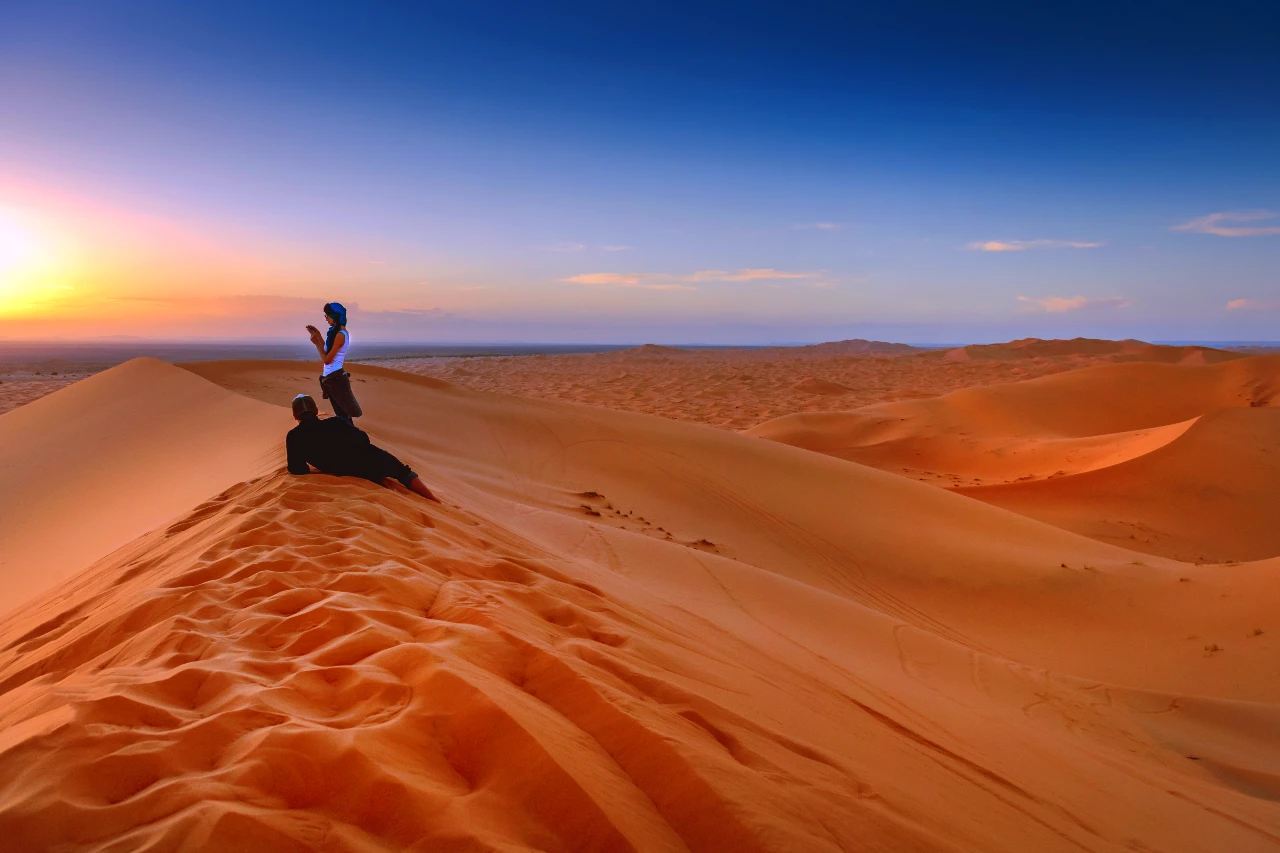
- Merzouga serves as Morocco’s premier desert gateway, boasting towering dunes and vibrant cultural experiences.
- Travelers should prioritize multi-night treks and local interactions for authentic immersion, avoiding mass tourism.
- The best visit times are October to May, with sustainable practices enhancing the desert’s fragile environment and communities.
Most travelers arrive in Morocco assuming that any stretch of sand and a camel ride will deliver the Sahara experience they imagined. The reality is far more layered. Merzouga is a small village in southeastern Morocco that serves as the primary gateway to the Erg Chebbi dunes, Morocco’s largest sand sea, and the difference between landing here versus any other desert town is enormous. From towering amber dunes that dwarf everything around them to Gnawa musicians playing by firelight at a nomad camp, Merzouga rewards those who come prepared. This guide will walk you through everything that makes this corner of the Sahara genuinely extraordinary and show you how to plan a visit that goes well beyond a snapshot at sunset.
Table of Contents
- Merzouga and the Erg Chebbi dunes: What makes them unique?
- Choosing your Merzouga experience: Activities and immersion
- Erg Chebbi vs. Erg Chigaga: Which Sahara Desert suits you?
- Responsible travel in Merzouga: When to go and how to travel sustainably
- What most travelers miss: The soul of Merzouga beyond the dunes
- Ready for your Merzouga adventure? Tailored trips and resources
- Frequently asked questions
Key Takeaways
| Point | Details |
|---|---|
| Merzouga’s unique appeal | Merzouga stands out with its dramatic Erg Chebbi dunes and position as a gateway to deep Saharan cultural immersion. |
| Choose authentic experiences | Multi-night treks and local homestays offer richer, more responsible encounters than standard day tours. |
| Travel responsibly | Visiting during shoulder seasons and choosing ethical operators can maximize enjoyment and minimize your environmental impact. |
| Compare Sahara regions | Erg Chebbi is more accessible and picturesque, while Erg Chigaga offers a remote wilderness adventure for seasoned travelers. |
Merzouga and the Erg Chebbi dunes: What makes them unique?
To understand why Merzouga consistently outranks other desert gateways on travelers’ lists, you need to start with the geography. Merzouga sits at roughly 1,000 meters above sea level in southeastern Morocco, close to the Algerian border, in the Draa-Tafilalet region. The village itself is modest. A few riads, some guesthouses, a handful of cafes. But step outside the last building and the ground shifts from packed earth to deep orange sand almost instantly.
What you are looking at is Erg Chebbi, a true erg (a vast, continuous sea of sand shaped by wind into towering dunes). The Erg Chebbi dunes rise up to 150 meters high, with the tallest peak reaching closer to 160 meters, spanning 22 km in length and 5 km in width. For scale, that is roughly the height of a 50-story building. Standing at the base of a dune that size changes your relationship with the landscape in a visceral, immediate way.
| Feature | Erg Chebbi (Merzouga) |
|---|---|
| Maximum dune height | Up to 150 to 160 meters |
| Length of dune field | 22 km |
| Width of dune field | 5 km |
| Distance from Marrakech | Approx. 550 km (9 to 10 hours by road) |
| Nearest town | Rissani (20 km) |
| Best light | Sunrise and sunset |
Morocco has other small dune formations scattered across the south, including near Zagora and Tinfou, but none approach the scale or visual drama of Erg Chebbi. Those smaller dunes make pleasant photo stops. Erg Chebbi is an immersion. The sheer volume of sand means temperature shifts are more extreme, wind patterns create different textures across the surface, and the color palette changes from honey gold at midday to deep copper at dusk to near-silver under a full moon.
“Standing on the ridge of an Erg Chebbi dune at sunrise, with no building, road, or noise in sight, you realize you are looking at a landscape that has barely changed in thousands of years. That perspective is rare anywhere in the world.”
Photographers, in particular, return to Merzouga repeatedly because the light here operates differently. The lack of vegetation and the curvature of the dunes create clean shadow lines that shift hour by hour. Wildlife lovers also find surprises here: the desert monitor lizard, fennec fox, and various migratory birds pass through, especially around the seasonal Dayet Srji salt lake just west of the dune field.
Our Merzouga adventure guide breaks down the geography in even more detail for those who want to get into the specifics before they arrive.
Choosing your Merzouga experience: Activities and immersion
Understanding the landscape is one thing. Deciding how to actually spend your time in Merzouga is where most travelers get overwhelmed or end up making choices they later regret. There is a wide spectrum of options, from quick afternoon excursions to multi-night cultural immersions, and the experience quality varies significantly depending on what you choose.
The main activities, ranked by depth of experience
- Multi-night camel trek into the dunes. This is the gold standard. You ride at sunset into the erg, sleep in a traditional Berber camp, wake before dawn to climb a dune crest, and return in the early morning light. Two to three nights allows you to move deeper into areas where day-trippers never reach.
- Nomad homestays with local Amazigh families. These are not always easy to find independently, but they are the most culturally rich option available. You share meals, hear oral histories, and see a way of life that has adapted to the desert for centuries.
- 4×4 off-road tours across the dune field. Fast, exhilarating, and ideal if you are traveling with children or have limited mobility. You cover a lot of ground quickly and can combine this with visits to the kasbah ruins south of Merzouga.
- Sandboarding on the major dunes. Boards are available for rent in the village. The steep face of the tallest dunes gives good speed. It is physically demanding to hike back up, so plan for the cardio.
- Sunrise and sunset watching from a dune crest. Even a short one-hour guided walk at dawn delivers a genuinely transformative visual experience. TripAdvisor reviews consistently rate these sunset and sunrise experiences at 4.6 to 4.9 out of 5 based on thousands of traveler reviews, placing them among Morocco’s most satisfying activities.
| Tour type | Duration | Authenticity level | Price range (USD) | Best for |
|---|---|---|---|---|
| Daytime camel ride | 1 to 2 hours | Low | $15 to $30 | Casual visitors |
| Overnight camel trek | 1 night | Medium | $60 to $120 | First-time desert visitors |
| Multi-night deep trek | 2 to 3 nights | High | $150 to $300 | Authentic seekers |
| Nomad homestay | 1 to 3 nights | Very high | $40 to $80 per night | Cultural immersion travelers |
| 4×4 tour | Half to full day | Medium | $50 to $100 | Families, limited mobility |
The recommendation from experienced desert travelers is clear: authentic experiences favor multi-night treks or nomad homestays over day trips, and booking independently in Merzouga is the best way to customize your experience and sidestep the mass-tourism circuit.
Pro Tip: When you arrive in Merzouga, walk away from the main street and talk to guesthouse owners directly. Many have family connections to nomadic guides or can put you in touch with community-run camps that do not appear on major booking platforms. The best experiences here rarely get listed online.
A multi-day Merzouga tour from Marrakech lets you combine the desert with the dramatic landscapes of the Draa Valley and the Dades Gorges, making the journey itself part of the experience. For broader inspiration, the full list of Morocco desert experiences covers activities across the Saharan south that you can weave into a longer trip.
For those who want a curated overview of everything available, the Sahara Desert Tours section offers a useful starting point for comparing formats and durations.
Erg Chebbi vs. Erg Chigaga: Which Sahara Desert suits you?
One of the questions we hear most often from travelers planning their first Moroccan desert trip is this: should I go to Merzouga or to Erg Chigaga? Both are real Saharan erg formations. Both offer camel rides, desert camps, and stunning landscapes. But they deliver very different kinds of trips, and choosing the wrong one for your travel style is a common and frustrating mistake.
Erg Chebbi offers taller, more photogenic dunes closer to established infrastructure, while Erg Chigaga is considerably more remote and wild but requires a longer and more demanding drive to reach. Here is how they compare side by side.
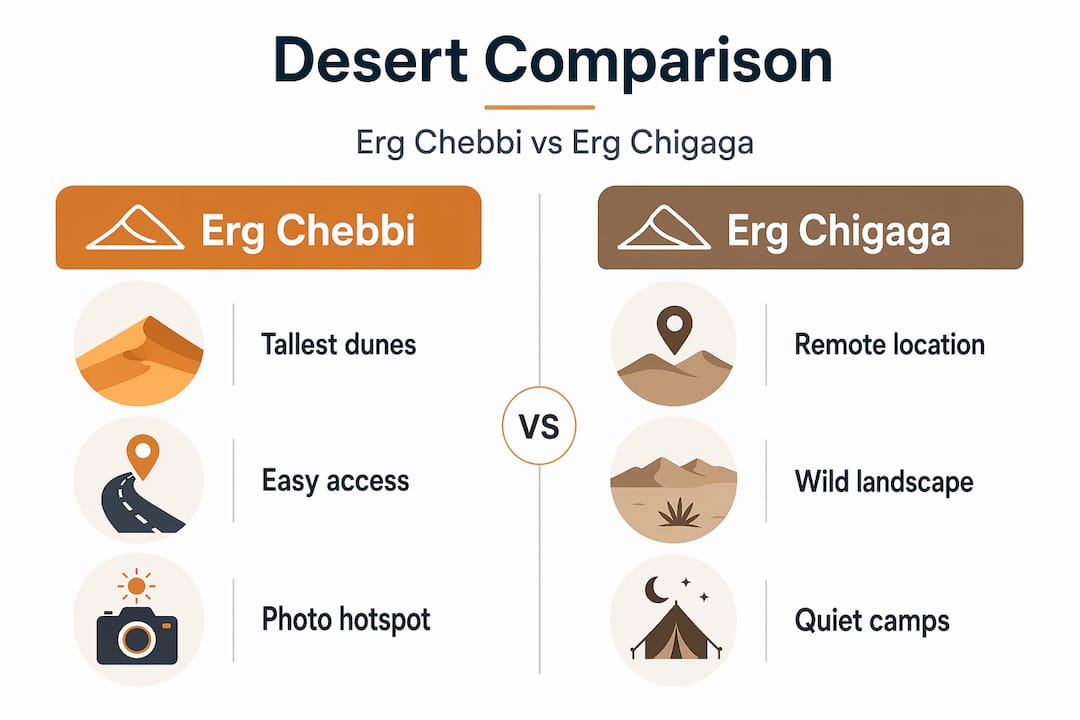
| Factor | Erg Chebbi (Merzouga) | Erg Chigaga (near M’Hamid) |
|---|---|---|
| Dune height | Up to 160 meters | Up to 300 meters in places |
| Accessibility | Good paved road from Rissani | A 4×4 is required for the rough track from M’Hamid |
| Infrastructure | Multiple guesthouses, riads, restaurants | Very limited, mostly camps |
| Crowd level | Moderate to busy in peak season | Low to very low year-round |
| Drive from Marrakech | 9 to 10 hours | 8 to 9 hours (then 2 hours off-road) |
| Best for | First-timers, photographers, cultural depth | Experienced desert travelers, true solitude |
Erg Chebbi is better suited for you if:
- This is your first Saharan experience and you want reliable logistics
- You want to combine desert adventure with cultural immersion and Gnawa music traditions
- You are traveling with children, older family members, or anyone with limited physical capacity
- Photography is a priority and you want maximum visual drama with accessible dunes
- You want more flexibility in accommodation, from budget guesthouses to Morocco luxury desert camps
Erg Chigaga is better suited for you if:
- You have visited Merzouga before and want something genuinely off the beaten track
- You are an experienced overlander comfortable with rough 4×4 routes
- True silence and extreme remoteness matter more to you than tall, dramatic dunes
- You are willing to pay premium rates for the logistics involved
Neither is objectively better. They serve different kinds of desert hunger. For most travelers on a first Moroccan desert trip, Merzouga and Erg Chebbi deliver more bang per kilometer of effort.
Responsible travel in Merzouga: When to go and how to travel sustainably
The surge in desert tourism across Morocco over the past decade has created real pressure on fragile ecosystems and on local communities. Choosing when you go and how you book matters more than most travelers realize.
Timing your visit
The best time to visit Merzouga is between October and May. Summer months, especially July and August, regularly push temperatures above 45°C in the dune field. That is not just uncomfortable; it is dangerous for extended outdoor activity. Camel welfare also suffers under extreme heat, which is another reason to avoid the peak summer period.
Within the October to May window, the shoulder seasons of October to November and March to April offer the best combination of mild temperatures, fewer visitors, and better light for photography. December through February can be cold overnight, sometimes dropping near freezing in the dunes, but the days are crisp and clear and the crowds are smaller than in March and April.
Practical tips for responsible travel in Merzouga:
- Book with operators who are locally owned and employ Merzouga residents as guides, not large tour operators based in Marrakech or Fes who parachute staff in for the season
- Ask specifically about camel welfare practices before booking any trek. Well-run operators limit trek duration, avoid midday rides in warm months, and can describe their camels’ daily routine
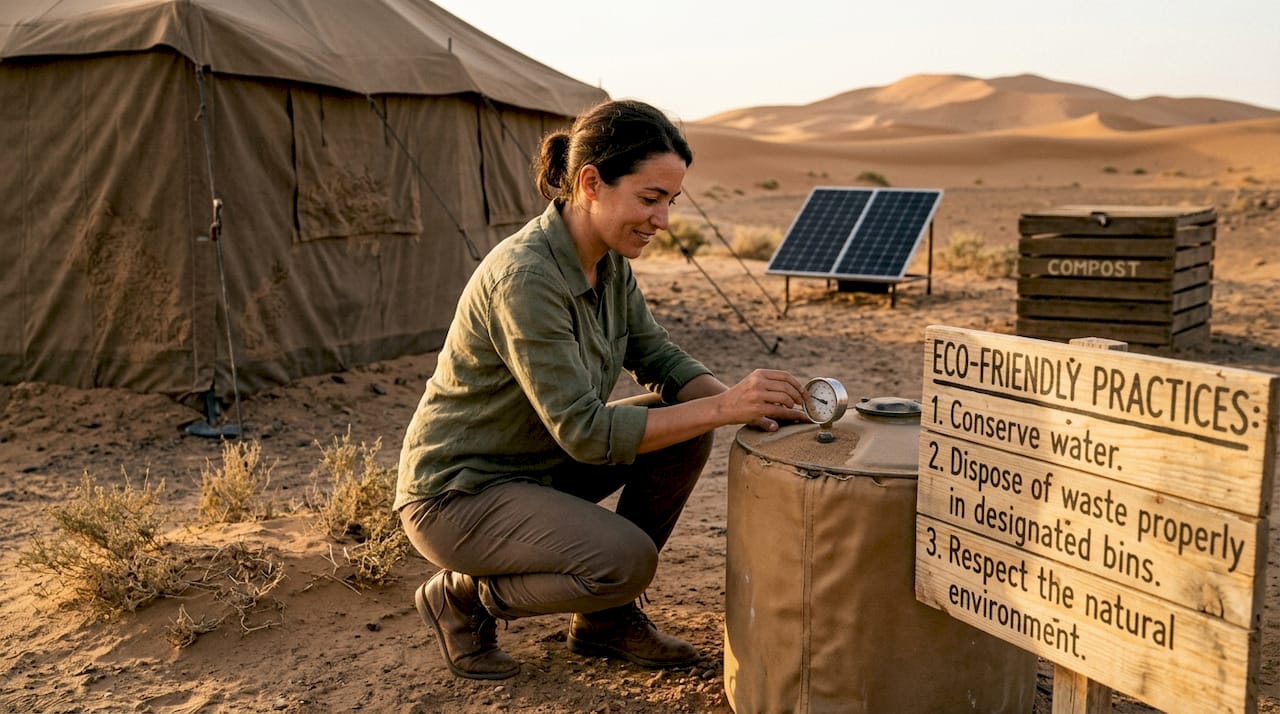
- Choose camps that use solar power and composting toilets over those that run diesel generators and leave waste in the dunes
- Carry reusable water bottles. Single-use plastic is a growing problem in the dune field and around the village
- Tip your guides directly and generously. Guide wages in the desert tourism sector are often lower than in cities, and tips form a significant part of their income
- Avoid picking up geological specimens or plants or disturbing desert wildlife. The fennec fox in particular is a protected species and should never be fed or handled
Statistic to know: UN Tourism sustainable travel guidelines emphasize that overtourism in fragile natural areas leads to measurable degradation of both the landscape and the authentic cultural practices that make destinations like Merzouga appealing in the first place. Choosing eco-camps and shoulder season travel directly counters this trend.
Pro Tip: When comparing desert camps, look for those that list their water source, waste management approach, and local hiring practices on their website or in their booking materials. A camp that is vague or evasive about these details is usually not operating sustainably.
For more practical planning advice, the Morocco desert trip tips guide covers packing lists, health considerations, and what to realistically expect from overnight camps. If you want to explore the luxury end of the spectrum with sustainability in mind, the luxury desert camp overview details which high-end camps genuinely back up their eco-credentials.
What most travelers miss: The soul of Merzouga beyond the dunes
Here is something we have observed repeatedly after facilitating hundreds of desert journeys: the travelers who come away most transformed by Merzouga are almost never the ones who had the most spectacular itinerary on paper.
The person who stays three nights in a luxury camp with a perfectly timed camel ride and drone footage of themselves at sunset often returns with great content. But ask them six months later what stayed with them, and the answer is often thinner than you would expect. Compare that to the traveler who spent a modest two nights with a Gnawa musician’s family in a small settlement outside the dunes, sharing a communal meal of harira (a traditional Moroccan spiced soup), listening to lute music by firelight, and helping collect water before dawn. That person is still talking about it years later.
The distinction is not about cost or even effort. It is about the quality of human contact. Merzouga’s real depth lives in its communities, not its coordinates.
The Amazigh (Berber) people of this region carry an oral tradition and a relationship with the desert that most visitors do not even know exists. There are stories embedded in specific dune formations. There are navigational techniques passed from grandparent to grandchild that predate GPS by centuries. There are seasonal patterns, weather signs, and resource-management practices that have allowed communities to survive and thrive in one of the world’s most extreme environments.
Most standard itineraries never touch any of this. Travelers are shuttled in, shown a sunset, served mint tea, and returned to their accommodation by 9 pm. It is a pleasant experience. It is not Merzouga.
We believe that the future of desert tourism in places like this depends on a fundamental shift in how visitors and operators think about value. Slower travel, fewer itinerary items, and genuine interaction with local knowledge-holders deliver far more lasting impact than any number of photo opportunities. The unforgettable Morocco experiences that travelers describe years later almost always share one quality: a moment where the planned itinerary stepped back and real life stepped in.
The uncomfortable truth is that mass desert tourism, even well-intentioned versions of it, tends to flatten the very culture it sells. When a camp performs Gnawa music as background entertainment rather than as a living spiritual practice, something real gets lost. Travelers who ask more questions, book with more intentionality, and stay just a day or two longer than feels comfortable are the ones who return with something irreplaceable.
Ready for your Merzouga adventure? Tailored trips and resources
Everything you have read here points to one central truth: Merzouga rewards preparation and intentionality. The most meaningful desert experiences do not happen by accident. At TopMoroccoTravel.com, we design bespoke itineraries that match your travel style, timeline, and appetite for adventure or cultural depth. Whether you are drawn to the physical drama of the dunes, the quiet magic of a nomad homestay, or a mix of both, our team connects you with vetted local guides and community-rooted experiences. Start by exploring Moroccan deserts for deeper context and inspiration, then browse our full range of Morocco desert tours to find the format that fits you best. Your Sahara story starts here.
Frequently asked questions
What is the best time to visit Merzouga?
The best time is October to May to avoid summer heat exceeding 45°C and high tourist crowds. Shoulder months of October, November, and March to April offer the sweetest balance of comfort and quiet.
How tall are the dunes in Erg Chebbi?
The dunes of Erg Chebbi reach up to 150 to 160 meters in height, making them Morocco’s tallest and most visually dramatic sand formations.
Are camel treks in Merzouga ethical?
Ethics depend entirely on the operator. Always ask about animal welfare practices before booking, and follow the guidance to book direct with locals who prioritize camel care and community ownership over volume.
Can I book tours in Merzouga directly with locals?
Yes, and it is strongly recommended. Booking independently in Merzouga lets you customize your experience, support local families directly, and avoid the homogenized packages that characterize mass tourism.
What are the main differences between Erg Chebbi and Erg Chigaga?
Erg Chebbi offers taller, more picturesque dunes with better surrounding infrastructure and easier access, while Erg Chigaga is more remote and wild but demands a longer, rougher journey to reach, suiting experienced desert travelers who prioritize true solitude.


Comments are closed