




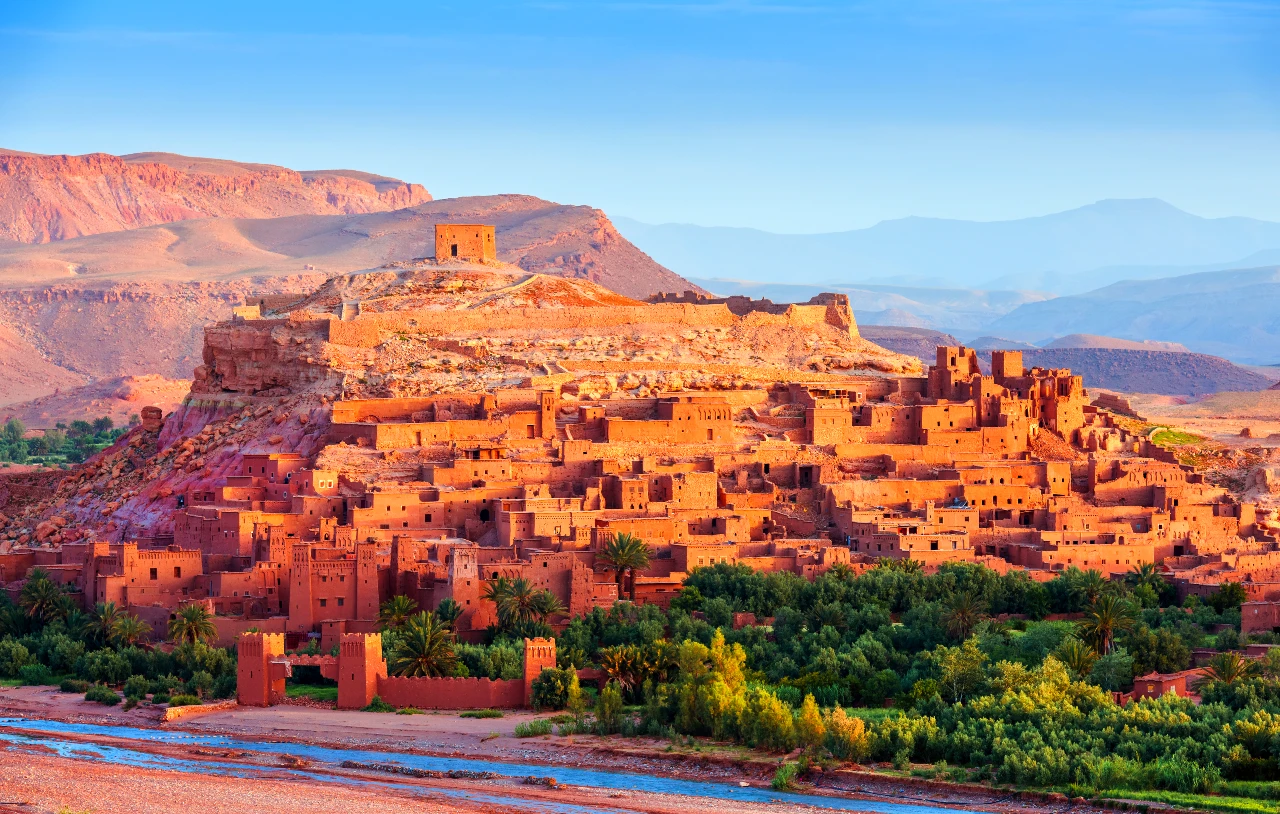
- Most travelers overlook Ouarzazate’s significance beyond a quick photo stop, missing its status as a UNESCO-recognized City of Film and a hub for Moroccan earthen architecture.
- The city’s active film industry generates local development, training, and social inclusion, making it more than just a scenic backdrop; it’s a place where cinema fuels community growth. V
- Visiting its famous studios, Kasbah Taourirt, and Aït Ben Haddou offers a rich understanding of both cinematic history and cultural heritage, especially when planned with flexibility and context in mind.
Most travelers treat Ouarzazate as a footnote. They pass through on the way to the Sahara, snap a photo near the kasbah, and move on. That’s a genuine mistake. Ouarzazate is a UNESCO-recognized City of Film, a living archive of Moroccan earthen architecture, and one of Africa’s most active film production hubs. It holds two major studios, a fortified citadel with nearly 300 rooms, and sits within striking distance of one of the world’s most famous UNESCO World Heritage Sites. This guide gives you the full picture of what makes Ouarzazate worth your time, how to visit its key sites, and how to plan a trip that goes well beyond the obvious.
Table of Contents
- Ouarzazate’s role as Morocco’s cinematic capital
- Exploring Ouarzazate’s iconic film studios: Atlas and CLA
- Discovering Kasbah Taourirt: heritage and cinematic backdrop
- Aït Ben Haddou: the UNESCO ksar and premier cinematic day trip
- Planning your visit: best times, tips, and traveler considerations
- What most guides miss about Ouarzazate: beyond film magic
- Plan your cinematic and cultural journey with Top Morocco Travel
- Frequently asked questions
Key Takeaways
| Point | Details |
|---|---|
| Ouarzazate’s film legacy | The city hosts numerous films annually, linking cinema with local job creation and social programs. |
| Iconic studios | Atlas and CLA Studios offer immersive experiences and support filmmaking education in Morocco. |
| Kasbah Taourirt charm | This historic fortress near Ouarzazate provides stunning architecture and film backdrop opportunities. |
| Aït Ben Haddou’s significance | A UNESCO site that exemplifies Morocco’s heritage and cinematic allure beyond a film set. |
| Visit timing | April offers ideal weather with comfortable temperatures, abundant sunshine, and minimal rainfall for visits. |
Ouarzazate’s role as Morocco’s cinematic capital
Before you visit, it helps to understand why Ouarzazate has earned its reputation. This isn’t just a place where films happen to be shot. It’s a city where film drives local development through jobs, education, and social inclusion programs that reach marginalized communities. That distinction matters when you’re standing inside a studio and wondering what you’re really looking at.
Ouarzazate hosts 15 to 20 film productions every year, ranging from major Hollywood features and European arthouse films to Moroccan and pan-African productions. The consistent production volume keeps the local economy active year-round and makes the city feel genuinely alive, not like a preserved artifact. When you read about films like Gladiator, Kingdom of Heaven, or Lawrence of Arabia being shot in Morocco, many of those scenes originated near this city.
What elevates Ouarzazate beyond a simple filming backdrop is how its creative economy works at the community level:
- Film workshops and training programs provide technical skills to local youth
- The film industry creates work for local artisans, construction workers, costume makers, and caterers
- Social inclusion initiatives bring opportunities to groups often excluded from the formal economy
- Community members serve as extras, location scouts, and support staff on international productions
You’ll find Ouarzazate travel guides that list the famous films shot here, but few explain that the city’s UNESCO recognition is specifically tied to how film serves as a tool for human development. That’s the detail that reframes everything else you see during your visit.
Exploring Ouarzazate’s iconic film studios: Atlas and CLA
The two studios that put Ouarzazate on the cinematic map are Atlas Studios and CLA Studios. Both are open to visitors when productions aren’t actively filming, and both reward a few hours of exploration. They’re not theme parks. They’re working professional facilities with permanent sets, warehouses of props, and a tangible sense of real work happening.
Atlas Studios is the larger of the two, covering an enormous area outside the city. It holds sets that have been rebuilt and adapted dozens of times over decades. You’ll find everything from Egyptian temples and Tibetan monasteries to Roman streets, all constructed for specific productions and left standing because they’re reused regularly. The studio also operates a hotel on-site, which means you can actually stay the night surrounded by film history. That’s not something many film destinations in the world can offer.
CLA Studios takes a different angle. While it hosts major international productions, it also runs closely with the local École du Cinéma (School of Cinema), giving local students hands-on access to a functioning professional studio environment. This is the cinematic education ecosystem that transforms Ouarzazate from a location into a creative center. Both studios have turned this city into more than a backdrop—they’ve made it a continental force in film production and training.
Here’s what to keep in mind when visiting the studios:
- Call ahead or ask at your accommodation about current filming schedules. Active productions sometimes close entire sections of a studio to the public with little advance notice.
- Morning visits tend to work better at Atlas Studios, as tour groups tend to arrive midday and crowd the more photogenic sets.
- Bring a wide-angle lens or phone with a panoramic mode. The scale of the permanent sets is genuinely surprising and deserves the frame.
- Budget about two to three hours for Atlas and an additional one to two for CLA if you want to explore without rushing.
Pro Tip: If visiting Atlas Studios, ask specifically about which recent production used a particular set. Staff are usually knowledgeable, and their firsthand stories make the experience feel far more personal than a generic tour.
Discovering Kasbah Taourirt: heritage and cinematic backdrop
Just five kilometers from the city center, Kasbah Taourirt is one of the most architecturally striking sites in southern Morocco. With nearly 300 rooms built from pisé (compacted earth mixed with straw), it represents the domestic and political ambitions of the Glaoui clan, who controlled much of southern Morocco in the early 20th century. Today it functions as both a heritage site and a working neighborhood, with families still occupying portions of the structure.
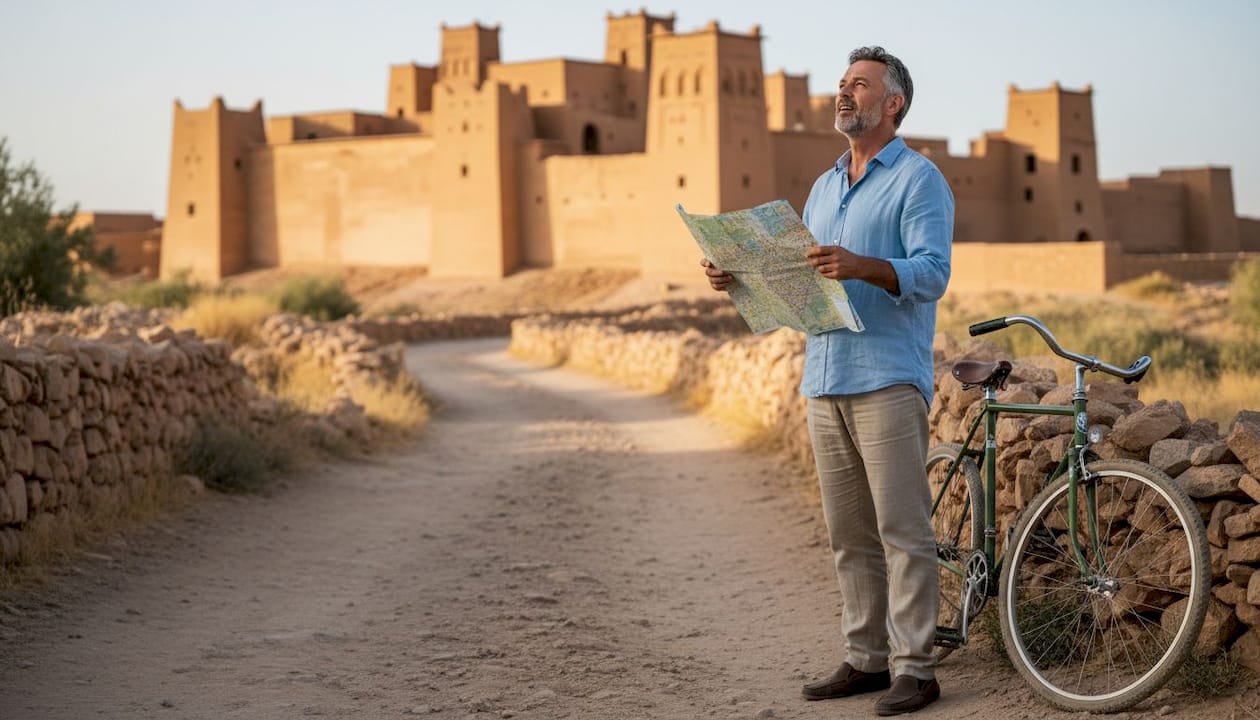
What surprises most visitors is the scale. From the road, it looks manageable. Once you’re inside, the maze of corridors, open courtyards, rooftop terraces, and multi-story towers reveals a structure that took generations to build and requires genuine attention to explore properly. The earthen architecture conservation work ongoing at this site is visible as you walk through: some sections have been carefully restored while others show the natural erosion that earthen buildings face in this climate.
Here’s how to make the most of your visit:
- Arrive by 4:00 PM. Late afternoon light hits the ochre walls at an angle that makes every texture visible and every photograph look considered rather than accidental.
- Pay the entrance fee. At approximately 20 Moroccan dirhams, it’s one of the most affordable heritage experiences in Morocco. Hours run from 8:00 AM to 6:00 PM.
- Take the rooftop terrace walk. The views toward the Atlas Mountains from the upper levels contextualize why this location appealed to both historical occupants and modern film directors.
- Hire a local guide for 30 minutes. The official guides at the entrance know the specific rooms used in filming and explain the Glaoui history in a way that makes the space feel inhabited rather than merely preserved.
- Walk the adjacent medina quarter. Right beside the kasbah, the old medina sells local crafts, Berber rugs, and traditional silver jewelry without the hard-sell environment of Marrakech’s souks.
Pro Tip: The best view of Kasbah Taourirt as a heritage site is actually from the road just north of the complex. That’s where most film production photography is taken, and it’s free.
Aït Ben Haddou: the UNESCO ksar and premier cinematic day trip
Thirty kilometers northwest of Ouarzazate sits a site that genuinely stops people mid-conversation. Aït Ben Haddou is a fortified village (called a ksar in Arabic) built entirely from earthen brick, stacked against a hillside above a shallow river crossing. Inscribed as a UNESCO World Heritage Site in 1987, it’s recognized for its architecture, its cultural significance, and the ongoing need to preserve earthen construction techniques that most of the modern world has abandoned.
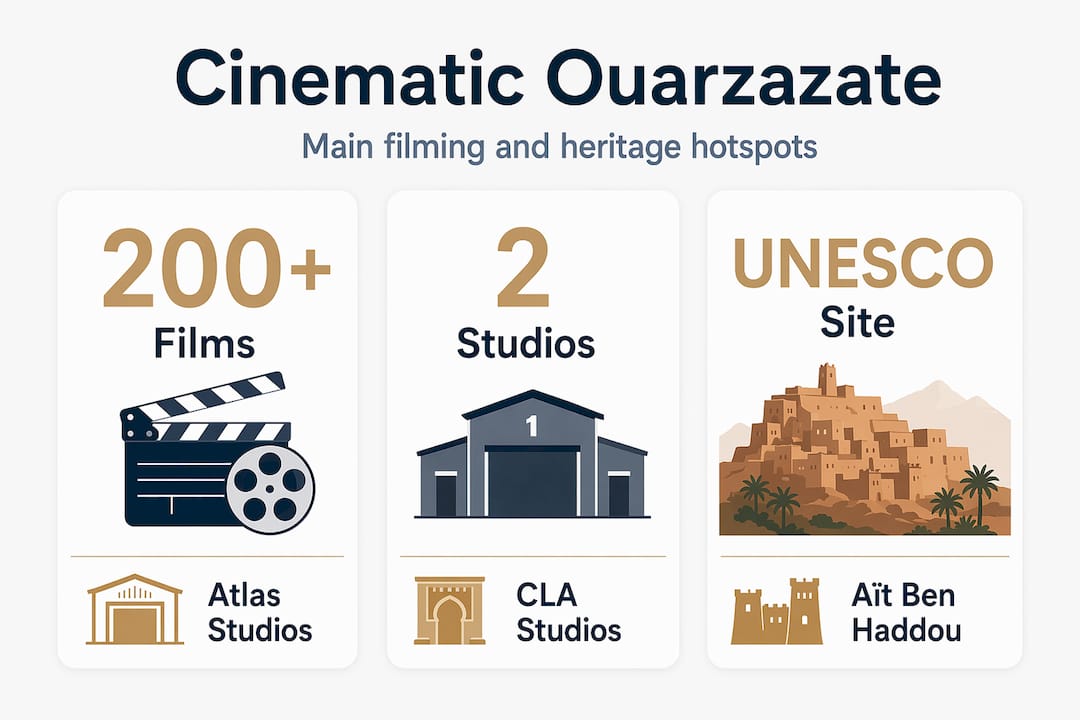
Films and television productions have used this site so extensively that you may recognize it before you’ve ever visited. Gladiator, Game of Thrones, The Mummy, Prince of Persia, and dozens of other productions have filmed here. But this site is not just a film set. Families still live within the ksar, artisans sell pottery and weavings inside the walls, and conservation teams work continuously to maintain the integrity of the earthen towers.
Here’s a comparison to help you plan your Ouarzazate day trips around this region:
| Site | Distance from Ouarzazate | UNESCO status | Best visit time | Entrance fee |
|---|---|---|---|---|
| Aït Ben Haddou | ~30 km | World Heritage Site (1987) | Late afternoon | ~10–15 MAD |
| Kasbah Taourirt | ~5 km | None (managed heritage) | Late afternoon | ~20 MAD |
| Atlas Studios | ~5 km | N/A | Morning | ~50 MAD |
| Draa Valley | ~30 km south | N/A | Morning | Free |
What sets Aït Ben Haddou apart from the studios and even from Kasbah Taourirt is the sense of inhabiting a layered historical space rather than visiting one. When you cross the shallow river on stepping stones to enter the ksar, you’re entering a site that has been continuously occupied for centuries. That continuity is palpable. It’s also why Morocco desert tours so frequently combine this site with a Sahara extension. The logic of the landscape pulls you further south.
Key points to keep in mind:
- Visit in late afternoon for the best light on the earthen towers
- The river crossing is shallow but not always dry; sandals work better than sneakers
- The hilltop shrine at the top of the ksar offers the best panoramic view of the surrounding valley
- Spending 2 to 3 hours here, rather than rushing, lets the site reveal itself gradually
Planning your visit: best times, tips, and traveler considerations
Timing matters more in Ouarzazate than in most Moroccan cities. The region sits at an elevation of around 1,150 meters, which gives it a desert climate moderated by altitude. That means the temperature swings between seasons are significant, and choosing the wrong month can either cook you or leave you underdressed.
April is consistently rated the best month for visiting Ouarzazate, with average daytime highs around 27°C, approximately 12.5 sunshine hours per day, and very low rainfall probability. May and October run close seconds. The combination of warm (but not brutal) temperatures and long daylight hours makes extended outdoor exploration at kasbahs and the ksar genuinely comfortable.
Here’s a seasonal comparison to help you decide:
| Season | Months | Average high temp | Rain chance | Recommended? |
|---|---|---|---|---|
| Spring | March to May | 24°C to 30°C | Low | Yes, ideal |
| Summer | June to August | 38°C to 42°C | Very low | Avoid midday |
| Autumn | September to November | 26°C to 33°C | Low to moderate | Yes, good |
| Winter | December to February | 14°C to 20°C | Moderate | Manageable |
Beyond weather, here are the practical Ouarzazate travel tips that actually change your experience:
- Build a flexible itinerary. Studio access can be blocked by active filming with no advance warning. Having a backup plan (Draa Valley, Fint Oasis) prevents frustration.
- Ouarzazate as a base, not just a stop. Some travelers skip the city itself in favor of surrounding sites, but using it as a multi-night base gives you early morning access to Aït Ben Haddou before the tour buses arrive.
- Conserve your data budget wisely. Signal in the kasbahs and the ksar area can drop significantly. A Morocco travel eSIM gives you flexible data coverage without swapping SIM cards or hunting for local shops.
- Book accommodation in the city center. Staying near Kasbah Taourirt puts you within walking distance of the medina, restaurants, and the road to both studios.
- Respect conservation zone restrictions. Some rooms and towers at historic sites are closed to visitors for structural repair. These closures exist for good reasons and are worth respecting.
Pro Tip: If your schedule allows only one full day in the area, spend the morning at Atlas Studios when light and crowds are both favorable, drive to Aït Ben Haddou for a late lunch, and time your return through Kasbah Taourirt at golden hour. That single day covers the most compelling things to do in Ouarzazate and its surroundings without feeling rushed.
What most guides miss about Ouarzazate: beyond film magic
Here’s an opinion that might surprise you: the film studios are not the best reason to visit Ouarzazate. They’re the most famous reason, and they’re worth seeing. But travelers who come purely for the cinematic angle often leave feeling like they’ve looked at a catalog rather than engaged with a place.
The more interesting story is how film functions as a tool for social development in a city where formal employment has historically been limited. The workshops, the film school ties, and the youth programs: these aren’t side projects. They’re the reason UNESCO gave Ouarzazate its Creative City designation in the first place. When you visit the studios with that context, every set feels different. You’re not looking at a backdrop. You’re looking at a local economy built on creative production.
The earthen architecture sites carry a parallel lesson. Kasbah Taourirt and Aït Ben Haddou are beautiful, but they’re also fragile. Pisé construction degrades in rain and requires constant skilled maintenance. The conservation programs at these sites are quiet, ongoing, and underfunded relative to the visitor numbers both sites attract. Travelers who treat these places with the care they’d give any living cultural site, staying on marked paths, not touching wall surfaces, and respecting closed areas, actually contribute to the longevity of what they came to see.
Studio access varies considerably depending on what’s in production at any given time. Expecting full access every time is unrealistic. Accepting that reality and building flexibility into your plans transforms a potential disappointment into a feature of visiting an actual working film city rather than a museum. The visits that work best are the ones where travelers arrive curious rather than expecting a scripted experience.
Read our earthen sites’ preservation insights for a deeper look at what’s involved in maintaining Morocco’s most iconic heritage architecture. The context changes how you see everything.
Plan your cinematic and cultural journey with Top Morocco Travel
Ouarzazate rewards travelers who plan with intention. Getting the most out of the studios, kasbahs, and desert circuits requires local knowledge, flexible logistics, and connections that open doors. At Top Morocco Travel, we build Morocco desert tours that combine Aït Ben Haddou, Ouarzazate’s film studios, and Sahara excursions into coherent, unhurried itineraries. Our Moroccan city tour concepts blend cultural depth with comfort, so you’re never just checking boxes. For anyone wondering why guided tours deliver better Morocco experiences, the short answer is that local expertise saves time, unlocks access, and turns good trips into memorable ones. Our team handles the logistics so you can focus on the experience.
Frequently asked questions
What makes Ouarzazate a unique destination for travelers?
Ouarzazate combines active film production with genuine cultural heritage and community development programs, making it one of the few destinations where cinema, history, and social impact genuinely intersect.
Can visitors tour the Atlas and CLA studios easily?
Both studios welcome visitors, but access may be restricted during filming, so calling ahead and building buffer time into your schedule is the smartest approach.
Is Aït Ben Haddou just a film set or more?
It’s far more. Inscribed in 1987 as a UNESCO site, Aït Ben Haddou is a living village with active conservation work that extends well beyond its cinematic reputation.
When is the best time to visit Ouarzazate for sightseeing?
April offers ideal conditions with temperatures around 27°C and roughly 12.5 hours of sunshine daily, making it the top choice for outdoor sightseeing and photography.
Should I spend my entire trip in Ouarzazate or explore surrounding areas?
Use Ouarzazate as a base rather than a singular destination. Many travelers find that focusing on nearby sites like Aït Ben Haddou and the Sahara circuit delivers far more depth than staying within the city limits alone.



Comments are closed