




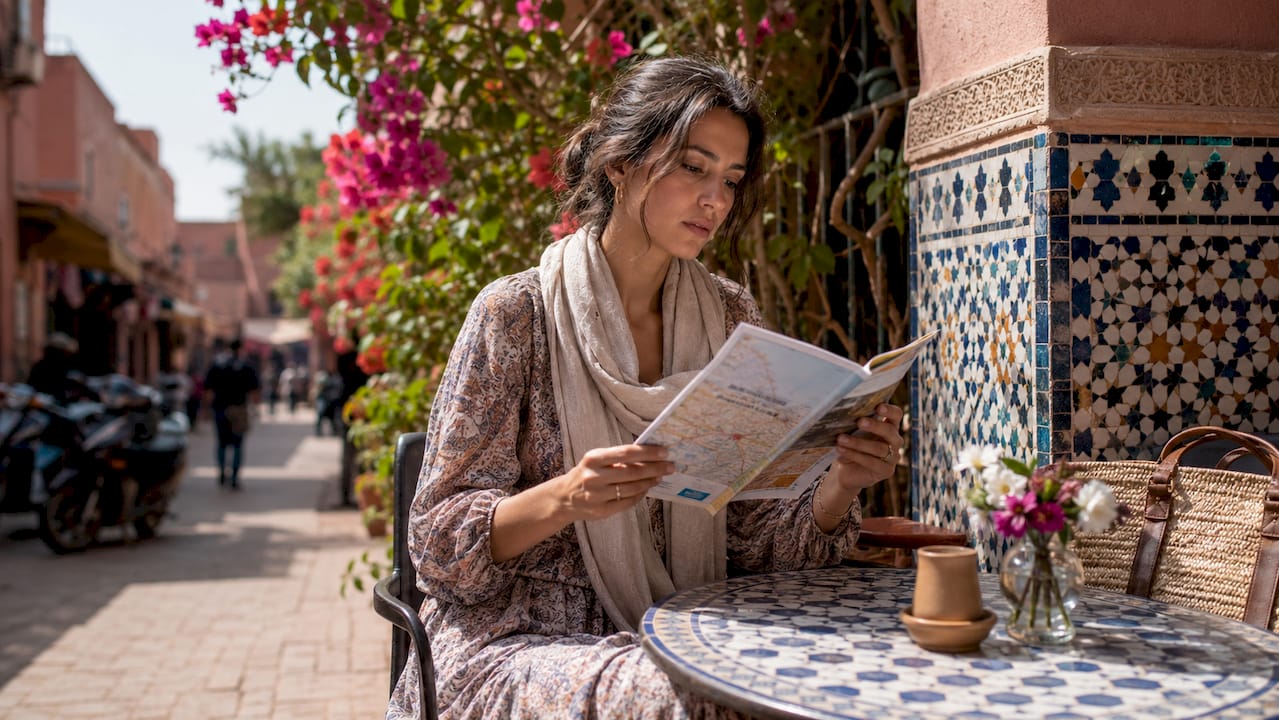
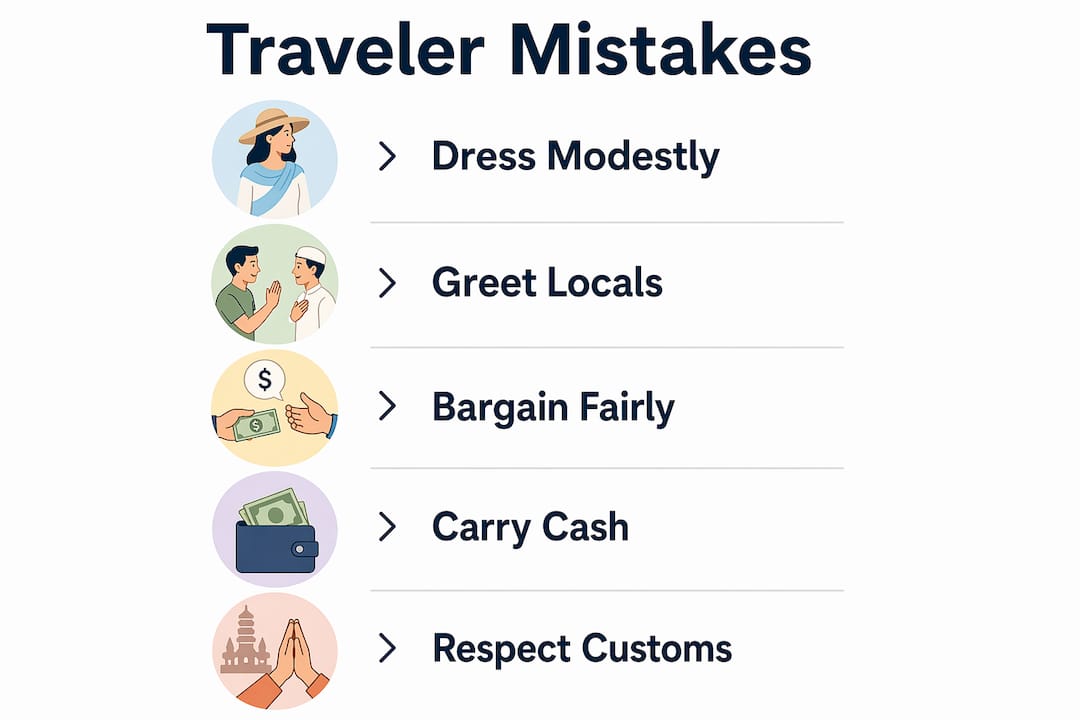
- Many common mistakes in Morocco involve cultural misunderstandings, such as dressing modestly and greeting locals with “Salam,” which prevent offenses and open friendly interactions.
- Travelers often mishandle bargaining, relying on fixed prices in some areas and overbargaining elsewhere, but successful negotiation involves respectful, friendly offers around 30-40% of initial quotes.
- Proper cash preparation, understanding local customs, and realistic itineraries are essential to avoid logistical pitfalls, delays, or safety issues during your trip.
The 10 mistakes travelers make in Morocco are predictable, well-documented, and almost entirely avoidable with the right preparation. Morocco is one of the world’s most rewarding destinations, but its cultural rules, bargaining customs, and logistical realities catch first-time visitors off guard in ways that can sour an otherwise extraordinary trip. This guide covers every major pitfall, from cultural faux pas in Fez and Marrakech to cash management errors and souk negotiation blunders, so you arrive informed and leave with nothing but good memories.
What are the most common cultural mistakes travelers make in Morocco?
Cultural missteps are the most frequent and most damaging errors visitors make. Morocco is a predominantly Muslim country with deeply held social norms around dress, greetings, and religious spaces. Ignoring these norms does not just cause awkward moments. It genuinely offends the people whose country you are visiting.
Dressing without modesty is the single most visible mistake. In cities like Marrakech, Fez, and Chefchaouen, both men and women should cover their shoulders and knees when walking through medinas, visiting markets, or entering any religious area. Lightweight linen trousers and long-sleeved shirts work well in Morocco’s heat and signal cultural awareness immediately.
Skipping the greeting is equally damaging. Failing to greet before asking questions is considered rude by locals. Saying “Salam” or “As-salamu alaykum” before any interaction, whether asking for directions or entering a shop, transforms the quality of that exchange. Greeting is not just politeness in Morocco. It is a social contract that opens doors.
Using the left hand for eating, passing food, or handing over money is a serious cultural offense. The left hand is considered unclean in Moroccan culture, and using it in social situations signals disrespect. This is a small adjustment that takes seconds to learn and makes a significant impression.
Attempting to enter mosques as a non-Muslim is another common blunder. Most mosques forbid non-Muslim entry, and the Hassan II Mosque in Casablanca is the notable exception that offers guided tours. Trying to enter restricted religious sites creates friction and embarrassment. Respect the boundary, and you will find Moroccan locals far more welcoming in every other context.
- Dress modestly in medinas, markets, and near mosques
- Always greet with “Salam” before starting any conversation
- Use your right hand for eating, passing items, and handling money
- Do not attempt to enter mosques unless explicitly open to visitors
- Photograph people only with their explicit permission
Pro Tip: Pack a lightweight scarf or shawl in your day bag. It doubles as a cover-up at religious sites and a layer against the evening chill in the Sahara.
For a deeper look at Moroccan hospitality customs, TopMoroccoTravel has a full breakdown of greetings and etiquette that will prepare you well before you land.
How do tourists commonly mishandle shopping and bargaining in Moroccan souks?
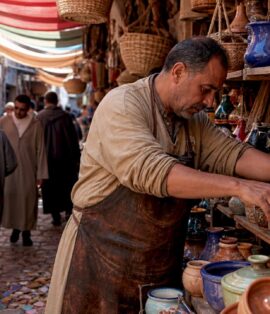
The souks of Marrakech, Fez, and Meknes are extraordinary places to shop, but they operate on rules that most Western travelers have never encountered. The biggest mistake is treating them like a fixed-price retail environment. The second biggest mistake is treating them like a battlefield.
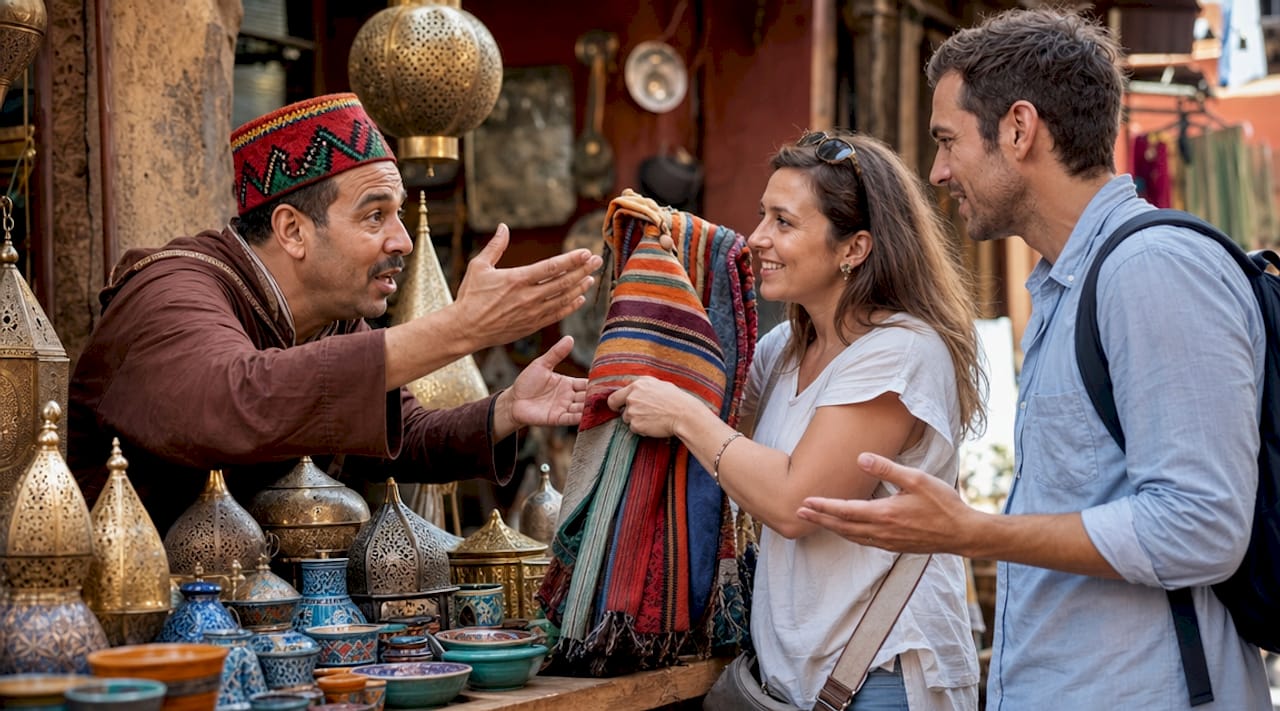
Bargaining in Moroccan souks is expected, social, and even enjoyable when done correctly. Successful negotiation often brings prices down to roughly 30% of vendor quotes, which means the opening price you hear is rarely close to the real value. Start your counter-offer at around 30 to 40 percent of the asking price, then work toward a middle ground. Keep the tone friendly and light. Vendors respect confident, good-humored bargaining far more than aggressive demands.
The opposite mistake is equally common: overbargaining to the point of insult. If a vendor accepts your price, buy the item. Walking away after a deal is struck is considered deeply disrespectful and will follow you through the medina by reputation faster than you think.
Knowing when prices are fixed saves confusion. Produce stalls, pharmacies, and government-run cooperatives typically use fixed prices. Craft shops, textile vendors, and souvenir stalls are where bargaining applies. When in doubt, ask a local guide rather than assuming.
| Situation | Correct approach |
|---|---|
| The vendor quotes an opening price | Counter at 30 to 40% of the asking price |
| The vendor accepts your offer | Complete the purchase. Do not walk away. |
| Fixed-price stall (produce, pharmacy) | Pay the stated price without negotiating |
| The vendor is persistent after your refusal | Say “La shukran” and walk away calmly |
| You are unsure if bargaining applies | Ask your licensed guide before engaging |
Pro Tip: “La shukran” with a polite wave and a calm exit is more effective than any lengthy explanation. Overexplaining a refusal signals hesitation, and vendors read hesitation as continued interest.
What mistakes do travelers make regarding money, transportation, and safety?
Financial and logistical errors are where Morocco travel advice gets specific and practical. These are not abstract cultural concerns. They are situations that will cost you time, money, or both if you are unprepared.
Relying on cards instead of cash is the most common financial mistake. Cash is necessary for everyday spending outside urban hotels and upscale restaurants. Souks, taxis, small riads, and street food vendors operate entirely in Moroccan dirhams. ATMs are best used in major cities like Casablanca, Marrakech, and Rabat. Airport exchange desks offer poor rates, and remote areas like the Draa Valley or the road to Merzouga may have no ATM access at all. Withdraw enough cash in the city before heading anywhere rural. Comparing Morocco dirham exchange rates before you travel can save you a meaningful amount on larger withdrawals.
Skipping the taxi fare agreement is a classic tourist trap. Always agree on a price before getting into a petit taxi, or confirm the driver will use the meter. Drivers in Marrakech and Fez are notorious for quoting inflated fares to tourists who do not ask upfront. The fix takes ten seconds and saves you an argument at the destination.
Ignoring the risk of unofficial guides is a safety and financial mistake. Fake guides earn commissions at shops, and the sales pressure inside those shops can be intense. Always book licensed guides through a reputable operator. The difference in experience is significant.
- Withdraw dirhams from city ATMs before traveling to rural areas
- Agree on taxi fares before departure, every single time
- Book only licensed, verified guides through reputable agencies
- Carry roughly 1,000 MAD cash if driving, as police checkpoints on highways expect on-the-spot cash payment for fines
- Use offline maps like Maps. me in medinas where GPS is unreliable
Getting lost in medinas is inevitable, but being unprepared for it is a mistake. GPS is not always reliable in medinas, and strangers offering to help you find your way often expect payment. Download an offline map before you enter Fez’s medina or the Marrakech souks. Print your riad’s address in Arabic as a backup. For more on travel safety in Morocco, TopMoroccoTravel’s advisory covers scam awareness and security in detail.
How do timing and itinerary mistakes affect your Morocco trip?
Timing errors and overambitious itineraries are among the most underrated traveling mistakes in Morocco. Travelers who plan Morocco like a European city break consistently underestimate how the country’s rhythms, distances, and culture require a different pace.
- Underestimating travel times. The drive from Marrakech to Merzouga, the gateway to the Erg Chebbi dunes, takes roughly nine to ten hours by road. Many travelers book it as a day trip. It is not. Build overnight stays into any desert excursion and treat the journey itself as part of the experience.
- Treating the call to prayer as a disruption. The adhan sounds five times daily, beginning before dawn. Travelers who book medina accommodations without expecting this often feel frustrated. The call to prayer is not an inconvenience. It is the sound of Morocco. Bring earplugs if you need them, but adjust your expectations before you arrive.
- Trying to see too much too quickly. Morocco rewards depth over breadth. Spending three full days in Fez’s medina teaches you more about Moroccan culture than a single afternoon in five different cities. Prioritize two or three destinations and explore them properly.
- Ignoring Friday rhythms. Friday is the holy day in Morocco. Many shops, government offices, and smaller restaurants close or operate on reduced hours around midday prayers. Plan your souk visits and administrative tasks around this reality rather than against it.
- Limiting your trip to Marrakech only. Marrakech is spectacular, but Morocco is far more than Jemaa el-Fna Square and the Majorelle Garden. Chefchaouen’s blue medina, the Roman ruins at Volubilis, the Sahara near Merzouga, and the Atlantic coast at Essaouira each offer entirely different experiences. A Morocco travel guide built around multiple regions will serve you far better than a Marrakech-only itinerary.
Key takeaways
Avoiding the top mistakes travelers make in Morocco requires cultural awareness, cash preparation, smart bargaining habits, and a realistic itinerary that respects local rhythms.
| Point | Details |
|---|---|
| Cultural etiquette matters most | Dress modestly, greet with “Salam,” and use your right hand to avoid causing offense. |
| Cash is non-negotiable | Withdraw Moroccan dirhams in major cities; cards are not accepted in souks or taxis. |
| Bargain smart, not aggressively | Counter at 30 to 40% of the asking price and use “La shukran” to exit unwanted sales. |
| Book licensed guides only | Unofficial guides lead to commission shops; licensed guides prevent scams and misunderstandings. |
| Slow down your itinerary | Underestimating travel times and trying to cover too much ruins the depth of the experience. |
What I’ve learned from watching travelers get Morocco wrong
After years of working with visitors across Marrakech, Fez, Chefchaouen, and the Sahara, the pattern is always the same. The travelers who struggle most are not the ones who made big mistakes. They are the ones who made small, preventable ones that compounded across the trip.
The greeting mistake is the one that surprises me most. Educated, well-traveled people walk into a shop, point at something, and ask the price without a single word of acknowledgment to the person behind the counter. In Morocco, that is not just rude. It closes the entire interaction before it starts. One “Salam” changes everything. The vendor relaxes, the price often drops, and the exchange becomes a genuine human moment instead of a transaction.
The cash issue is the one that causes the most stress. I have seen travelers arrive at Marrakech airport, exchange money at the desk for a terrible rate, then run out of dirhams in the Draa Valley with no ATM for sixty kilometers. Planning your currency exchange before departure is not a minor detail. It is the foundation of a functional trip.
The itinerary problem is the one I feel most strongly about. Morocco is not a country you can skim. The medina of Fez has over 9,000 streets. The Sahara requires a full day of travel each way to experience properly. Travelers who try to do Marrakech, Fez, Chefchaouen, and the desert in five days come back exhausted and underwhelmed. The ones who spend five days in Fez alone come back changed. Slow down. Morocco rewards patience in a way that few destinations do.
— TopMoroccoTravel.com
Let expert guidance handle the hard parts
The mistakes covered in this article are common, but they are also the exact problems that a well-planned guided tour eliminates before they happen. TopMoroccoTravel designs Moroccan city tours that pair you with licensed, knowledgeable guides who handle logistics, navigate medinas, and provide cultural context in real time. Whether you want a guided imperial cities tour covering Fez, Meknes, Rabat, and Marrakech or a custom desert excursion to Merzouga, every itinerary is built to give you depth, safety, and an authentic experience without the stress of figuring it out alone. Explore the full range of tours at TopMoroccoTravel and plan your Morocco trip with confidence.
FAQ
What should I never do in a Moroccan souk?
Never accept the first price quoted, and never walk away after a vendor has accepted your offer. Successful negotiation brings prices to roughly 30% of the opening quote, so counter confidently and complete the deal once agreed.
Is Morocco safe for first-time travelers?
Morocco is generally safe for tourists, but unofficial guides earn commissions at shops and can mislead visitors. Booking licensed guides and staying aware in crowded medinas significantly reduces risk.
Do I need cash in Morocco?
Yes. Cash in Moroccan dirhams is required for taxis, souks, and most small restaurants. ATMs in major cities are the best withdrawal option. Avoid airport exchange desks, which offer poor rates.
Can non-Muslims visit mosques in Morocco?
Most mosques are closed to non-Muslims. The Hassan II Mosque in Casablanca is the primary exception and offers guided tours for visitors. Attempting to enter other mosques creates cultural friction and should be avoided.
How do I avoid getting scammed in Moroccan medinas?
Use offline maps to navigate independently, and politely decline unsolicited help from strangers. GPS is unreliable in medinas, so download Maps. me or a similar offline tool before entering Fez or Marrakech’s old city.


Comments are closed