




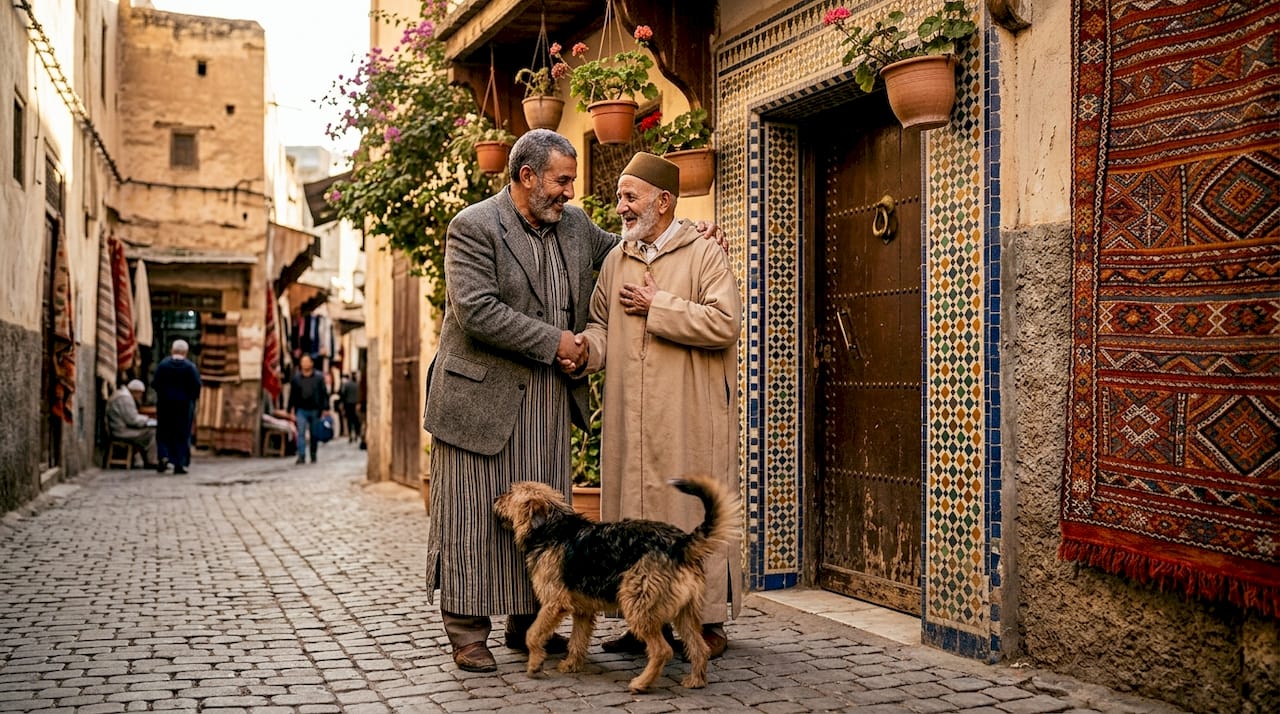
- Moroccan hospitality and greetings are essential to social interactions, signaling respect and cultural understanding.
- Travelers should practice proper gestures, greetings, and acceptances, such as “Salam Alaikum” and mint tea, to engage genuinely with locals.
- Demonstrating patience, modest dressing, and attentive participation enhances authentic experiences across markets, homes, and urban settings.
Most travelers arrive in Morocco expecting the pleasantries to be quick and transactional. That assumption costs them more than they realize. Morocco greetings and hospitality customs are the social fabric of daily life here, and knowing how to navigate them changes everything about your experience. From the first “Salam Alaikum” spoken in a narrow medina alley to a glass of mint tea pressed into your hands at a riad, these rituals carry weight that goes far beyond politeness. They signal who you are, how you see people, and whether you deserve to be treated like a guest or just another tourist passing through.
Table of Contents
- Key Takeaways
- Morocco greetings and hospitality customs: the core of social life
- Moroccan hospitality traditions: tea, homes, and rituals
- Greetings and hospitality in markets, cafés, and urban settings
- Practical etiquette tips for navigating Moroccan customs respectfully
- What I have learned about Moroccan greetings after years of guiding travelers
- Experience authentic Moroccan hospitality with guided cultural tours
- FAQ
Key Takeaways
| Point | Details |
|---|---|
| Greetings open every interaction | Always exchange “Salam Alaikum” before shopping, asking directions, or starting a conversation. |
| Gender etiquette matters | Women initiate handshakes; men wait and bow or place a hand on the heart if no handshake is offered. |
| Mint tea is a ritual, not a drink | Accept tea with both hands or your right hand as a sign of respect for your host. |
| Rushing is disrespectful | Slowing down to engage warmly leads to better connections and often better prices. |
| Dress shapes your reception | Modest clothing outside tourist areas earns genuine warmth and signals cultural awareness. |
Morocco greetings and hospitality customs: the core of social life
Before anything else gets said between two Moroccans, a greeting happens. Not a wave or a nod. A real, deliberate exchange. Greetings open interactions the way a handshake seals a deal in the West: with intention and acknowledgment of the other person’s presence.
The standard opener is “As-salamu alaykum,” meaning “peace be upon you,” and the expected reply is “Wa alaykum as-salam.” These are not just religious phrases. They function as cultural entry codes. Use one, and you signal that you respect the space you are entering. Skip it, and you start the encounter on uncertain footing.
In major cities like Casablanca, Marrakech, and Fès, you will also hear “Bonjour” or even “Hello” used comfortably. Morocco’s layers of Arabic, Amazigh, and French influences mean greetings reflect cultural diversity, and most locals adapt naturally to the language you use. That said, leading with the Arabic greeting earns visible appreciation even from cosmopolitan city residents.
Gestures, handshakes, and the heart touch
Physical greetings in Morocco carry their own set of rules that most travel guides skim over. The handshake is common between men who know each other, often followed by touching the right hand to the heart. This gesture communicates warmth and sincerity. It is not performative. Watching two Moroccan men greet after a long absence, you will see multiple cheek kisses, extended hand-holding, and a cascade of inquiries about family.
For interactions between men and women, the protocol is clear. Women initiate handshakes when they are comfortable doing so. If a woman does not extend her hand, a man bows slightly or places his right hand over his heart. This is not awkward. It is respectful, and local women appreciate it immediately. As a male traveler, waiting for that cue is one of the most important social signals you can get right.
Here are the key greeting behaviors to practice before you arrive:
- Say “As-salamu alaykum” when entering any shop, café, or home
- Wait for the other person to indicate the physical style of greeting they prefer
- Always use your right hand for handshakes, exchanges, and giving or receiving items
- Men should not initiate physical contact with women they do not know
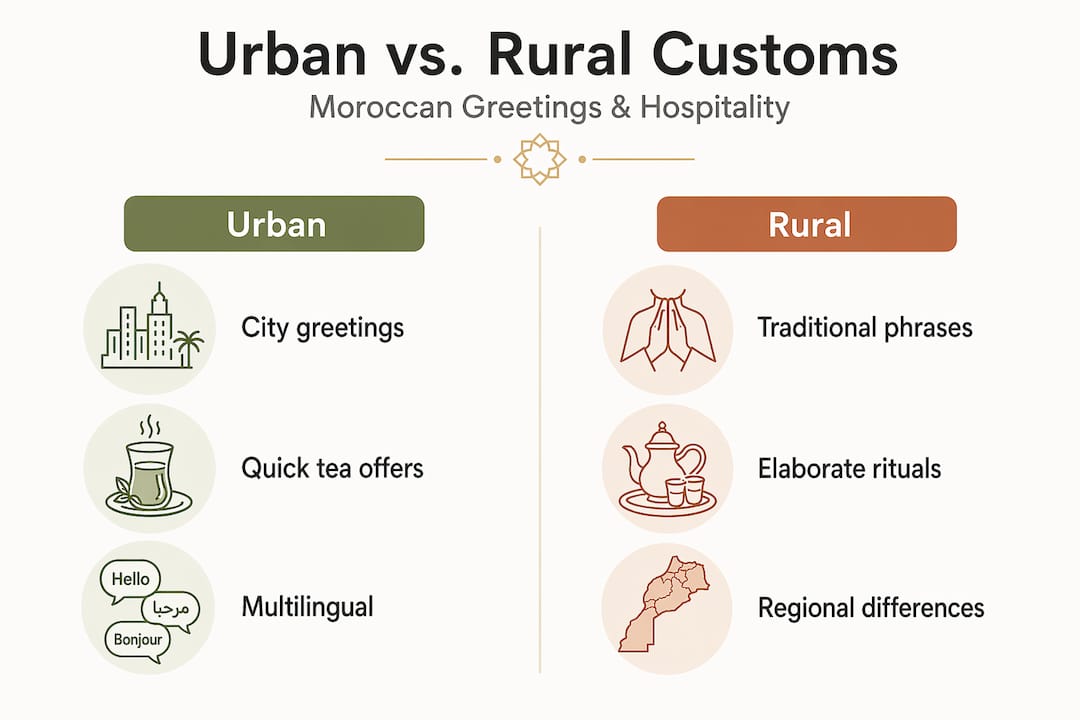
- In rural or traditional areas, expect more formal and extended greetings than in cities
- Younger urban Moroccans may greet more casually, but the verbal exchange still matters
Pro Tip: If you are unsure whether to shake hands with a woman you’ve just met, pause, smile, and let her lead. A warm smile while placing your hand on your heart works in every situation and never offends.
Moroccan hospitality traditions: tea, homes, and rituals
The first thing you need to understand about Moroccan hospitality is that it is not optional for the host. Hospitality is a moral value in Moroccan society, rooted deeply in Arab, Amazigh, and African traditions. Turning away a guest, or treating one poorly, carries real social weight. This is why the warmth you receive is genuine. It is not a sales tactic. It is identity.
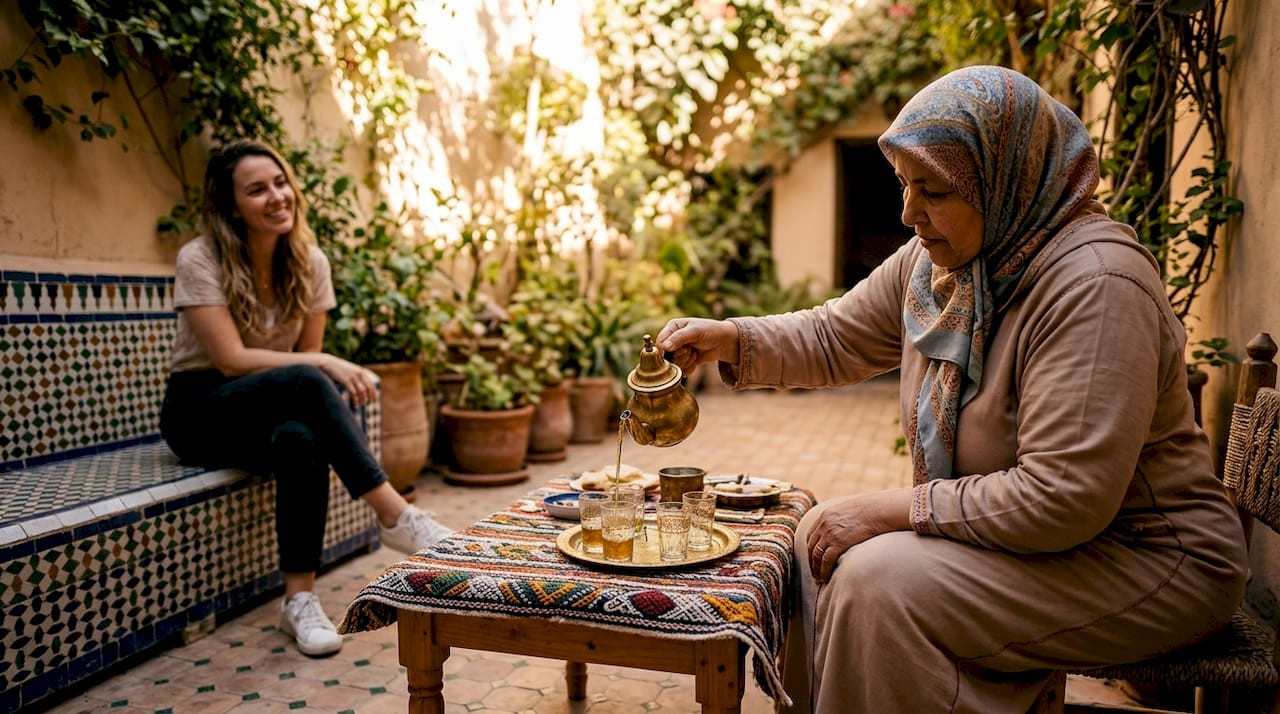
The mint tea ceremony is where this value becomes tangible. Tea arrives in a small ornate teapot, is poured from a height to create a light froth, and is served in small glasses. Declining it outright, especially in a private home, reads as rejection. Accepting tea with both hands or at minimum your right hand shows gratitude and opens the social door. The tea is the beginning of a conversation, not just a beverage.
Here is what a typical home visit looks like and how to move through it gracefully:
- Remove your shoes at the entrance if your hosts do the same. Look for a shoe rack or pile near the door and follow the lead of those around you.
- Accept whatever refreshments are offered, whether tea, bread, fruit, or a full meal. Refusing multiple times signals discomfort and can make the host feel they have failed.
- Sit where you are guided. Moroccan homes often have a salon with low seating along the walls. The position you are offered reflects your status as a guest.
- Let the host pour the tea. Picking up the teapot yourself is like walking into someone’s kitchen and serving yourself. The act of pouring is part of the ritual.
- Stay present in conversation. Checking your phone repeatedly or rushing to leave signals that you do not value the time being offered to you.
- When leaving, thank the host specifically: “Shukran bzaf” (thank you very much) goes a long way. A compliment to the home or the tea will be remembered.
The tea ritual builds genuine connection between host and guest in a way that shapes the entire visit. Travelers who rush through it or decline it often notice a subtle cooling in the interaction afterward, even if they cannot name the reason.
It is also worth knowing that hospitality customs vary across Morocco’s regions. Amazigh Berber communities in the Atlas Mountains, for example, tend toward even more generous food offerings and longer visits. Arab urban families in Fès or Meknes may observe more formal seating and serving protocols. The hospitality of Arab, Amazigh, and African cultures expresses itself differently by region, but the underlying instinct is always the same: you are a guest, and that status carries honor.
Pro Tip: When visiting a Moroccan home, bring a small gift. A box of sweets, seasonal fruit, or pastries from a local market shows appreciation without the awkwardness of arriving empty-handed. Skip alcohol unless you are absolutely certain of the household’s preferences.
Greetings and hospitality in markets, cafés, and urban settings
Understanding social customs in Morocco does not stop at front doors. The marketplace is where cultural customs in Morocco play out under real pressure, with real transactions, and where getting it right visibly changes outcomes.
In any souk or market, greeting before bargaining sets the tone for everything that follows. Walk up to a stall and immediately ask the price without any greeting, and you will likely get a higher one. Open with “As-salamu alaykum”; take a moment to show genuine interest in what is being sold, maybe ask where the product comes from, and the conversation shifts. You are no longer a mark. You are a guest.
| Setting | Greeting approach | What to expect |
|---|---|---|
| Souk or market stall | “Salam Alaikum” before any price inquiry | Tea offer, warmer negotiation, lower opening prices |
| Café | Greet staff on entry; order one drink minimum | Long, unhurried sitting time is completely normal |
| Riad or guesthouse | Tea served on arrival; remove shoes at the entrance. | Genuine hospitality from staff; ask questions freely |
| Street or neighborhood | Smile and acknowledge passersby in medinas | Locals appreciate the acknowledgment and may offer directions |
| Mosque entrance | Non-Muslims generally cannot enter; greet from outside respectfully | No photography at prayer times; be quiet near entrances |
Cafés deserve their own mention because they are central to how Moroccan social life functions. In major cities, you will find both mixed-gender cafés and traditional male-only cafés that coexist on the same street. Greeting staff when you walk in matters. Ordering at least one drink and settling in for a long sit is entirely normal. No one will rush you. Loud behavior or disruptive conversations are socially frowned upon in the quieter, more traditional venues.
In riads and boutique guesthouses, mint tea on arrival is standard practice. This is not just a hospitality industry offering. It is an extension of the same home ritual. Receive it, sit with it, and use the moment to ask your hosts about the neighborhood, local markets, or what they recommend. The conversation that follows is often more useful than any guidebook.
These are the social behaviors that will noticeably improve your experience in urban settings:
- Always lead with a verbal greeting in any commercial interaction
- Use your right hand when exchanging money, goods, or business cards
- Ask for directions warmly, not impatiently; a casual chat often comes before the answer
- Recognize that some warmth in souks does come with commercial motivation, but engage genuinely regardless
- Learn city exploration tips before your visit so you are not navigating social norms while also figuring out where you are going
Practical etiquette tips for navigating Moroccan customs respectfully
The gap between knowing and doing is where most travelers struggle. You can read every guide and still freeze when a shopkeeper pulls out a chair and insists you sit for tea. These tips address the specific moments where cultural customs in Morocco require real, practical decisions.
Slow down intentionally. The pace of social exchange in Morocco is unhurried by design. Rushing interactions disrupts the natural rhythm that locals value deeply. Schedule your days with enough buffer to stop, sit, talk, and take part in the hospitality offered to you.
Dress modestly outside tourist zones. Modest dress earns warm receptions and shows that you understand where you are. For women, loose-fitting clothing and a scarf for shoulders and hair in medinas and mosques communicate respect without sacrificing comfort. For men, shorts are fine in beach areas but draw unnecessary attention in traditional neighborhoods.
Know how to decline gracefully. If you genuinely cannot accept more tea or food, place your hand over your heart, smile, and say “La shukran” (no, thank you). Do this once, warmly. Repeating it multiple times reads as cold refusal. One sincere decline is always respected.
Here is a practical checklist for understanding and respecting Moroccan social norms in day-to-day encounters:
- Always ask permission before photographing people, their homes, or their stalls
- Use your right hand for all giving and receiving, even when your left is more convenient
- During Ramadan, avoid eating, drinking, or smoking publicly during daylight hours. Familiarize yourself with Ramadan customs before traveling during this period
- Do not argue or raise your voice during negotiations. Humor and patience resolve more than frustration
- Do not feel obligated to buy from someone who offers you tea in a shop, but do stay and talk for a few minutes before leaving
- Recognize that gender interactions vary widely: in cities, norms are more relaxed, but in rural areas, women and men maintain more physical and social separation
Pro Tip: Moroccan humor is genuinely funny and is often used to defuse tension in negotiations. If a shopkeeper makes a joke, laugh. A light exchange before a transaction shifts the entire dynamic in your favor.
For a deeper read on what to prepare before your trip, the Morocco travel guide on TopMoroccoTravel covers etiquette, logistics, and cultural context in detail that will save you real awkward moments on the ground.
What I have learned about Moroccan greetings after years of guiding travelers
I have watched hundreds of travelers arrive in Morocco carrying the same unspoken assumption: that being polite means staying out of people’s way. They smile at shopkeepers from a distance, wave off the tea offer, and then wonder why their time in the medina felt hollow.
The truth I have seen play out repeatedly is that Moroccan hospitality traditions ask something specific of visitors. They ask you to show up. Not to perform gratitude, but to actually receive what is being offered. That first glass of tea at a riad is not a transaction or an upsell. It is, as I have come to see it, a test of whether you are present. The quality of the entire stay often hinges on how that first exchange unfolds.
I have also seen the opposite happen in a matter of seconds. A traveler walks into a shop in the Fès medina, says, “Salam Alaikum,” asks the artisan about the cedar wood shelf behind him, and suddenly there is a stool appearing from nowhere and a conversation about the family trade that spans four generations. That moment did not cost anything. It just required slowing down.
The misconception I find most damaging is the idea that warmth in Morocco is automatically transactional. Yes, some interactions in tourist-heavy areas carry commercial intent. But treating every local as a potential scam shuts down the very exchanges that make Morocco extraordinary. The ways to show respect in Morocco are simpler than most travelers expect: look people in the eye, say the greeting, accept the tea, and take the moment. The return on that small investment is a version of Morocco that most visitors never see.
— TopMoroccoTravel
Experience authentic Moroccan hospitality with guided cultural tours
Reading about Moroccan hospitality customs is useful preparation. Actually living them with a knowledgeable local guide is something else entirely. At Topmoroccotravel, our city tours and cultural immersion experiences are designed specifically to put travelers inside the moments this article describes. You will visit Medina workshops where tea is offered as custom, not commerce. You will shop in souks with a guide who opens each interaction with the proper greeting and shows you exactly how the dynamic changes.
For travelers who want the full picture, our guided tours across Morocco take the guesswork out of cultural navigation while keeping the experience genuine. You can also explore Moroccan culture, traditions, and heritage in our detailed resource library to build your understanding before you land. Morocco rewards preparation. Let us help you arrive ready.
FAQ
What is the standard greeting in Morocco?
The most common greeting is “As-salamu alaykum,” with the reply “Wa alaykum as-salam.” In cities, “Bonjour” or “Hello” is also widely accepted.
How should men greet women in Morocco?
Men should wait for a woman to extend her hand before attempting a handshake. If she does not, a slight bow or placing the right hand on the heart is the respectful alternative.
Is it rude to refuse mint tea in Morocco?
Refusing tea outright, especially in a home or riad, can seem impolite. One gentle decline with a hand on the heart and a warm smile is accepted, but accepting at least one glass is always the better choice.
What should I know about greetings in Moroccan markets?
Always greet a vendor with “Salam Alaikum” before asking prices or bargaining. Greeting before bargaining creates a warmer exchange and often leads to more reasonable opening offers.
How does Ramadan affect hospitality customs in Morocco?
During Ramadan, many locals fast from sunrise to sunset, so public eating or drinking in their presence is considered disrespectful. Hospitality gatherings shift to evenings, with especially generous food and social warmth after the fast breaks at iftar.


Comments are closed