




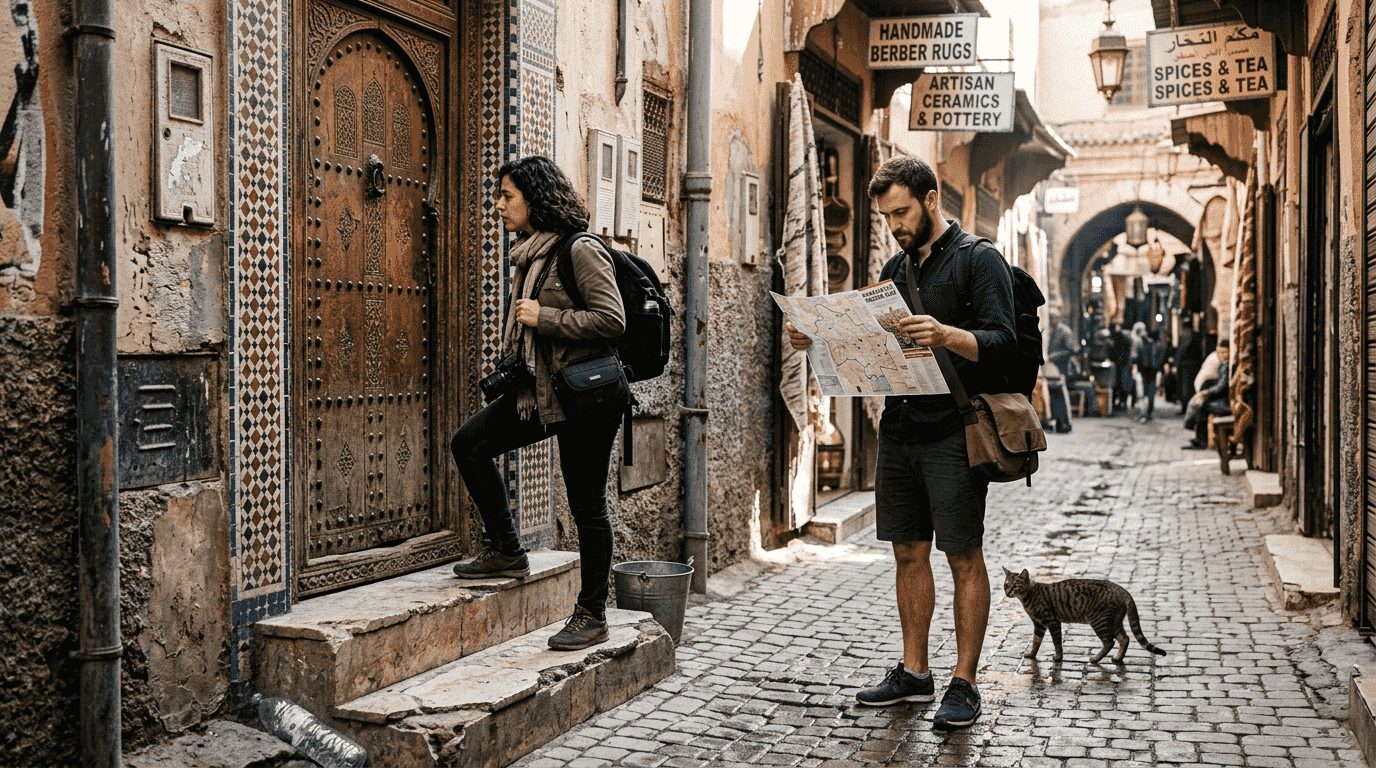
Exploring Moroccan cities like Marrakech, Fes, and Chefchaouen promises vibrant souks, stunning architecture, and rich cultural encounters. Yet many travelers fall into tourist traps, miss authentic experiences, and struggle with unwanted attention or inflated prices. This guide delivers expert-backed strategies to navigate Morocco’s imperial cities confidently and immersively. You’ll discover how to embrace local rhythms, avoid common pitfalls, shop souks like a pro, and connect deeply with Moroccan culture. Whether you’re a solo female traveler or planning a group adventure, these actionable tips ensure your Moroccan journey becomes truly memorable.
Table of Contents
- Why Flexibility And Expert Guidance Enhance Moroccan City Exploration
- Strategies For Solo Female Travelers To Have Respectful And Safe Experiences
- How To Identify And Avoid Common Tourist Traps And Scams In Moroccan Cities
- Negotiation Tactics And Authentic Shopping Tips For Moroccan Souks
- Explore Morocco With Expert-Guided Tours And Custom Itineraries
- FAQ
Key takeaways
| Point | Details |
|---|---|
| Expert-led flexibility | Conversational tours with historians reveal local stories beyond fixed itineraries and create lasting memories. |
| Modest dress and confidence | Covering shoulders and knees plus walking purposefully reduces unwanted attention in tourist-heavy areas. |
| Verify independently | Official signage confirms site access, while unsolicited street help often leads to scams and extra costs. |
| Negotiation is cultural | Souk prices are flexible, first quotes inflate for tourists, and respectful bargaining enhances authentic interactions. |
| Explore quieter routes | Staying off main tourist paths delivers calmer, more genuine cultural experiences in Moroccan medinas. |
Why flexibility and expert guidance enhance Moroccan city exploration
Fixed itineraries limit authentic cultural engagement. Checking off landmarks feels productive, but you miss the heartbeat of Moroccan life. Immersive cultural experiences thrive when you embrace local rhythms and unexpected detours. Conversational, curated experiences reveal stories behind the architecture, traditions shaping daily routines, and hidden corners tourists overlook.
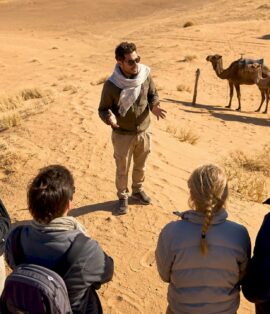
Expert-led tours provide deeper understanding and lasting memories by focusing on narratives rather than photo ops. Guides trained in history, anthropology, or local crafts transform a medina walk into a journey through centuries of trade, artisan traditions, and social evolution. They answer your questions in real time, adjust pace to your interests, and introduce you to craftspeople or local families you’d never meet on a checklist tour.
Flexibility allows spontaneous exploration when you stumble upon a pottery workshop, smell fresh bread from a neighborhood oven, or hear call to prayer echoing through narrow alleys. These unplanned moments create the richest memories. Rigid schedules force you past them. A flexible approach respects your energy levels, curiosity peaks, and desire to linger where fascination strikes.
Consider these benefits of expert-guided, flexible exploration:
- Personalized pacing matches your stamina and interests rather than group averages
- Local insights reveal why certain neighborhoods developed specific crafts or architectural styles
- Real-time adjustments capture seasonal festivals, market days, or artisan demonstrations
- Safety increases through guide knowledge of current conditions and cultural norms
Pro Tip: Book guided tours with small group sizes or private options. This ensures your questions get answered and your interests shape the route. Look for guides with academic backgrounds or decades of local experience who can explain cultural context beyond surface-level facts.
This tailored approach transforms sightseeing into cultural education. You’ll understand how Moroccan cities evolved, why certain traditions persist, and what daily life looks like for residents. That depth makes your journey meaningful long after you return home. Explore Moroccan city tour concepts that prioritize storytelling and authentic encounters over rushed landmark visits.
Strategies for solo female travelers to have respectful and safe experiences
Solo female travelers experience varying degrees of unwanted attention in tourist-heavy areas like Marrakech, Fes, and Chefchaouen. Understanding why this happens and how to minimize it empowers you to explore confidently. Most attention occurs near main squares, popular riads, and busy souk entrances where vendors and hustlers target obvious tourists.
Modest dressing significantly reduces unwanted attention. Cover shoulders and knees with loose, breathable fabrics. Long skirts or pants paired with tunics or shirts work perfectly in Morocco’s climate while respecting local norms. A light scarf offers versatility for entering mosques or shielding from sun. This isn’t about hiding yourself but rather blending in enough that you’re not immediately flagged as a first-time visitor.
Walking confidently and with purpose deters harassment. Make eye contact briefly, then look ahead as if you know exactly where you’re going. Hesitation or looking lost invites offers of help that quickly become pushy sales pitches or guide demands. Even if you’re uncertain about directions, pause inside a shop or cafe to check your map rather than standing confused in the street.
Learning and calmly using “la shukran” (no thank you) proves effective. Say it firmly but without anger, then continue walking without breaking stride. Engaging in conversation, even to explain you’re not interested, often prolongs the interaction. A simple “la shukran” repeated as needed communicates clearly across language barriers.
Staying in less touristy alleys creates a calmer experience. Residential neighborhoods away from Jemaa el-Fnaa or Bab Boujloud offer authentic glimpses of daily life without constant vendor approaches. You’ll see families shopping for groceries, children playing, and neighbors chatting over mint tea. These quieter zones let you breathe and observe Moroccan culture naturally.
Consider these practical safety strategies:
- Join other travelers or locals for evening walks through unfamiliar areas
- Keep your phone charged and share your location with trusted contacts
- Trust your instincts if a situation feels uncomfortable and remove yourself calmly
- Carry small bills to avoid showing large amounts of cash when making purchases
Pro Tip: Book accommodations in residential neighborhoods rather than directly on main tourist squares. You’ll sleep better, pay less, and experience authentic neighborhood rhythms. Morning walks to bakeries and evening strolls become cultural education rather than obstacle courses. Explore Moroccan city tour concepts that include female guides who share insider perspectives on navigating cities comfortably.
How to identify and avoid common tourist traps and scams in Moroccan cities
Tourist traps often begin with speed and unsolicited help, leading to uncomfortable situations and unexpected expenses. Someone approaches rapidly, offering to show you a shortcut, help find your riad, or explain that a site is closed. These fast approaches aim to catch you off guard before you can assess the situation.
Official signage and uniformed staff at entrances confirm site status, not street information. If someone claims a tannery, palace, or museum is closed, walk to the entrance yourself and verify. Verifying information independently prevents being misled about site accessibility. Scammers profit by redirecting you to shops or alternative sites where they earn commissions.
Early refusal of help avoids aggressive situations. The moment someone offers unsolicited assistance, politely decline with “la shukran” and keep moving. Accepting even small favors creates perceived obligation that scammers exploit. They’ll claim you owe them for showing a direction or taking a photo, then demand payment or insist you visit their shop.
Common scams to recognize
- Fake guides offering to show you the “real” medina then leading you to commission-earning shops
- Closed site claims redirecting you to alternative locations with inflated entry fees
- Helpful strangers who suddenly demand payment after giving unsolicited directions
- Aggressive henna artists applying designs without agreement then demanding high prices
- Taxi drivers claiming meters are broken and quoting inflated flat rates
Souk prices vary wildly, and first quotes may be inflated several times above fair value. Vendors assess your experience level, dress, and demeanor to gauge starting prices. A leather bag might be quoted at 800 dirhams to an obvious tourist but 200 dirhams to a local or experienced traveler.
| Scam Type | Warning Signs | Protection Strategy |
|---|---|---|
| Fake guide | Unsolicited approach, rushed explanations | Decline immediately, verify sites independently |
| Shop pressure | Aggressive hospitality, blocking exit | Set clear boundaries, leave if uncomfortable |
| Taxi overcharge | Broken meter claims, no price agreement | Insist on meter or agree on price before entering |
| Henna scam | Application without clear price discussion | Refuse unwanted services firmly |
Avoid shopping under urgency or emotional pressure. Vendors create false scarcity (“last one,” “special price today only”) or use hospitality tactics (mint tea, friendly conversation) to make you feel obligated to buy. Legitimate artisans welcome browsers and repeat customers. Pushy sellers prioritize one-time tourist sales over reputation.
Pro Tip: Research typical prices for items you’re interested in before entering souks. Online forums and recent traveler blogs provide current price ranges. Knowing a quality leather bag typically costs 150 to 300 dirhams helps you negotiate confidently and recognize when quotes are absurdly inflated. Check Morocco itinerary tours that include shopping guidance from local experts who explain fair pricing and quality indicators.
Negotiation tactics and authentic shopping tips for Moroccan souks
Souk prices are not fixed, and first-time visitors often encounter inflated prices. Understanding this flexibility transforms shopping from stressful to enjoyable. Vendors expect negotiation as part of the cultural exchange. Your willingness to engage respectfully in bargaining signals cultural awareness and often leads to better prices plus genuine interactions.
Beginners face higher price quotes than locals or experienced travelers. Vendors assess language skills, clothing, camera visibility, and comfort level navigating the medina. Someone confidently browsing multiple stalls gets lower initial quotes than someone looking overwhelmed or rushing. This isn’t personal; it’s business strategy in markets where pricing flexibility is standard practice.
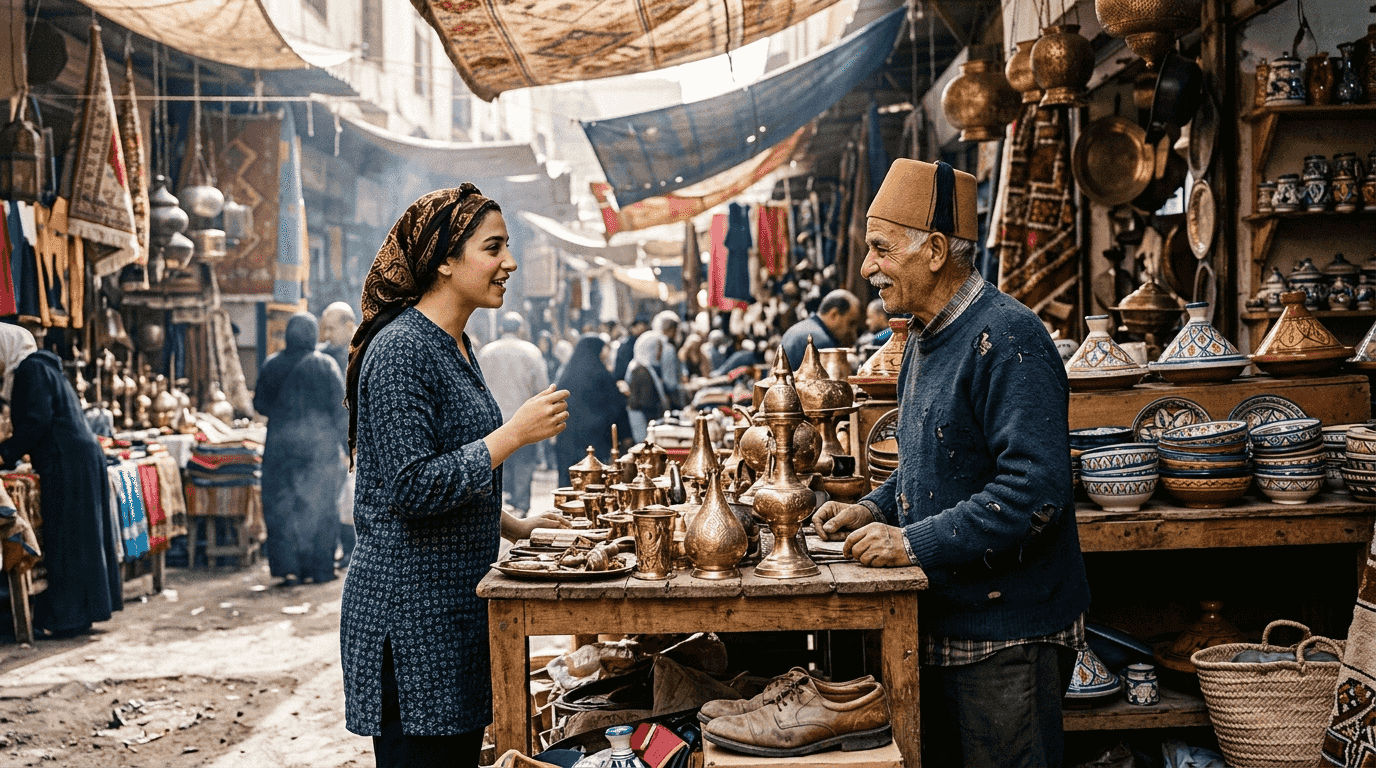
Negotiation is expected and part of shopping culture. Refusing to bargain or accepting first prices disappoints vendors who enjoy the back-and-forth exchange. Start by offering 40 to 50 percent of the initial quote for most items. The vendor will counter, you’ll increase slightly, and you’ll typically settle around 60 to 70 percent of the opening price for quality goods.
| Negotiation Stage | Your Action | Vendor Response | Outcome |
|---|---|---|---|
| Initial quote | Listen without commitment | Tests your price knowledge | Establishes starting point |
| Your counter offer | Offer 40 to 50 percent of quote | Acts surprised, explains quality | Begins genuine negotiation |
| Middle ground | Increase offer by 10 to 15 percent | Reduces price moderately | Approaches fair price |
| Final decision | Walk away or accept calmly | May call you back with better price | Completes transaction or ends respectfully |
Removing urgency reduces pressure and improves deals. Browse multiple shops selling similar items to understand quality differences and price ranges. Vendors notice when you’re comparing options and offer better prices to serious buyers who clearly know the market. Rushing signals desperation or limited time, which keeps prices high.
Respectful bargaining fosters authentic interactions with sellers. Ask about craftsmanship, materials, and the artisan’s background. Many souk vendors are third or fourth generation craftspeople proud of their family traditions. Showing genuine interest in their work, not just haggling over price, creates memorable exchanges and often results in fair pricing plus small extras like gift wrapping or delivery to your riad.
Consider these shopping strategies:
- Visit souks multiple times to build familiarity and vendor relationships
- Carry small bills to avoid change-making disputes or pressure to round up
- Learn basic Arabic or French numbers to understand quoted prices directly
- Buy directly from artisan workshops when possible for better prices and quality assurance
Pro Tip: Shop later in the day when vendors are more willing to negotiate to meet daily sales goals. Mid-morning brings fresh energy and higher prices. Late afternoon, especially near closing time, often yields the best deals as sellers prefer making a sale at lower margins over closing empty-handed. Explore things to do in Morocco and best places to see that include authentic artisan workshops where you can watch craftspeople work and purchase directly at fair prices.
Explore Morocco with expert-guided tours and custom itineraries
Top Morocco Travel offers luxury city tours blending culture and comfort for travelers seeking authentic experiences beyond surface-level sightseeing. Expert guides enrich your journey with authentic stories and insights drawn from years of local knowledge and academic backgrounds in Moroccan history, architecture, and cultural traditions. Customizable itineraries cater to your interests and pace, whether you’re fascinated by Islamic architecture, culinary traditions, artisan crafts, or social history.
Booking a guided tour enhances safety, depth, and enjoyment throughout your Moroccan city exploration. You’ll navigate medinas confidently, understand cultural context behind what you observe, and connect with local craftspeople and families through trusted introductions. Our Moroccan city tour concepts prioritize small groups and personalized attention.
Discover why guided tours transform your Moroccan experience from confusing to enlightening. Our imperial cities tour guide showcases how expert-led exploration reveals layers of history and culture you’d miss traveling independently.
Pro Tip: Early booking secures the best guides and allows time to customize your itinerary based on your specific interests, dietary needs, and accessibility requirements for a truly personalized Moroccan adventure.
FAQ
Are Moroccan city tours safe for solo female travelers?
Yes, with modest dress, awareness, and confidence, many solo women travel safely in Moroccan cities. Covering shoulders and knees, walking purposefully, and using “la shukran” to decline unwanted attention creates comfortable exploration. Staying off main tourist routes helps minimize harassment while providing calmer, more authentic cultural experiences in residential neighborhoods.
How can I avoid tourist scams while exploring Moroccan medinas?
Decline unsolicited help calmly and early with a firm “la shukran” while continuing to walk. Verify site information through official signage and uniformed staff only, never through street claims about closures or redirections. Avoid rushed or pressured buying situations by setting clear boundaries and leaving any shop where you feel uncomfortable or trapped.
What is the best way to shop in Moroccan souks without overpaying?
Understand prices are negotiable and often inflated for tourists, with fair prices typically 60 to 70 percent of initial quotes. Take time to compare quality and prices across multiple stalls before committing to purchases. Negotiate respectfully without urgency by starting at 40 to 50 percent of the asking price and engaging vendors in conversation about craftsmanship and materials.
When is the best time to visit Moroccan cities for cultural exploration?
Spring (March through May) and fall (September through November) offer comfortable temperatures for walking medinas and exploring outdoor sites. These seasons avoid summer heat exceeding 100 degrees Fahrenheit and winter rains that can make narrow alley navigation slippery. Ramadan timing varies yearly, so research whether you want to experience fasting culture or prefer restaurants operating normal hours.
Do I need to speak Arabic or French to explore Moroccan cities independently?
Basic phrases in Arabic or French enhance interactions and demonstrate cultural respect, but English is widely spoken in tourist areas. Learning “shukran” (thank you), “la shukran” (no thank you), and numbers helps with shopping and navigation. However, hiring local guides fluent in your language ensures you understand historical context, cultural nuances, and safety considerations throughout your exploration.
Recommended
- 8 Essential Morocco Travel Tips for Every Type of Traveler
- 7 Essential Facts About Famous Moroccan Cities
- 7 Must Do Morocco Experiences for Every Type of Traveler
- Marrakech Travel Guide: Explore Morocco’s Vibrant Heart
- Family Home Swap in Marrakech: Kid-Friendly Guide 2024


Comments are closed