




- Moroccan cuisine reflects centuries of diverse influences, emphasizing aromatic spices over heat, and is a cultural and social experience.
- Iconic dishes like tagine, couscous, pastilla, and harira are deeply embedded in daily rituals and regional traditions, requiring cultural awareness to appreciate fully.
- Engaging with local street food, dining customs, and regional variations enhances understanding, transforming a trip into a meaningful cultural immersion.
Moroccan cuisine is defined as one of the world’s most complex and layered culinary traditions, built on centuries of Berber, Arab, Andalusian, and Mediterranean influence. Food in Morocco is not simply sustenance. It is a cultural act, a social ritual, and a direct expression of hospitality that shapes every interaction from a family kitchen in Fes to a street stall in Marrakech. The spice palette alone spans over 15 ingredients, including cinnamon, cumin, saffron, and ras el hanout, and these spices build aromatic depth rather than fiery heat. Understanding this distinction changes how you approach every meal. Travelers who eat with curiosity and context get far more from Morocco than those who stick to tourist menus.
What are the iconic Moroccan dishes every traveler must try?
Moroccan food culture centers on a handful of dishes so deeply embedded in daily life that skipping them means missing the country itself. These are not just popular Moroccan recipes. They are rituals with history, technique, and meaning behind every ingredient.
- Tagine is the most recognized of all traditional Moroccan dishes. The name refers to both the conical clay pot and the slow-cooked stew inside it. Tagines cook slowly over low charcoal heat so that lamb, chicken, or vegetables absorb the surrounding spices and broth over hours. The pot then comes directly to the table as a communal serving vessel. Popular variants include chicken with preserved lemon and olives, lamb with prunes and almonds, and kefta with eggs in tomato sauce.
- Couscous carries a significance that goes beyond flavor. Couscous is traditionally a Friday meal in Morocco, served after midday prayers as a sacred weekly ritual shared by families. Authentic preparation involves steaming the semolina multiple times over a rich broth rather than simply soaking it, which produces a light, separate texture that instant versions never replicate. If you are in Morocco on a Friday, seek out a local home-style restaurant for this dish.
- Pastilla originates from Fes and represents the most sophisticated expression of Moroccan cooking. It is a flaky warqa pastry filled with spiced pigeon or chicken, almonds, and eggs, then dusted with powdered sugar and cinnamon. The combination of savory and sweet in one dish surprises most first-time visitors and defines the elegance of Fassi cuisine.
- Harira is a thick, tomato-based soup loaded with chickpeas, lentils, lamb, and fresh herbs. It is the dish Moroccans break their fast with during Ramadan, though you will find it served year-round at lunch. A bowl of harira with a piece of Khobz, the round, dense Moroccan bread, is one of the most satisfying and affordable meals you can eat anywhere in the country.
- Khobz deserves its own mention because it functions as both food and a utensil. Moroccans use torn pieces of bread to scoop tagine, salads, and dips from communal plates. Arriving at a meal without bread is genuinely unusual.
Pro Tip: If you want the best couscous of your trip, plan a Friday lunch at a neighborhood restaurant away from the medina’s main tourist drag. Ask locals where families eat after prayers. That is where the real couscous is.
How does Moroccan cuisine vary by region?
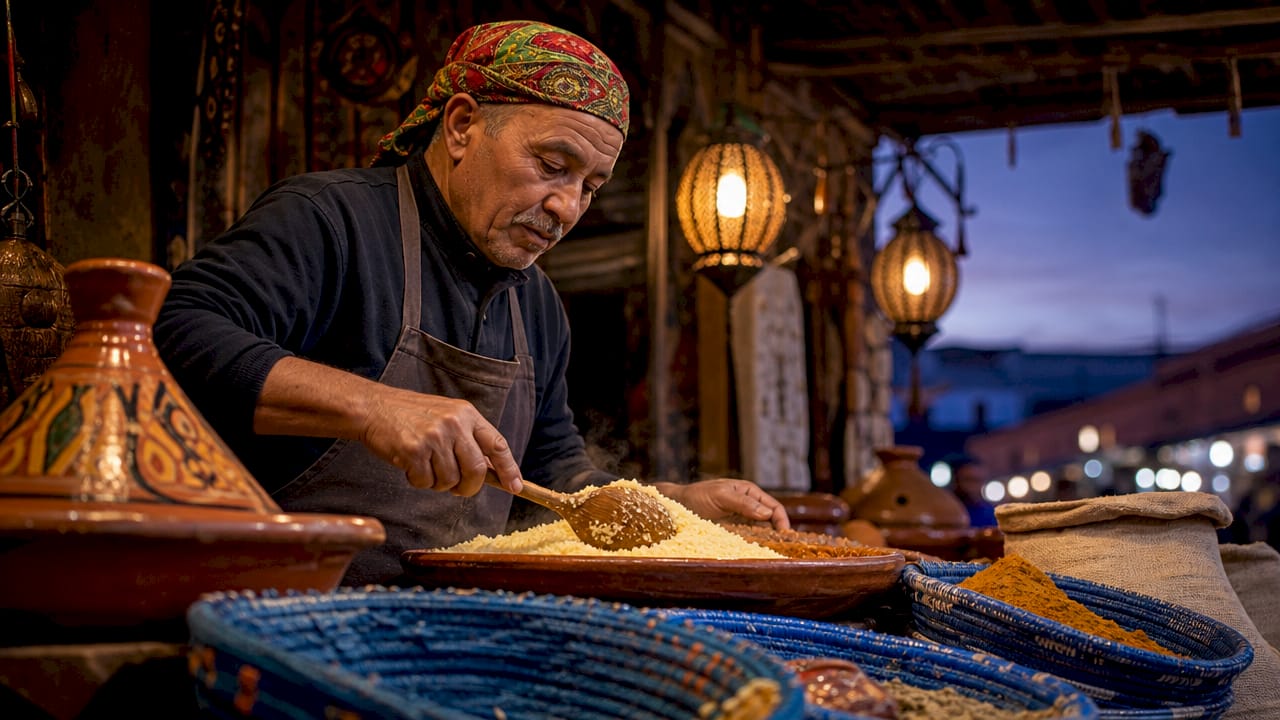
Morocco’s geography produces dramatically different food cultures, and knowing this before you travel helps you seek out the right dishes in the right cities. The best food in Morocco is often hyper-local and not replicated elsewhere.
| Region | Signature dishes | What makes it distinct |
|---|---|---|
| Fes | Pastilla, lamb stews, rfissa | Oldest imperial city; most refined and complex preparations |
| Marrakech | Tanjia, mechoui, and Jemaa el-Fna street food | Vibrant street culture; slow-cooked meat in clay urns |
| Essaouira and Casablanca | Grilled sardines, chermoula fish, seafood tagines | Atlantic coast freshness: seafood lunch costs 100 to 200 MAD per person at port stalls |
| Sahara and South | Madfouna (Berber pizza), slow-roasted meats, | Desert Berber traditions: bread stuffed with spiced meat and vegetables |
| Chefchaouen and the North | Bissara (fava bean soup), goat cheese, fresh herbs | Mountain produce; simpler, earthier flavors |
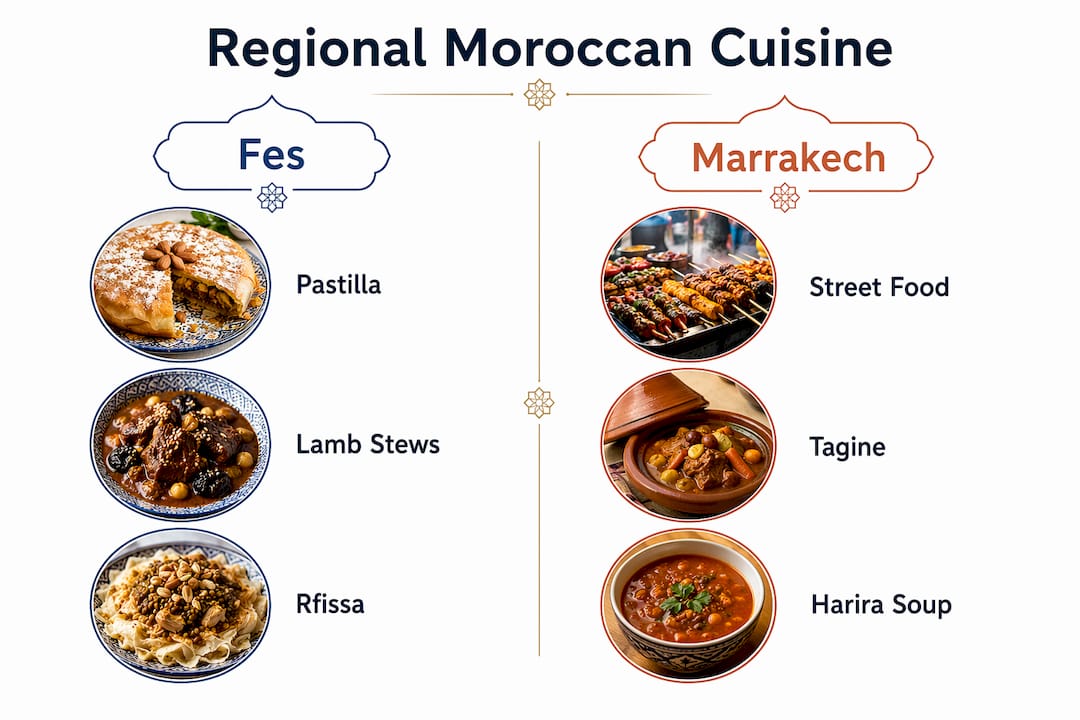
Marrakech deserves special attention for travelers interested in Moroccan street food. Jemaa el-Fna square transforms into an open-air food theater every evening, with stalls selling everything from harira and snail soup to grilled meats and fresh-squeezed orange juice. Mechoui near Jemaa el-Fna costs between 80 and 150 MAD for slow-roasted whole lamb, and knowing that price range protects you from being overcharged as a tourist. The square also offers more adventurous options like sheep’s head and camel spleen, which are respected local specialties rather than novelty items.
Fes operates at a different register entirely. The food there reflects centuries of courtly tradition, and dishes like rfissa (shredded msemen flatbread with lentils and fenugreek) or bastilla au lait (a sweet milk and almond dessert pastilla) show a level of culinary refinement you simply do not find elsewhere. The coastal cities of Essaouira and Casablanca offer the freshest seafood in the country, with portside stalls grilling the morning’s catch to order. For travelers heading south toward the Sahara, Madfouna is the dish to find. It is a thick bread dough stuffed with spiced lamb, onions, and eggs, then baked directly in the embers of a fire.
What should travelers know about Moroccan street food and food safety?
Moroccan street food is one of the most rewarding and affordable ways to eat in the country, but it requires some practical knowledge to enjoy confidently.
- Follow the locals. Queues of locals at street stalls are the most reliable indicator of food quality and safety. High turnover means ingredients are fresh and nothing sits out for long. A stall with no locals and a menu in five languages is a warning sign, not an invitation.
- Start with cooked dishes. Moroccan salads are typically cooked vegetables rather than raw leaves, which makes them a safe and genuinely delicious entry point. Zaalouk (roasted eggplant with tomatoes), taktouka (roasted peppers and tomatoes), and carrot salad with cumin are all cooked through and easy on unfamiliar digestive systems.
- Avoid raw vegetables, unpasteurized dairy, and improperly stored items. Fresh salads washed in tap water and soft cheeses from unverified sources carry the most risk for travelers. Stick to cooked preparations, especially in the first few days.
- Know your key street foods. Brochettes (grilled meat skewers) cost between 10 and 30 MAD and are cooked to order over charcoal. Maâkouda are fried potato fritters sold in sandwiches, crispy and filling for a few dirhams. Snail soup (babbouche) is a Marrakech specialty served in small cups with a toothpick and a spiced broth that locals swear has medicinal properties.
- Understand the spice situation. Moroccan food is aromatic rather than spicy. The spices build layered, warm flavors rather than heat. If you are sensitive to spice, the actual heat level in most dishes is low. Harissa, the chili paste, is usually served on the side so you control how much goes in.
Pro Tip: Carry a small bottle of hand sanitizer and use it before eating street food. Most stalls do not have handwashing facilities nearby, and this one habit prevents most travel stomach issues.
What role does hospitality and meal etiquette play in Moroccan dining?
Moroccan food culture and communal eating are inseparable from the country’s values of generosity and togetherness. Understanding the social architecture of a Moroccan meal transforms you from a tourist eating food into a guest experiencing a culture.
- Communal eating is the norm. Tagines and salads are placed in the center of the table and shared by everyone present. You eat from the section of the dish directly in front of you, using bread to scoop rather than cutlery in traditional settings. Reaching across to someone else’s section is considered poor form.
- Mint tea is non-negotiable. Moroccan mint tea is green tea brewed with fresh spearmint and generous amounts of sugar, then poured from a height to create a frothy top. It is served at the beginning of a visit, during meals, and after. Refusing tea is a social signal that you are in a hurry or uncomfortable, so accept it even if you only sip politely.
- Meals follow a clear progression. A traditional Moroccan meal begins with an array of cold and warm salads, followed by a main dish of tagine or couscous, and ends with fresh fruit, pastries, and tea. The pace is slow and deliberate. Rushing through signals disrespect for the effort and hospitality involved.
- Accepting food is an act of respect. When a Moroccan host offers you more food, declining the first time is expected. Accepting the second or third offer is the culturally appropriate response. Eating enthusiastically and complimenting the cook directly are the highest forms of appreciation you can show.
Understanding Moroccan greetings and hospitality customs before your trip gives you the context to read these moments correctly and respond with genuine warmth rather than awkward uncertainty.
Key takeaways
Moroccan cuisine rewards travelers who approach it with curiosity, cultural awareness, and a willingness to eat where locals eat rather than where menus are translated.
| Point | Details |
|---|---|
| Spices build flavor, not heat | Moroccan dishes use 15+ spices for aroma and depth; chili heat is typically served on the side. |
| Friday is the best day for couscous | Authentic couscous is steamed multiple times and served after Friday prayers for the freshest experience. |
| Regional dishes differ dramatically | Fes offers refined stews, Marrakech has street food, and coastal cities serve fresh Atlantic seafood. |
| Follow locals for street food safety | High-turnover stalls with local queues signal freshness far better than tourist ratings or signage. |
| Hospitality shapes every meal | Communal eating, mint tea rituals, and slow meal pacing are cultural expressions, not just customs. |
What eating in Morocco actually taught me
Most food guides tell you what to order. What they rarely tell you is how disorienting it feels the first time a complete stranger invites you to share their meal in a medina courtyard and how that disorientation is exactly the point.
At TopMoroccoTravel, we have spent years watching travelers arrive in Morocco with a list of dishes and leave with something far more significant: a recalibrated sense of what a meal is supposed to feel like. The food itself is extraordinary, but the rhythm of Moroccan dining is what actually changes people. Slow. Communal. Generous to a degree that feels almost confrontational if you come from a culture where food is fuel.
The honest challenge for most Western travelers is not the spices or the unfamiliar ingredients. It is the pace. Sitting for two hours over a meal with no agenda, no phone, and no rush is harder than it sounds. The travelers who lean into that discomfort consistently report it as the most memorable part of their trip.
My practical advice: skip at least one restaurant meal and find a local family-style lunch spot, ideally on a Friday. Order whatever they are serving. Eat slowly. Accept the tea. You will learn more about Morocco in that single meal than from three days of sightseeing.
One more thing worth saying directly: do not let spice anxiety keep you from exploring. Moroccan food is aromatic, not spicy, and the flavors are built for pleasure, not endurance. The harissa is always on the side. You are in control.
— TopMoroccoTravel.com
Taste Morocco the right way with a guided food tour
The difference between eating in Morocco and truly experiencing it often comes down to who is walking beside you. TopMoroccoTravel designs city tours built around food culture, taking you through medina spice markets, family-run cookhouses, and street food corridors that most travelers walk past without knowing what they are missing. A knowledgeable local guide explains what you are eating, why it matters, and how to order it correctly. For travelers who want the full picture, the imperial cities tour covers Fes, Marrakech, Meknes, and Rabat with dedicated culinary stops in each city. These tours are built for people who want to eat well and understand what they are eating.
FAQ
What is the most popular dish in Morocco?
Tagine is the most widely eaten and recognized dish in Morocco, found in every region and prepared with dozens of ingredient combinations. Couscous rivals it in cultural significance, particularly on Fridays.
Is Moroccan food spicy for sensitive travelers?
Moroccan food is aromatic rather than spicy, using spices like cinnamon, cumin, and saffron for flavor depth rather than heat. Chili-based condiments like harissa are served separately, so travelers with low spice tolerance can eat comfortably.
What should I eat for breakfast in Morocco?
A typical Moroccan breakfast includes khobz or msemen flatbread, olive oil, honey, amlou (almond and argan oil paste), and mint tea. Many riads and guesthouses serve this spread as standard.
How much does street food cost in Morocco?
Brochettes cost between 10 and 30 MAD, while a full seafood lunch at a port stall in Essaouira or Casablanca runs 100 to 200 MAD per person. Mechoui near Jemaa el-Fna costs 80 to 150 MAD depending on portion size.
When is the best time to experience traditional Moroccan food culture?
Friday midday is the single best moment to experience authentic Moroccan cuisine, as families gather for the weekly couscous ritual after prayers. Ramadan evenings offer a second unmissable window, with streets full of harira, chebakia pastries, and communal breaking of the fast.



Comments are closed