




TL;DR:
- Morocco is generally safe for tourists, with most risks limited to petty scams and local unrest.
- Official advisories emphasize caution but do not recommend avoiding travel altogether, especially outside border zones.
- Travelers should remain vigilant, hire licensed guides, and stay informed about local conditions to enjoy an authentic experience.
Morocco sits at the top of countless travel bucket lists, yet the Morocco travel advisory issued by Western governments gives many first-timers pause. That hesitation is understandable but often overblown. The country welcomes roughly 17 million visitors a year, and the overwhelming majority return home with nothing worse than a slightly aggressive carpet dealer story. This guide cuts through the official language and the online fear-mongering to give you an honest, experience-based breakdown of what the risks actually are, where they concentrate, and how to sidestep them without sacrificing a single extraordinary moment.
Table of Contents
- Current travel advisories and safety landscape in Morocco
- Understanding Morocco’s real safety environment: beyond official warnings
- Essential safety tips and common scams every traveler should know
- Travel entry requirements, visa rules, and preparation essentials
- Navigating cultural, adventure, and luxury experiences safely
- Our perspective: the advisory industrial complex is scaring people away from one of Africa’s best trips
- Plan your Morocco trip with confidence
- Frequently asked questions
Key Takeaways
| Point | Details |
|---|---|
| Official advisories recommend caution | Travel advisories advise increased caution due to terrorism and unrest but violent crimes are rare. |
| Petty crime is most common risk | Touts, scams, and petty theft are common but manageable with street smarts and vigilance. |
| Use licensed guides | Licensed guides reduce risks and improve cultural understanding and navigation in medinas. |
| Know entry requirements | Most travelers do not need visas for stays under 90 days; check passport validity and embassy updates. |
| Tailor safety to travel style | Adjust precautions for adventure, cultural, or luxury experiences and solo travel for best safety outcomes. |
Current travel advisories and safety landscape in Morocco
Before you book a riad in Marrakech or a desert camp near Merzouga, it helps to know what official sources are actually saying. The short version: Morocco is not a red-zone destination. The longer version requires some nuance.
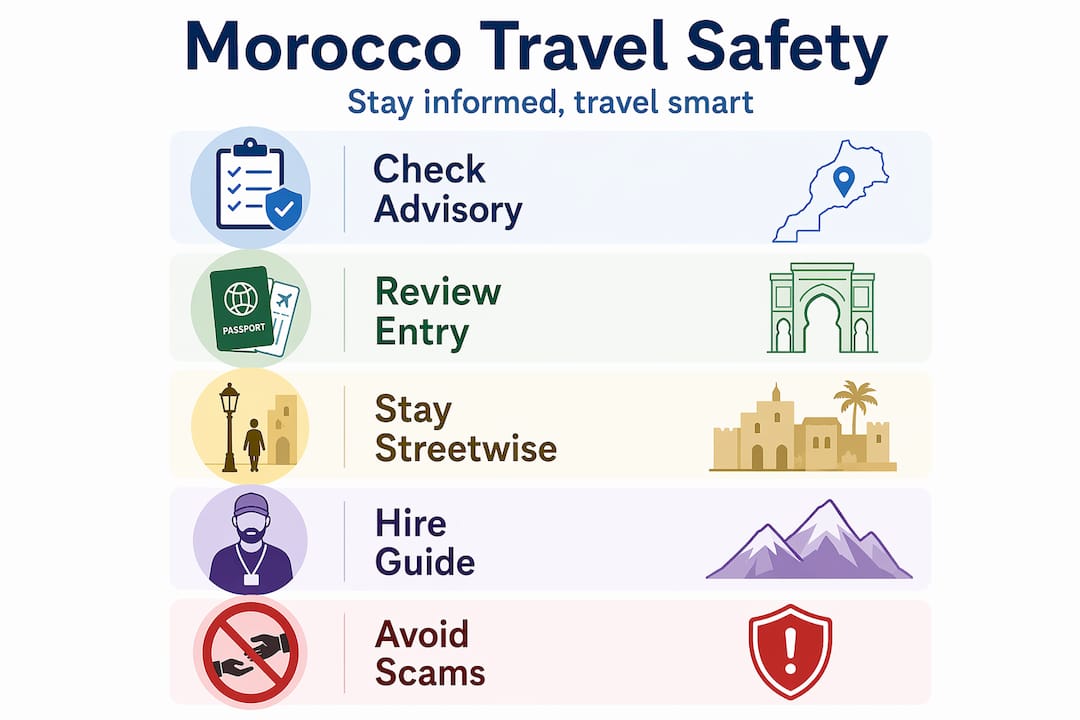
Western governments advise increased caution due to terrorism and civil unrest risks in Morocco, placing it in the same advisory category as France, the United Kingdom, and Spain. That framing matters. When a government issues the same warning level for a country as it does for Paris, the advisory is about awareness, not avoidance.
Here is what the current guidance specifically flags:
- Terrorism risk: The threat exists, particularly in crowded public spaces, but there have been no major attacks targeting tourists in recent years. Stay alert in markets, transport hubs, and popular landmarks.
- Civil unrest: Protests can occur, particularly in larger cities. They tend to be peaceful but can escalate. Avoid large gatherings as a precaution.
- Border zones: The Algerian-Moroccan border and areas within 30 kilometers of the Berm, a sand wall separating Moroccan-controlled territory from the Western Sahara buffer zone, carry genuine risk from unexploded ordnance and military activity. This is a hard no-go zone.
- Petty crime hotspots: Crowded medinas, tourist-heavy squares like Jemaa el-Fna in Marrakech, and busy train stations see the highest rates of pickpocketing, credit card skimming, and tourist scams.
“Exercise increased caution” is the official level for Morocco. It is not “do not travel.” It is not “high risk.” It is the baseline advisory for most popular international destinations outside Northern Europe.
One thing that rarely appears in government advisories: before you travel, confirm the current visa requirements for Morocco, since entry rules interact directly with how prepared and legally secure you are the moment you land.
Understanding Morocco’s real safety environment: beyond official warnings
Official advisories describe possibilities. Local reality describes probabilities. Those are very different things, and the gap between them is where most traveler anxiety lives.
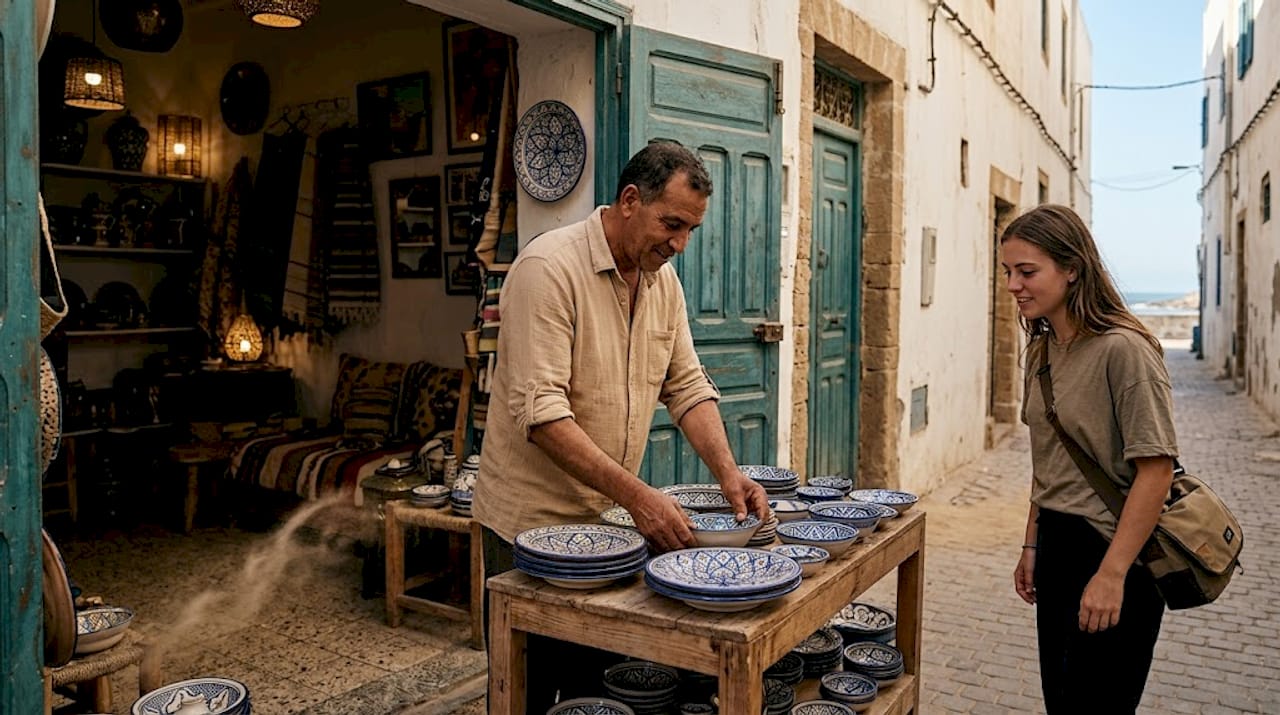
Morocco is safe but intense with noise, heat, and aggressive negotiation. Violent crime is rare, but petty scams and harassment are common. That sentence is the most accurate one-line summary of Morocco’s safety environment you will find anywhere.
Here is what the everyday experience actually looks like:
- Violent crime against tourists is extremely rare. Assault and robbery with force are not part of the typical traveler’s Morocco experience. Most visitors never encounter anything more threatening than a persistent shop owner.
- Harassment and touts are a daily reality. In cities like Fes and Marrakech, unsolicited attention from people offering directions, restaurant recommendations, or guide services is constant. It is annoying. It is not dangerous.
- Rural Morocco plays by different rules. In the Atlas Mountains, the Draa Valley, and desert regions, the pace slows considerably. Locals in small villages tend to be genuinely hospitable without an angle. The high-pressure sales culture of the medinas simply does not exist there.
- Scams are evolving digitally. Fake QR codes on menus, fraudulent online booking pages, and WhatsApp-based tour scams targeting travelers who book last-minute have all been reported. Morocco’s scam landscape has moved partly online.
The most useful shift in mindset for Morocco is treating it like a high-energy city anywhere in the world. You would not wander confused down an empty alley in Naples at midnight. Apply that same instinct here.
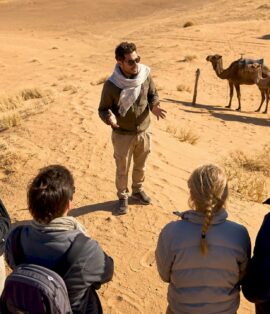
Hiring a licensed guide is the single highest-return investment for both safety and experience. Not a self-appointed guide who approaches you on the street, but a registered professional you book through a reputable operator. Our Morocco travel guide with safety insights covers exactly what to look for when vetting guides and tours.
Pro Tip: If someone approaches you unsolicited offering to “show you around for free,” there is no free. The fee comes at the end, often with social pressure and a detour to a cousin’s shop. Smile, decline firmly, and keep walking.
Essential safety tips and common scams every traveler should know
Knowing the general environment is one thing. Knowing the specific playbook that scammers use gives you a practical edge that most tourists simply do not have on arrival.
The most common scams in Morocco right now:
- The fake guide: Someone claims to be an official guide, walks you through the medina, then demands payment or steers you to commission-paying shops.
- The “closed” attraction: A stranger tells you the site you are looking for is closed today, then offers to take you somewhere better. The original site is almost always open.
- The carpet invitation: You are invited for “free mint tea” in a shop, which becomes a high-pressure sales experience lasting 45 minutes to two hours.
- Taxi overcharging: Drivers quote oral prices, then inflate them at the end or claim the meter is broken. In Marrakech especially, unlicensed taxis are common.
- Inflated restaurant menus: Tourists receive a different menu from locals, sometimes with prices three to five times higher, especially near major tourist squares.
In medinas, avoid checking maps in alleys, walk with purpose, and never accept help from faux guides, as they often lead to scams. Looking lost is a signal. Moving with intention is a deterrent.
Practical safety behaviors that make a real difference:
- Use only licensed petit taxis with working meters, or agree on a fixed price before getting in. Apps like Careem operate in Casablanca and Rabat.
- Keep one card separate from your wallet. Skimming at ATMs, particularly in tourist-dense areas, is a known issue.
- Book excursions and city tours through verified operators, not through people you meet at your hotel entrance or on the street.
- Keep copies of your passport, travel insurance, and emergency numbers stored both in email and offline on your phone.
- Know the tourist police number: 19 in Morocco. Tourist police operate in major cities and are specifically trained to assist foreign visitors.
| Scam type | How it works | How to prevent it |
|---|---|---|
| Fake guide | Unsolicited offer to navigate the medina | Book guides through verified operators only |
| Taxi overcharging | Oral price quoted, inflated on arrival | Agree on price before entering, use apps |
| Closed attraction | Told site is shut, redirected elsewhere | Verify with official site or your hotel concierge |
| Menu price switching | Tourists given inflated menu | Check prices before ordering, ask for the posted menu |
| Carpet tea invitation | “Free” tea leads to pressure selling | It is okay to say no and leave at any time |
| Fake QR menus | QR code links to fraudulent page | Ask for a printed menu as confirmation |
For tailored guidance on navigating specific cities, the Moroccan city exploration tips page breaks down Marrakech, Fes, Chefchaouen, and others by neighborhood safety level.
Pro Tip: Ministry of Tourism-licensed guides wear a badge with a photo ID and registration number. Ask to see it before hiring anyone on-site. A genuine professional will show it immediately and without attitude.
Travel entry requirements, visa rules, and preparation essentials
The Morocco travel advisory conversation cannot ignore the logistics of getting in. Entry requirements affect everything from how prepared you feel at the border to what options you have if something goes wrong mid-trip.
Most international travelers do not need a visa for stays up to 90 days. Passports must be valid for 3 to 6 months beyond your departure date. This covers nationals from the United States, Canada, the United Kingdom, Australia, and most EU countries.
Key preparation points before you fly:
- Check your passport validity today. Not when you are packing. Now. A passport expiring within six months of your return date can result in denied boarding or entry.
- Verify requirements close to your travel date. Morocco has historically updated entry rules with short notice. Always check with the Moroccan embassy or consulate in your country within 30 days of departure.
- Buy travel insurance that covers medical evacuation. Morocco has good private hospitals in Casablanca and Rabat, but facilities in rural and desert areas are limited. Medical repatriation coverage is not optional; it is essential.
- Declare cash over the equivalent of roughly $10,000 USD. Morocco has currency control laws. Importing or exporting large amounts of Moroccan dirhams without declaration can result in confiscation.
- Know the rules on medication. Some prescription drugs legal in your home country require documentation to bring into Morocco. Carry a letter from your doctor and the original pharmacy packaging.
- Book accommodation before arrival. Hotels and riads often register guests with local authorities. This registration, called fiches d’hébergement, is a legal requirement and contributes to your security footprint in the country.
The full Morocco travel visa requirements page covers specifics by nationality and keeps pace with policy changes more reliably than a general web search.
Navigating cultural, adventure, and luxury experiences safely
Morocco is not one kind of trip. It is a desert camp under the Milky Way near Erg Chebbi, a tasting menu in a Fes riad, a hammam in the old medina, and a hike through the Toubkal massif. Each of those experiences carries different considerations.
Safety concerns persist mainly as tourist anxiety. Actual crime rates and violent incident frequency are low and declining. That is the context in which all of the following advice should sit.
For solo travelers:
- Daytime solo exploration in medinas is generally fine with awareness. Save the deep navigation of unlabeled alleyways for when you have company or a guide.
- Solo female travelers face more verbal harassment than men, particularly in larger cities. Dressing modestly and moving with confidence significantly reduces unwanted attention. Our dedicated solo female travel safety in Morocco guide goes into depth on neighborhoods, dress codes, and trusted operators.
- Ear pods in, map up, and slow pace is the combination that marks you as vulnerable. Pick one of those at a time.
For luxury travelers:
- High-end riads and boutique hotels often provide a bubble of comfort that can lull you into forgetting the rules of the street. The moment you step outside a five-star property in the medina, the same realities apply as for any other traveler.
- Negotiate nothing without knowing the real price first. Luxury visitors are frequently assumed to have limitless budgets. Agree on costs before services begin, including hammams, private transfers, and guided shopping excursions.
For adventure travelers:
- Desert tours near Merzouga and Zagora require reputable operators, not the cheapest option found on a forum. Check operator licensing and read recent reviews on platforms outside Morocco.
- Trekking in the High Atlas requires up-to-date weather information and, ideally, a certified mountain guide registered with the Moroccan mountain guides association.
- Always inform someone of your route and expected return time when heading into remote terrain.
Cultural awareness that directly affects your safety:
- During Ramadan, eating, drinking, or smoking in public during daylight hours is both disrespectful and, in some cases, illegal for residents. Tourists are generally given more latitude, but exercising discretion prevents friction.
- Photography of people without permission, particularly women and older Moroccans, can generate strong reactions. Ask first, always.
Pro Tip: When booking any multi-day excursion, ask specifically whether your operator carries liability insurance and whether your guides are licensed by the Moroccan Ministry of Tourism. Legitimate operators answer this without hesitation. Vague answers are your signal to keep looking.
Our perspective: the advisory industrial complex is scaring people away from one of Africa’s best trips
Here is something worth saying plainly: travel advisories are written by bureaucrats managing legal risk, not by travelers managing actual experience. The language is designed to protect governments from liability, not to help you make informed decisions. When the same country that issues a Level 2 warning for Morocco also issues one for Italy and Germany, the framework has lost its calibration.
The travelers we see come to Morocco most prepared are not the ones who read the most advisories. They are the ones who understood the specific, localized nature of the risks. Petty crime concentrates in predictable places at predictable times. Scams follow scripts you can learn. The terrorism threat, while real as a category, has not targeted tourist infrastructure in years.
What genuinely worries us is not the traveler who reads a government advisory and gets cautious. It is the traveler who reads it, books a five-star hotel, and assumes the warning doesn’t apply to them once they’re inside the riad walls. Overconfidence in Morocco is riskier than informed caution.
The travelers who have the best experiences here are the ones who come curious, humble, and street-smart. They accept that the country will push back on their expectations in ways that Europe won’t. They treat that friction as part of the experience rather than evidence of danger. Morocco rewards that mindset with extraordinary generosity, beauty, and depth that no advisory document will ever be able to describe.
Plan your Morocco trip with confidence
Understanding the current Morocco travel advisory is just the starting point. The real work is turning that knowledge into an itinerary that feels safe, authentic, and genuinely memorable. At Top Morocco Travel, we specialize in exactly that. Our team of licensed local guides and expert trip planners builds every itinerary around real-time safety awareness, vetted local operators, and experiences that go well beyond the tourist trail. Whether you are planning a solo desert adventure, a luxury cultural tour, or a family trip through the imperial cities, we handle the complexity so you can focus on the experience. Reach out and let’s build your Morocco trip the right way.
Frequently asked questions
Is Morocco safe for tourists?
Yes, Morocco is relatively safe for tourists, with violent crime being rare and most risks concentrated in petty scams and opportunistic theft in tourist-heavy areas.
Do U.S. travelers need a visa to visit Morocco?
No, U.S. travelers do not need a visa for stays up to 90 days, but passports should be valid for at least 3 to 6 months beyond your scheduled departure date.
What areas in Morocco should travelers avoid for safety reasons?
Travelers should avoid areas within 30km of the Algerian-Moroccan border and the northern or western side of the Berm, and should stay away from large-scale demonstrations in urban areas.
How can travelers avoid common scams in Morocco?
Use licensed guides with Ministry of Tourism badges, avoid accepting unsolicited help from strangers in medinas, confirm all prices before services begin, and keep valuables distributed across separate pockets or bags.
Is solo female travel safe in Morocco?
Solo female travel is generally safe with standard precautions. Morocco is safe for solo female travelers who dress modestly, avoid isolated areas after dark, and use trusted local operators for guided exploration of medinas and rural areas.


Comments are closed