




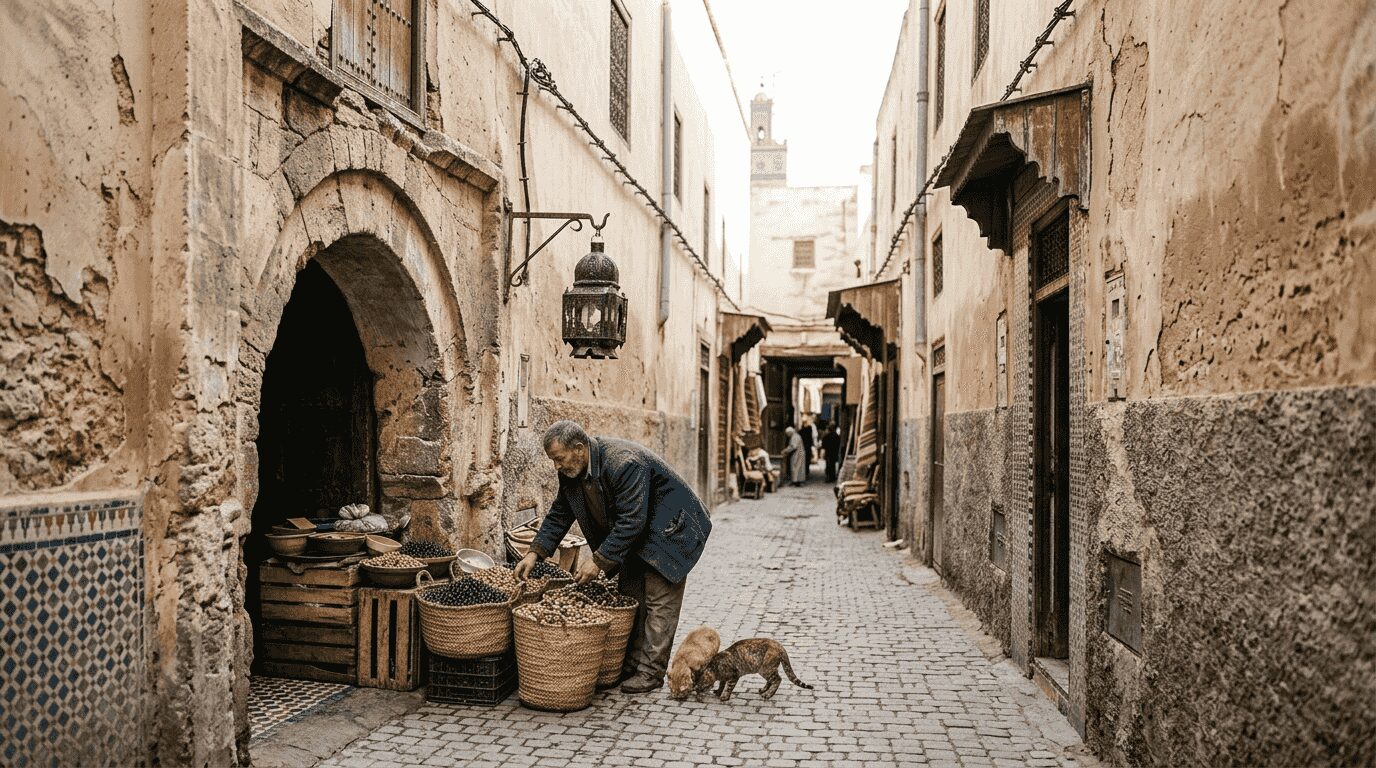
When you think of Moroccan medinas, you might picture chaotic markets overflowing with trinkets and persistent vendors. This common misconception misses the heart of what medinas truly are: living museums where centuries-old traditions thrive in everyday life. These UNESCO World Heritage sites offer far more than shopping. They’re pedestrian-only urban centers where artisans practice ancient crafts, families gather in hidden courtyards, and Islamic architecture tells stories spanning 900 years. Understanding why medinas matter transforms your Moroccan journey from tourist checklist to genuine cultural discovery.
Table of Contents
- Understanding The Historical And Cultural Significance Of Moroccan Medinas
- Experiencing Authentic Moroccan Culture Through Medinas’ Vibrant Souks And Community Life
- Navigating Moroccan Medinas: Unique Urban Design And Traveler Tips
- Explore Moroccan Medinas With Expert-Guided Tours
- What Is A Medina In Morocco?
- How Can I Best Explore A Moroccan Medina?
- What Makes Moroccan Medinas Unique Compared To Modern Cities?
- Which Moroccan Medinas Are Must-Visit For Travelers?
- Are Moroccan Medinas Safe And Tourist-Friendly To Explore?
Key takeaways
| Point | Details |
|---|---|
| Moroccan medinas are UNESCO World Heritage sites | They preserve medieval Islamic architecture and centuries-old social structures |
| Immersive cultural experiences await | Interact directly with local artisans, explore specialized souks, and taste authentic street food |
| Unique pedestrian-only urban design | Labyrinthine alleys create car-free zones designed for defense and community interaction |
| Major medinas showcase living traditions | Marrakech and Fez medinas house over 10,000 artisans maintaining medieval crafts |
| Local guides enhance exploration | Expert guidance unlocks deeper understanding and safer, richer navigation |
Understanding the historical and cultural significance of Moroccan medinas
The Medina of Marrakech, a UNESCO World Heritage Site, offers an authentic cultural experience rooted in its 11th-century origins. Founded by the Almoravid dynasty, Marrakech quickly evolved into a powerful emirate capital where traders, scholars, and craftspeople converged. The Medina’s history dates back to the 11th century, offering a deep dive into Moroccan heritage through its monuments, palaces, and mosques.
Fez el-Bali presents an even more remarkable feat of urban preservation. The University of al-Qarawiyyin, founded in 859 CE, is the oldest continuously operating degree-granting educational institution worldwide, demonstrating how medinas served as intellectual centers for Islamic civilization. UNESCO designated Fez el-Bali as a World Heritage Site in 1981 due to its medieval Islamic urban civilization spanning 300 hectares with over 9,000 alleys.
These medinas aren’t frozen museums. They function as thriving communities where families have lived for generations, passing down traditional knowledge and maintaining social structures that modern cities have abandoned. The architectural elements reflect sophisticated Islamic design principles: central courtyards for privacy, intricate tilework demonstrating geometric mastery, and fountain systems providing communal gathering spaces.
Exploring historical monuments in Morocco within medina walls reveals how political power, religious devotion, and artistic achievement merged. The Koutoubia Mosque’s minaret in Marrakech and Karaouine Mosque in Fez stand as architectural benchmarks that influenced construction across North Africa and Andalusia.
Key historical features of Moroccan medinas:
- Defensive walls and gates protecting medieval urban cores from invasion
- Traditional water distribution systems serving neighborhoods and public baths
- Neighborhood mosques anchoring social and religious community life
- Foundouks (caravanserais) housing traveling merchants and their goods
- Royal palaces demonstrating the intersection of power and artistry
Pro Tip: Visit medinas during early morning when golden light illuminates ancient walls and you can observe daily routines before tourist crowds arrive.
Experiencing authentic Moroccan culture through medinas’ vibrant souks and community life
Medinas offer immersive cultural experiences through direct interaction with local artisans, street food, and community life that guidebooks can barely capture. Walking through these spaces reveals how commerce, craftsmanship, and social connection interweave naturally. Souks within medinas provide specialized marketplaces offering spices, leather products, and textiles in distinct quarters organized by trade.
The sensory richness of medina souks creates unforgettable moments. Spice vendors arrange pyramids of saffron, cumin, and ras el hanout while explaining traditional flavor combinations. Leather tanners work in centuries-old tanneries where natural dyes create Morocco’s famous babouches (slippers). Textile merchants display hand-woven carpets with patterns specific to Berber regions, each design telling cultural stories.
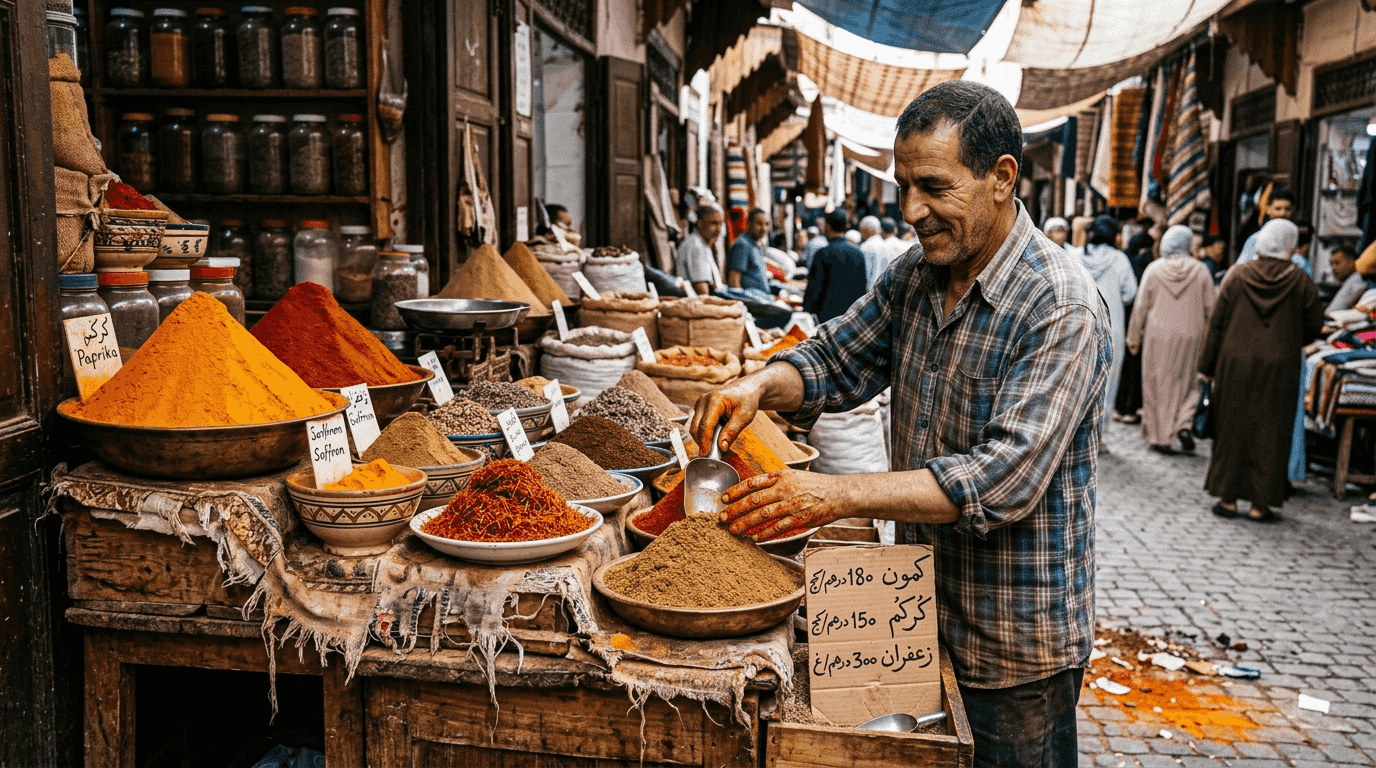
Jemaa el-Fna square is the center of Medina life with performers, food stalls, and music creating an outdoor theater that transforms from morning market to evening spectacle. Snake charmers, storytellers, and acrobats entertain crowds while smoke from grilled meats and fresh orange juice vendors fill the air with competing aromas.
Craft traditions survive because over 10,000 artisans maintain medieval practices in souks such as leather tanning and tilework. In Fez’s Chouara Tannery, workers still use pigeon droppings and natural dyes in stone vats, following techniques unchanged for 600 years. Watching zellige (mosaic tilework) masters cut and arrange geometric patterns by hand demonstrates patience modern manufacturing has forgotten.
Street food provides another layer of authentic experience. Vendors sell msemen (flatbread), harira (lentil soup), and snail broth from mobile carts positioned at corners where locals gather. These aren’t tourist attractions but genuine community meeting points where you can join conversations and share meals.
Essential cultural experiences in medina souks:
- Visit specialty quarters like the dyers’ souk, copper souk, and textile markets
- Watch artisans practice traditional crafts in open-air workshops
- Sample street foods locals actually eat, not just tourist-focused restaurants
- Engage with merchants to learn about product origins and techniques
- Explore Marrakech medina riads (traditional houses with interior courtyards)
Pro Tip: Learn basic Darija (Moroccan Arabic) greetings like “salam” and “shukran” to show respect and open genuine conversations with locals who appreciate the effort.
The social fabric extends beyond commerce. Neighborhood hammams (public baths) serve as community centers where people socialize while maintaining cleanliness rituals. Bakeries become gathering spots where families bring homemade dough to communal ovens. These interactions reveal how medina life prioritizes human connection over efficiency.
Exploring the Medina Chefchaouen offers a distinct experience with blue-painted streets creating a calmer atmosphere compared to Marrakech’s intensity, yet maintaining the same authentic community rhythms.
Navigating Moroccan medinas: unique urban design and traveler tips
The architectural layout with maze-like alleys serves for defense and social organization while creating cooler microclimates through narrow passages that limit direct sunlight. This defensive design confused invaders unfamiliar with the winding paths, while residents knew shortcuts and dead ends intimately. Medinas are pedestrian-only zones promoting a distinct urban experience without motor vehicles, fundamentally changing how you move and perceive space.
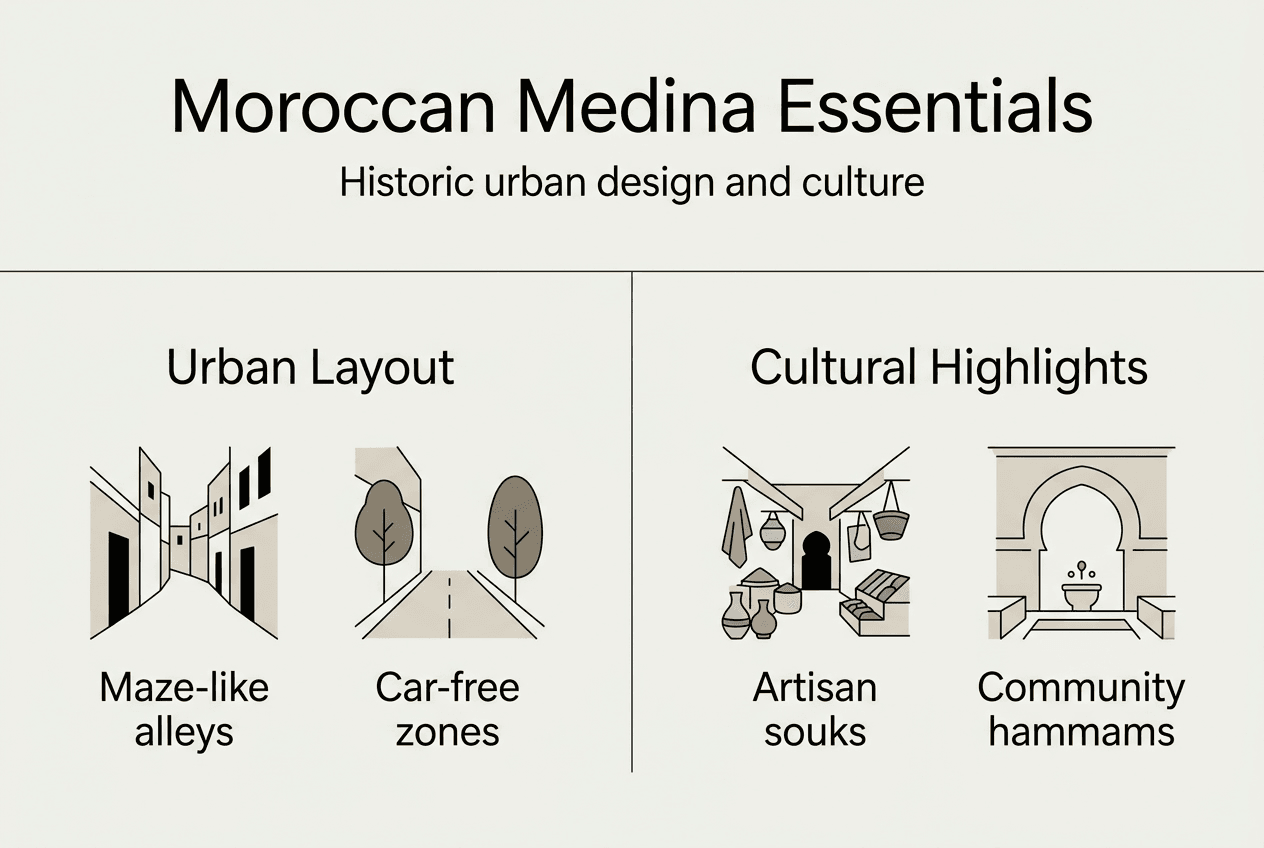
The absence of cars creates acoustic environments where you hear conversations, craftwork, and calls to prayer instead of traffic noise. Donkeys and handcarts remain the primary transport for goods, maintaining logistical practices from medieval times. This restriction forces slower movement, encouraging observation and interaction rather than rushing between destinations.
Street width varies purposefully. Main thoroughfares accommodate two-way foot traffic and occasional donkey passage, while residential alleys narrow to preserve household privacy. Covered passages (called “sabats”) connect buildings overhead, providing shade and architectural interest. These design elements create temperature differences up to 10 degrees cooler than surrounding modern districts.
Understanding what is a medina helps you appreciate how urban planning reflected social hierarchies and community values. Wealthy families built homes with blank exterior walls hiding lavish interior courtyards, while public fountains and communal ovens anchored neighborhood identities.
Practical navigation strategies for medina exploration:
- Start at major landmarks like main gates or central mosques to establish reference points
- Take photos of distinctive features at turns to retrace your path
- Accept getting lost as part of the authentic experience rather than a failure
- Ask shopkeepers for directions; most happily guide tourists without expecting payment
- Download offline maps but don’t rely solely on GPS in dense alley networks
- Join morning walking tours to learn layout before independent afternoon exploration
Expert tip: hire a local guide to navigate and enrich the medina experience with cultural context that transforms random wandering into meaningful discovery. Guides know which workshops welcome visitors, when specific souks are most active, and can facilitate genuine interactions with artisans.
| Medina | Size (Hectares) | Notable Feature | Best Visit Time |
|---|---|---|---|
| Fez el-Bali | 300 | World’s largest car-free medieval city | Early morning for tannery views |
| Marrakech | 140 | Jemaa el-Fna square performances | Evening for square atmosphere |
| Chefchaouen | 12 | Blue-painted buildings and walls | Midday for photography |
| Essaouira | 30 | Coastal fortifications and art galleries | Afternoon to catch ocean breezes |
Pro Tip: Wear closed-toe shoes with good grip since medina streets are often uneven cobblestone or polished stone that becomes slippery, and bring a small daypack for purchases rather than accepting plastic bags.
Safety in medinas centers on awareness rather than fear. Pickpocketing can occur in crowded areas, so secure valuables in front pockets or bags. Aggressive vendors exist but firm, polite refusals work better than engaging in unwanted conversations. Women should dress modestly, covering shoulders and knees, to minimize unwanted attention.
Exploring Marrakech medina cultural heritage reveals how thoughtful preparation transforms potentially overwhelming environments into enriching experiences where every turn presents new discoveries.
Explore Moroccan medinas with expert-guided tours
Navigating medina complexities becomes significantly easier and more meaningful when you join guided tours led by experts who unlock deeper cultural understanding. Top Morocco Travel offers carefully designed experiences focusing on imperial cities and their medinas, ensuring you don’t just see monuments but understand their significance within Moroccan heritage.
Our Moroccan imperial cities tour connects you with knowledgeable local guides who grew up in these medinas, speaking multiple languages and passionate about sharing their cultural legacy. They know which artisan workshops welcome visitors for demonstrations, can negotiate fair prices in souks, and explain religious and social customs that enhance your respect and enjoyment.
Customized luxury and small-group options through our Moroccan city tour concepts provide tailored immersive experiences matching your interests, whether you’re fascinated by architecture, culinary traditions, or textile arts. Rather than rushing through highlight reels, these tours allow meaningful engagement with communities and crafts.
Booking a guided tour ensures a richer, hassle-free exploration of Moroccan medinas while supporting local economies directly through ethical tourism practices that benefit artisans and families maintaining these living heritage sites.
What is a medina in Morocco?
A medina is the historic quarter of a Moroccan city, typically surrounded by defensive walls built during medieval Islamic periods. These areas feature narrow, winding streets lined with traditional architecture, souks (markets), mosques, and residential neighborhoods organized around community focal points. Unlike European old towns, medinas remain vibrant residential and commercial centers rather than tourist-focused historic districts. The term comes from the Arabic word for “city” and represents the original urban core before colonial-era expansions created modern districts outside the walls.
How can I best explore a Moroccan medina?
Hire a knowledgeable local guide to navigate and understand the medina’s cultural layers, historical significance, and hidden gems tourists miss alone. Wear comfortable closed-toe shoes suitable for uneven cobblestones and bring water since medina exploration involves hours of walking. Visit during early morning to experience authentic daily life, avoid midday heat and crowds, and capture better photographs in softer light. Booking guided tours ensures safety and deeper engagement.
What makes Moroccan medinas unique compared to modern cities?
Medinas have labyrinthine, pedestrian-only alleys designed for defense and social cohesion, creating environments fundamentally different from car-dominated urban planning. Historic social and architectural design fostered tight-knit communities where neighbors shared communal resources like ovens, fountains, and hammams (public baths). Living traditions and crafts are preserved through generational knowledge transfer, with artisans practicing techniques unchanged for centuries. This continuity makes medinas functioning museums where culture remains practiced rather than performed.
Which Moroccan medinas are must-visit for travelers?
Marrakech and Fez medinas are UNESCO World Heritage Sites renowned for monumental heritage and living traditions including Jemaa el-Fna square’s nightly performances and historic palaces. Fez el-Bali is the world’s largest car-free medieval city with vibrant artisan quarters where leather tanning, metalwork, and silk weaving continue using traditional methods. The Medina Chefchaouen offers distinctive blue-painted streets creating a calmer, more relaxed atmosphere perfect for photography and leisurely exploration. Each medina presents unique characteristics reflecting regional traditions and histories.
Are Moroccan medinas safe and tourist-friendly to explore?
Medinas are generally safe for tourists who take normal urban precautions like securing valuables, staying aware in crowded areas, and avoiding isolated alleys after dark. Using a local guide significantly improves both safety and experience quality by providing cultural context, facilitating authentic interactions, and helping navigate potentially confusing layouts. Respect local customs by dressing modestly with covered shoulders and knees, asking permission before photographing people, and learning basic Arabic greetings to show cultural sensitivity. Following Marrakech medina travel tips prepares you for confident, respectful exploration.
Recommended
- Why explore Marrakech medina: unlock cultural heritage – Top Morocco Travel
- What Is a Medina? and Its Impact on Moroccan Travel
- Exploring Marrakech Medina Morocco: Guide for All Travelers
- 7 Must Do Morocco Experiences for Every Type of Traveler
- Cultura local en safaris: valor auténtico y exclusividad – Namibia Luxury Safaris | Book Your 2025/2026 Adventure Today



Comments are closed