




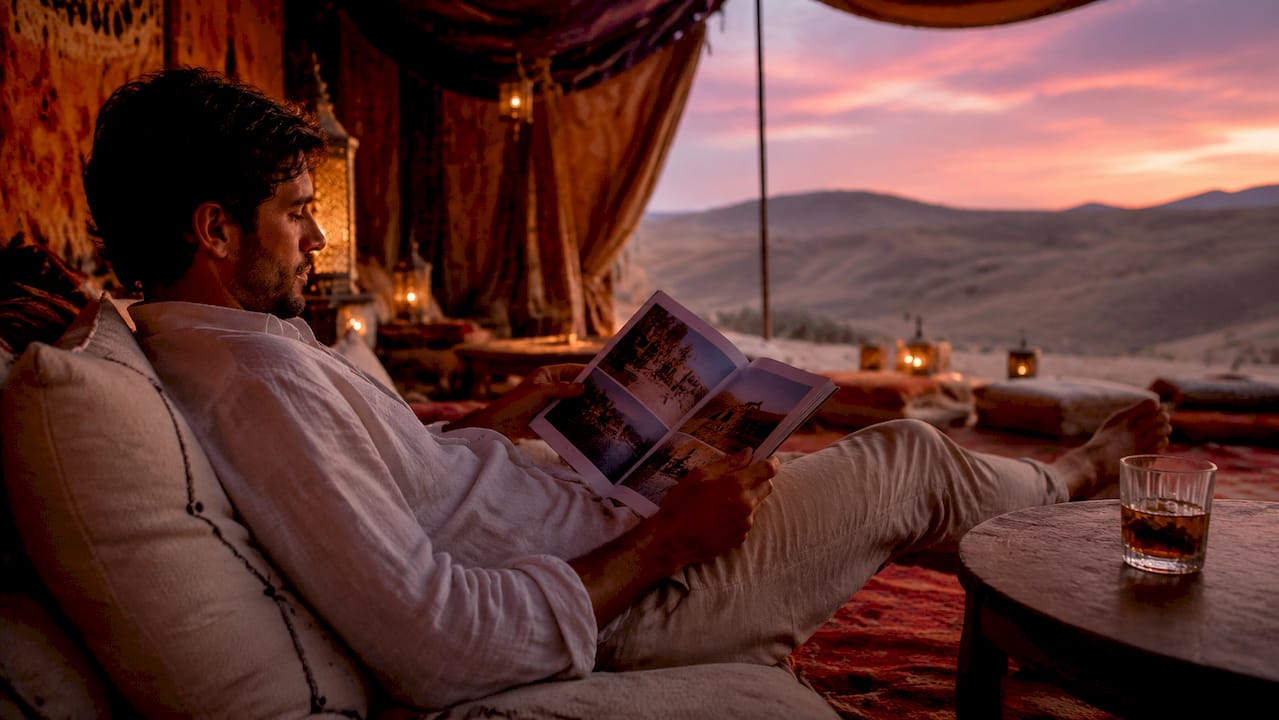
- Luxury desert camps in Morocco vary in experience based on their location, from the accessible Erg Chebbi to the remote Erg Chigaga.
- The best camps offer private en-suite tents, full-board meals, cultural activities, and spectacular dune views, with privacy and camp placement inside the dunes being crucial for luxury.
- Travelers should choose their region and camp carefully to align with their desire for solitude, cultural immersion, and accessibility while considering seasonal weather constraints.
Luxury desert camps in Morocco are high-end tented accommodations set inside or near the Sahara, combining private en-suite tents, full-board Berber hospitality, and guided desert activities into a single immersive stay. The industry term for this category is glamping, though Morocco’s top operators go well beyond standard glamping by engineering genuine privacy, cultural depth, and comfort that rivals a five-star hotel. The three regions that define this market are Erg Chebbi near Merzouga, the Agafay Desert outside Marrakech, and the remote Erg Chigaga near M’Hamid. Each delivers a radically different experience, and choosing the wrong one for your travel style is the most common mistake luxury travelers make.
What sets luxury desert camps in Morocco apart by location?
Luxury desert camps in Morocco cluster in three distinct regions, each with its own terrain, travel time, and luxury tier. Understanding the differences before you book saves you from a mismatch between expectations and reality.
Erg Chebbi: the classic Sahara experience
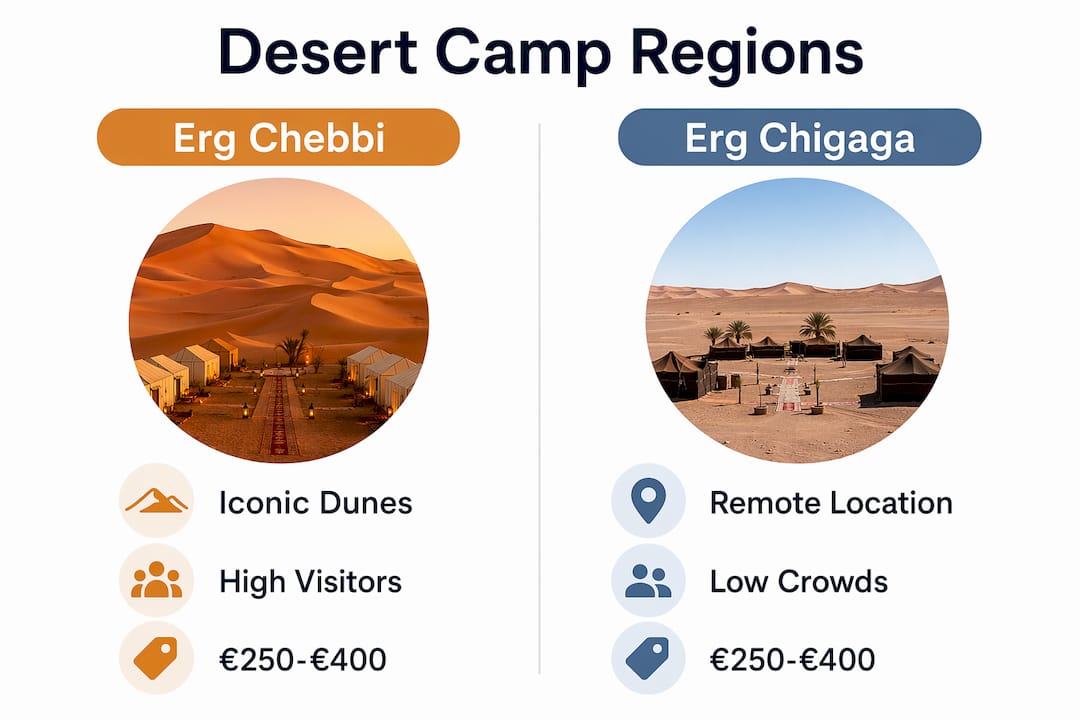
Erg Chebbi, near the town of Merzouga, is the most recognized desert destination in Morocco. Its towering orange dunes reach heights of up to 150 meters, and the region has the broadest concentration of luxury tented camps in the country. The drive from Marrakech takes roughly 9 hours, making it a two-night minimum stay to justify the journey. The infrastructure here is the most developed of the three regions, which means more camp options, more competition on quality, and generally the widest range of price points.
The trade-off is crowd density. Erg Chebbi attracts the highest volume of visitors, so camps on the outer edge of the erg can feel less isolated than their marketing suggests. Travelers who prioritize solitude should ask specifically about a camp’s position inside the dune field rather than on its perimeter.
Agafay: desert glamping 30 minutes from Marrakech
The Agafay Desert is a rocky, arid plateau rather than a classic sand dune environment. Its defining advantage is proximity. Agafay sits about 30 minutes from Marrakech, making it the only desert option that works as a one-night add-on to a city itinerary. The Ranch Agafay is one of the best-known properties here, offering domed tents with king-size beds, a pool, an animal park, and both Moroccan and international cuisine.
Agafay suits travelers who want the visual drama of a desert setting without committing to a long overland journey. The experience leans more toward resort-style glamping than raw Sahara immersion. If you want genuine sand dunes and deep desert silence, Agafay will feel like a beautiful approximation rather than the real thing.
Erg Chigaga: the most remote luxury option
Erg Chigaga, near M’Hamid in southern Morocco, is the most isolated of the three regions. Reaching it requires 10–12 hours of travel plus a 4×4 transfer over rough terrain, which filters out casual visitors almost entirely. The reward is outstanding night skies, near-total silence, and a sense of being genuinely far from the modern world. Camps here are fewer in number but tend to attract travelers who treat the difficult access as part of the appeal.
Pro Tip: Ask any camp you’re considering whether their tents are positioned inside the erg or at its edge. Camps placed deep inside the dune field deliver dramatically better isolation and sunrise views than those set up near the road.
| Region | Travel time from Marrakech | Terrain | Crowd level | Price range per person per night |
|---|---|---|---|---|
| Erg Chebbi | ~9 hours | Classic sand dunes | Moderate to high | €250–€400 |
| Agafay | ~30 minutes | Rocky desert plateau | Moderate | €150–€300 |
| Erg Chigaga | 10–12 hours + 4×4 | Remote sand dunes | Very low | €300–€400+ |
Pricing across all three regions typically ranges from €250 to €400 per person per night at the top tier, with inclusions varying significantly by camp.
What amenities should you expect at a Moroccan luxury tented camp?
The standard for high-end desert retreats in Morocco has risen sharply over the past decade. Travelers booking a top-tier camp today should expect a specific set of physical comforts as a baseline, not a bonus.
The tent itself sets the tone. Beldi Desert Camp in Merzouga offers tents of approximately 30 square meters with king-size beds and en-suite bathrooms with hot water. That specification, a private bathroom with a flush toilet and hot shower inside or directly attached to the tent, is the single most important feature separating a genuine luxury camp from a mid-range one. Shared bathroom facilities are a dealbreaker for most luxury travelers, and some camps that market themselves as “luxury” still use shared blocks.
Electricity availability varies. Most top camps provide 24-hour power through solar or generator systems, which supports phone charging, lighting, and climate control fans. WiFi is available at some properties but deliberately limited at others. Many camps treat limited connectivity as a feature, not a flaw, since the appeal of the desert is partly its separation from daily life.
Privacy engineering is the other defining quality of a genuine high-end camp. Saharian Camp and Umnya Desert Camp both emphasize widely spaced tents, private terraces, and no shared facilities. That physical separation means you can sit outside your tent at midnight and hear nothing but wind. It also means your sunrise camel ride does not overlap with another group’s.
Standard inclusions at the best camps typically cover:
- Full-board meals featuring Berber tagines, couscous, and fresh salads prepared on-site
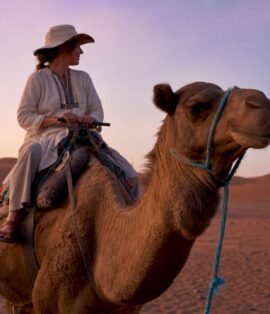
- Camel rides at sunrise or sunset, usually 45–60 minutes in duration
- Guided dune walks with a local Berber guide who explains desert navigation and plant life
- Stargazing sessions with or without a telescope, depending on the camp
- Hammam treatments at select properties, either in a dedicated tent or a nearby facility
Umnya Desert Camp includes full board, camel rides, dune walks, and private hot showers as standard, which reflects the inclusive model most top camps now follow. Researching exactly what is included before booking prevents unexpected charges on arrival.
Pro Tip: When comparing camps, ask specifically whether the bathroom is inside the tent, attached directly to it, or in a separate structure. “En-suite” means different things to different operators, and the distinction matters enormously for comfort and privacy.
When is the best time for desert camping in Morocco?
Season is the single biggest variable in the quality of a desert camp stay. Get the timing right, and the experience is extraordinary. Get it wrong and the heat makes most outdoor activities impossible.
The recommended season for luxury desert camping runs from October through April. Daytime temperatures during this window range from a comfortable 18°C to 28°C, and nights cool down enough to make sleeping in a tent genuinely pleasant. Clear skies are common, which maximizes stargazing quality. October and November offer warm days and cool nights without the peak-season crowds of December and January.
Summer months present a serious challenge. Daytime temperatures in the Sahara can exceed 45°C to 50°C during July and August. At those temperatures, outdoor activities like camel trekking and dune walks are unsafe between 9 a.m. and 5 p.m. Most camps reduce their programming significantly in summer, and some close entirely. Travelers who visit in summer should expect to spend most of the day inside their tent or in shaded communal areas.
For practical trip planning, consider these seasonal factors:
- October to November: Ideal balance of warm days, cool nights, and lower crowd levels. Best value for money.
- December to January: Peak season with the most stable weather. Book camps three to four months in advance for the best tent selection.
- February to April: Excellent conditions with wildflowers appearing in some desert areas after winter rains. Slightly fewer visitors than peak season.
- May to September: Extreme heat limits outdoor activity. Only recommended for travelers with very specific scheduling constraints.
Clothing preparation matters regardless of season. Even in winter, midday sun in the desert is intense. Lightweight long sleeves protect against sunburn and sand. At night from November through February, temperatures can drop close to freezing, so a warm layer is not optional.
What unique experiences define a stay at a high-end desert retreat?
The activities at a luxury camp are where the investment pays off most visibly. A well-run camp does not just provide a bed in the desert. It curates a sequence of experiences that would be impossible to replicate independently.
Camel trekking at sunrise is the signature activity at nearly every camp in Erg Chebbi and Erg Chigaga. The light at that hour turns the dunes copper and gold, and the silence is absolute. Most camps limit their sunrise treks to small groups of four to six guests, which preserves the atmosphere. Sandboarding on the steeper dune faces is a physical counterpoint to the meditative quality of a camel ride, and most camps provide boards as part of their activity package.
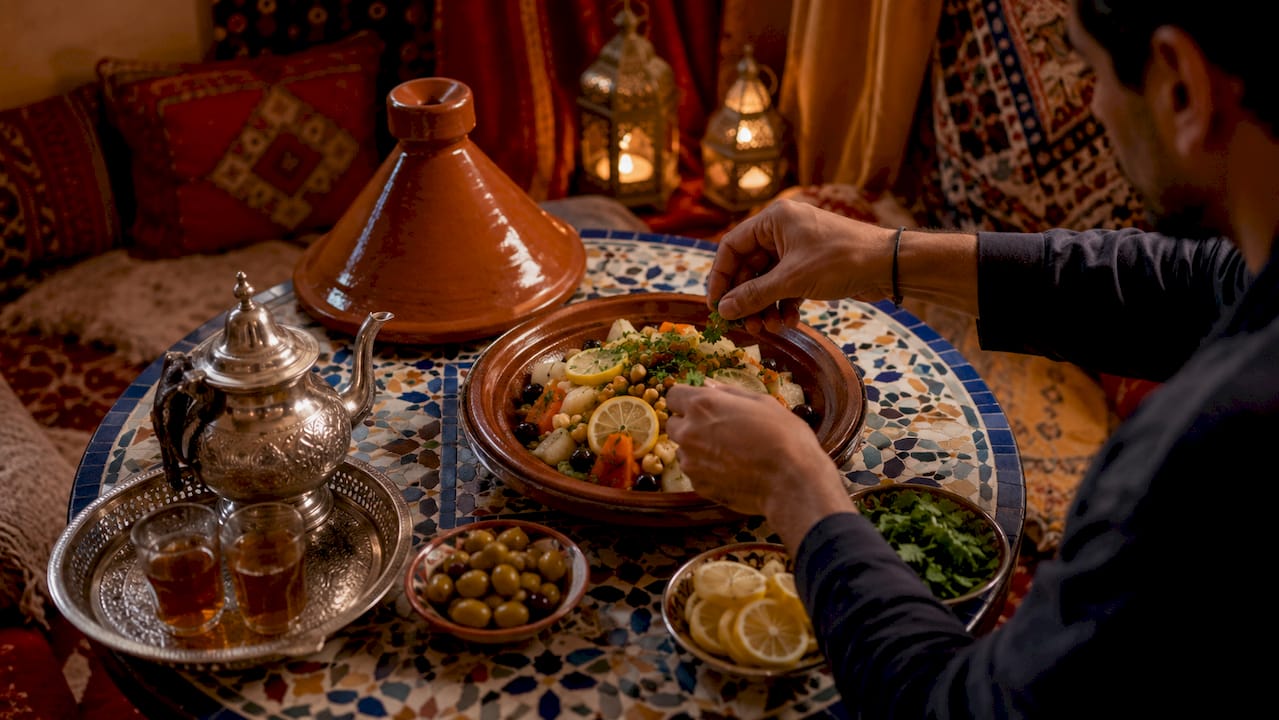
Cultural immersion is where Morocco’s luxury camping experiences genuinely separate themselves from desert glamping elsewhere in the world. Berber guides share knowledge of desert navigation, medicinal plants, and traditional music that no guidebook captures. Private dinners under the stars, with a musician playing the guembri or bendir, are a standard offering at top camps. The food itself is part of the cultural experience. Slow-cooked lamb tagine, saffron-spiced couscous, and fresh mint tea served in the traditional three-pour style are not props. They are the actual cuisine of the families who run these camps.
Stargazing quality scales directly with remoteness. Erg Chigaga, with its near-zero light pollution, delivers some of the clearest night skies accessible by road anywhere in North Africa. Erg Chebbi offers excellent stargazing as well, though the lights of Merzouga are visible on the horizon. Agafay’s proximity to Marrakech means more ambient light, which reduces the impact noticeably.
Spa and hammam offerings add another layer of comfort. Select camps in Erg Chebbi include a traditional hammam tent where guests receive a black soap scrub and argan oil treatment. This combination of physical relaxation and cultural ritual is one of the details that separates a high-end desert retreat from a standard camp stay.
Key Takeaways
Luxury desert camps in Morocco deliver the most value when travelers match their chosen region to their priorities: Erg Chebbi for accessibility and dune drama, Agafay for a quick city escape, and Erg Chigaga for genuine isolation and the finest night skies.
| Point | Details |
|---|---|
| The region determines the experience | Erg Chebbi, Agafay, and Erg Chigaga each offer distinct terrain, access, and isolation levels. |
| Private bathrooms define luxury | Verify that en-suite means in-tent, not a shared block, before confirming any booking. |
| October to April is the optimal window | Summer heat above 45°C makes outdoor activities unsafe and limits the full camp program. |
| Inclusions drive real value | Top camps bundle full-board meals, camel rides, stargazing, and cultural activities into the nightly rate. |
| Camp placement inside the erg matters | Tents set deep in the dune field deliver better isolation, views, and silence than edge-of-erg positions. |
What I’ve learned after years of sending travelers into the Sahara
The most consistent mistake I see luxury travelers make is optimizing for amenities on paper rather than experience in practice. A camp with a pool and a spa menu sounds impressive. A camp with perfectly spaced tents, a Berber host who grew up in the desert, and a position two kilometers inside the erg is the one guests talk about for years.
Privacy is the real luxury in the desert. Not thread count. Not a cocktail menu. The ability to walk out of your tent at 3 a.m., see the Milky Way overhead without another soul in sight, and feel the specific silence of the Sahara. That experience requires deliberate camp selection, not just a high nightly rate. I always tell travelers to ask one question before booking: “How many tents does your camp have, and how far apart are they?” The answer tells you more than any amenity list.
Erg Chigaga is consistently underestimated because of the access challenge. Travelers see “10–12 hours plus 4×4” and choose Erg Chebbi instead. That is a reasonable call for a first Morocco trip. But for travelers who have done Erg Chebbi and want something that feels genuinely off-grid, Erg Chigaga is not just better. It is a different category of experience. The comparison between Zagora and Erg Chigaga makes this clear: Zagora is accessible and affordable, but it does not compete on isolation or luxury infrastructure.
One more thing most travelers overlook: the quality of your local host matters as much as the physical camp. The best camps in Morocco are run by Berber families with deep roots in the desert. Their knowledge, warmth, and storytelling are not a service add-on. They are the experience itself.
— Topmoroccotravel.com
Plan your luxury desert camp stay with TopMoroccoTravel.
TopMoroccoTravel curates Morocco desert tours that pair the country’s finest luxury tented camps with expert-guided itineraries across Erg Chebbi, Agafay, and Erg Chigaga. Every package is built around your travel dates, group size, and comfort priorities, with camp selection vetted for genuine privacy standards and cultural authenticity. The team handles all logistics, including transfers, 4×4 arrangements for remote camps, and pre-trip briefings on what to pack and expect. For travelers who want to combine a desert stay with Morocco’s imperial cities, the Moroccan desert exploration guide outlines how to structure a full-country itinerary that does justice to both. Reach out directly to start building your 2026 desert itinerary.
FAQ
What is the best luxury desert camp region in Morocco?
Erg Chebbi near Merzouga is the most accessible and widely recommended region for first-time luxury desert travelers, offering towering dunes, a broad range of high-end camps, and a roughly 9-hour drive from Marrakech.
How much does a luxury desert camp in Morocco cost?
Top-tier camps typically price between €250 and €400 per person per night, with that rate usually covering full-board meals, camel rides, guided dune walks, and stargazing sessions.
Is the Agafay Desert a good option for luxury glamping in Morocco?
Agafay is an excellent choice for travelers with limited time, sitting just 30 minutes from Marrakech with resort-style amenities. It offers a desert atmosphere but lacks the classic sand dunes and deep isolation of Erg Chebbi or Erg Chigaga.
What should I verify before booking a luxury desert camp?
Confirm that the en-suite bathroom is physically attached to or inside your tent, not a shared facility. Also ask about tent spacing and the camp’s position inside the dune field versus on its perimeter, since both factors directly affect privacy.
Is Zagora a good alternative to Erg Chebbi for luxury travelers?
Zagora is more accessible and less expensive than Erg Chebbi or Erg Chigaga, but it has significantly fewer genuine luxury camp options and lower dune drama, making it better suited to budget-conscious travelers than those seeking a high-end desert retreat.
Comments are closed