




TL;DR:
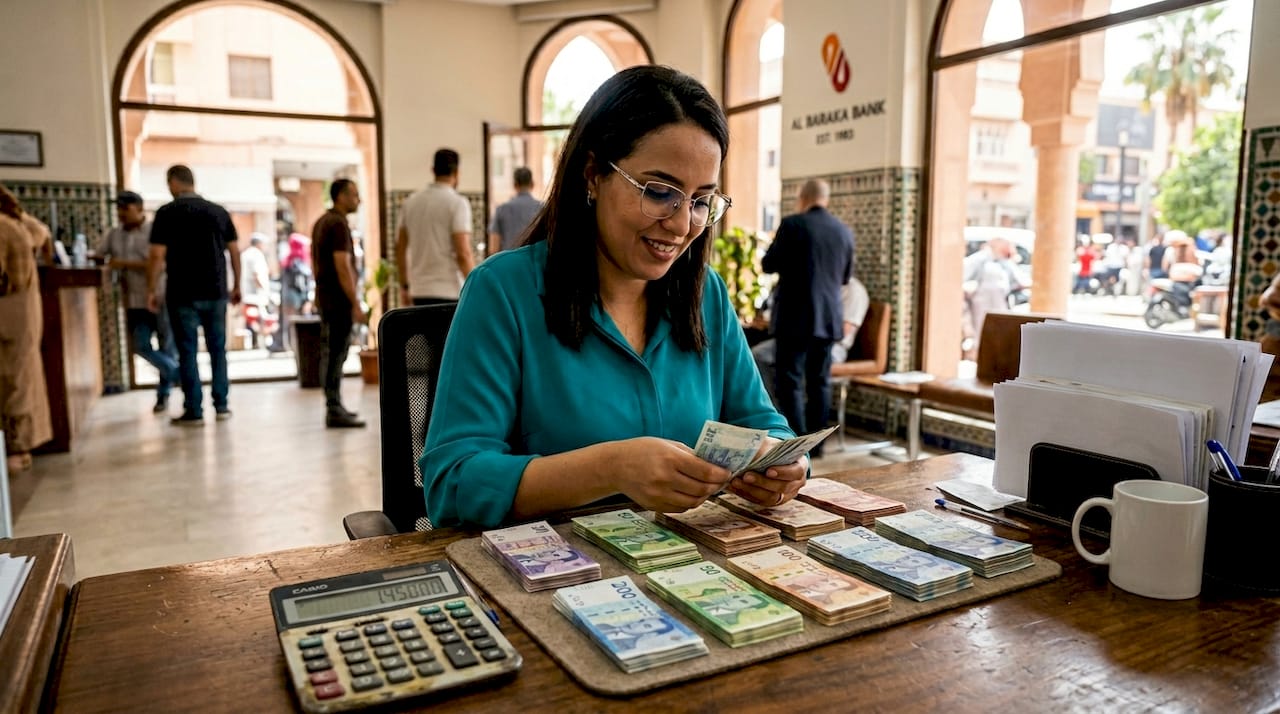
- The Moroccan dirham (MAD) is the official currency, but travelers should compare exchange rates and avoid relying solely on airport exchanges.
- Outside cities, cash remains essential, and using ATMs to top up is the most practical strategy.
- Understanding currency spreads and limits on reconversion helps manage expenses and ensures a smoother trip in Morocco.
Most travelers arrive in Morocco with the same questions: What’s the local currency? Can I use euros? Where do I get the best rate? The currency in Morocco is the Moroccan dirham, and while that’s a simple answer, the practical side of handling money here is where things get interesting. The difference between the official rate and what you actually pay at a bureau de change can be significant. This guide covers everything you need: what the dirham looks like, current exchange rates, where and how to exchange money, and how to avoid the mistakes that cost travelers real money every year.
Table of Contents
- Key takeaways
- Currency in Morocco: understanding the dirham
- Exchange rates for the dirham
- Practical money management in Morocco
- Currencies accepted in Morocco
- What I’ve learned from years of Morocco travel
- Plan your Morocco trip with confidence
- FAQ
Key takeaways
| Point | Details |
|---|---|
| The official currency is the dirham | Morocco uses the Moroccan dirham (MAD), not euros or dollars, for all official transactions. |
| Exchange rates vary by provider | Bank Al-Maghrib rates differ from what banks and bureaus charge, so always compare the final effective rate. |
| Cash is still king outside cities | Rural areas, souks, and small guesthouses rarely accept cards, so carry enough dirhams at all times. |
| A two-step currency strategy works best | Get a small amount of dirhams at arrival, then top up at reliable ATMs once you’ve settled in. |
| Euros are not legal tender | While euros may be accepted informally in tourist areas, relying on dirhams avoids confusion and bad deals. |
Currency in Morocco: understanding the dirham
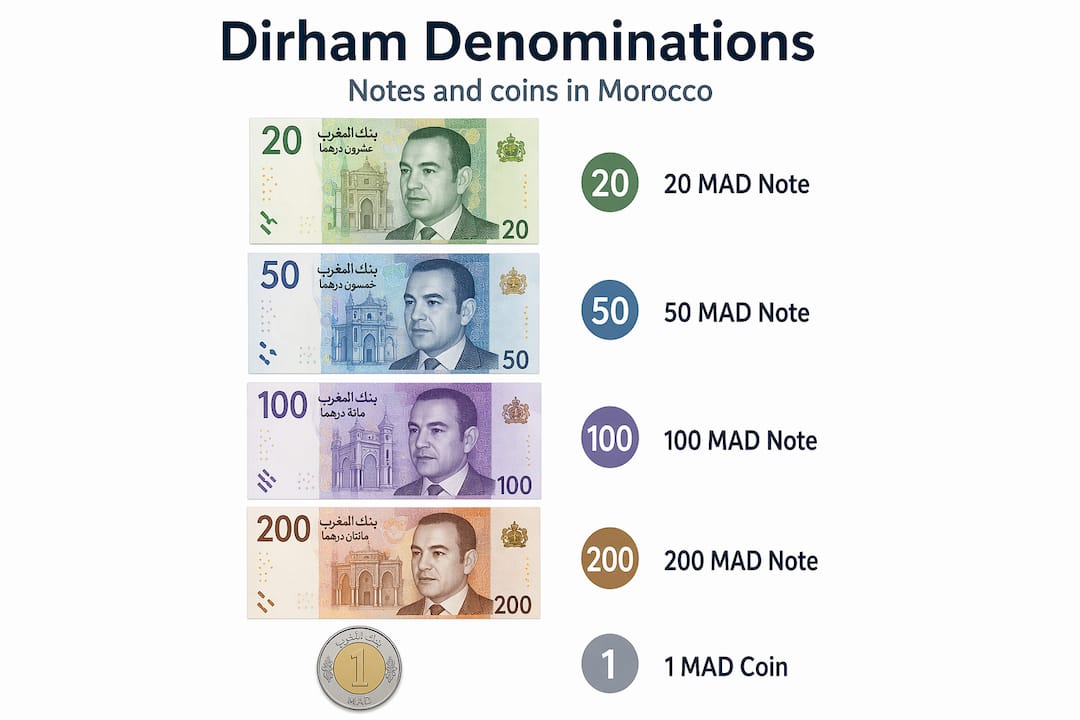
The Moroccan dirham is Morocco’s official currency, issued by Bank Al-Maghrib and designated with the ISO 4217 code MAD. You’ll see it written as “DH” on price tags and menus, though locals often just say “dirhams.” One dirham divides into 100 centimes, and you’ll encounter both coins and notes in everyday transactions.
Current banknotes come in denominations of 20, 50, 100, and 200 dirhams, while coins cover smaller values, including 1, 2, 5, and 10 dirhams, along with 10 and 20 santimat. The 200 dirham note is the largest and worth roughly $20 USD at current rates, so you won’t be juggling high-value bills for minor purchases.
The informal price language you need to know
Here’s something most travel guides skip entirely. Morocco has an older informal pricing system that persists colloquially in markets and among older generations. You might hear a vendor quote a price in “rials” or “francs.” One rial equals 5 centimes, and one franc equals 1 centime. So when a market seller says “forty rials,” they mean 2 dirhams.
Younger Moroccans in cities tend to quote prices in dirhams directly, but in traditional souks or rural areas, you may still encounter the old system. Don’t panic. Just ask them to write it down or convert to dirhams. Knowing this exists saves you from accidentally overpaying or under-paying for something in a haggling situation.
A brief history worth knowing
Morocco replaced the French franc with the dirham in 1960 after independence, a deliberate step toward financial sovereignty. The dirham was made a partially convertible currency, meaning you can exchange it freely inside Morocco but face restrictions taking large amounts out of the country. Practically speaking, this means you should spend or reconvert your dirhams before leaving, as reconversion is allowed but limited and requires proof of original exchange.
Remember: Keep your exchange receipts throughout your trip. You’ll need them if you want to convert leftover dirhams back to your home currency at the airport before departing.
Exchange rates for the dirham
This is where things get more nuanced than a simple number. There are actually two rates you need to understand: the official Bank Al-Maghrib rate and the mid-market rate you see on currency converter apps.
Bank Al-Maghrib publishes buying and selling prices for all major currencies. For the euro, that looked like €1 buying at 10.2378 MAD and selling at 11.8980 MAD. The spread between those two numbers is where the bank (and every provider downstream) makes money. The mid-market rate, which is the real midpoint between buy and sell, sits around 10.8 MAD per euro. expected,
Key exchange rate reference table
| Currency | Mid-Market Rate (approx.) | Bank Buy Rate | Bank Sell Rate |
|---|---|---|---|
| USD (US Dollar) | 1 USD ≈ 9.23 MAD | 8.90 MAD | 10.50 MAD |
| EUR (Euro) | 1 EUR ≈ 10.80 MAD | 10.24 MAD | 11.90 MAD |
| GBP (British Pound) | 1 GBP ≈ 12.60 MAD | 12.10 MAD | 13.80 MAD |
| SAR (Saudi Riyal) | 1 SAR ≈ 2.46 MAD | 2.35 MAD | 2.70 MAD |
Note: Rates are approximate for reference purposes. Always check current rates before exchanging.
Why the spread matters to your wallet
The gap between what a bank buys currency for and what it sells is not a hidden trick. It’s how currency exchange works everywhere. But what travelers often miss is that the effective rate you pay at an actual exchange office also includes service fees and margins on top of the official spread. That means the rate you get at a Marrakech medina bureau will almost always be worse than the Bank Al-Maghrib sell rate.
The dirham is pegged to a currency basket weighted roughly 60% toward the euro and 40% toward the US dollar. That peg keeps the dirham relatively stable compared to freely floating currencies, which is good news for budgeting. You won’t wake up mid-trip to find your money has lost 10% of its value overnight.
Pro Tip: Compare the final amount of dirhams you receive after all fees, not just the headline rate. A bureau advertising “no commission” often builds the fee into a worse exchange rate.
Practical money management in Morocco
Getting this right is the difference between a smooth trip and constant small frustrations. Here’s what actually works.
Where to exchange money
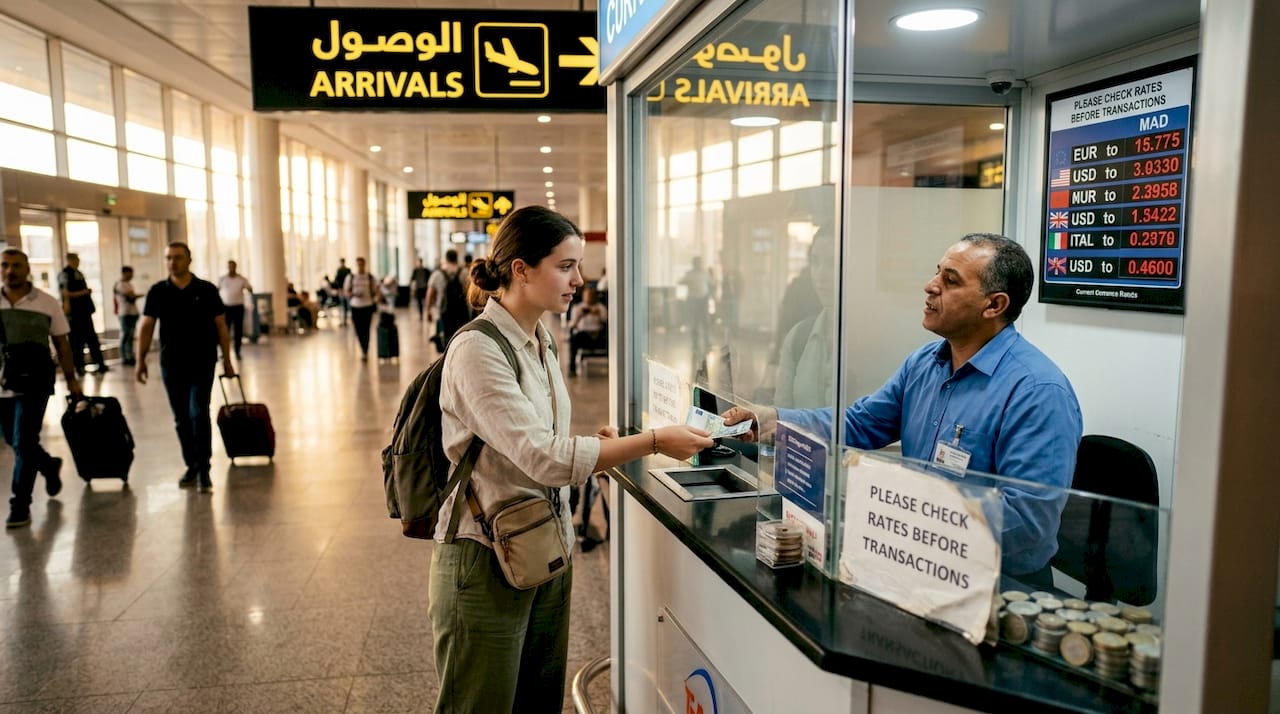
- Airport exchange counters handle your immediate needs on arrival. The rates are not the best, but they’re predictable and safe. Exchange just enough to cover your taxi and first meal, around 200 to 300 dirhams.
- Bank branches in city centers typically offer better rates than airports but involve queuing and sometimes require a passport. Wafa Bank and CIH Bank branches in medinas are commonly used by travelers.
- Licensed exchange offices (bureaux de change) are scattered throughout tourist districts in Fes, Marrakech, Casablanca, and Agadir. Rates vary, so check two or three before committing.
- ATMs are the most convenient option once you’re settled. They dispense dirhams directly from your home account using interbank rates, though your bank will charge a foreign transaction fee and possibly a flat withdrawal fee.
Many experienced travelers follow a two-step approach: get a modest amount of dirhams on arrival for immediate expenses, then rely on ATMs to top up as needed throughout the trip. This minimizes the amount you exchange at poor airport rates while keeping you liquid.
ATMs in Morocco: what to expect
ATMs are widely available in cities like Casablanca, Marrakech, Fes, and Rabat. You’ll find them at bank branches, shopping centers, and near major tourist attractions. Outside these urban centers, availability drops significantly. Villages near the Sahara, rural Berber areas, and small coastal towns may have no ATMs at all or machines that run out of cash during peak travel season.
When you use an ATM, always choose to be charged in dirhams rather than your home currency. The machine will offer you “dynamic currency conversion,” which sounds convenient but means the ATM’s bank sets the exchange rate instead of your home bank. That rate is almost always worse. Decline it every time.
Carrying enough cash in dirhams matters beyond cities. Tips for guides and drivers, small guesthouse payments, street food, hammam entry fees, and local bus fares all require cash. Cards simply are not part of the transaction flow in most of Morocco outside upscale hotels and large restaurants.
Pro Tip: Tell your home bank about your Morocco travel dates before you leave. Card blocks for “suspicious foreign activity” are one of the most avoidable travel headaches, and a two-minute phone call prevents them.
Daily budgeting in dirhams
To give your budget some context: a sit-down lunch in a local restaurant typically costs 40 to 80 MAD. A taxi ride across a medina runs 20 to 40 MAD. A night in a well-regarded mid-range riad in Marrakech might cost 400 to 800 MAD per room. Knowing these reference points helps you check whether the price you’re quoted sounds right before you accept it. For a deeper look at managing Morocco trip costs, it helps to plan category by category rather than guessing a daily number.
Currencies accepted in Morocco
Morocco’s official position is clear: the dirham is the only legal tender. That said, the reality on the ground in tourist zones is more nuanced.
Here’s what you can actually expect:
- Euros are the most commonly accepted foreign currency outside the official system. Some riads, souvenir shops, and tour operators in heavily touristed areas like Jemaa el-Fna in Marrakech or the blue streets of Chefchaouen will take euros. The rate they offer you will be unfavorable compared to what you’d get at a bureau de change.
- US dollars are less commonly accepted but do appear in some tourist-facing businesses, particularly in Agadir and Casablanca, where international visitors are frequent.
- British pounds and other currencies are almost never accepted informally. You’ll need to exchange these at a licensed bureau.
The key point is that the euro is not legal tender in Morocco, and accepting it is entirely at the vendor’s discretion. When a shopkeeper accepts euros, they’re doing you a convenience, not following a rule. The exchange rate they apply is theirs to set, and it will rarely be in your favor.
The credit card situation
Credit cards work reliably at four and five-star hotels, major restaurants in tourist districts, larger tour operators, and some upscale shops in the medinas. Visa and Mastercard have the widest acceptance. American Express is hit or miss. Contactless payments are not yet standard across Morocco outside of a few modern establishments in Casablanca and Rabat.
For a practical read on converting euros to dirhams specifically, including which exchange offices offer better rates, that topic deserves its own attention before you travel.
The safest approach for currencies accepted in Morocco is this: arrive with enough dirhams for your first full day, use ATMs to replenish, and treat card payments as a bonus option rather than a fallback plan.
What I’ve learned from years of Morocco travel
I’ve watched countless travelers walk past a bank ATM in Fes to exchange cash at an airport-style kiosk in the medina because it felt more convenient. That decision routinely costs them 5 to 8% of every transaction. When you’re spending 3,000 MAD over a week, that’s real money left on the table.
My own practice now is to withdraw a larger sum from an ATM on day two, after I’ve located a reliable machine near my accommodation. I keep smaller bills on hand for souks and tipping, and I use cards only at established restaurants and hotels where I know the terminal works. Outside cities, I carry more cash than I think I’ll need, because running out in the Atlas Mountains or near the Draa Valley means either a long drive to the nearest town or accepting whatever informal exchange someone offers you.
The buy/sell spread insight took me an embarrassing amount of time to fully internalize. I used to check the mid-market rate on a currency app, then feel vaguely cheated at every exchange office. Once I understood that the effective rate includes the spread plus any service margin, I stopped being surprised and started planning around it. Budgeting with the sell rate as my reference point means I never come up short.
One thing I’d add that few guides mention: don’t exchange all your foreign currency at once. Rates shift, and holding some of your home currency gives you flexibility if you find a better rate later in the trip. City exchange offices in Casablanca and Rabat often have better rates than those in the tourist-heavy medinas of Marrakech and Fes, simply because they’re competing for a more price-aware local clientele.
— Topmoroccotravel
Plan your Morocco trip with confidence
Understanding Morocco’s currency is one piece of a larger puzzle. The travelers who get the most from their time here are the ones who’ve thought through logistics before they land, not just the big itinerary items but the practical daily details like where to find cash, how much things actually cost, and how to move between places without friction.
At Topmoroccotravel, we design tours that take the guesswork out of exactly these situations. Our Moroccan city exploration guides cover the medinas of Marrakech, Fes, Chefchaouen, and beyond, with on-the-ground detail you won’t find in a generic travel blog. If you’re planning a multi-city route, our Morocco travel packages include itineraries built around real traveler needs, including budgeting guidance and local payment realities. Whether you’re traveling solo, as a couple, or with family, we match the experience to how you actually travel. Explore what’s available and start building a trip that works for you.
FAQ
What is the official currency in Morocco?
The official currency in Morocco is the Moroccan dirham (MAD), issued by Bank Al-Maghrib and subdivided into 100 santimat. All official transactions in Morocco use the dirham.
Can I use euros in Morocco?
Euros are not legal tender in Morocco, but some tourist-facing businesses accept them informally. The exchange rate applied by vendors is usually unfavorable, so converting to dirhams at a licensed bureau is the better option.
What is the best way to exchange money in Morocco?
The most cost-effective approach is to get a small amount of dirhams at arrival for immediate needs and then use ATMs at bank branches for larger withdrawals. Always choose to be charged in dirhams to avoid dynamic currency conversion fees.
Do credit cards work in Morocco?
Credit cards work at upscale hotels, major restaurants, and larger tour operators, primarily in cities. Outside urban areas and in traditional markets, cash in dirhams is expected, and cards are rarely accepted.
How much is $1 USD in Moroccan dirhams?
1 USD equals approximately 9.23 MAD at the mid-market rate. The rate you receive at an exchange office will be slightly lower due to the buy/sell spread and any service fees applied.




Comments are closed