




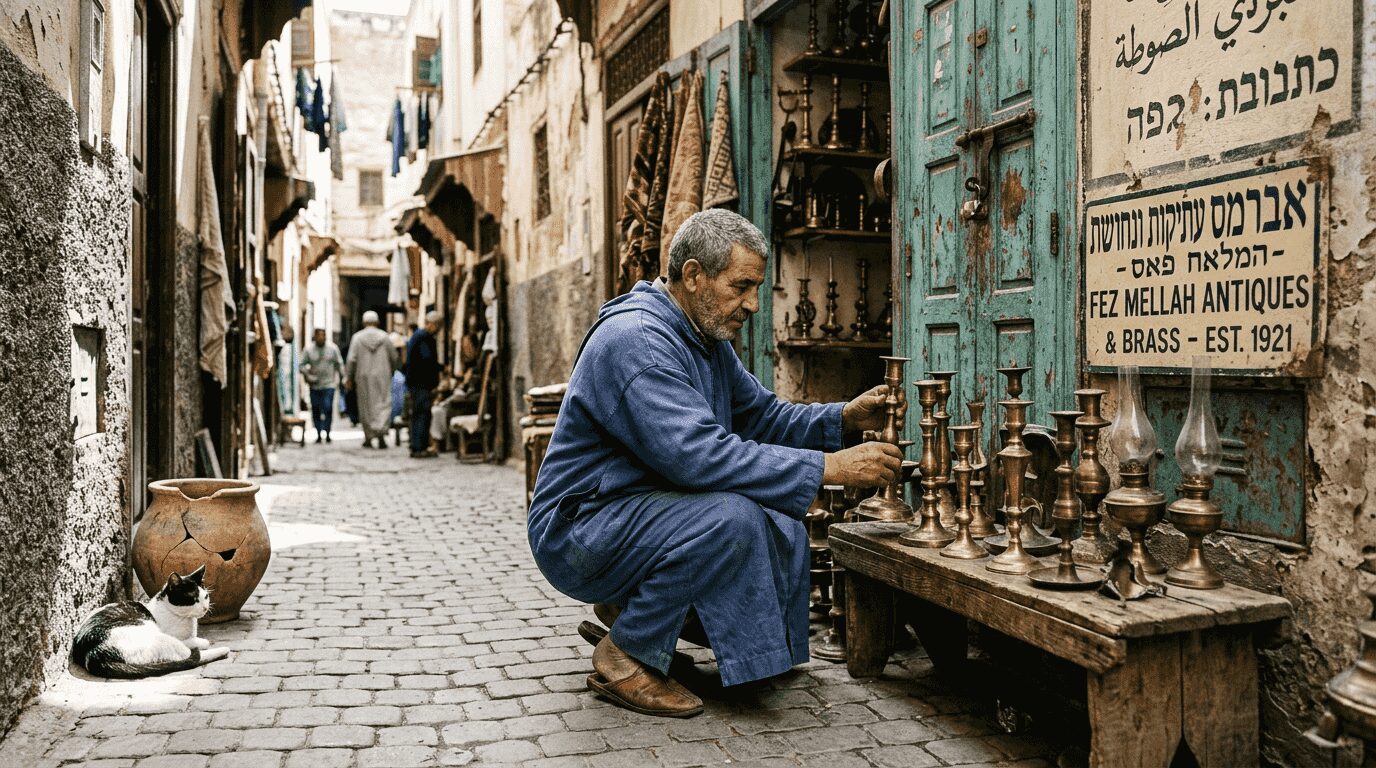
Many travelers assume Moroccan Jewish heritage is a minor footnote in North African history, but this couldn’t be further from reality. Jewish presence in Morocco dates back over 2,000 years, predating the Roman Empire and weaving itself into the nation’s cultural fabric. From ancient synagogues to restored quarters, this heritage offers profound insights into Morocco’s multicultural identity. Understanding this legacy transforms how you experience Moroccan cities and enriches every aspect of cultural exploration.
Table of Contents
- Unearthing Ancient Roots: The History Of Moroccan Jews
- Exploring Historic Jewish Quarters And Landmarks
- Preserving Memory: Morocco’s Cultural Revival Of Jewish Heritage
- Connecting With Moroccan Jewish Heritage: What Travelers Gain
- Explore Moroccan Jewish Heritage With Expert-Guided Tours
- Frequently Asked Questions
Key takeaways
| Point | Details |
|---|---|
| Ancient origins | Moroccan Jewish history spans over 2,000 years, blending indigenous Toshavim and Sephardic Megorashim communities |
| Accessible landmarks | Historic Jewish quarters like the Mellah in Marrakech and Fez feature preserved synagogues and cultural monuments |
| Active preservation | Morocco’s national conservation plan has restored over 167 cemeteries and rehabilitated synagogues across the country |
| Cultural contributions | Jewish communities historically shaped Moroccan trade, science, arts, and multicultural identity |
| Enriched travel experience | Exploring this heritage connects travelers to diverse narratives that complement broader Moroccan cultural tourism |
Unearthing ancient roots: The history of Moroccan Jews
Jewish communities established themselves in Morocco as early as 70 CE, creating one of the world’s oldest continuous Jewish diasporas. Two distinct groups shaped this heritage: the Toshavim, indigenous Jews who had lived in North Africa for centuries, and the Megorashim, Sephardic refugees who arrived after the Spanish Reconquista. Sephardic refugees integrated with indigenous Jews, forming a unique syncretic culture that blended Iberian customs, Judeo-Arabic language, and distinctive religious practices.
The Reconquista dramatically altered Morocco’s Jewish demographic landscape. When Spain expelled Jews in 1492, thousands fled to Morocco, bringing sophisticated commercial networks, scientific knowledge, and cultural traditions. These refugees settled primarily in coastal cities and imperial capitals, establishing vibrant communities that would influence Moroccan commerce for centuries. Their arrival created a cultural fusion that enriched both Jewish and broader Moroccan society.
Historical dynamics between Jewish communities and Muslim rulers varied significantly across different periods and regions. The dhimmi status, while imposing certain restrictions, also provided legal protection and relative autonomy. Jewish communities often prospered as merchants, artisans, and advisors to sultans. This complex relationship shaped Moroccan medinas where Jewish quarters became integral to urban fabric.
Key historical phases include:
- Ancient period: Jewish traders and settlers established communities in Roman-era Morocco
- Medieval era: Jewish scholars contributed to Morocco’s golden age of learning and commerce
- Post-Reconquista: Sephardic migration created cultural renaissance in major cities
- Colonial period: French protectorate brought modernization and new challenges to traditional communities
Pro Tip: When visiting historic sites, look for architectural details that reveal cultural exchange, such as Islamic geometric patterns in synagogue design or Hebrew inscriptions in medina archways.
“The Jewish presence in Morocco represents not a separate history but an intertwined narrative central to understanding Moroccan identity itself.”
Exploring historic Jewish quarters and landmarks
The Mellah districts stand as tangible monuments to centuries of Jewish life in Morocco. These traditional Jewish quarters featured distinctive architecture, narrow streets, and central synagogues that served as community focal points. Marrakech’s Mellah, established in 1558, includes the Slat al-Azama synagogue, which symbolizes the refuge Morocco provided to Spanish Jews. The Mellah in Marrakech and Fez are historically significant Jewish quarters with preserved landmarks that offer immersive cultural experiences.
Fez’s Mellah contains some of Morocco’s most important Jewish monuments. The Ibn Danan Synagogue, dating to the 17th century, showcases exquisite craftsmanship with carved cedar wood, colorful tiles, and Hebrew calligraphy. This centuries-old monument symbolizes Moroccan Jewish cultural legacy and demonstrates the architectural sophistication of Jewish religious spaces. Walking through these quarters reveals how Jewish communities shaped urban development and contributed to Morocco’s UNESCO heritage sites.
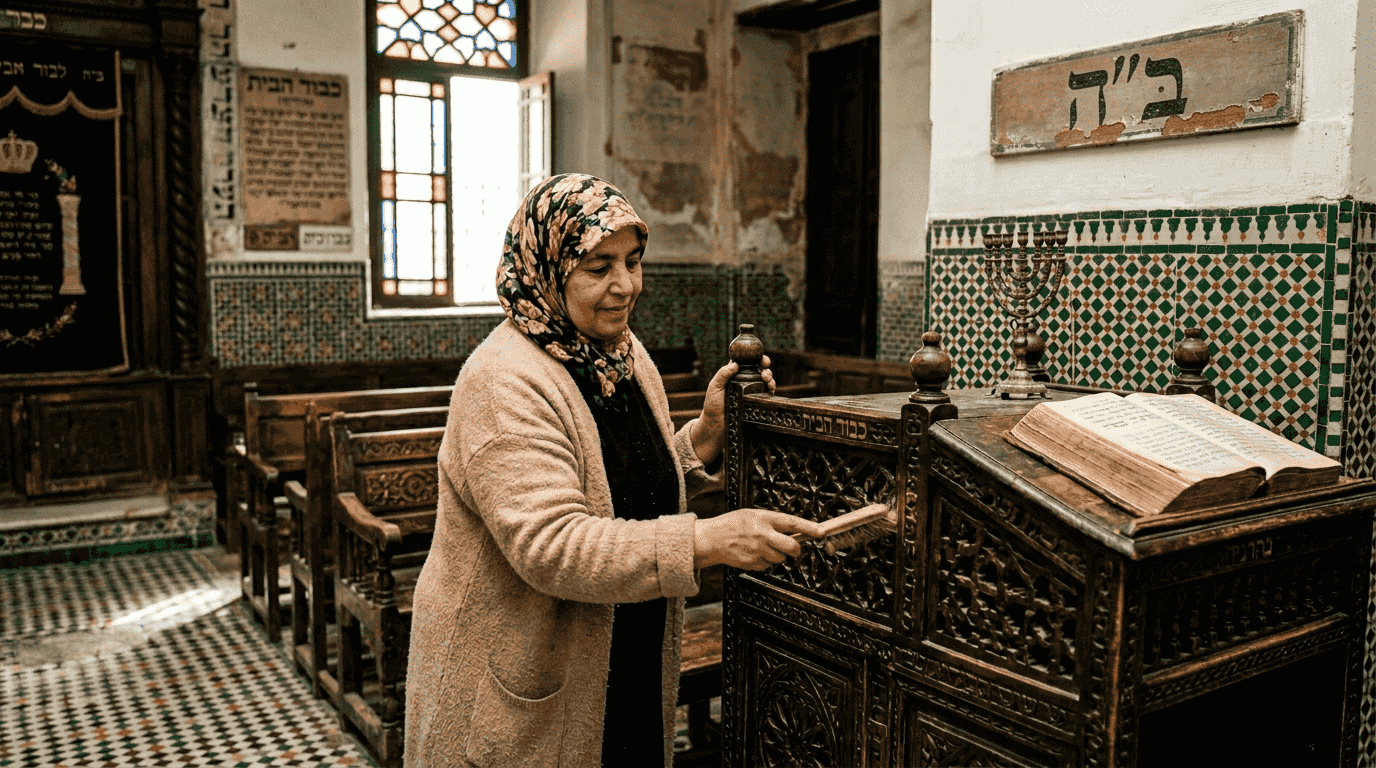
Many Jewish burial sites and cemeteries have undergone careful restoration, transforming them into important cultural heritage sites. These sacred spaces contain centuries of history, with tombstones bearing Hebrew inscriptions that chronicle family lineages and community leaders. The restoration work preserves not just physical structures but the memory of individuals who shaped Moroccan society.
| Location | Key Landmark | Historical Significance | Visitor Access |
|---|---|---|---|
| Marrakech | Slat al-Azama Synagogue | 16th-century refuge for Spanish Jews | Open for guided tours |
| Fez | Ibn Danan Synagogue | 17th-century architectural masterpiece | Restored and accessible |
| Casablanca | Beth-El Synagogue | Modern Jewish community center | Active congregation, limited access |
| Essaouira | Simon Attias Synagogue | Historic coastal Jewish quarter | Open to visitors |
Visiting these sites offers more than architectural appreciation. You connect with stories of merchants who traded across continents, scholars who preserved ancient texts, and families who maintained traditions through centuries of change. The historical monuments in Morocco include these Jewish landmarks as essential components of national heritage.
Pro Tip: Plan visits during weekday mornings when sites are less crowded and natural light illuminates architectural details best. Local guides from heritage organizations provide context that transforms buildings into living narratives.
Exploring Marrakech becomes richer when you understand how Jewish craftsmen contributed to palace decorations and how Jewish merchants operated in souks alongside Muslim and Christian traders. This multicultural commerce created the vibrant market culture travelers experience today.
Preserving memory: Morocco’s cultural revival of Jewish heritage
King Mohammed VI launched a comprehensive national strategy that recognizes Jewish heritage as integral to Moroccan identity. The national plan conserves Jewish quarters and has restored over 167 cemeteries across the country, representing one of the most ambitious Jewish heritage preservation programs in the Arab world. This initiative goes beyond physical restoration to actively promote cultural awareness and education.
Synagogues and street names in historic Jewish quarters are being systematically rehabilitated. The restoration work employs traditional craftsmanship techniques, ensuring authenticity while making sites accessible to contemporary visitors. Artisans trained in historical methods recreate decorative elements using original materials and designs. This attention to detail preserves not just structures but the artistic traditions that created them.
New cultural centers promote Hebrew language study and Jewish traditions, revitalizing community awareness among both Jewish and Muslim Moroccans. Dar Moulay Hachem in Demnat is being converted into a Hebrew cultural center, offering educational programs that connect younger generations with this heritage. These centers host exhibitions, lectures, and cultural events that make Jewish history accessible to all Moroccans.
The preservation effort follows this systematic approach:
- Documentation: Scholars catalog sites, record oral histories, and digitize historical records
- Physical restoration: Expert craftsmen repair buildings using traditional methods and materials
- Community engagement: Local residents participate in preservation planning and benefit from heritage tourism
- Educational programming: Schools incorporate Jewish heritage into curriculum, promoting understanding
- International collaboration: Partnerships with global Jewish organizations provide funding and expertise
This comprehensive strategy reflects Morocco’s recognition that Jewish heritage belongs to all Moroccans, not just Jewish communities. The government’s commitment demonstrates how Morocco’s cultural immersion opportunities extend beyond typical tourist experiences to include meaningful engagement with minority histories.
“Preserving Jewish heritage strengthens Morocco’s identity as a nation that has historically embraced diversity and protected its minorities.”
Travelers benefit directly from these preservation efforts. Restored sites offer authentic experiences backed by scholarly research and community support. The infrastructure around heritage sites, from informational plaques to trained guides, makes exploration both accessible and meaningful. Rabat’s cultural sites now include Jewish heritage locations as part of official tourist itineraries.
Connecting with Moroccan Jewish heritage: what travelers gain
Exploring Jewish heritage provides travelers with layered understanding of Morocco’s multicultural identity. You discover how Jewish, Berber, and Arab cultures intertwined to create the Morocco you experience today. Jewish heritage exploration offers unique insights into multicultural history that enriches cultural tourism beyond surface-level experiences. This depth transforms casual sightseeing into meaningful cultural engagement.
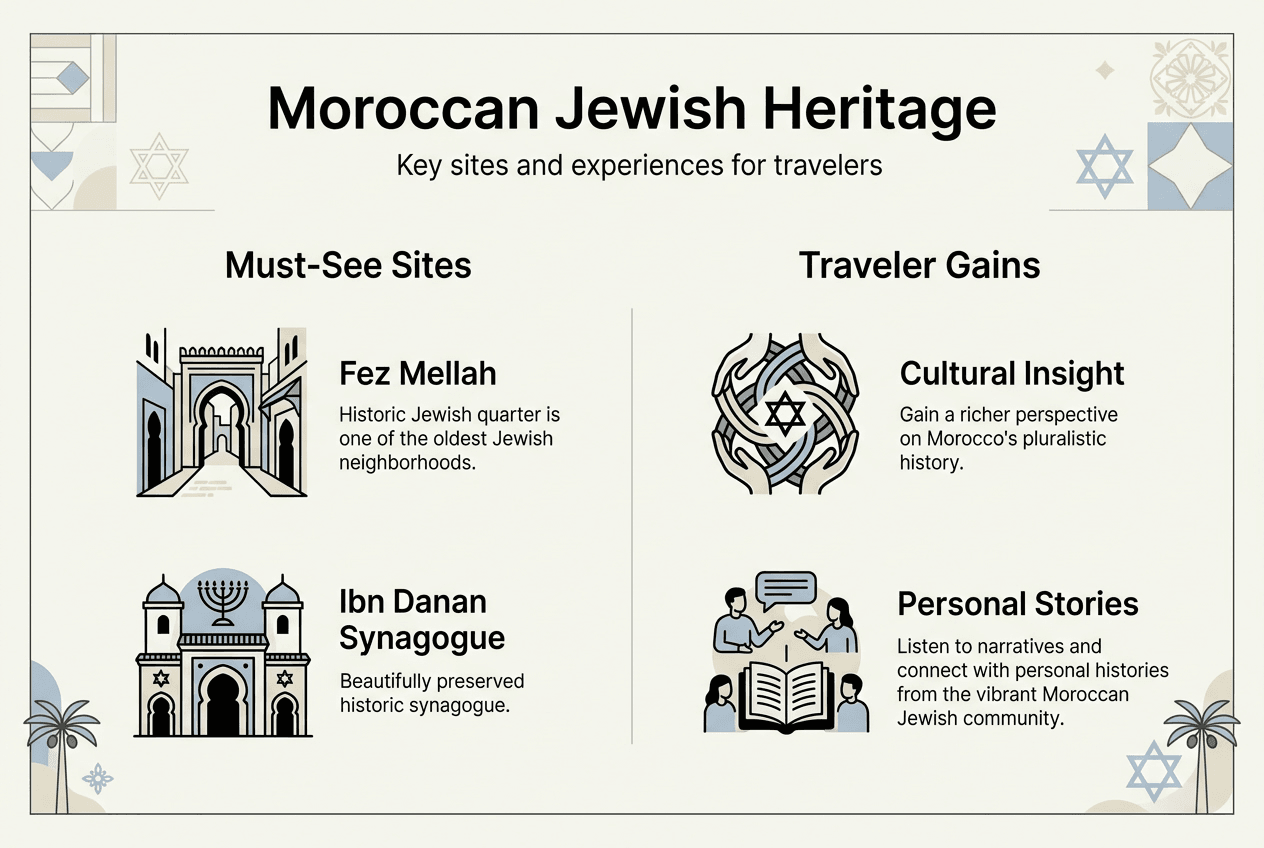
Cultural tourism that includes minority histories promotes appreciation and understanding. When you visit a restored synagogue or walk through a Mellah, you engage with narratives often overlooked in mainstream tourism. This engagement supports preservation efforts financially and demonstrates public interest that encourages continued conservation. Your visit becomes part of the preservation story.
Connecting with local guides and heritage experts dramatically enriches your experience. These specialists share family stories, explain architectural symbolism, and provide context that brings sites alive. Expert guides know which details matter, which stories resonate, and how to connect past and present meaningfully. Their knowledge transforms buildings into narratives.
| Heritage Experience Type | What You Gain | Best For | Typical Duration |
|---|---|---|---|
| Guided Mellah walking tour | Architectural insights, historical context | First-time heritage visitors | 2-3 hours |
| Synagogue visits with scholar | Religious traditions, artistic details | Deep cultural learners | 1-2 hours per site |
| Cemetery exploration | Genealogical connections, community history | Heritage seekers, researchers | 1-2 hours |
| Cultural center programs | Contemporary Jewish-Moroccan life | Those interested in living culture | Half-day workshops |
Visiting synagogues, museums, and Jewish quarters creates tangible connections to centuries of tradition. You touch the same railings Jewish merchants touched, walk streets where scholars debated, and see spaces where families celebrated and mourned. These physical connections make history immediate and personal.
Jewish heritage exploration complements broader Moroccan cultural and historical travel perfectly. The best places to see in Morocco gain additional dimension when you understand Jewish contributions to their development. A visit to Casablanca becomes richer when you explore its historic Jewish quarter alongside the Hassan II Mosque.
Practical benefits include:
- Deeper appreciation for Moroccan arts, crafts, and architecture
- Understanding of commercial and trade history that shaped cities
- Connection to global Jewish diaspora narratives
- Recognition of Morocco’s unique position in Arab-Jewish relations
Pro Tip: Combine Jewish heritage sites with visits to nearby historical monuments to see how different communities influenced each other architecturally and culturally. This comparative approach reveals the true nature of Moroccan cultural synthesis.
The personal impact of heritage tourism extends beyond your trip. You return home with stories that challenge stereotypes and demonstrate how diverse communities can coexist and enrich each other. These insights prove particularly valuable in our interconnected world where understanding cultural complexity matters more than ever.
Explore Moroccan Jewish heritage with expert-guided tours
Professional guided tours provide the depth and context that transform Jewish heritage sites from interesting stops into meaningful experiences. Expert guides bring decades of knowledge, connecting architectural details to historical events and personal stories to broader cultural movements. These specialists understand how to pace visits, when to provide information, and when to let sites speak for themselves. Moroccan city tours that include Jewish heritage components offer comprehensive cultural immersion.
Customized packages cater specifically to heritage-focused travelers seeking authentic engagement. Tours combine Jewish quarters with broader cultural experiences, showing how Jewish communities fit within Morocco’s larger narrative. An Imperial cities tour gains significant depth when it includes Mellah districts and synagogues alongside palaces and mosques. This integrated approach reveals the true multicultural nature of Moroccan civilization.
Working with guided tour specialists ensures access to sites that might otherwise remain closed or difficult to navigate. Professional tour operators maintain relationships with heritage site managers, synagogue caretakers, and local communities. This access opens doors literally and figuratively, providing experiences independent travelers cannot easily arrange.
Frequently asked questions
Is Moroccan Jewish heritage accessible for first-time visitors?
Absolutely. Major Jewish heritage sites in cities like Marrakech, Fez, and Casablanca welcome visitors with clear signage and available guides. Restored synagogues and Mellah quarters feature accessible pathways and informational materials. Many sites now include multilingual explanations that provide historical context without requiring prior knowledge. First-time visitors find Moroccan medinas and Jewish quarters equally navigable with proper planning.
What are the must-visit Jewish heritage sites in Morocco?
Priority sites include the Mellah quarters in Marrakech and Fez, where you experience authentic Jewish urban planning and architecture. The Ibn Danan Synagogue stands as a must-see landmark showcasing 17th-century craftsmanship. Restored cemeteries in major cities offer genealogical insights and peaceful reflection spaces. Casablanca’s Jewish Museum provides comprehensive historical overview. These UNESCO heritage sites represent centuries of cultural development.
How is Jewish heritage preserved and promoted in Morocco today?
The Moroccan government actively implements conservation plans that restore synagogues, rehabilitate cemeteries, and create cultural centers. King Mohammed VI’s initiative has preserved over 167 burial sites and numerous religious buildings. New Hebrew cultural centers offer educational programs that engage both Jewish and Muslim Moroccans. This systematic approach includes documentation, physical restoration, and community education. The preservation reflects Morocco’s commitment to cultural immersion that honors all heritage traditions.
Can exploring Moroccan Jewish heritage enrich overall Moroccan travel experiences?
Definitely. Jewish heritage exploration provides unique insights that deepen understanding of Morocco’s multicultural identity. It complements visits to imperial cities, medinas, and natural landmarks by revealing how diverse communities shaped Moroccan civilization. Understanding Jewish contributions to commerce, arts, and scholarship enhances appreciation for everything from architectural details to market traditions. This layered perspective transforms surface tourism into meaningful cultural engagement. Combining heritage sites with top destinations creates comprehensive travel experiences that honor Morocco’s full historical complexity.
Recommended
- Why explore Marrakech medina: unlock cultural heritage – Top Morocco Travel
- Moroccan Culture Explained: Traditions, Cuisine, and Heritage
- Morocco Holidays: Offer Adventure Culture And Luxury Tours
- Why Experience Moroccan Music: Cultural and Emotional Impact
- Cultural Experiences in Safari – Why They Matter – Namibia Luxury Safaris | Book Your 2025/2026 Adventure Today



Comments are closed