





Covering about 3,320,000 square miles, the Sahara Desert is larger than the entire United States. This vast expanse captures the curiosity of many travelers, as its monumental size and varied landscapes provoke both awe and intrigue. Understanding the Sahara’s geography and role across North Africa helps reveal why it stands as such a powerful symbol of natural wonder and cultural significance, offering adventure seekers and curious minds a closer look at one of the planet’s most extreme environments.
Table of Contents
- Defining The Sahara Desert And Its Geography
- Countries Spanning The Sahara Desert Region
- Morocco’s Role And Saharan Desert Highlights
- Travel And Safety Considerations For Visitors
- Unique Features And Experiences In Morocco’s Sahara
Key Takeaways
| Point | Details |
|---|---|
| Sahara Desert Geography | The Sahara is the world’s largest hot desert, covering approximately 3,320,000 square miles across northern Africa. Its diverse landscapes include sand dunes, plateaus, and mountains, bordered by major geographical features to the west, north, east, and south. |
| Saharan Nations | Eleven countries, including Algeria, Egypt, and Morocco, encompass the Sahara, each contributing unique geographic and cultural elements to the desert landscape. Their specific segments of the desert vary significantly in terrain and ecological characteristics. |
| Morocco’s Role | Morocco is a key destination in the Sahara, featuring iconic landscapes like the Erg Chebbi dunes, which are central to the country’s tourism industry. The desert’s cultural heritage is intertwined with local Berber communities, enhancing the travel experience. |
| Travel Safety | Successful travel in the Sahara requires thorough preparation and awareness of extreme weather conditions. Engaging experienced local guides and understanding current geopolitical concerns are essential for a safe journey. |
Defining the Sahara Desert and Its Geography
The Sahara Desert stands as a colossal geographical marvel stretching across northern Africa, representing the world’s largest hot desert. According to Britannica, this immense landscape covers approximately 3,320,000 square miles, extending roughly 3,000 miles from east to west and spanning between 800 and 1,200 miles from north to south. Its massive scale makes it a truly remarkable geological feature that dominates the African continent.
Geographically, the Sahara is defined by its complex and diverse topography, featuring an extraordinary range of landscapes. Wikipedia describes the region as encompassing multiple terrain types, including expansive sand dunes, rocky plateaus, and rugged mountain ranges. The desert is strategically bordered by significant geographical landmarks: the Atlantic Ocean to the west, the Atlas Mountains and Mediterranean Sea to the north, the Red Sea to the east, and the Sahel savanna region to the south. This intricate positioning contributes to its unique climatic and ecological characteristics.
Climate plays a crucial role in defining the Sahara’s environment. The region experiences extreme conditions characterized by extraordinarily low and unreliable rainfall, consistently high temperatures throughout the year, and significant temperature variations between day and night. The highest point within the Sahara is Mount Koussi in Chad, rising to an impressive 11,204 feet, which highlights the desert’s varied elevation and geological complexity. Its harsh environment supports minimal vegetation and presents challenging conditions for most forms of life, making it one of the most extreme landscapes on the planet.
For travelers interested in exploring this remarkable desert region, Your Ultimate Guide to Morocco Desert Tours offers comprehensive insights into experiencing the Sahara’s unique terrain and cultural landscapes firsthand.
Countries Spanning the Sahara Desert Region
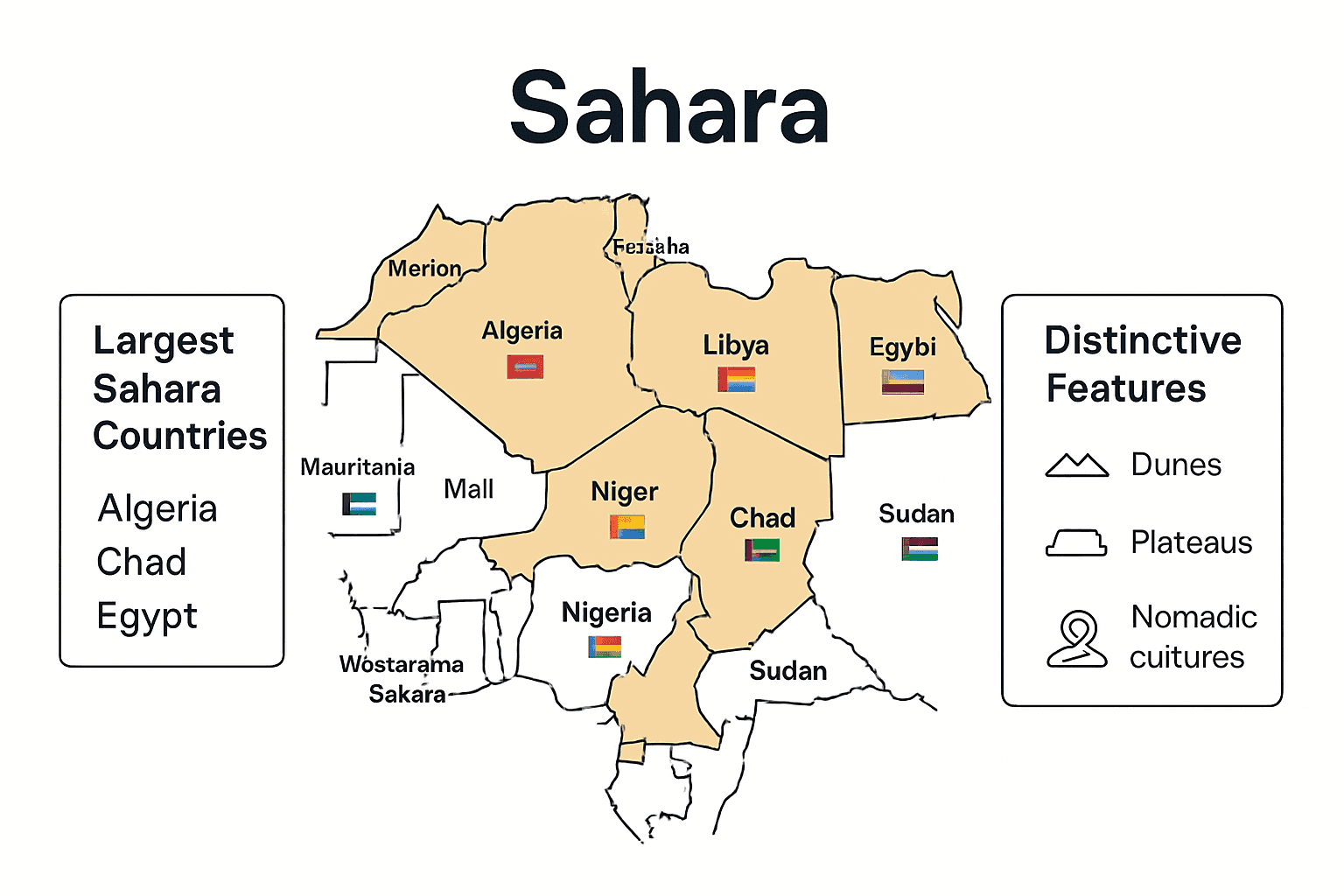
The Sahara Desert stretches across an impressive array of North African nations, creating a vast and diverse geographical landscape. According to Britannica, eleven countries encompass portions of this massive desert region, including Algeria, Chad, Egypt, Libya, Mali, Mauritania, Morocco, Niger, Western Sahara, Sudan, and Tunisia. Each of these nations contributes a unique segment to the desert’s expansive terrain, creating a complex mosaic of geographical and cultural diversity.
Geographically, these countries represent different zones of the Sahara, with varying topographical features and environmental conditions. Wikipedia highlights that while these nations share the desert landscape, their specific regions demonstrate significant variations in terrain, from rocky plateaus to massive sand dunes. Countries like Algeria and Libya contain the largest desert portions, while nations such as Morocco and Egypt feature more limited but equally fascinating desert landscapes that have profoundly influenced their national identities and historical development.
The economic and cultural significance of the Sahara varies dramatically across these nations. Some countries, like Mauritania and Niger, have substantial portions of their national territory covered by desert, fundamentally shaping their economic activities, population distribution, and traditional ways of life. Others, such as Morocco, leverage the desert’s unique landscape for tourism and cultural experiences.
 Nomadic populations like the Tuareg people have traditionally traversed these desert regions, creating intricate social networks that transcend modern national boundaries and represent a living cultural heritage deeply connected to the harsh yet beautiful desert environment.
For travelers eager to explore the Sahara’s diverse landscapes, Discover the Magic of Morocco Desert Tours offers an immersive journey into one of the most captivating desert regions in the world.
Morocco’s Role and Sahara Desert Highlights
Morocco plays a pivotal role in the Sahara Desert experience, offering some of the most breathtaking desert landscapes in North Africa. Britannica highlights the country’s remarkable sand dunes near Merzouga as among the most visited desert areas, which have become a cornerstone of Morocco’s tourism industry. These stunning natural formations represent more than just geographical features—they are gateways to understanding the rich cultural heritage and ecological complexity of the Saharan region.
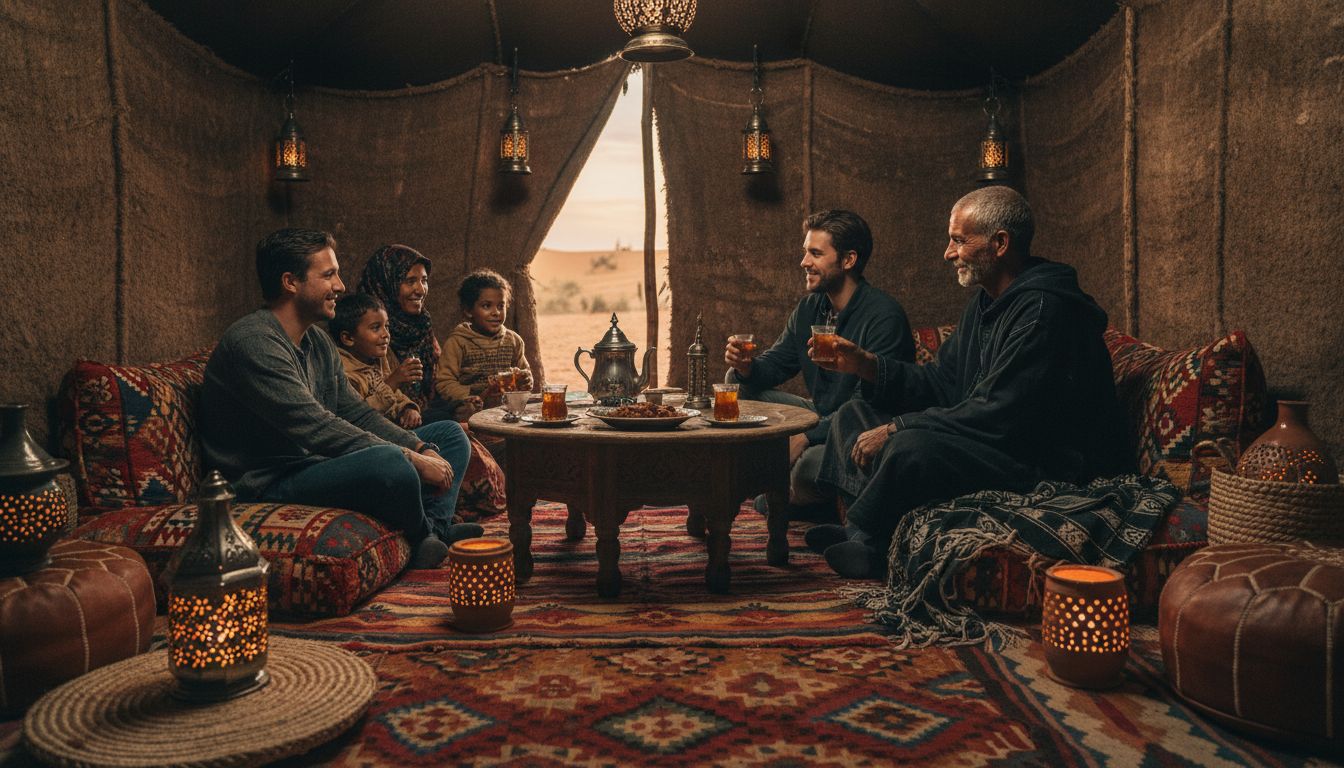
Wikipedia provides deeper insights into Morocco’s desert landscape, particularly emphasizing the Erg Chebbi dunes near Merzouga as a major tourist attraction. These towering sand formations offer visitors extraordinary experiences like camel treks and authentic overnight stays in traditional Berber tents. The landscape is not just visually stunning but serves as a living museum of Berber culture, showcasing centuries-old traditions of survival and adaptation in one of the world’s most challenging environments.
The Moroccan Sahara represents a complex ecosystem where culture, geography, and tourism intersect in fascinating ways. Travelers can explore vast expanses of golden sand, encounter nomadic communities, and witness breathtaking desert landscapes that have remained largely unchanged for millennia. Local Berber communities have developed intricate survival strategies that transform the seemingly inhospitable desert into a vibrant, dynamic living space. These communities offer visitors unique insights into sustainable living, traditional crafts, and ancient navigation techniques that have been perfected over generations.
Travelers seeking an immersive desert experience can discover the magic of these landscapes through Sahara Desert Tours Morocco, which offer comprehensive journeys into the heart of Morocco’s most spectacular desert regions.
Travel and Safety Considerations for Visitors
Traveling through the Sahara Desert demands meticulous preparation and awareness of the region’s unique challenges. Britannica emphasizes the critical importance of understanding the desert’s harsh environmental conditions, which include extreme temperatures, limited water sources, and unpredictable sandstorms. Successful desert exploration requires travelers to prioritize safety by partnering with experienced local guides who possess intimate knowledge of the terrain and can navigate potential risks effectively.
Wikipedia provides additional insights into the essential safety considerations for desert travelers. Preparation is key, which means carrying sufficient water supplies, protective clothing, and communication devices. Temperature fluctuations in the Sahara can be dramatic, with scorching daytime heat giving way to near-freezing nighttime temperatures. Travelers should pack layers, high-SPF sunscreen, wide-brimmed hats, and lightweight, breathable clothing that offers protection from intense solar radiation while allowing proper air circulation.
Beyond physical preparation, understanding the geopolitical landscape is crucial for safe desert travel. Some regions within the Sahara experience political instability, making it essential to stay informed about current local conditions and potential security concerns. Reputable tour operators can provide real-time guidance on safe routes and necessary precautions. Travelers should also consider travel insurance that specifically covers desert expeditions, ensure their vaccination records are current, and register with their home country’s embassy or consular services before embarking on their journey.
To ensure a safe and memorable desert experience, 7 Essential Morocco Desert Trip Tips for Every Traveler offers comprehensive guidance for navigating the Sahara’s unique challenges and opportunities.
Unique Features and Experiences in Morocco’s Sahara
Britannica reveals the extraordinary allure of Morocco’s Sahara, highlighting the Erg Chebbi dunes near Merzouga as a premier destination for transformative desert experiences. These magnificent sand formations offer travelers an unparalleled opportunity to engage with a landscape that seems to defy imagination. Camel treks across the undulating golden dunes provide an authentic journey through a terrain that has remained virtually unchanged for centuries, allowing visitors to connect with the timeless rhythm of desert life.
Wikipedia expands on the rich cultural tapestry of the region, emphasizing the unique opportunities for immersive experiences. Travelers can explore ancient kasbahs, witness breathtaking star-filled desert skies, and learn about the remarkable flora and fauna that have adapted to survive in this extreme environment. The traditional Berber camps offer more than just accommodation—they provide a window into a way of life that has been carefully preserved through generations, where hospitality and survival are intrinsically linked to the desert’s harsh landscape.
The Moroccan Sahara represents a living ecosystem of cultural and natural wonders. Visitors can expect extraordinary sensory experiences, from the shifting colors of sand during sunrise and sunset to the profound silence that blankets the landscape. Local guides share intricate stories of nomadic life, traditional navigation techniques, and survival strategies that have been perfected over millennia. The desert becomes a classroom of sorts, offering lessons in resilience, adaptability, and the delicate balance between human communities and their natural environment.
For travelers seeking the most exceptional desert experiences, Best Luxury Desert Camps Morocco provides an insider’s guide to experiencing the magic of Morocco’s most spectacular desert destinations.
Discover the Authentic Sahara Experience with TopMoroccoTravel
Understanding which countries the Sahara Desert spans is just the first step toward truly immersing yourself in this vast and breathtaking landscape. Many travelers face the challenge of finding reliable, safe, and culturally rich ways to explore the Sahara while overcoming harsh environmental conditions and complex regional geography described in the guide. If you are seeking an unforgettable desert adventure that goes beyond facts to authentic experiences in Morocco’s Sahara, you need expert guidance and personalized itineraries tailored to your travel goals.
At TopMoroccoTravel, we specialize in crafting bespoke Sahara tours that capture the magic of Morocco’s desert regions, including the famous Erg Chebbi dunes near Merzouga. Whether you want to experience camel treks, traditional Berber camps, or safe desert travel tips mentioned in the article, our expert team ensures an immersive and worry-free journey. Start your adventure now by exploring our Sahara Desert Tours Morocco and prepare for a cultural and natural discovery like no other. Don’t wait to turn your curiosity into an incredible reality with trusted local experts at TopMoroccoTravel.
Frequently Asked Questions
What is the Sahara Desert?
The Sahara Desert is the world’s largest hot desert, covering approximately 3,320,000 square miles across northern Africa. It features diverse landscapes, including sand dunes, rocky plateaus, and mountain ranges.
How many countries does the Sahara Desert span?
The Sahara Desert spans eleven countries in North Africa, creating a diverse geographical landscape with significant cultural and environmental variations.
What are the main geographical features of the Sahara Desert?
The Sahara Desert includes various terrains, such as expansive sand dunes, rocky plateaus, and rugged mountains. Notable geographical landmarks surround it, including the Atlantic Ocean, the Mediterranean Sea, and the Sahel savanna region.
What travel considerations should visitors keep in mind when visiting the Sahara Desert?
Travelers should prepare for extreme temperatures, carry sufficient water supplies, and hire experienced local guides. It’s also important to stay informed about geopolitical conditions and to consider travel insurance specific to desert expeditions.
Recommended
- Your Ultimate Guide to Morocco Desert Tours—Top Morocco Travel
- Moroccan Desert Tour Guide: Plan and Enjoy an Unforgettable Trip
- Discover the Magic of Morocco Desert Tours—Top Morocco Travel
- 7 Essential Morocco Desert Trip Tips for Every Traveler


Comments are closed