




- Tangier is Morocco’s northern gateway, where diverse cultures converge within a compact area suitable for quick exploration.
- Visitors can experience the Medina, Kasbah museums, scenic viewpoints like Cap Spartel, and historic sites such as the American Legation Museum and St. Andrew’s Church efficiently without a car.
- Combining coastal trips to Cap Spartel and the Caves of Hercules with cultural visits enhances a visit, especially during the FCAT festival.
Tangier is defined as Morocco’s northern gateway, a city where African, Arab, and European cultures collide across a compact geography that travelers can cover in one to two focused days. The things to do in Tangier range from walking the medieval Medina and Kasbah to standing at Cap Spartel where the Atlantic meets the Mediterranean, visiting the Tangier American Legation Museum, sipping mint tea at Café Hafa, and exploring the Caves of Hercules just outside the city. What makes Tangier genuinely different from other Moroccan cities is how tightly its top attractions cluster together, making efficient sightseeing possible without a car or an exhausting schedule. This guide organizes every major experience by category, with specific events and practical costs included throughout.
What are the must-see historical and cultural sites in Tangier?
Tangier’s historical core is the Medina, a walled old city whose narrow alleys connect two defining public squares: the Petit Socco and the Grand Socco. The Petit Socco, also called Zoco Chico, served for centuries as a trading hub and still draws locals to its outdoor cafés and storytellers. The Grand Socco functions as the main gateway between the modern city and the Medina, framed by the Mendoubia Gardens and the ornate Sidi Bou Abid Mosque. Walking between these two squares takes under ten minutes, yet the sensory shift from one to the other is dramatic enough to feel like crossing between eras.
Above the Medina sits the Kasbah, Tangier’s fortified citadel and one of the most rewarding areas in the city for cultural experiences. The Kasbah Museum occupies the former sultan’s palace and holds Moroccan art, Roman mosaics, and archaeological finds from the region. Within the same complex, the Museum of Contemporary Art and the Ibn Battuta Museum offer additional depth for visitors interested in modern Moroccan expression and the life of the 14th-century explorer who was born in Tangier. Clustering these three museums into a single Kasbah visit is the most time-efficient approach for anyone on a one-day itinerary.
The Tangier American Legation Museum is the first American public property established outside the United States, and it remains one of the most historically distinctive stops in North Africa. The museum houses exhibits on the long diplomatic relationship between Morocco and the U.S., along with a dedicated section on writer Paul Bowles, who lived in Tangier for decades and shaped the city’s literary identity. Morocco was the first country to recognize American independence in 1777, which gives this building a significance that extends well beyond regional history.
Pro Tip: The American Legation Museum requires cash payment at entry, so carry small bills or exact change before you arrive. ATMs near the Grand Socco are reliable and convenient.
Two architectural landmarks round out the cultural circuit. The Grand Mosque of Tangier, while closed to non-Muslim visitors, is worth viewing from the exterior for its green-tiled minaret and central position in the Medina. St. Andrew’s Church, built in 1894 in a Moorish style at the request of Queen Victoria, is open to visitors and contains the grave of Walter Harris, the Times of London correspondent who covered Morocco for decades. The church is one of the few places in Tangier where Islamic architectural motifs and Christian worship coexist in a single building.
- Medina and squares: Start at Grand Socco, walk to Petit Socco, and allow 60 to 90 minutes for the full circuit, including market browsing.
- Kasbah museums: Budget two hours for the Kasbah Museum, Contemporary Art, and Ibn Battuta Museum combined.
- American Legation: Allow 45 to 60 minutes; bring cash and arrive before noon to avoid afternoon crowds.
- St. Andrew’s Church: A 15-minute stop that rewards visitors with a genuinely unexpected architectural experience.
How to experience Tangier’s natural beauty and scenic viewpoints
Cap Spartel stands 326 meters above sea level at the precise point where the Atlantic Ocean and the Mediterranean Sea meet, making it one of the most geographically significant viewpoints on the African continent. The lighthouse on site has operated since 1865 and now includes a small museum. The panoramic view from the cape on a clear morning is one of the best photographs you will take in Morocco, with the Spanish coast visible across the strait. Cap Spartel sits about 14 kilometers west of the city center, reachable by taxi in roughly 20 minutes.
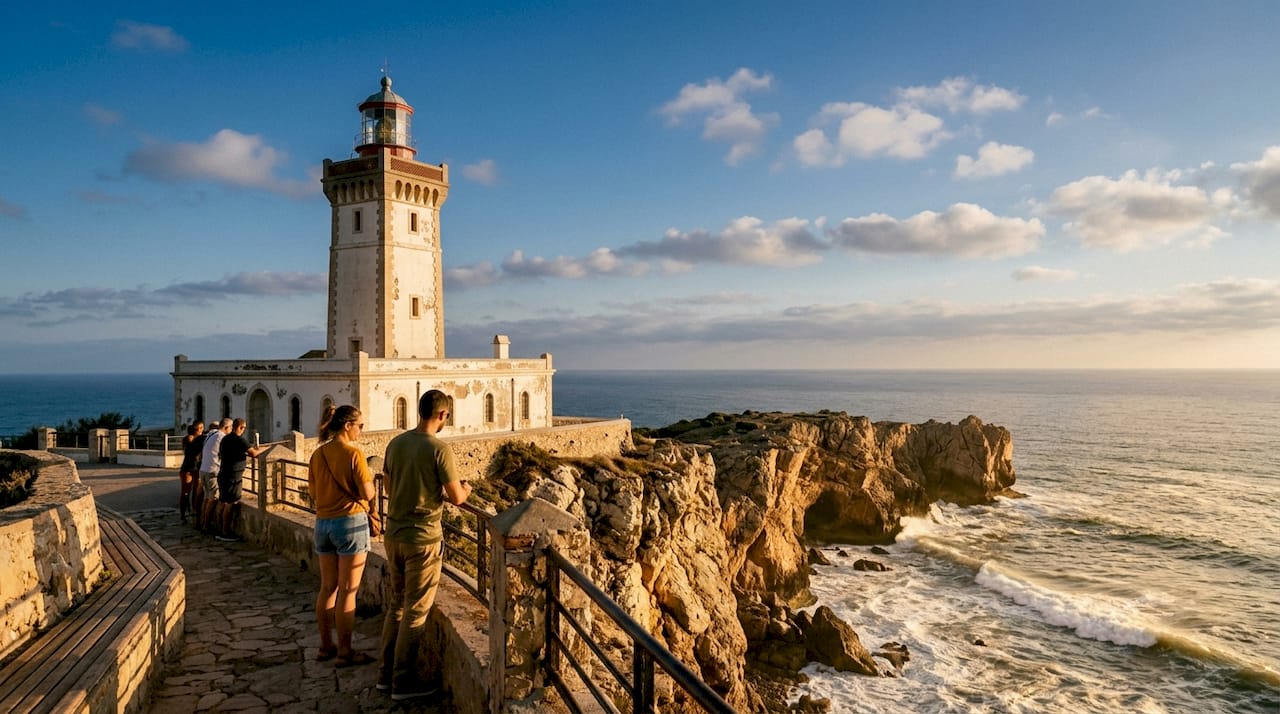
Just three kilometers south of Cap Spartel, the Caves of Hercules are among the most visited natural attractions near Tangier. The natural section of the caves is free to enter, while the man-made portion costs 5 MAD to access. That 5 MAD entry is worth it: the carved opening facing the sea is shaped like the African continent in silhouette, a detail that consistently surprises first-time visitors. Combining Cap Spartel and the Caves of Hercules into a single half-day trip is the standard approach, and it works well.
Pro Tip: Visit Cap Spartel and the Caves of Hercules in the morning when light hits the sea cliffs directly. Afternoon haze reduces visibility across the strait significantly.
Tangier’s coastline also offers accessible beaches within or close to the city. Here is a quick comparison of the main options:
| Beach | Distance from center | Best for |
|---|---|---|
| Plage Municipale | Walking distance | Quick dip, families |
| Merkala Beach | 3 km south | Quieter atmosphere, locals |
| Playa de la Alcazaba | 4 km south | Scenic backdrop, photography |
The Corniche, Tangier’s seaside promenade, connects the city beach to the port area and is best walked in the late afternoon when the light softens over the bay. Several seafood restaurants line the Corniche, making it a natural end point for a coastal afternoon. The promenade is flat, well-maintained, and safe for families traveling with children.
- Take a petit taxi from the city center to Cap Spartel (roughly 60 to 80 MAD one way).
- Walk the cape viewpoint and lighthouse area for 20 to 30 minutes.
- Continue three kilometers south by taxi to the Caves of Hercules.
- Return to the city along the coastal road, stopping at Merkala Beach if time allows.
- End the afternoon on the Corniche with a seafood meal before heading back to the Medina.
Where to enjoy the authentic Tangier atmosphere: cafés, markets, and local culture
Tangier’s café culture is not incidental to the city’s identity. It is the city’s identity. Three cafés in particular carry historical and literary weight that sets them apart from any generic coffee stop.
Café Hafa, perched on a cliff above the Strait of Gibraltar, has served mint tea in the same style of terraced seating since 1921. The Rolling Stones, the Beatles, and writer William S. Burroughs all sat here at various points. The view over the strait toward Spain is unobstructed, and the tea arrives in small glasses on metal trays, exactly as it has for over a century. Gran Cafe de Paris on the Place de France is where Tangier’s diplomatic and literary crowd gathered during the International Zone era of the 1920s through 1950s. Today it retains its tiled floors and brass fixtures, and the espresso is excellent. Café Baba in the Kasbah claims to be where the Rolling Stones smoked their first Moroccan kif, a story the owner still tells with evident pride.
- Café Hafa: Best visited in the afternoon for the light and the view. Order the fresh-squeezed orange juice alongside the mint tea.
- Gran Cafe de Paris: Morning coffee here before museum visits sets the right tone for the day.
- Café Baba: Compact and atmospheric; arrive early afternoon before the Kasbah fills with tour groups.
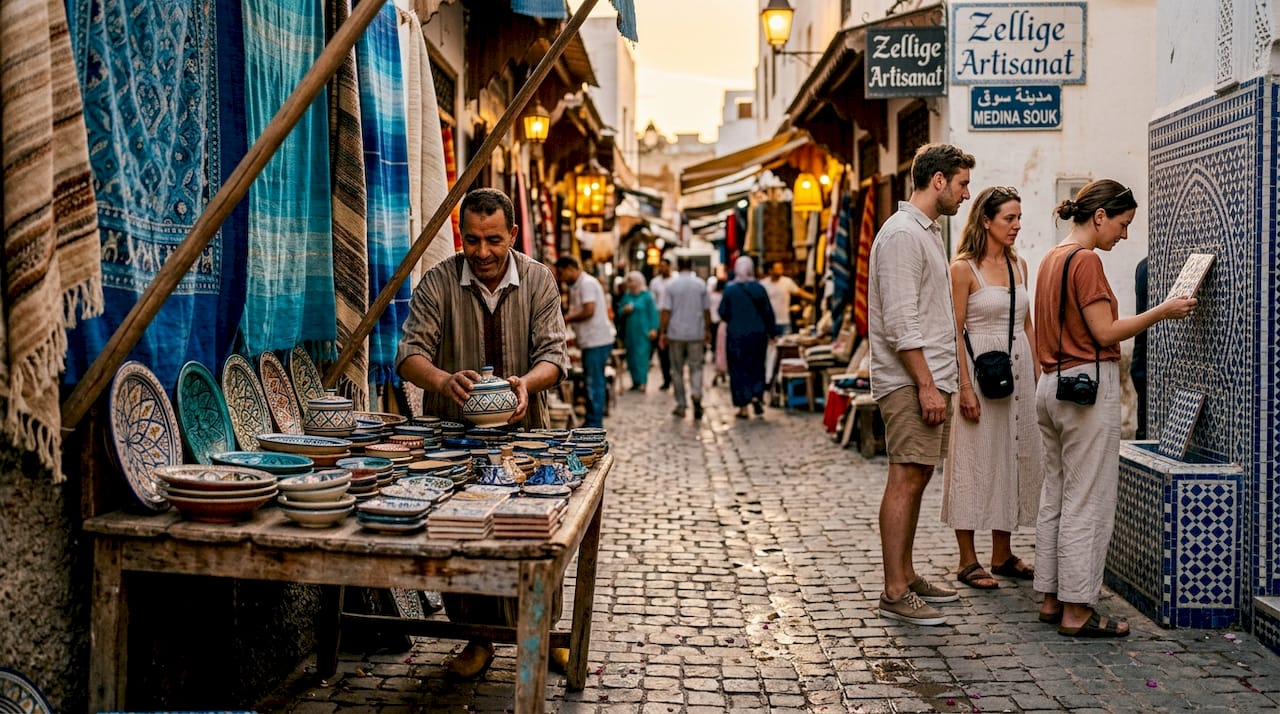
The Medina markets, called souks, run along the main artery between the Grand Socco and the Petit Socco. Leather goods, spices, ceramics, and djellabas line the stalls, and the quality is generally higher here than in more tourist-saturated Moroccan cities like Marrakech. Bargaining is expected, and starting at roughly half the asking price is a reasonable opening position. The spice market near the Petit Socco is worth a slow walk even if you buy nothing, purely for the visual and aromatic intensity.
Traditional mint tea in Tangier is poured from height to create froth, a practice that signals hospitality and patience. Accepting tea from a shop owner does not obligate you to buy anything, though it often leads to a genuine conversation about the city. Starting museum visits early and shifting to cafés and markets in the afternoon aligns with local rhythms and keeps your energy levels balanced across the day.
What special events and festivals should travelers consider visiting in Tangier?
The Tarifa-Tangier African Film Festival, known as FCAT, is the most significant cultural event on Tangier’s annual calendar. FCAT runs May 22 through 30 across both Tarifa in Spain and Tangier in Morocco, opening at Cinema Rif in Tangier’s Grand Socco. The festival screens films from across sub-Saharan Africa and the Maghreb, with director talks, panel discussions, and outdoor screenings that draw audiences from both sides of the strait.
“FCAT serves as a cultural bridge between Europe and Africa, using cinema to open conversations that geography and politics often close.” The festival’s dual-city format makes it unique in the world of film festivals, and attending even two or three screenings gives travelers a perspective on contemporary African storytelling that no museum exhibit can replicate.
Planning a visit around FCAT requires booking accommodation in Tangier at least six to eight weeks in advance, as the festival draws international press and film professionals alongside general audiences. Cinema Rif itself is a beautifully restored 1938 movie house that is worth visiting outside festival season as well, for its architecture and its regular programming of Moroccan and international films. The cultural significance of Moroccan festivals extends well beyond entertainment: they are the moments when the city’s layered identity becomes most visible to outside visitors.
Beyond FCAT, Tangier hosts smaller cultural events tied to Ramadan, Eid celebrations, and the Moussem of Sidi Kacem, a local religious festival that brings traditional music and processions to the Medina. These events are harder to plan around but rewarding if your travel dates happen to align.
How to plan your visit efficiently: itineraries and transportation tips in Tangier
Tangier airport passenger traffic has grown by over 11% year-on-year, meaning more direct international routes are now available than at any previous point. That growth translates to better flight options from European cities, which makes Tangier increasingly viable as a standalone two-day destination rather than just a day trip from Spain.
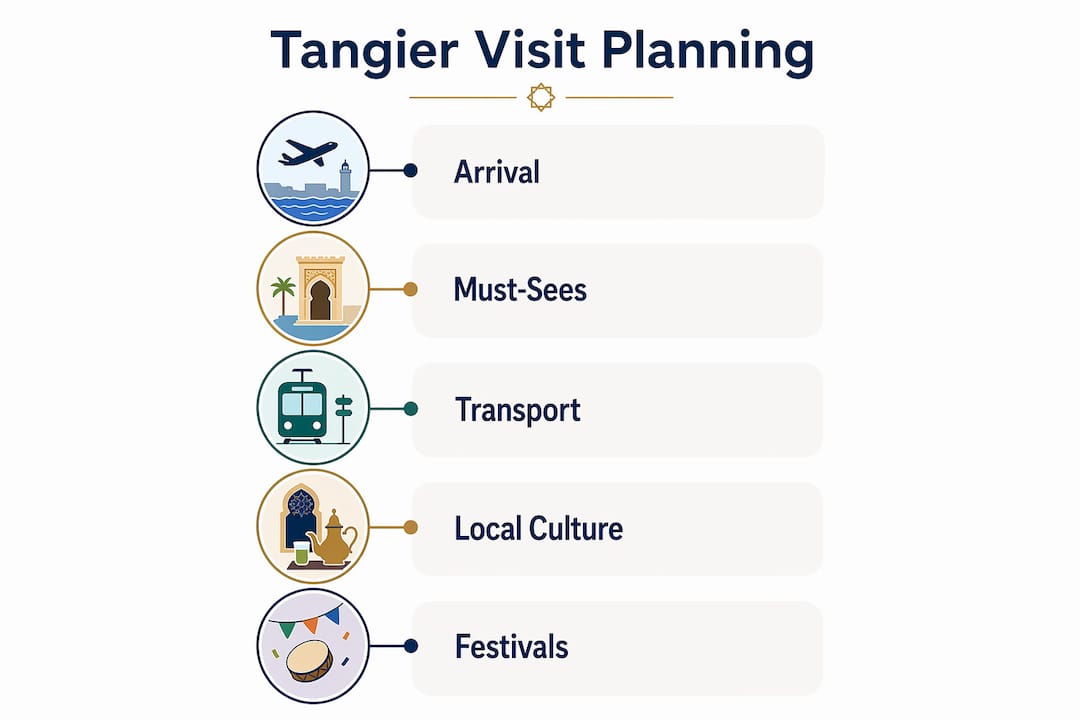
Here is how a one-day versus two-day visit breaks down in practice:
| Itinerary | Morning | Afternoon | Evening |
|---|---|---|---|
| One day | Medina, Kasbah, American Legation | Cap Spartel, Caves of Hercules | Corniche dinner |
| Two days | Day 1: Medina and museums | Day 1: Cafés and souks | Day 1: Grand Socco area |
| Day 2: Cap Spartel and coast | Day 2: Merkala Beach | Day 2: Café Hafa at sunset |
Transportation within Tangier is straightforward and affordable. The hop-on hop-off bus costs 130 MAD for a 48-hour pass and covers the main tourist circuit, including the Medina, beach, and port. Standard public buses run for approximately 3.5 MAD per ride and connect most neighborhoods. Fixed-rate taxis from the airport to the city center cost 100 MAD, which removes any negotiation stress on arrival. Petit taxis within the city are metered and rarely exceed 20 to 30 MAD for a short trip.
Pro Tip: The main attractions cluster tightly around the Medina and Kasbah, so plan your day to move outward from the center rather than zigzagging across the city. This alone cuts walking time by 30 to 40 minutes on a one-day visit.
Cash is the dominant payment method across Tangier’s attractions, markets, and smaller restaurants. Carry a mix of 20 and 50 MAD notes at all times. The best restaurants in Tangier, including seafood spots on the Corniche and traditional Moroccan restaurants near the Kasbah, typically accept cash only. ATMs are available near the Grand Socco and along Boulevard Pasteur in the modern city center.
Key takeaways
Tangier rewards travelers who plan around its compact geography, cluster attractions logically, and shift from museums in the morning to cafés and coast in the afternoon.
| Point | Details |
|---|---|
| Cluster your sightseeing | The Kasbah, American Legation, and Medina squares sit within walking distance of each other. |
| Carry cash everywhere | Museums, taxis, and most restaurants in Tangier operate on cash only; bring small bills. |
| Cap Spartel plus Caves of Hercules | Combine both into one half-day coastal trip for maximum efficiency and scenery. |
| FCAT runs May 22 to 30 | Book accommodation early if visiting during the African Film Festival at Cinema Rif. |
| Morning museums, afternoon cafés | Aligning your schedule with local rhythms improves both access and atmosphere. |
What I’ve learned from years of sending travelers to Tangier
Most visitors arrive in Tangier expecting a scaled-down version of Marrakech or Fes. They leave realizing it is something entirely different: a port city with a cosmopolitan edge, a literary past, and a pace that rewards patience over itinerary-checking.
The single most common mistake I see is spending too much time in the Medina markets and not enough time simply sitting. Café Hafa on a Tuesday afternoon, with a glass of mint tea and the Spanish coast visible across the water, teaches you more about Tangier than any museum exhibit. The city’s identity was shaped by writers, diplomats, and traders who stayed long enough to absorb it, not by people who photographed it and left.
I also think travelers underestimate the Kasbah museums. The Ibn Battuta Museum in particular is overlooked because Ibn Battuta himself is less famous in Western travel culture than he deserves to be. He covered more ground in the 14th century than Marco Polo, and the museum makes that case convincingly. Give it 45 minutes and you will leave with a genuinely different perspective on the history of exploration.
One practical note: the Tangier city guide on our site includes updated safety information and neighborhood-by-neighborhood breakdowns that I recommend reading before your first visit. The Medina is safe, but knowing which alleys lead where saves real time and reduces the low-level friction that makes some travelers feel anxious. Tangier is not a difficult city. It just asks you to slow down enough to read it correctly.
— Topmoroccotravel.com
Plan your Tangier visit with Topmoroccotravel
Topmoroccotravel designs Moroccan city tours that take the guesswork out of Tangier’s layered geography and cultural depth. Whether you want a private guided walk through the Kasbah and American Legation, a coastal excursion to Cap Spartel and the Caves of Hercules, or a full two-day cultural program timed around FCAT, the team builds itineraries around your pace and interests. Guided tours in Tangier are particularly valuable for first-time visitors because local guides navigate the Medina’s unmarked alleys, handle museum entry logistics, and connect you to experiences that no map app surfaces. Explore the full range of city exploration options and start planning your Tangier trip today.
FAQ
What are the top things to do in Tangier in one day?
A single day in Tangier covers the Medina, Kasbah museums, American Legation, Cap Spartel, Caves of Hercules, and Café Hafa. Cluster the Medina and Kasbah in the morning, then head to the coast in the afternoon.
Is the Tangier American Legation Museum worth visiting?
The American Legation Museum is the first American public property outside the U.S. and houses exhibits on Paul Bowles and U.S.-Morocco diplomatic history. It is one of the most historically distinctive museums in North Africa and takes under an hour to visit.
How much does it cost to enter the Caves of Hercules?
The natural section of the Caves of Hercules is free, while the man-made portion costs 5 MAD. Both sections are accessible on the same visit and are best combined with a stop at Cap Spartel nearby.
What is the best way to get around Tangier?
The hop-on hop-off bus costs 130 MAD for 48 hours and covers the main tourist circuit. Petit taxis are metered and affordable for shorter trips, and public buses run for approximately 3.5 MAD per ride.
When is the Tarifa-Tangier African Film Festival?
FCAT runs May 22 through 30, opening at Cinema Rif in Tangier’s Grand Socco. Book accommodation at least six to eight weeks in advance if your visit coincides with the festival.


Comments are closed