




- Tangier’s rich history and layered culture make it a rewarding destination for curious travelers willing to explore beyond surface-level attractions.
- A mixed approach of guided and solo experiences allows deep engagement with the city’s neighborhoods, history, and hidden gems.
Tangier sits at the crossroads of Africa and Europe, separated from Spain by just 14 kilometers of the Strait of Gibraltar, yet most travelers treat it as a quick stamp in the passport before moving south. That’s a serious mistake. Guided walks through Tangier’s Medina and Kasbah paired with smart, targeted stops dramatically sharpen a traveler’s cultural understanding and cut the friction of navigating unfamiliar streets alone. This guide breaks down exactly how to approach Tangier with intention, whether you have a single day, a long weekend, or the luxury of an open schedule.
Table of Contents
- Setting the context: Why Tangier deserves a deeper look
- Authenticity and adventure: The best ways to explore
- From iconic sights to hidden gems: Building your Tangier itinerary
- Customizing your Tangier experience: Itinerary personalization tips
- Why the conventional approach to Tangier misses the mark
- Discover custom Tangier adventures with Top Morocco Travel
- Frequently asked questions
Key Takeaways
| Point | Details |
|---|---|
| Go beyond the medina | Tangier rewards travelers who mix iconic sites with hidden gems for a richer cultural experience. |
| Pair guided walks with stops | Expert walks with museum visits reduce friction and deepen your understanding of Tangier’s history. |
| Customize your itinerary | Flexible planning lets you balance adventure, culture, and relaxation for a personalized journey. |
| Choose pacing wisely | A compact sightseeing plan covers essentials quickly, but slow travel brings deeper context and connections. |
Setting the context: Why Tangier deserves a deeper look
Tangier is one of those cities that rewards people who show up curious. It has been a meeting point for Phoenician traders, Roman settlers, Portuguese colonizers, French and Spanish colonial powers, and generations of artists and writers who found something irresistible in its layered identity. The Beat Generation writers, from Paul Bowles to William S. Burroughs, didn’t choose Tangier by accident. They came because the city felt genuinely alive with contradiction and complexity.
That history shapes everything you experience here today. The Tangier city guide points to a destination that operates on multiple cultural registers at once. You can walk from a neighborhood where French is the preferred language to one where Darija (Moroccan Arabic) and Amazigh dialects blend in a single conversation. Spanish signage still appears in some corners. The food reflects all of it.
Here’s what most visitors miss when they rush through:
- The Medina’s layered geography. The winding lanes aren’t randomly arranged. They follow social and trade logic that dates back centuries, and understanding that logic transforms a confusing maze into a living map.
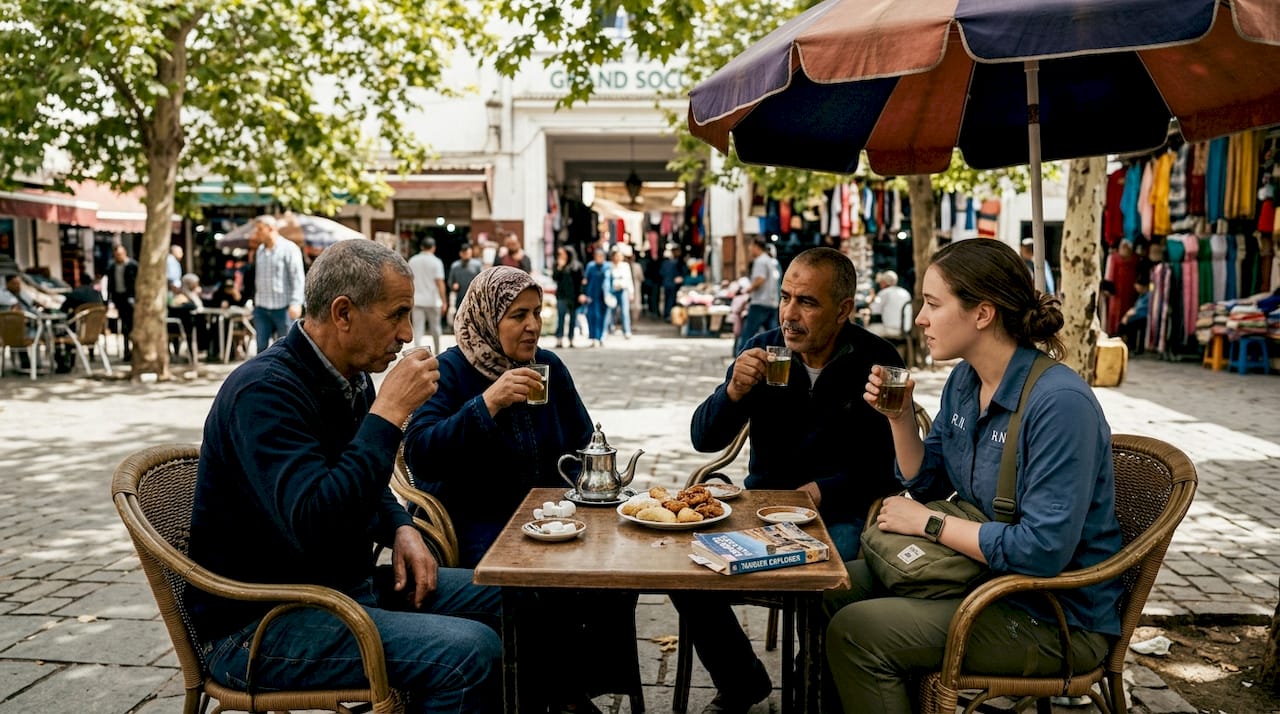
- The Grand Socco and Petit Socco. These two squares anchor the old and new towns, respectively, and serve as real social hubs, not tourist backdrops.
- The beach boulevard and ville nouvelle. Tangier’s European-era new town holds stunning Art Deco architecture that most rush-through travelers never notice.
- Local cuisine beyond tourist menus. Authentic bissara (a thick fava bean soup), fresh sardines grilled at tiny stands near the port, and mint tea ceremonies in family-run spaces tell a story no museum exhibit can match.
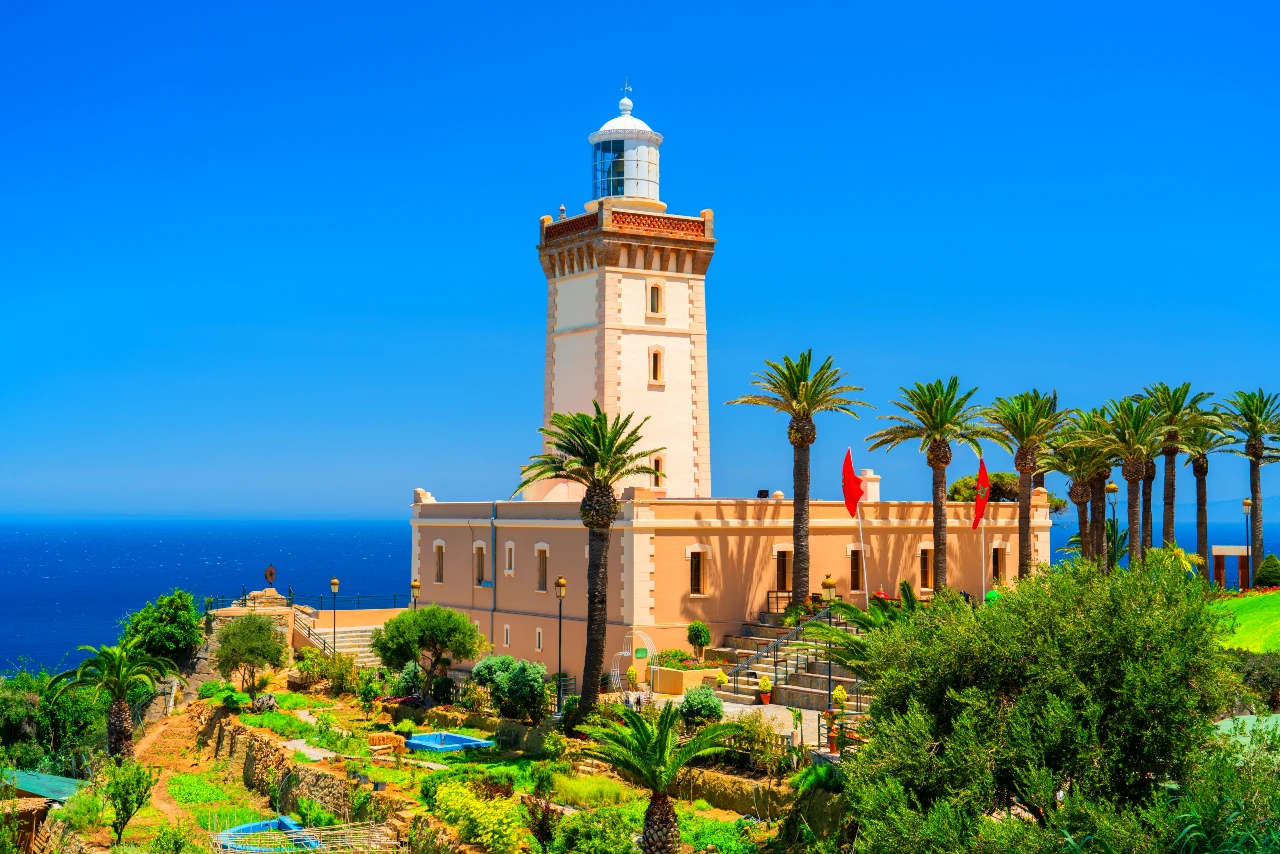
- The Cape Spartel lighthouse and Hercules Caves. Just outside the city, these sites blend mythology and stunning Atlantic coastline into a half-day trip that most transit travelers never take.
Some itinerary resources emphasize must-see sequencing for short stays, while others push for slower pacing and genuinely hidden gems beyond the main medina. Both approaches have merit, but the choice comes down to your travel style and how long you have. The must-see Tangier sights include landmarks like the Kasbah Museum, the American Legation Museum, and the Forbes Museum, but these anchors work best when they’re part of a flexible structure, not a rigid checklist.
A key insight: Tangier’s value as a destination isn’t proportional to how many landmarks you check off. It’s proportional to how deeply you engage with what you find.
Authenticity and adventure: The best ways to explore
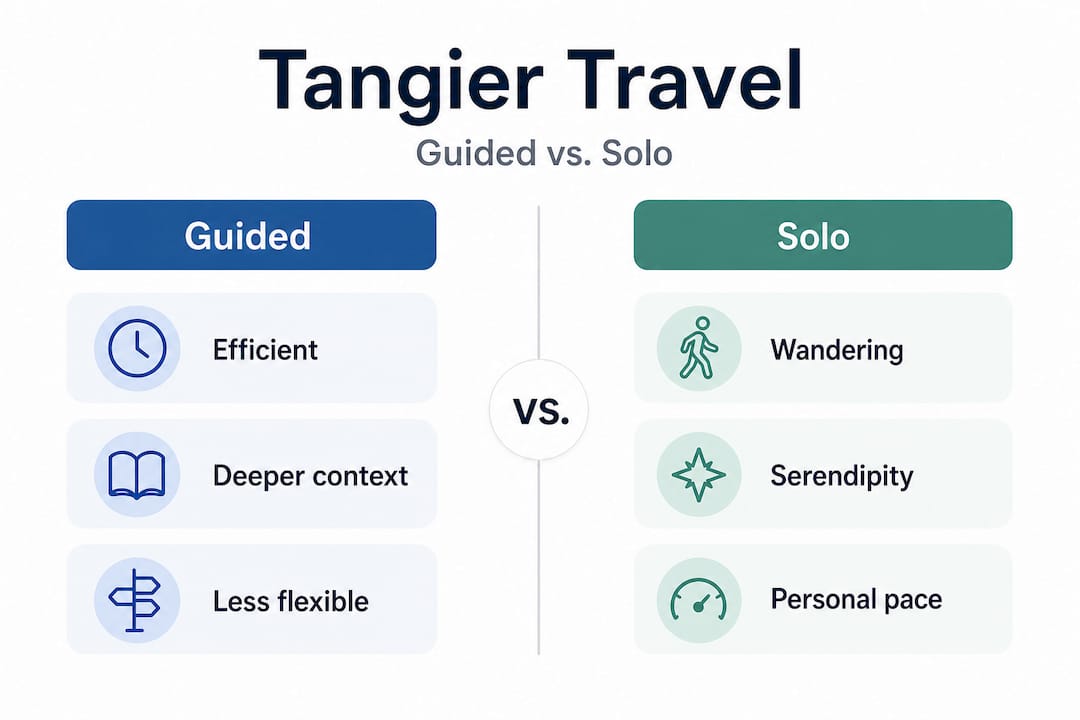
The fundamental question most travelers face in Tangier is whether to go guided or solo. Both paths have genuine advantages, and the smartest approach often combines the two strategically.
Guided tours of the Medina and Kasbah dramatically reduce the time you spend lost or uncertain while adding layers of historical and social context you simply can’t access from a guidebook. A good local guide doesn’t just show you the American Legation Museum. They explain why an American diplomatic presence mattered in 18th-century Morocco, what it says about trade relationships, and how that history echoes in Tangier’s unique status as an international zone through the 20th century.
But solo exploration has its own rewards. Getting lost in the authentic medina culture is how you stumble onto a neighborhood hammam that’s been operating for 200 years, or a ceramics workshop where an artisan is working on pieces that will never appear in any shop facing tourist traffic.
Here’s a practical comparison to help you decide:
| Approach | Time efficiency | Cultural depth | Access to hidden spots | Cost |
|---|---|---|---|---|
| Fully guided tour | High | High (with good guide) | Medium | Higher |
| Semi-guided (key sites) | Medium-High | High | High | Moderate |
| Fully self-guided | Low | Variable | Very high (with effort) | Lower |
| Mixed approach | High | Very high | Very high | Moderate |
The mixed approach wins for most travelers. Spend your first morning with a knowledgeable guide to build your spatial and cultural bearings. Then use the afternoon to wander with that context in your head.
Pro Tip: Before booking any guide in Tangier, ask specifically about their knowledge of the Kasbah’s residential neighborhoods, not just the main tourist circuit. Guides who can take you into living streets rather than just museum corridors offer a fundamentally different experience.
Understanding what a medina actually is helps enormously before you arrive. A medina is the traditional walled urban center of a Moroccan city, organized around mosques, souks (markets), and residential quarters. Tangier’s medina is smaller than Fez’s or Marrakech’s, which makes it less overwhelming for first-time visitors but no less rich in content.
Here are the most rewarding adventure-focused activities you can layer into your Tangier itinerary:
- Kasbah exploration on foot. The Kasbah sits at the highest point of the medina, offering views across the strait to Spain on clear days. Walking its narrow lanes at different times of day reveals completely different moods.
- Cape Spartel and the Caves of Hercules. A 30-minute drive from the city center brings you to the dramatic headland where the Mediterranean meets the Atlantic. The cave system here is genuinely impressive and steeped in Berber and Roman history.
- Day hike into the Rif Mountain foothills. The Rif Mountains begin roughly 60 kilometers south of Tangier, and organized hiking trips from the city offer access to forested trails, cedar woodland, and Amazigh (Berber) mountain villages that feel like a different world.
- Artisan quarter visits. Tangier’s leather tanners, weavers, and metalworkers still practice their crafts in workshops that have operated for generations. A knowledgeable guide or a reputable tour operator can arrange access that respectful independent travelers rarely achieve.
- Coastal cycling along the beach road. Tangier’s long Atlantic beach stretches for several kilometers, and cycling it at sunrise before the day heats up is one of the city’s genuinely underrated pleasures.
For travelers who’ve already explored Chefchaouen’s medina, Tangier offers a useful contrast. Where Chefchaouen feels intimate and visual, Tangier feels complex and layered. Both reward curiosity in different ways.
From iconic sights to hidden gems: Building your Tangier itinerary
A strong Tangier itinerary doesn’t mean packing in as many sites as possible. It means sequencing experiences so that each one adds context to the next. Coverage versus depth and relaxation is a real trade-off that every traveler has to make consciously.
Here’s how the main experiences stack up in terms of time investment and payoff:
| Experience | Time needed | Best for | Insider advantage |
|---|---|---|---|
| Kasbah and Kasbah Museum | 2 to 3 hours | History lovers | Visit just before closing for smaller crowds |
| Grand Socco and Medina souk | 1 to 2 hours | Culture seekers, shoppers | Morning visits for genuine local atmosphere |
| American Legation Museum | 1.5 hours | History buffs, art lovers | Free entry; one of Africa’s most overlooked museums |
| Cape Spartel and Hercules Caves | 3 to 4 hours | Adventure travelers | Sunset at Cape Spartel is spectacular |
| Rif Mountain day hike | Full day | Active travelers | Arrange through a local operator for trail access |
| Artisan workshops | 1 to 2 hours | Culture seekers | Guided access reveals non-commercial workshops |
| Beach boulevard and ville nouvelle | 1.5 to 2 hours | Relaxed explorers, architecture fans | Early morning walk before city traffic builds |
Visit the top Tangier attractions as anchors, but don’t let them consume every hour. The spaces between landmark visits are where Tangier surprises you most.
Different traveler profiles call for different combinations:
- Culture seekers: Start at the Grand Socco, work through the Medina souk to the Kasbah, spend serious time at the American Legation Museum, and finish with a guided artisan workshop visit. Add a traditional Moroccan dinner in a riad-style restaurant in the medina.
- Adventure travelers: Open your first morning with a sunrise beach walk or coastal cycle. Spend midday in the Kasbah for the views. Plan a full-day Rif Mountain hike for day two, and end with Cape Spartel at sunset.
- Relaxed explorers: Build a slower, café-anchored itinerary. Mint tea at the Petit Socco. A morning at the Forbes Museum. A long seafood lunch on the corniche. An afternoon browse through the ville nouvelle’s European-era streets. No rush, no checklist.
For travelers planning broader Moroccan journeys, the must-do Morocco experiences provide excellent context for how Tangier fits into a national travel narrative. And if you’re drawn to the country’s historic cities as a group, the Imperial Cities Escape itinerary shows how Tangier connects to Fez, Meknes, and Rabat in a coherent northern Morocco circuit.
The strongest itineraries treat Tangier not as a gateway but as a destination complete in itself, with enough depth to fill three or four thoughtful days.
Customizing your Tangier experience: Itinerary personalization tips
No two travelers need the same Tangier. A couple on a romantic weekend, a solo backpacker with a week to spare, a family with kids, and a photography-focused traveler will all get different things from the city and should approach it differently. Here’s how to build an itinerary that actually fits you.
Guided Medina and Kasbah walks with targeted stops consistently deliver better cultural context and more efficient use of limited time than unguided wandering, especially on a first visit. That’s not an argument against independence; it’s an argument for starting with a strong foundation.
Follow these steps to build a personalized Tangier itinerary:
- Set clear priorities before you arrive. Decide whether history, food, adventure, photography, or relaxation is your primary focus. Let that drive your time allocation rather than trying to cover everything equally.
- Anchor your days with one major experience. One significant activity per day, whether a guided Kasbah tour, a mountain hike, or a cooking class, provides structure without overcrowding your schedule.
- Build in genuine free time. Two hours of unstructured wandering in the Medina after a morning tour produces a completely different experience than rushing to the next listed attraction. Tangier rewards curiosity.
- Check for local events and market days. Tangier’s weekly markets, religious festivals, and cultural events add a layer of authenticity that no fixed itinerary can replicate. The local tourist office or your tour operator can advise on timing.
- Mix experience types across each day. Pair a structured museum visit with an unstructured afternoon walk. Follow an adventure activity with a slow dinner. Contrast creates energy.
- Plan transport in advance for day trips. Cape Spartel, the Rif Mountain foothills, and the beach towns to the south all require reliable logistics. Booking transport through a reputable operator avoids the significant friction of arranging shared taxis with a language barrier.
Pro Tip: Build at least one completely empty half-day into your itinerary. In Tangier, the best experiences often come from saying yes to an unexpected invitation from a local craftsman, a last-minute mint tea ceremony with a shopkeeper, or following an alley that looks interesting for no particular reason.
“The most memorable moments in any Moroccan medina rarely appear in any itinerary. They happen in the gaps, when you’ve dropped your checklist and started paying attention to what’s actually in front of you.”
For travelers who want to compare Tangier’s medina dynamics with Morocco’s most famous urban labyrinth, Marrakech medina tips provide a useful parallel framework. The sensory intensity differs, but the navigation principles and cultural rhythms are surprisingly similar. And if you want a deeper understanding of what makes Morocco’s medinas culturally significant at a national level, Marrakech’s cultural heritage offers rich context that applies across the country.
The key principle across all of this is flexibility. A rigid itinerary in Tangier isn’t just limiting; it’s often counterproductive. The city has a pace of its own, and travelers who match that pace consistently report richer, more memorable visits than those who treat the medina as a race course.
Why the conventional approach to Tangier misses the mark
Here’s an uncomfortable truth about most Tangier travel content: it’s optimized for people who don’t actually want to experience Tangier. It’s optimized for people who want to say they’ve been to Tangier.
The checklist approach—Kasbah by 10am, museum by noon, lunch at a recommended restaurant, souvenir shopping by 3pm, and back on the ferry by 5pm—does technically expose you to the city’s surface. But compact must-see sequencing for short stays often leads to surface-level engagement, while slower pacing and genuinely hidden gems offer far deeper cultural insights. That’s not just a philosophical preference. It’s what experienced travelers consistently report when asked what they actually remember about their visits years later.
Nobody remembers the museum they speed-walked through in 40 minutes. They remember the elderly ceramicist in a back-alley workshop who showed them how a pattern was made by hand or the teenager who practiced his English by explaining the history of his neighborhood’s mosque with genuine pride.
The real problem with conventional Tangier guides is that they treat the city as a collection of objects to be viewed rather than a living community to be encountered. Tangier’s architecture tells stories. Its food traditions carry history. Its street life reflects the ongoing negotiation between tradition and modernity that makes Moroccan culture so compelling. None of that is accessible at pace.
We’ve seen this pattern consistently across our experience working with travelers in Morocco. The visitors who slow down, who spend three days in Tangier rather than one, who book a half-day with a skilled local guide rather than trying to cover everything solo and fast, come away with stories. The ones who rush come away with photos of doorways they barely stopped to look at.
Flexible, curiosity-driven travel isn’t just more rewarding emotionally. It’s also more practical. You make fewer wrong turns when you’re not rushing. You notice the detail that leads you to the extraordinary lunch spot that isn’t in any guide. You have the bandwidth to have actual conversations rather than just transactional exchanges.
Exploring the authentic Moroccan medina on its own terms means accepting that you won’t see everything and choosing depth over coverage. That’s not a compromise. It’s an upgrade.
Tangier is genuinely generous to travelers who show up with patience and curiosity. It has centuries of stories to share. The only requirement is that you give it enough time to tell them.
Discover custom Tangier adventures with Top Morocco Travel
Reading about Tangier’s layers is one thing. Actually building the itinerary that matches your pace, interests, and travel style is where most travelers get stuck. That’s exactly where we come in. At Top Morocco Travel, we specialize in turning the inspiration you’ve gathered into a concrete, personalized plan that works on the ground.
Our tailored Morocco tours cover everything from intimate Kasbah walking experiences with expert local guides to multi-day adventure packages combining Tangier’s medina with Rif Mountain hikes and coastal exploration. If you want to understand why customized Morocco tours consistently outperform standard packages for cultural depth and personal satisfaction, we lay out the full case in detail. Whether you’re planning a solo cultural immersion, a couple’s escape, or a family adventure, we’ll build an experience that fits you precisely.
Frequently asked questions
What is the best way to explore Tangier’s medina and kasbah?
Pairing a guided walk with targeted stops at museums and heritage sites provides the best balance of cultural depth and efficient use of your time, especially on a first visit to the city.
Can I see Tangier’s highlights in just one day?
Major sights can fit into a well-sequenced single day, but slower pacing over two or more days consistently reveals richer experiences and hidden gems that a rushed one-day visit simply can’t reach.
What adventure activities are available near Tangier?
Tangier offers hiking, Kasbah exploration, and artisan discovery within the city, plus day trips to Cape Spartel, the Hercules Caves, and the Rif Mountain foothills for travelers seeking more active experiences.
Is Tangier safe for tourists interested in cultural immersion?
Tangier is considered safe for cultural travelers, and guided experiences provide both safety and the contextual knowledge that makes every stop more meaningful and every neighborhood encounter more rewarding.



Comments are closed