




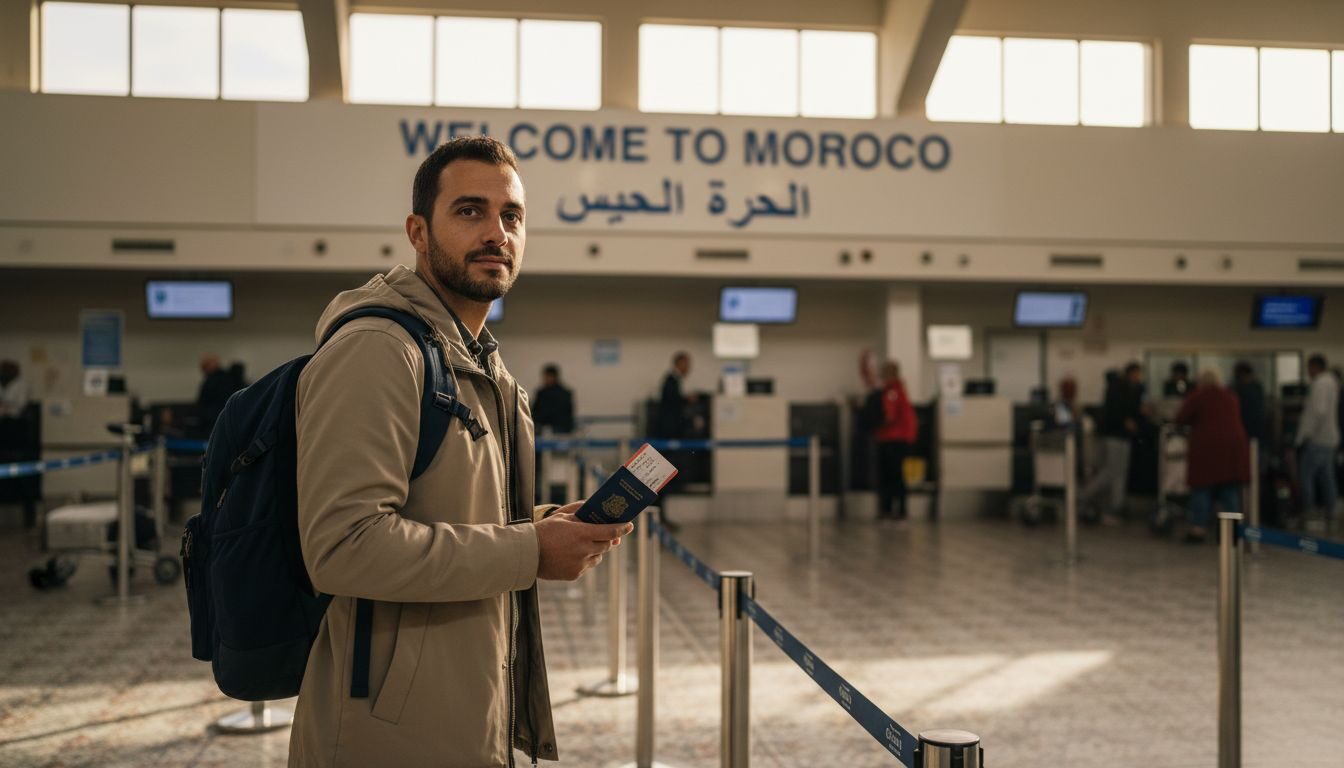
Many travelers are surprised to learn that over 70 nationalities, can visit Morocco without a traditional visa for up to 90 days. Planning the perfect Moroccan trip means sorting entry requirements early, especially with so many myths about visas and documentation still common online. This guide breaks down facts from fiction so first-time visitors can focus on Morocco’s rich culture and stunning sights, while staying clear of stressful last-minute surprises at the border.
Table of Contents
- Morocco Travel Visa Basics And Misconceptions
- Visa Types: Tourist, Business, Evisa, Transit
- Visa-Exempt Countries And Eligibility Rules
- Required Documents For Morocco Visa Applications
- Application Process: Online And Embassy Steps
- Common Mistakes, Costs, And Compliance Risks
Key Takeaways
| Point | Details |
|---|---|
| Visa-Free Entry | Travelers from over 70 countries can enter Morocco without a visa for up to 90 days with just a valid passport. |
| Visa Types | Morocco offers tourist, business, eVisa, and transit visas, each with specific requirements depending on travel purpose. |
| Document Preparation | Ensure all required documentation is accurate and complete to avoid delays or rejections during application. |
| Application Process | Travelers can apply through an online eVisa system or traditional embassy channels, depending on their nationality and visa type. |
Morocco travel visa basics and misconceptions
Navigating Morocco’s travel visa landscape can be complex, with numerous myths and misconceptions surrounding entry requirements. Understanding the fundamental rules is crucial for international travelers planning their Moroccan adventure. The Moroccan Ministry of Foreign Affairs provides clear guidance on entry regulations, revealing that most travelers can enter without extensive bureaucratic hurdles.
Contrary to popular belief, Morocco offers generous entry policies for tourists from many countries. More than 70 nationalities can enter Morocco without a traditional visa, enjoying a visa-free stay of up to 90 days. These travelers typically require only a valid passport with at least six months remaining before expiration. However, the specific requirements vary depending on your country of origin, making it essential to verify your individual status before departure.
Some key misconceptions about Moroccan travel visas include the assumption that all international visitors need a complex, pre-approved visa. In reality, citizens from numerous countries in Europe, North America, and several Asian nations can enter Morocco relatively seamlessly. Business travelers, tourists, and short-term visitors often benefit from these simplified entry protocols. The eVisa system has further streamlined the process for countries that do require additional documentation, allowing travelers to complete most requirements online before their trip.
Pro Tip – Visa Preparation: Always check the most current entry requirements with the official Moroccan embassy or consulate at least one month before your planned travel dates, as visa policies can change periodically and individual circumstances may vary.
Visa types: tourist, business, eVisa, transit
Morocco offers several distinct visa categories to accommodate different travel purposes, making entry accessible for international visitors. The Morocco visa portal provides comprehensive details about the various authorization types travelers might need depending on their specific travel objectives. Understanding these categories is crucial for smooth entry and legal compliance.
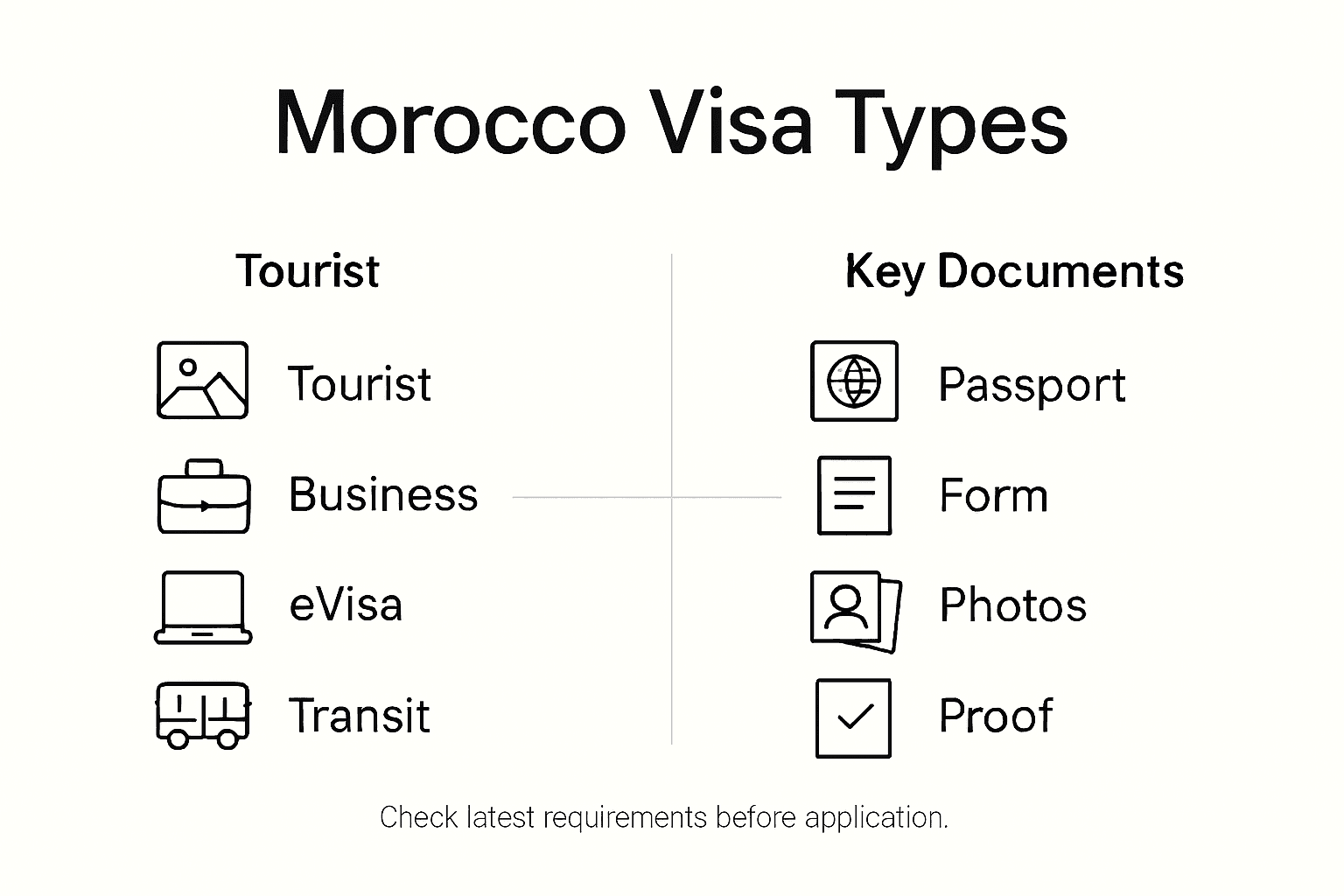
The primary visa types include tourist visas, which allow leisure travelers to explore Morocco for short periods, typically up to 90 days. Business visas cater to professionals attending meetings, conferences, or conducting commercial activities. For many nationalities, an eVisa presents a convenient online application process, eliminating the need for traditional embassy visits. Travelers with connecting flights or brief stopovers can also apply for transit visas, which provide temporary authorization to pass through Morocco.
Each visa type has specific requirements and documentation standards. Tourist visas are generally the most straightforward, requiring a valid passport, proof of return travel, and sufficient financial resources. Business visas demand additional documentation like invitation letters from Moroccan companies and evidence of professional purpose. The global visa index highlights that eVisas have simplified the application process, allowing eligible travelers to complete most requirements digitally before departure. Transit visas are typically the shortest in duration, designed specifically for travelers passing through Morocco without extended stays.
Pro Tip – Visa Selection: Carefully assess your specific travel purpose and duration to select the most appropriate visa type, as choosing the wrong category can lead to entry complications or potential legal issues.
Here is a quick comparison of Morocco’s primary visa options and their main features:
| Visa Type | Typical Duration | Main Purpose | Key Documentation Needed |
|---|---|---|---|
| Tourist Visa | Up to 90 days | Leisure travel | Passport, itinerary, financial proof |
| Business Visa | Variable | Meetings, commerce | Invitation letter, passport, proof |
| eVisa | Up to 90 days | Tourism or short business | Online application, digital docs |
| Transit Visa | Short stay (1-7 days) | Connecting flights | Proof of onward travel, passport |
Visa-exempt countries and eligibility rules
Morocco maintains a generous visa policy that allows citizens from numerous countries to enter without complex documentation. Official embassy records reveal a comprehensive list of nationalities eligible for short-term entry, typically permitting stays up to 90 days without obtaining a traditional visa. Understanding these exemption rules is critical for international travelers planning their Moroccan adventure.
The visa-exempt countries primarily include most European Union member states, several North American nations, and select countries in Asia and Oceania. Travelers from these regions can enter Morocco with just a valid passport, avoiding the need for advance visa applications. However, eligibility is not universal, and specific conditions apply. Some nationalities might be required to obtain an Electronic Travel Authorization (AEVM/ETA) even if technically visa-exempt, which serves as a digital pre-screening mechanism to streamline border entry processes.
Eligibility requirements extend beyond simple nationality considerations. Comprehensive international visa policy databases highlight additional factors that impact entry permissions. These include passport validity (typically requiring at least six months remaining), proof of return or onward travel, and demonstrable sufficient financial resources for the duration of the stay. Travelers must also meet health and security screening requirements, which can vary based on current international protocols and bilateral agreements between Morocco and their home country.
Pro Tip – Passport Preparation: Always verify your specific visa requirements at least two months before travel, as immigration policies can change rapidly, and individual circumstances might necessitate additional documentation beyond standard exemption rules.
Required documents for Morocco visa applications
Navigating the Morocco visa application process requires careful preparation and attention to detail. Official visa documentation guidelines outline a comprehensive set of documents travelers must assemble to ensure a smooth application experience. Understanding these requirements is crucial for avoiding potential delays or application rejections.
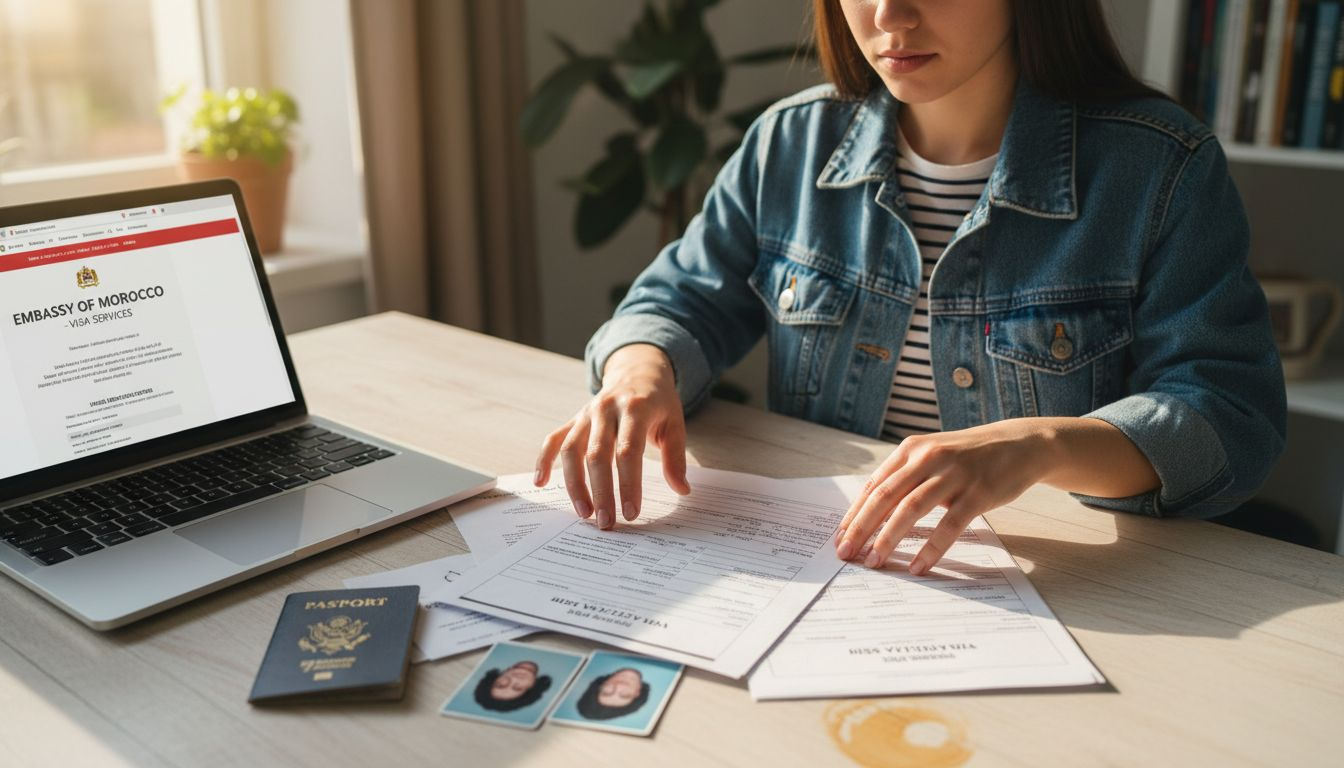
The core document requirements typically include several key components. Applicants must submit a fully completed visa application form with accurate personal information. A valid passport is essential, with most guidelines mandating at least six months of validity beyond the planned travel dates. Additional mandatory documents include recent passport-sized photographs meeting specific dimension and quality standards, detailed travel itinerary, proof of accommodation reservations, and verifiable evidence of sufficient financial resources to support the entire trip.
Different visa types may require supplementary documentation tailored to specific travel purposes. Comprehensive travel documentation resources emphasize the importance of providing translated documents when necessary, especially for business or specialized visa categories. Business travelers, for instance, must typically include official invitation letters from Moroccan companies, while tourists might need to demonstrate return flight bookings and travel insurance. Critically, all submitted documents must be current, legible, and match the information provided in the primary application form.
Pro Tip – Document Verification: Create a comprehensive checklist of required documents at least one month before application submission, and consider having a trusted friend or travel professional review your documentation package to catch potential errors or omissions.
Application process: online and embassy steps
Morocco offers two primary pathways for visa applications: the modern online eVisa system and the traditional embassy application process. The official Accès Maroc portal provides comprehensive guidance for travelers navigating these different routes, ensuring a streamlined approach to obtaining travel authorization.
The online eVisa process represents the most convenient option for eligible travelers. Applicants begin by creating an account on the official portal, where they must complete a detailed digital application form. This involves uploading all required supporting documents, including passport scans, photographs, and travel itinerary. The digital platform allows real-time tracking of application status, with most online applications processed within 3-5 business days. Applicants are required to pay the visa fee electronically and will receive their authorization via email upon approval.
Traditional embassy visa applications remain necessary for travelers from countries not eligible for the online system or those requiring specialized visa categories. This process involves scheduling an appointment at the nearest Moroccan consulate or embassy, submitting physical documents, and participating in a potential in-person interview. Embassy applications typically have longer processing times, often ranging from one to three weeks. Travelers must prepare a comprehensive document package, including original passport, completed application forms, photographs, financial statements, and any additional supporting documentation specific to their travel purpose.
Pro Tip – Application Preparation: Create digital and physical copies of all documents before starting your application, and ensure your passport photographs meet the exact specifications required by Moroccan immigration authorities to prevent unnecessary delays.
Common mistakes, costs, and compliance risks
Navigating the Morocco visa application process requires meticulous attention to detail, as common application mistakes can result in significant complications. Travelers must understand that even minor errors can lead to application rejection, financial losses, and potential travel disruptions.
The most frequent compliance pitfalls include submitting inconsistent personal information across documents, providing incomplete supporting evidence, and failing to meet specific photographic requirements. Visa application fees typically range from 20 to 250 US dollars, depending on the visa type and applicant’s nationality. Additional financial risks emerge from potential application rejection costs, which may include non-refundable fees, rescheduling expenses, and potential travel insurance complications. Business travelers and tourists alike must carefully verify every detail, ensuring passport validity, accurate travel dates, and precise personal information matching all submitted documentation.
Risk management extends beyond paperwork accuracy. Travelers must be aware of potential legal compliance risks that could impact their entry into Morocco. These include overstaying permitted duration, working without appropriate authorization, or misrepresenting travel purposes. Some nationalities face stricter scrutiny, with immigration authorities conducting thorough background checks. Travelers might encounter additional screening for certain professional categories, specific travel histories, or nationalities identified as higher-risk by Moroccan immigration protocols. Understanding these nuanced requirements is crucial for maintaining legal status and avoiding potential future travel restrictions.
Pro Tip – Document Cross-Verification: Create a comprehensive checklist comparing your passport, application form, and supporting documents, cross-referencing every detail to ensure absolute consistency and minimize the risk of application rejection.
The following table summarizes common mistakes and compliance risks associated with Morocco visa applications:
| Error Type | Common Issues | Potential Impact |
|---|---|---|
| Inconsistent Information | Mismatched personal details | Application rejection |
| Incomplete Documents | Missing required paperwork | Processing delays |
| Invalid Passport/Photos | Expired passport, wrong photo size | Denied entry, extra fees |
| Overstaying or Misuse | Remaining past permitted duration | Fines, travel bans |
Simplify Your Morocco Travel Visa Journey with Expert Support
Navigating Morocco’s visa requirements can feel overwhelming with all the specific rules about passport validity, visa types, and documentation. The article highlights common challenges travelers face such as understanding visa exemptions, avoiding application mistakes, and choosing the right visa category to ensure smooth entry. These concerns can cause unnecessary stress and delays, especially when preparing important documents or selecting between tourist, business, or eVisa options.
At TopMoroccoTravel.com, we recognize how crucial it is to start your Moroccan adventure on the right foot. Beyond offering tailored tours and authentic cultural experiences, we provide trusted guidance to help you plan every detail, including up-to-date visa information and personalized advice to match your travel purpose. Let us handle the complexity while you focus on the excitement of exploring Morocco’s cities, deserts, and vibrant culture. Explore our complete range of customized travel services and take advantage of our 24/7 support to guarantee a hassle-free start to your journey.
Don’t let visa uncertainties hold you back from discovering Morocco’s wonders. Visit TopMoroccoTravel.com now and start customizing your dream itinerary with confidence today.
Frequently Asked Questions
What types of visas are available for traveling to Morocco?
Morocco offers several visa types, including tourist visas for leisure travel, business visas for professional purposes, eVisas for eligible travelers, and transit visas for those passing through the country. Each type has specific requirements and durations.
Do I need a visa to visit Morocco?
Most travelers from over 70 countries can enter Morocco without a visa for stays up to 90 days, provided they have a valid passport with at least six months’ validity left. However, specific eligibility should be verified based on your nationality.
What documents do I need to apply for a visa to Morocco?
When applying for a Morocco visa, you typically need a completed visa application form, a valid passport, recent passport-sized photographs, a travel itinerary, proof of accommodation, and evidence of sufficient financial resources.
How can I apply for a Morocco visa online?
Eligible travelers can apply for a Morocco eVisa by creating an account on the official Accès Maroc portal. The process involves completing an online application form and uploading required documents, with most applications processed within 3-5 business days.
Recommended
- Morocco Travel Visa Requirements: What to Know
- Your Ultimate Morocco Travel Guide for an Unforgettable Trip – Top Morocco Travel
- 8 Essential Morocco Travel Tips for Every Type of Traveler
- Complete Guide to Morocco Travel Experiences




Comments are closed