





Most travelers planning bespoke journeys to Morocco discover that almost 60 percent of luxury itineraries designed by travel consultants deliver more authentic cultural experiences compared to standard packages. As expectations for unforgettable adventures and expert-curated details rise, understanding what sets travel consultants apart becomes crucial. This guide uncovers the myths and expertise behind travel consulting, helping discerning travelers find true personalization for every Moroccan escape.
Table of Contents
- Travel Consultant Defined And Common Myths
- Major Types And Areas Of Specialization
- Core Skills And Essential Qualifications
- How Travel Consultants Create Experiences
- Key Responsibilities And Typical Obligations
- Risks, Costs, And Common Pitfalls To Avoid
Key Takeaways
| Point | Details |
|---|---|
| Travel Consultants Offer Tailored Expertise | Unlike traditional agents, travel consultants provide personalized advice and intricate travel planning based on deep industry knowledge. |
| Specializations Enhance Client Experiences | Consultants specialize in various areas such as leisure, corporate, and luxury travel, ensuring clients receive expertise tailored to their needs. |
| Essential Skills for Success | Travel consultants must master both technical and soft skills, including booking systems and effective communication, to deliver high-quality service. |
| Proactive Risk Management is Key | Consultants should develop robust strategies to mitigate financial, operational, and reputational risks to ensure seamless travel experiences for clients. |
Travel consultant defined and common myths
A travel consultant is a professional who provides specialized advice and strategic planning for travelers seeking personalized and complex travel experiences. Unlike traditional travel agents who primarily book tickets, these professionals offer expert guidance in crafting comprehensive travel strategies tailored to individual preferences and requirements.
Travel consultants distinguish themselves through deep industry knowledge and strategic problem-solving skills. The International Air Transport Association (IATA) defines them as professionals who successfully advise clients on travel options and construct intricate itineraries. Their expertise goes far beyond simple reservation management, encompassing detailed understanding of destination insights, cultural nuances, and logistical challenges that typical travelers might not anticipate.
Common myths about travel consultants often misrepresent their professional capabilities. Many people incorrectly assume they are merely ticket sellers or online booking agents. In reality, travel consultants provide specialized services that include comprehensive travel planning, risk assessment, insider destination knowledge, and personalized recommendations based on individual traveler needs. They serve as strategic partners who transform complex travel aspirations into seamless, memorable experiences.
Pro tip: When selecting a travel consultant, request a detailed consultation that explores your specific travel preferences, budget constraints, and personal interests to ensure a truly customized travel experience.
Major types and areas of specialization
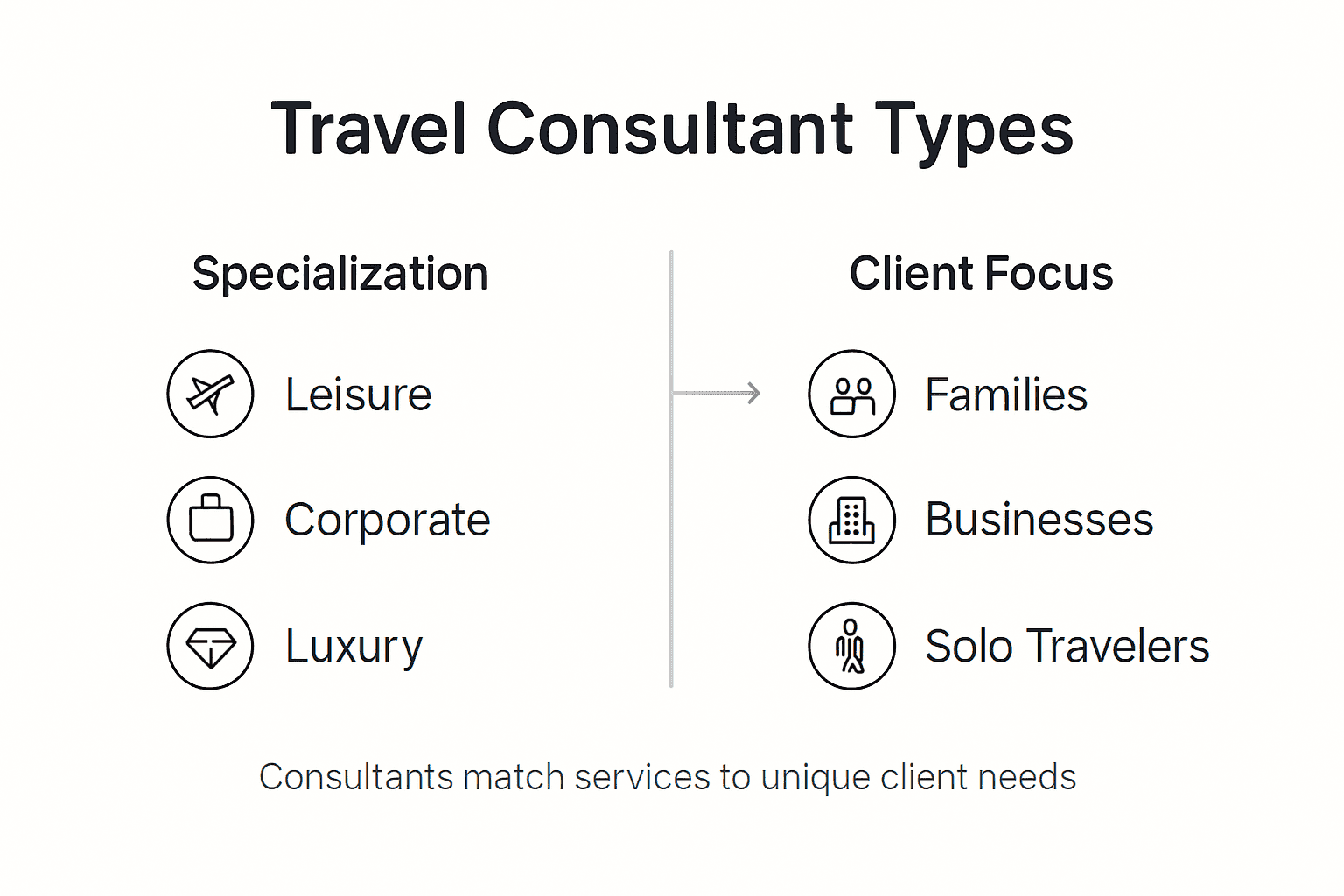
Travel consultants specialize in diverse areas, offering tailored services that cater to unique traveler needs. Travel agencies and consultants operate across multiple sectors, including leisure, corporate, group, and specialized tourism experiences. These professionals function as crucial intermediaries, bridging clients’ travel aspirations with intricate logistical planning and expert destination knowledge.
The primary categories of travel consultant specializations include:
- Leisure Travel Consultants: Focus on personal vacation planning, crafting customized experiences for individuals and families
- Corporate Travel Specialists: Manage complex business travel arrangements, negotiating corporate travel packages and ensuring efficient logistics
- Group Travel Planners: Coordinate travel for large groups, including tours, conferences, and educational expeditions
- Luxury Travel Experts: Design high-end, personalized travel experiences with premium accommodations and exclusive services
- Adventure and Niche Tourism Consultants: Specialize in specific travel segments like eco-tourism, medical tourism, or adventure travel
Consultants vary significantly in their expertise and market focus, reflecting the complex landscape of modern travel planning. Each specialization requires deep knowledge of specific travel domains, understanding of client needs, and ability to navigate intricate travel logistics. Some consultants develop expertise in particular regions, while others focus on specific types of travel experiences that demand unique skills and insider knowledge.
Pro tip: When seeking a travel consultant, identify your specific travel needs and look for a specialist with proven experience in that particular travel sector or destination.
Here’s a summary of travel consultant specializations and their unique impacts:
| Specialization Type | Core Focus | Typical Client | Unique Value Provided |
|---|---|---|---|
| Leisure Travel Consultant | Custom vacations | Families, solo travelers | Personalized trip design |
| Corporate Travel Specialist | Efficient business travel | Companies, executives | Cost savings, policy compliance |
| Group Travel Planner | Coordinated group arrangements | Schools, tour groups | Seamless multi-member logistics |
| Luxury Travel Expert | High-end, exclusive experiences | Affluent travelers | Premium, VIP treatment |
| Adventure/Niche Tourism | Specialized theme travel | Niche-seeking travelers | Unique, off-the-beaten-path trips |
Core skills and essential qualifications
Travel consultants must develop a comprehensive skill set that combines technical knowledge and interpersonal capabilities. Core professional skills encompass a wide range of technical and soft skills essential for success in the dynamic travel industry. These professionals need to master complex booking systems, understand global travel regulations, and demonstrate exceptional communication abilities.
The key skills required for travel consultants include:
-
Technical Competencies:
- Proficiency in global reservation systems
- Advanced geographical knowledge
- Understanding of airline and transportation regulations
- Airfare and pricing calculation skills
- Digital technology and booking platform expertise
-
Soft Skills:
- Exceptional customer service
- Strong problem-solving abilities
- Cultural sensitivity and awareness
- Effective communication
- Adaptability and stress management
Educational qualifications and professional development play crucial roles in establishing credibility within the travel consulting profession. Most successful consultants pursue specialized diplomas such as the IATA Travel and Tourism Consultant Diploma, which provides comprehensive training in complex travel planning, industry standards, and advanced customer service techniques. Continuous learning and staying updated with emerging travel trends are critical for maintaining professional relevance and competitive edge.
Pro tip: Invest in ongoing professional certifications and language skills to differentiate yourself in the competitive travel consulting marketplace.
Compare how technical and soft skills contribute to a travel consultant’s success:
| Skill Category | Example Skill | Impact on Service Quality |
|---|---|---|
| Technical | Global reservation systems | Accurate, efficient bookings |
| Technical | Airfare calculation | Competitive pricing for clients |
| Soft | Problem-solving | Rapid issue resolution |
| Soft | Cultural sensitivity | Enhanced client satisfaction |
How travel consultants create experiences
Travel consultants transform ordinary trips into extraordinary journeys through meticulous planning and personalized storytelling. They craft experiences that engage clients emotionally and intellectually, going far beyond simple itinerary booking. By understanding individual preferences, cultural nuances, and personal aspirations, these professionals design travel narratives that resonate deeply with each traveler’s unique desires.
The experience creation process involves several critical elements:
- Detailed Client Consultation: Thoroughly understanding traveler motivations, interests, and expectations
- Cultural Mapping: Identifying authentic local experiences that align with client preferences
- Personalized Itinerary Design: Constructing seamless travel narratives with carefully curated experiences
- Emotional Touchpoint Management: Anticipating and addressing potential traveler concerns
- Immersive Experience Curation: Selecting encounters that provide meaningful cultural connections
Experience design transforms travel from transactional to transformational, integrating sensory details and narrative elements that convert simple trips into profound personal journeys. Successful travel consultants act as storytellers, architects of memory, and cultural interpreters who understand that true travel is about creating lasting impressions that extend far beyond typical tourist experiences. They carefully choreograph each journey’s emotional and intellectual landscape, ensuring travelers not only visit destinations but truly connect with them.

Pro tip: Share your most authentic travel interests and personal goals during initial consultations to help your travel consultant design a truly personalized experience.
Key responsibilities and typical obligations
Travel consultants shoulder a complex set of responsibilities that extend far beyond simple ticket booking. They serve as critical intermediaries between travelers and travel suppliers, managing intricate logistical and customer service challenges that require exceptional professional skills and attention to detail.
Their core responsibilities encompass multiple critical areas:
-
Travel Planning and Booking:
- Constructing comprehensive travel itineraries
- Booking flights, accommodations, and transportation
- Processing ticket reservations and exchanges
- Managing complex multi-destination travel arrangements
-
Customer Service and Support:
- Providing personalized travel recommendations
- Resolving travel-related issues and complications
- Offering real-time support before and during travel
- Managing client expectations and communication
-
Regulatory and Professional Obligations:
- Staying current with travel industry regulations
- Understanding international travel requirements
- Ensuring compliance with legal and safety standards
- Maintaining professional certifications and training
Travel consultants must balance multiple professional responsibilities, acting simultaneously as logistical experts, customer service professionals, and strategic travel advisors. Their role demands continuous learning, adaptability, and a comprehensive understanding of global travel dynamics. By navigating complex supplier relationships, managing client expectations, and delivering personalized experiences, they transform potential travel challenges into seamless journeys.
Pro tip: Maintain detailed documentation of every client interaction and travel arrangement to ensure smooth communication and problem resolution.
Risks, costs, and common pitfalls to avoid
Travel consulting involves navigating a complex landscape of potential risks and challenges. Travel consultants must proactively manage operational risks that can significantly impact client experiences, requiring sophisticated strategic planning and continuous adaptation to changing global conditions.
Primary risks and potential pitfalls include:
-
Financial Risks:
- Unpredictable travel market fluctuations
- Currency exchange rate volatility
- Sudden price changes in flights and accommodations
- Potential commission and service fee reductions
-
Operational Risks:
- Geopolitical instability affecting travel routes
- Health crisis disruptions
- Complex international travel regulations
- Supply chain and logistics challenges
-
Reputational Risks:
- Client miscommunication
- Failure to meet expectations
- Inadequate problem resolution
- Insufficient travel expertise
Effective risk management requires constant vigilance and proactive strategies to mitigate potential disruptions. Successful travel consultants develop robust contingency plans, maintain comprehensive insurance coverage, and invest in continuous professional development to stay ahead of emerging challenges. They must balance client satisfaction with financial sustainability, making informed decisions that protect both their business and traveler interests.
Pro tip: Develop a comprehensive risk management protocol that includes regular training, updated communication strategies, and flexible booking options to protect both your business and your clients.
Discover the True Value of Expert Travel Consulting with TopMoroccoTravel
Understanding what a travel consultant does and why their expertise matters can transform your approach to planning a trip. If you want to avoid the common pitfalls of travel planning such as miscommunication, unpredictable pricing, or logistical complexities, partnering with a professional who offers personalized itinerary design and insider knowledge is essential. At TopMoroccoTravel.com, we specialize in crafting immersive, tailor-made experiences across Morocco that address these challenges head-on. Our team acts as your dedicated strategic travel consultants, ensuring every detail from cultural immersions to adventure activities is seamlessly planned and executed.
Unlock the full potential of your Moroccan journey by working with specialists who understand the importance of personalized service and expert problem solving. Explore our carefully curated popular tour packages and consult with seasoned professionals who are committed to turning your travel dreams into reality. Visit TopMoroccoTravel.com today to start your personalized consultation and guarantee a memorable, stress-free adventure that only true travel experts can deliver.
Frequently Asked Questions
What is the role of a travel consultant?
A travel consultant provides personalized travel planning, expert advice, and strategic solutions tailored to individual traveler needs, going beyond basic ticket booking.
How do travel consultants differ from traditional travel agents?
Travel consultants focus on crafting custom itineraries and offering specialized insights and recommendations, while traditional travel agents primarily handle bookings and reservations.
What types of travel consultants are there?
There are several types, including leisure travel consultants, corporate travel specialists, group travel planners, luxury travel experts, and adventure/niche tourism consultants.
What are essential skills required for a travel consultant?
Key skills include proficiency in global reservation systems, excellent customer service, strong problem-solving abilities, cultural sensitivity, and adaptability to various travel logistics.
Recommended
- Complete Guide to the Role of a Travel Agency
- The Essential Guide to Travel Agencies in Morocco
- Travel to Morocco: Ultimate Guide for Shocking Adventures
- Planning a Trip to Morocco? Essential Tips for Your Visit





Comments are closed