



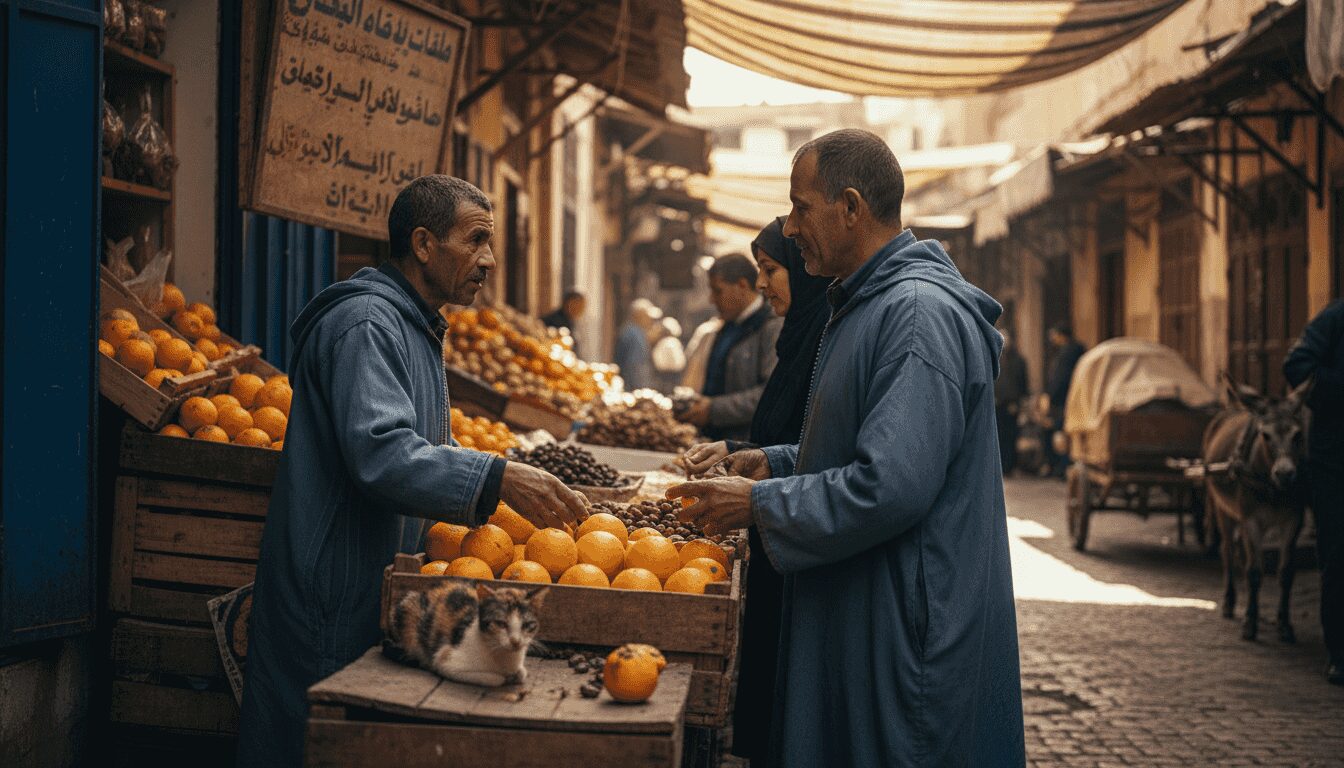
Most travelers assume Modern Standard Arabic dominates everyday conversation in Morocco, but this assumption misses the vibrant linguistic reality on the ground. Moroccan Arabic, multiple Berber dialects, French, and Spanish shape daily interactions differently across regions. Understanding this diversity transforms your travel experience from surface-level tourism into genuine cultural immersion, helping you connect authentically with locals and navigate Morocco’s rich heritage more confidently.
Table of Contents
- Overview Of Morocco’s Official Languages
- Primary Languages Spoken Across Morocco
- Historical And Cultural Roots Of Language Diversity
- Common Misconceptions About Language Use In Morocco
- Practical Language Tips For Travelers
- Explore Morocco’s Rich Languages With Expert Tours
- Frequently Asked Questions About Language In Morocco
Key takeaways
| Point | Details |
|---|---|
| Official languages | Arabic and Amazigh were both recognized as official languages in Morocco’s 2011 constitution. |
| Daily spoken language | Moroccan Arabic dialect is the primary language for 85-90% of the population in everyday situations. |
| French influence | French dominates business, education, and government sectors despite lacking official status. |
| Berber diversity | Berber languages include regional dialects like Tarifit, Tamazight, and Tashelhit tied to ethnic identity. |
| Travel preparation | Learning basic phrases in Moroccan Arabic and French enhances communication and cultural respect. |
Overview of Morocco’s official languages
Morocco’s 2011 constitutional amendment marked a turning point for linguistic recognition. The government officially recognizes both Arabic and Amazigh as national languages, reflecting efforts to preserve indigenous heritage alongside Arabic’s dominant role. This dual recognition acknowledges centuries of cultural coexistence and addresses long-standing demands from Berber communities for equal linguistic status.
Modern Standard Arabic serves primarily formal and written contexts. You’ll encounter it in official documents, news broadcasts, religious sermons, and formal education. However, few Moroccans use it in casual conversation, creating a distinction that confuses many first-time visitors who expect textbook Arabic to work everywhere.
Moroccan Arabic dialect, known locally as Darija, fills the gap for daily communication. This spoken variety differs significantly from Modern Standard Arabic in vocabulary, pronunciation, and grammar. Markets, cafes, taxis, and homes pulse with Darija, making it essential for authentic interactions. The dialect itself varies regionally, with northern, central, and southern versions incorporating different influences.
Government initiatives now support Amazigh language revitalization through education and media. Public schools in Berber-majority regions teach Amazigh alongside Arabic, and state television broadcasts programs in Berber dialects. These efforts aim to reverse decades of marginalization and celebrate Morocco’s indigenous linguistic heritage.
Understanding these official languages helps you grasp Morocco’s layered cultural identity:
- Arabic represents religious tradition and pan-Arab cultural connection
- Amazigh embodies indigenous heritage and regional pride
- Both languages carry political significance tied to identity and belonging
- Their coexistence reflects Morocco’s commitment to cultural pluralism
Primary languages spoken across Morocco
Moroccan Arabic dialect remains the mother tongue for 85-90% of Moroccans regardless of ethnicity. Even Berber families in urban areas often speak Darija at home or in mixed settings. This linguistic reality means you’ll hear Darija in souks, restaurants, hotels, and public transportation throughout your travels. Its vocabulary borrows from Berber, French, and Spanish, creating a unique hybrid that reflects Morocco’s multicultural history.
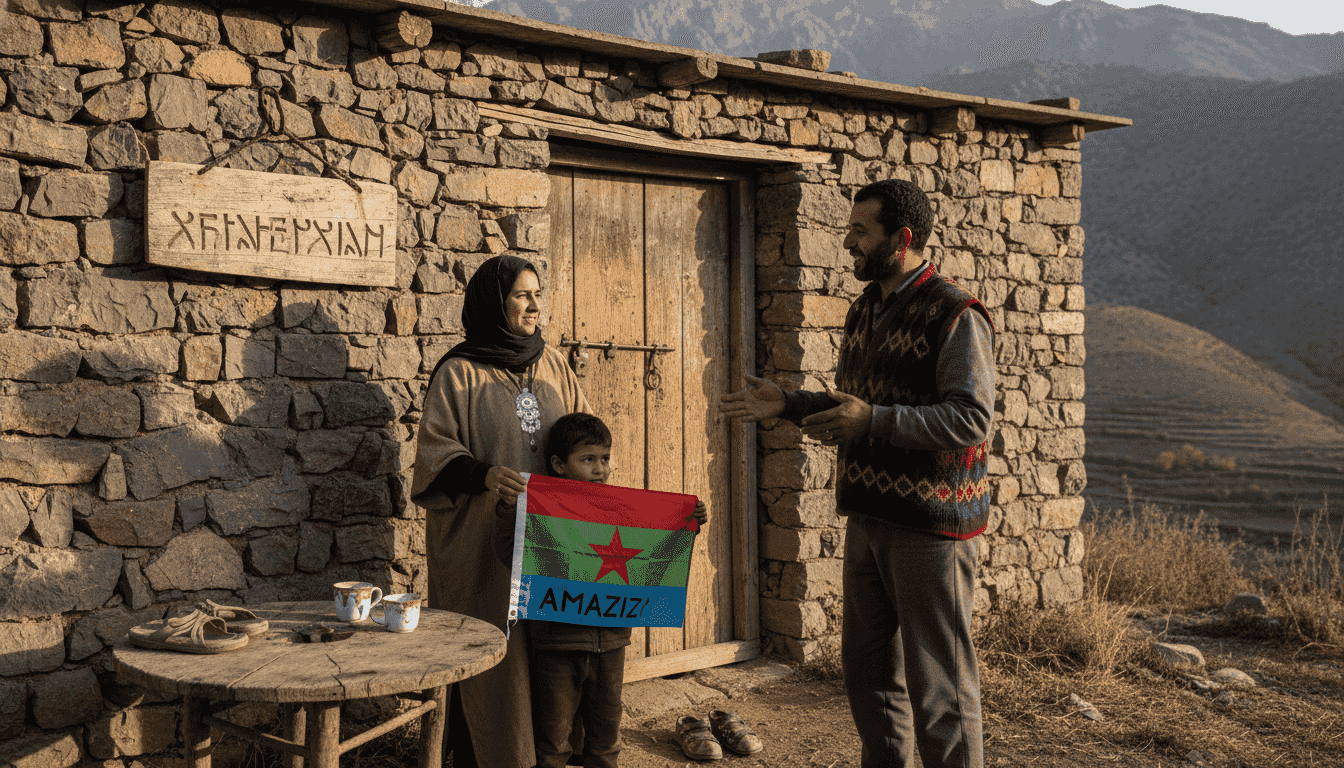
Berber languages account for roughly 40% of native speakers, though exact percentages vary by region. Three main dialects dominate: Tarifit in the Rif Mountains and northern regions, Tamazight in the Middle Atlas and southeastern areas, and Tashelhit in the High Atlas and Souss Valley. These dialects differ enough that speakers from different regions may struggle to understand each other without switching to Darija or French.
French is spoken by up to 33% of the population and dominates sectors like education and media. You’ll find French indispensable in cities like Casablanca, Rabat, and Marrakech, especially when dealing with hotels, restaurants, government offices, or professional services. Many educated Moroccans switch seamlessly between Darija and French mid-conversation, a practice called code-switching that signals sophistication and modernity.
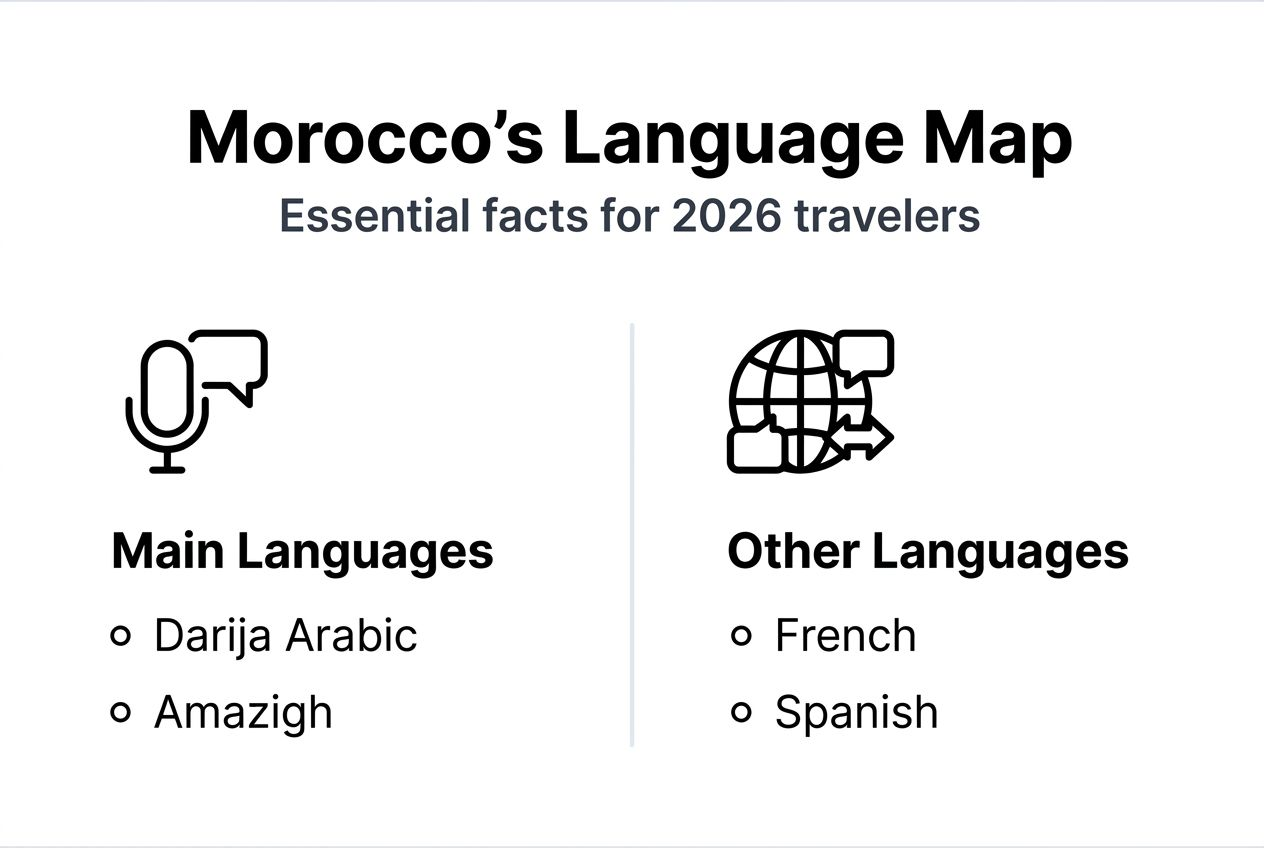
Spanish is predominantly spoken in northern Morocco and Western Sahara regions, affecting about 7-10% of Moroccans especially near the coast. Cities like Tangier, Tetouan, and Chefchaouen maintain strong Spanish cultural ties due to historical proximity and colonial influence. If you’re planning Morocco travel tips for northern routes, basic Spanish phrases prove surprisingly useful.
| Language | Speakers | Primary Regions | Common Uses |
|---|---|---|---|
| Moroccan Arabic | 85-90% | Nationwide | Daily conversation, markets, informal settings |
| Berber dialects | ~40% | Atlas Mountains, rural areas | Family, traditional ceremonies, local commerce |
| French | ~33% | Urban centers, coast | Business, education, government, tourism |
| Spanish | 7-10% | Northern cities | Local trade, cross-border interaction |
Recognizing this language distribution helps you prepare appropriate phrases and expectations for each region you visit. The linguistic landscape shifts dramatically as you move from cosmopolitan Casablanca to rural Berber villages or from southern desert towns to northern coastal cities.
Historical and cultural roots of language diversity
Berbers are Morocco’s indigenous peoples, inhabiting North Africa for thousands of years before Arab expansion. Their languages and cultures predate Arabic influence, creating a foundational layer of identity that persists despite centuries of cultural exchange. Berber communities maintained distinct traditions, social structures, and linguistic practices even as they adopted Islam and engaged with Arab settlers.
Arabization began in the 7th century when Arab armies conquered North Africa, introducing Arabic language, Islamic religion, and new governance systems. This process unfolded gradually over centuries rather than through sudden replacement. Berbers adopted Arabic for religious purposes first, then commerce, eventually integrating Arabic vocabulary into their own languages while maintaining Berber grammar and phonetics.
French and Spanish colonial periods from the early 1900s to 1956 established European languages in administration and education. France controlled most of Morocco, implementing French as the language of government, law, and schooling. Spain governed northern territories and Western Sahara, leaving a Spanish-speaking legacy in those regions. Colonial education systems deliberately promoted European languages over Arabic and Amazigh, creating linguistic hierarchies that persist today.
Post-independence language policies attempted to reverse colonial influence through Arabization campaigns. The government promoted Modern Standard Arabic in schools and official contexts, sometimes at the expense of Berber languages and French. These policies sparked tension between Arab nationalist goals and Berber cultural preservation efforts, eventually leading to the 2011 constitutional recognition of Amazigh.
Languages symbolize ethnic identity and regional belonging across Morocco in powerful ways:
- Speaking Berber signals connection to indigenous heritage and mountain communities
- Using French indicates education, urban sophistication, and professional status
- Darija serves as the unifying spoken language across ethnic boundaries
- Code-switching between languages demonstrates cultural flexibility and social awareness
“Language is not just communication in Morocco, it’s a marker of who you are, where you’re from, and what communities you belong to. Speaking someone’s mother tongue, even imperfectly, shows respect for their identity and opens doors that remain closed to those who don’t try.”
Common misconceptions about language use in Morocco
Modern Standard Arabic is not the daily spoken language for most Moroccans, contrary to what Arabic language courses might suggest. Studying formal Arabic prepares you for reading signs and understanding news broadcasts, but it won’t help much in conversations with taxi drivers, shopkeepers, or restaurant staff. Darija differs so substantially that Modern Standard Arabic speakers from other countries often struggle to understand Moroccan conversations without adjustment.
French is not an official language despite its widespread use in formal sectors. This distinction matters because it reflects ongoing debates about colonial legacy and linguistic sovereignty. While French dominates business and education, its status remains contested, with some Moroccans viewing it as a practical necessity and others seeing it as a colonial remnant that should yield to Arabic or Amazigh.
Berber languages are not uniform but consist of distinct regional dialects with limited mutual intelligibility. Assuming all Berber speakers understand each other creates confusion and demonstrates cultural ignorance. A Tarifit speaker from the Rif Mountains may communicate better with a Darija speaker than with a Tashelhit speaker from the Souss Valley, highlighting the diversity within the Berber linguistic family.
Misunderstanding these language roles leads to practical frustrations and missed opportunities for connection:
- Expecting English to work everywhere limits your interactions to tourist zones and younger, educated Moroccans
- Assuming French suffices in rural areas leaves you unable to communicate in markets or with older generations
- Ignoring regional language preferences can seem disrespectful, especially in Berber-majority areas
- Failing to learn basic Darija phrases signals disinterest in genuine cultural exchange
Pro Tip: Always verify the local language context when arriving in a new region rather than assuming based on what worked in your previous Moroccan destination. Ask your hotel staff or guide which languages locals prefer, and practice a few greetings in those languages to show respect and facilitate smoother interactions.
Practical language tips for travelers
Learn basic Moroccan Arabic phrases for greetings and daily interactions before your trip. Master essential expressions like “salam” (hello), “shukran” (thank you), “bsahha” (bon appetit/cheers), “bhal” (how much), and “fin kayen” (where is). These simple phrases unlock warmth and helpfulness from locals who appreciate your effort to speak their language, even imperfectly.
Show respect for Amazigh language by acknowledging it when visiting Berber regions. Learn greetings like “azul” (hello in Tamazight) or “labas” (how are you), and express interest when locals speak Berber around you. Since 2011, Amazigh language education has expanded to public schools in multiple regions, increasing pride in Berber linguistic identity. Your attempts to use even basic Berber words signal cultural respect and openness.
Use French in formal, business, or urban settings where it serves as the default professional language. Hotels, restaurants, tour operators, and government offices in cities like Casablanca, Rabat, and Marrakech operate primarily in French with Arabic. Staff members typically speak better French than English, making French your most reliable communication tool for complex requests, reservations, or problem-solving in these contexts.
In northern cities like Tangier, Tetouan, and Chefchaouen, knowing some Spanish improves local connections and navigation. Many older residents speak Spanish fluently due to historical ties, and younger generations study it in school. Spanish works particularly well in markets, small shops, and residential neighborhoods where French penetration is limited. For comprehensive preparation, consult our Morocco travel guide for regional language maps.
Practical language preparation strategies include:
- Download offline translation apps with Moroccan Arabic, French, and Berber support
- Practice pronunciation with YouTube videos or language exchange apps before departure
- Carry a small phrasebook with phonetic spellings for reference in situations without internet
- Learn numbers in Darija and French for market negotiations and price discussions
Pro Tip: Practice pronunciation with locals during your first interactions and ask for corrections. Moroccans genuinely appreciate sincere efforts to speak their languages and often become enthusiastic informal teachers, helping you improve throughout your stay. This openness to learning creates memorable connections and enriches your travel experience far beyond what English-only communication allows. Check our essential Morocco travel tips for more cultural guidance.
Explore Morocco’s rich languages with expert tours
Immerse yourself in Morocco’s linguistic and cultural diversity through specialized tours that bring language learning to life. Our Moroccan city tour concepts pair you with multilingual guides who navigate language nuances while explaining cultural context behind expressions, greetings, and local customs. Experience authentic conversations in souks, interact with artisans in their native tongues, and understand the regional language shifts as you travel.
Our Imperial cities tour guide services ensure confident communication across Morocco’s diverse linguistic landscape. Guides facilitate interactions in Darija, French, and Berber as needed, transforming potential language barriers into cultural learning opportunities. You’ll gain insider access to experiences that independent travelers miss due to communication challenges.
Discover why guided tours in Morocco enhance satisfaction by bridging language gaps and deepening cultural connections. Book your customized tour today to explore Morocco with linguistic confidence and authentic engagement.
Frequently asked questions about language in Morocco
What language should I learn before visiting Morocco?
Learn basic Moroccan Arabic phrases for daily interactions, as Darija is the most widely spoken language nationwide. Add essential French vocabulary for hotels, restaurants, and formal situations in major cities. If visiting northern regions, some Spanish proves helpful in local markets and neighborhoods.
Can I get by with only English in Morocco?
English works in tourist areas, upscale hotels, and with younger educated Moroccans in cities, but it’s insufficient for authentic experiences beyond tourist zones. Rural areas, traditional markets, and local restaurants require Arabic, French, or Berber. Learning basic phrases in multiple languages significantly improves your travel quality and cultural access.
Do Moroccans speak French or Arabic more often?
Moroccans speak Moroccan Arabic dialect most often in daily life, regardless of ethnicity or region. French serves specific formal contexts like business, education, and government but rarely replaces Darija in casual conversation. The choice between languages depends on social context, education level, and regional preferences rather than simple dominance.
Is Berber language useful for tourists?
Berber language proves useful and culturally meaningful when visiting Atlas Mountain regions, rural areas, or Berber-majority towns. Learning basic Amazigh greetings demonstrates respect for indigenous culture and often elicits warm responses from locals. Even minimal effort to speak Berber opens doors to deeper cultural exchanges and authentic hospitality.
How different is Moroccan Arabic from Standard Arabic?
Moroccan Arabic differs substantially from Modern Standard Arabic in vocabulary, pronunciation, and grammar, making mutual comprehension difficult without exposure. Darija incorporates Berber, French, and Spanish vocabulary while simplifying grammatical structures. Studying Standard Arabic helps with reading and formal contexts but won’t prepare you for everyday Moroccan conversations.
Which language is most important in Marrakech?
Moroccan Arabic dominates daily interactions in Marrakech, while French serves tourism and business sectors effectively. Most hospitality workers speak French and increasingly English, but market vendors, taxi drivers, and local restaurant staff primarily use Darija. Learning basic Moroccan Arabic phrases enhances your Marrakech experience significantly beyond French or English alone.
Recommended
- Marrakech Travel Guide: Explore Morocco’s Vibrant Heart
- Morocco Holidays: Offer Adventure Culture And Luxury Tours
- 8 Essential Morocco Travel Tips for Every Type of Traveler
- Moroccan Culture Explained: Traditions, Cuisine, and Heritage


Comments are closed