




TL;DR:
- Casablanca is Morocco’s largest and most cosmopolitan city, blending modern culture with traditional markets and iconic landmarks.
- Visitors should prioritize the Hassan II Mosque, explore neighborhoods like Habous and La Corniche, and utilize taxis and the tramway for efficient travel.
- The city offers rich contemporary Moroccan experiences focused on architecture, cuisine, and vibrant coastal life.
Casablanca is Morocco’s largest city and its most cosmopolitan, where a modern urban culture sits alongside traditional markets, art deco architecture, and one of the world’s great religious monuments. The things to do in Casablanca range from guided tours of the Hassan II Mosque to seafood lunches on La Corniche, afternoon shopping in the Habous Quarter, and evenings at Rick’s Café with live jazz. This guide covers the top Casablanca attractions by category and by neighborhood, with practical timing advice and itinerary options for stays from 24 hours to several days.
What are the must-see landmarks and iconic attractions in Casablanca?
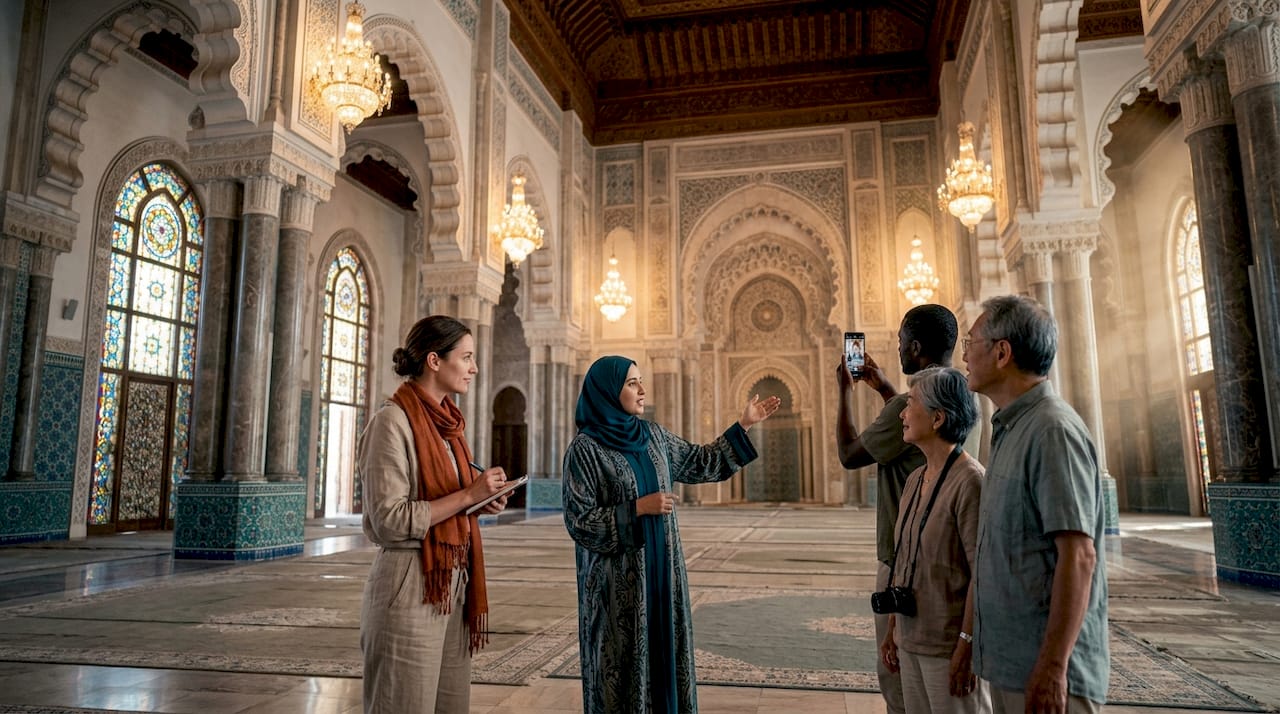
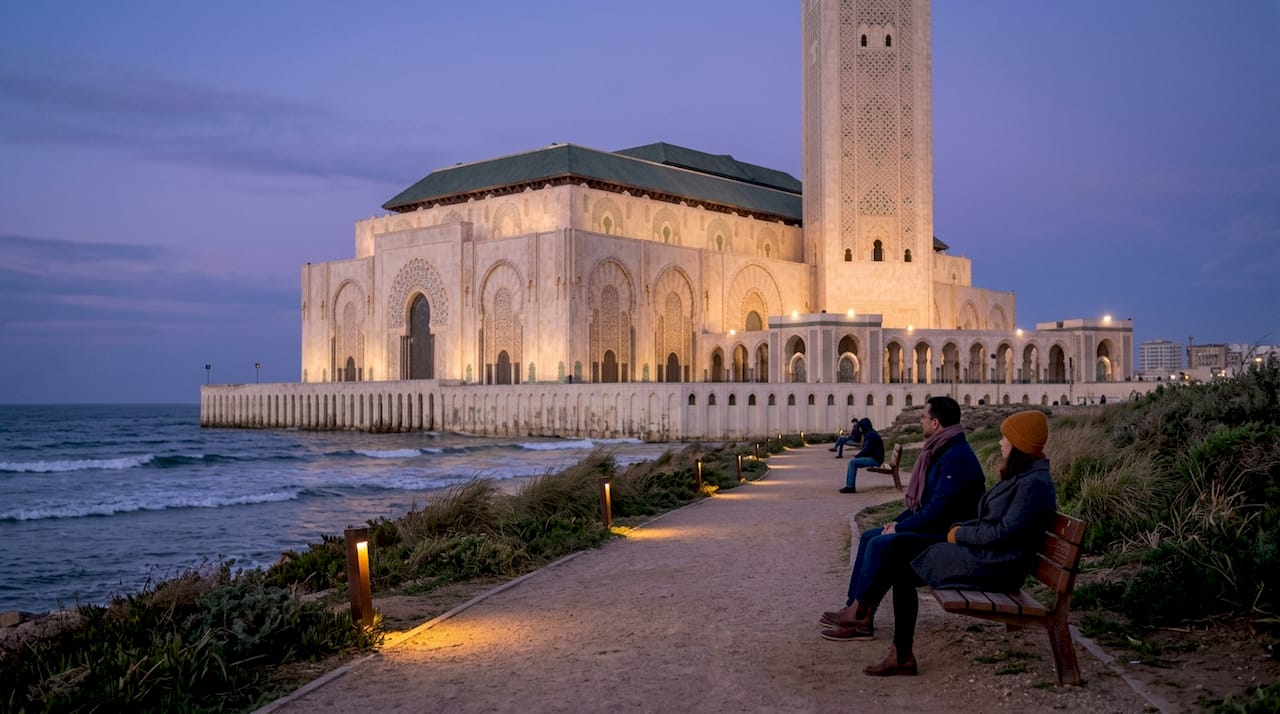
The Hassan II Mosque is the single most important sight in the city, and it is not optional for any serious visitor. Non-Muslim visitors can only enter the interior on official guided tours lasting 45 to 60 minutes, which run several times daily. Without a tour, you are limited to the exterior, which is impressive but misses the extraordinary tilework, cedar ceilings, and retractable roof inside. The mosque sits on a promontory over the Atlantic Ocean, making it visually striking from every angle.
Here are the top landmarks and what makes each one worth your time:
- Hassan II Mosque: Pre-booking your tour through platforms like GetYourGuide or Viator secures your preferred time slot and often includes hotel pickup. Tours pause during prayer times, so check the schedule before you arrive. Morning visits offer the best natural light on the white marble exterior and the fewest crowds.
- Place Mohammed V and United Nations Square: This central civic square is surrounded by art deco buildings, including the Wilaya (prefecture), the Palace of Justice, and the Bank Al-Maghrib. The architecture dates primarily from the French Protectorate era and represents one of the most concentrated collections of art deco design in Africa. The square is also a social hub where locals gather in the evenings.
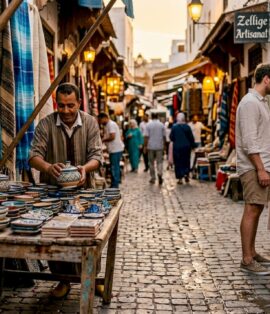
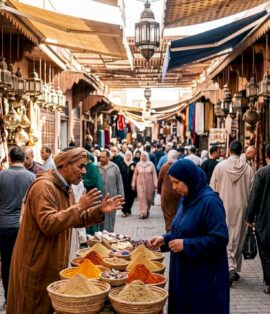
- Old Medina: Casablanca’s medina is smaller and less overwhelming than those in Fez or Marrakech, which makes it a good entry point for first-time visitors to Morocco. You will find street food vendors, small craft shops, and traditional residential architecture within a compact, walkable area.
- Habous Quarter: Built in the 1930s as a planned neighborhood blending French urban planning with Moroccan architectural tradition, Habous is the best place in the city for structured market shopping. First-time visitors consistently rate it as the most accessible traditional market experience in Casablanca, with fixed-price shops alongside negotiable stalls.
- La Corniche: This oceanfront promenade stretches through the Ain Diab district and lines up restaurants, beach clubs, and walking paths along the Atlantic. It is the place to go for a relaxed afternoon or a long seafood dinner at sunset.
- Rick’s Café: This is not a film set replica. Rick’s Café is housed in a genuine 1930s courtyard mansion near the Old Medina, decorated with period furniture and Moroccan craftsmanship. It serves Moroccan and international cuisine and hosts live jazz most evenings. The connection to the 1942 film Casablanca is the hook, but the food and atmosphere justify the visit on their own terms.
Pro Tip: Plan your Hassan II Mosque visit for the first morning of your trip. The tour takes under an hour, the light is best before 10 a.m., and you will have the rest of the day free for neighborhoods and food without the mosque hanging over your schedule.
How to experience Casablanca’s neighborhoods: what to see and do in each area
Casablanca covers a large geographic area, and the main districts each offer a distinct character. Moving between them without a plan wastes significant time. The most efficient approach is to work from the oceanfront inward, then finish in the market districts, which minimizes backtracking across the city.
- Downtown and Ville Nouvelle. This is the French-built city center, home to Place Mohammed V, the Cathedral of the Sacred Heart (now a cultural center), and a dense concentration of art deco facades. Spend a morning here walking the main boulevards, stopping at street cafés for coffee and msemen (Moroccan flatbread). The Mohammed V Museum of Modern Art is located in this district and is worth an hour for contemporary Moroccan and international work.
- Habous Quarter. Located southeast of the city center, Habous takes about 20 minutes by taxi from downtown. The streets are quieter than the Old Medina, the shops are organized, and the pace is slower. Buy argan oil products, leather goods, Moroccan ceramics, and pastries from the pâtisseries that line the main square. The Royal Palace of Casablanca borders the quarter, and while the interior is closed to visitors, the ornate gate is worth a photograph.
- Old Medina. The original walled city sits between the port and the modern downtown. It is compact enough to walk in 90 minutes and rewards those who leave the main lanes to find the quieter residential streets. Street food here is excellent: look for harira soup, sfenj (Moroccan doughnuts), and grilled sardines near the port entrance.
- Ain Diab and La Corniche. This is Casablanca’s leisure coast, running west of the Hassan II Mosque along the Atlantic. Beach clubs like Miami Plage and Tahiti Beach charge entry fees and offer sun loungers, pools, and restaurants. The promenade itself is free and popular with families and joggers in the early morning and evening. Seafood restaurants here are among the best in the city.
- Getting between neighborhoods. Tramway Line 1 connects United Nations Square to several key stops across the city and is the cheapest way to move between the center and outer districts. Petit taxis (small red cabs) are metered, affordable, and the fastest option for cross-city trips. Ride-hailing apps, including Careem, operate in Casablanca and remove the need to negotiate fares.
What cultural experiences and activities should travelers consider in Casablanca?
Casablanca rewards travelers who go beyond the landmark checklist. The city’s cultural life is active, layered, and often overlooked by visitors who treat it as a transit stop before Marrakech or Fez.
- Museum of Moroccan Judaism: Located in the Oasis neighborhood, this is the only museum of Jewish heritage in the Arab world. It documents the history of Morocco’s Jewish community through artifacts, photographs, and archival documents. The collection is small but significant, and the context it provides for understanding Moroccan society is genuinely illuminating.
- Villa des Arts: This French Protectorate-era mansion in the Ville Nouvelle hosts rotating contemporary art exhibitions from Moroccan and international artists. Entry is free or low-cost, and the building itself is architecturally interesting. It is a good stop on any art deco walking tour of the city center.
- Live music at Rick’s Café: Rick’s Café combines film nostalgia with authentic local design and cuisine, making it more than a tourist novelty. The house pianist performs nightly, and the jazz program runs several evenings a week. Reserve a table in advance, especially on weekends, as the venue fills quickly.
- Moroccan cuisine and street food: Casablanca’s food scene spans everything from hole-in-the-wall harira counters to upscale Moroccan restaurants in the Ain Diab district. For an authentic sit-down meal, try tajine or couscous at a family-run restaurant in the Habous Quarter. For street food, the Old Medina near the port is the best concentration of vendors.
- Guided architecture tours: Several local operators run walking tours focused on Casablanca’s art deco and Mauresque architecture, which is genuinely world-class and largely unknown outside specialist circles. These tours cover the post office, the courthouse, the Excelsior Hotel, and dozens of residential buildings that most visitors walk past without noticing.
Pro Tip: If your visit coincides with a Friday, plan the Hassan II Mosque tour for Thursday or Saturday. Friday is the main prayer day, and tour availability is reduced significantly. Check the mosque’s official schedule at least 48 hours before you plan to visit.
How can travelers make the most of their time in Casablanca?
The right itinerary depends entirely on how long you have. Casablanca is spread out, and poor sequencing of sights costs hours. The framework below is built around minimizing backtracking by working from the oceanfront inward.
24-hour layover itinerary
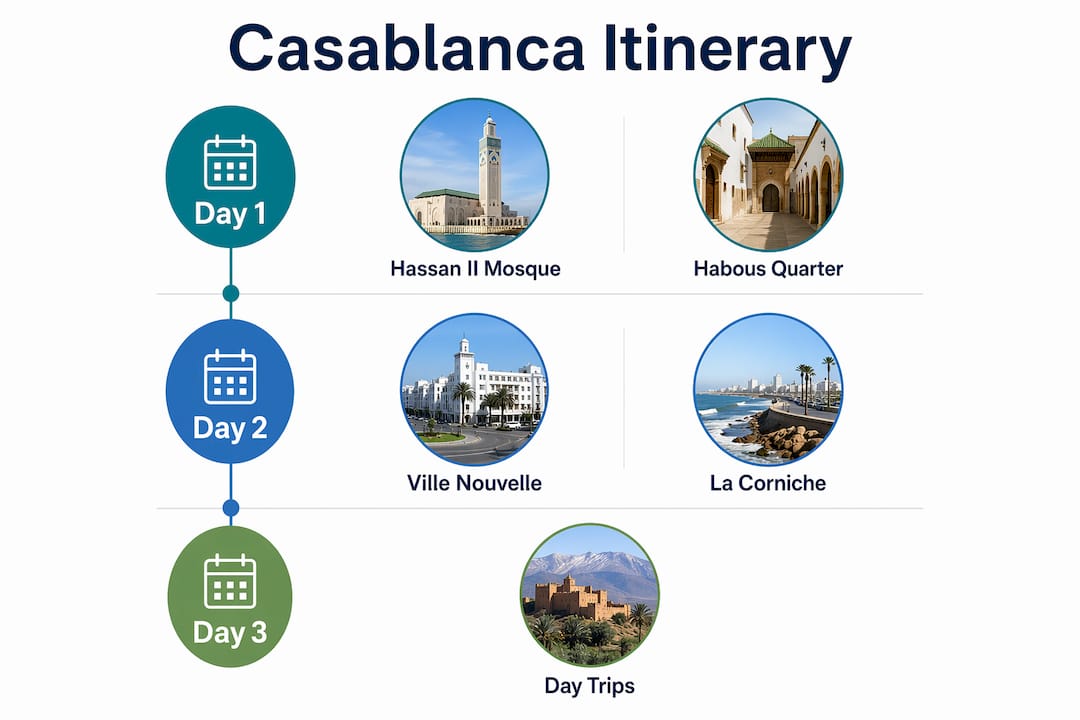
For a single day, Hassan II Mosque is the top priority and should anchor the morning. Book the earliest available tour, then walk the adjacent oceanfront before taking a taxi to the Old Medina for lunch. Spend the afternoon in the Habous Quarter for shopping and a coffee at one of the square’s cafés. End the evening at Rick’s Café or along La Corniche for dinner. This route covers the city’s four main character zones in one logical sweep.
48-hour itinerary
Day one follows the 24-hour route above. Day two opens with a walking tour of the Ville Nouvelle art deco district, starting at Place Mohammed V and working outward through the main civic buildings. After lunch at a downtown café, visit the Villa des Arts or the Museum of Moroccan Judaism in the afternoon. Finish with a sunset walk along La Corniche and dinner at one of the Ain Diab seafood restaurants.
Practical logistics table
| Detail | What to know |
|---|---|
| Hassan II Mosque hours | Tours run several times daily; paused during prayer times; check schedule in advance |
| Best transport option | Petit taxis for cross-city trips; Tramway Line 1 for central routes |
| Habous Quarter timing | Morning visits are cooler and less crowded; most shops open by 9 a.m. |
| Rick’s Café reservations | Book at least 24 hours ahead for weekend evenings; walk-ins accepted at lunch |
| Friday planning | Mosque tour availability is reduced; plan market and neighborhood visits instead |
For longer stays of three or more days, Casablanca also works as a base for day trips to Rabat (one hour by train), El Jadida (one hour by road), and the Ourika Valley near Marrakech (three hours). The ONCF train network connects Casablanca to most major Moroccan cities with reliable, affordable service.
Key takeaways
Casablanca’s best experiences combine the Hassan II Mosque, the Habous Quarter, La Corniche, and Rick’s Café into a logical route that covers the city’s modern and traditional character in two days.
| Point | Details |
|---|---|
| Book the mosque tour in advance | Pre-booking secures your time slot and avoids queues, especially during peak season. |
| Work oceanfront to inland | Start at Hassan II Mosque and La Corniche, then move to the city center and markets to avoid backtracking. |
| Habous over Old Medina for first-timers | Habous offers a calmer, more structured market experience for travelers new to Moroccan souks. |
| Rick’s Café is worth it | The venue combines authentic Moroccan design, live jazz, and quality food beyond its cinematic reputation. |
| Use taxis and the tramway | Petit taxis and Tramway Line 1 cover the city efficiently and cheaply without the need for a rental car. |
What I’ve learned from sending travelers to Casablanca
Most travelers arrive in Casablanca expecting a scaled-down version of Marrakech and leave surprised by how different it actually is. At Topmoroccotravel, we have planned hundreds of Casablanca itineraries, and the single most common mistake we see is underestimating the city’s size and overloading the schedule.
Casablanca is not a city you can cover by walking. The Hassan II Mosque, the Habous Quarter, and La Corniche are each in different parts of the city, and the distances between them require taxis or the tram. Travelers who try to walk everything burn out by midday and miss the best of the afternoon.
The second mistake is skipping the Habous Quarter in favor of the Old Medina. The Old Medina is interesting, but it is compact and relatively commercialized. Habous offers a more genuine sense of daily Moroccan life, better craft quality, and a calmer atmosphere that allows you to actually look at what you are buying.
The third thing worth saying directly: Casablanca is not a city for ancient imperial history. If you want medieval medinas and palace complexes, go to Fez or Meknes. Casablanca’s value is its contemporary Moroccan identity, its architecture, its food, and its coastline. Travelers who arrive with that expectation set correctly leave with a much richer experience than those who spend the trip wishing it were somewhere else.
One practical note on the mosque: plan around prayer times, not just tour times. Tours stop completely during prayers, and if you arrive at the wrong moment, you may wait 30 to 45 minutes before the next tour begins. The official tour schedule is published online and updated regularly. Check it the night before, not the morning of.
— Topmoroccotravel
Plan your Casablanca visit with Topmoroccotravel
Topmoroccotravel designs Moroccan city tours that cover Casablanca’s landmarks, neighborhoods, and cultural sites with expert local guides who know the city’s schedule, logistics, and hidden details. Whether you have 24 hours on a layover or a full week in Morocco, the team builds itineraries around your pace and interests, not a fixed group schedule. Tours include transport between sites, skip-the-line access where available, and curated dining recommendations. For travelers who want to understand why guided tours consistently deliver more than self-guided exploration in Morocco, the answer comes down to context, access, and time. Explore the full range of options at Topmoroccotravel and book with flexible terms.
FAQ
Is Hassan II Mosque open to non-Muslim visitors?
Yes, but only on official guided tours lasting 45 to 60 minutes. Without a tour, non-Muslim visitors are restricted to the exterior only.
How many days do you need in Casablanca?
Two days is enough to cover the main Casablanca attractions, including the Hassan II Mosque, Habous Quarter, Old Medina, La Corniche, and Rick’s Café. A third day allows for museum visits and a day trip to Rabat or El Jadida.
What is the best neighborhood for shopping in Casablanca?
The Habous Quarter is the best place for shopping for first-time visitors, offering crafts, leather goods, ceramics, and food in a calm, organized setting. The Old Medina has more variety but a more intense atmosphere.
What is the best way to get around Casablanca?
Petit taxis are the fastest and most flexible option for cross-city travel. Tramway Line 1 connects central squares and is useful for shorter distances. Ride-hailing apps, including Careem, also operate in the city.
Is Casablanca worth visiting compared to other Moroccan cities?
Casablanca offers a distinct experience focused on contemporary Moroccan culture, art deco architecture, and large-scale Islamic design rather than ancient medinas. It complements rather than competes with Fez, Marrakech, or Chefchaouen.


Comments are closed