




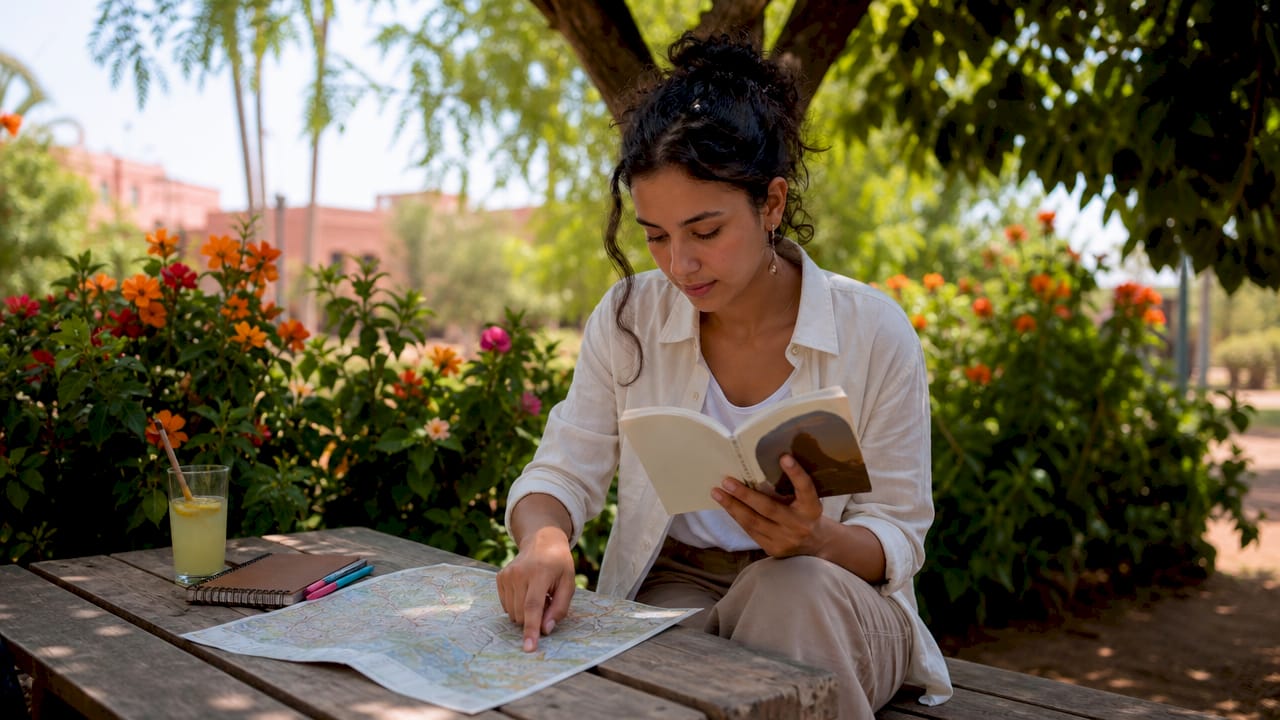
- Morocco is generally safe for tourists who stay alert and follow current advisories, despite some risks.
- The primary dangers include scams, petty theft, harassment, and regional threats, which are manageable with proper preparation.
- Remote border areas and certain urban zones require increased caution, but organized tourism infrastructure and government protection contribute to a positive safety profile.
Morocco is safe for tourists in the vast majority of cases, provided you travel with situational awareness and follow current government advisories. Morocco welcomed a record 17.4 million tourists in 2024, and the overwhelming majority experienced zero serious incidents. That figure matters because it reflects a country where tourism works at scale. The real risks, including terrorism threats, petty crime, and regional scams, are real but manageable. This guide covers every safety concern in Morocco, from solo female travel to border regions, so you can plan your trip with confidence rather than anxiety.
Is Morocco safe for tourists in 2026?
Morocco is classified as a destination requiring a high degree of caution, not avoidance. Smartraveller advises elevated caution due to terrorism threats in tourist areas and public places, which puts it in the same advisory tier as countries like Turkey and Egypt. That classification does not mean danger is constant. It means specific environments carry elevated risk and require deliberate behavior.
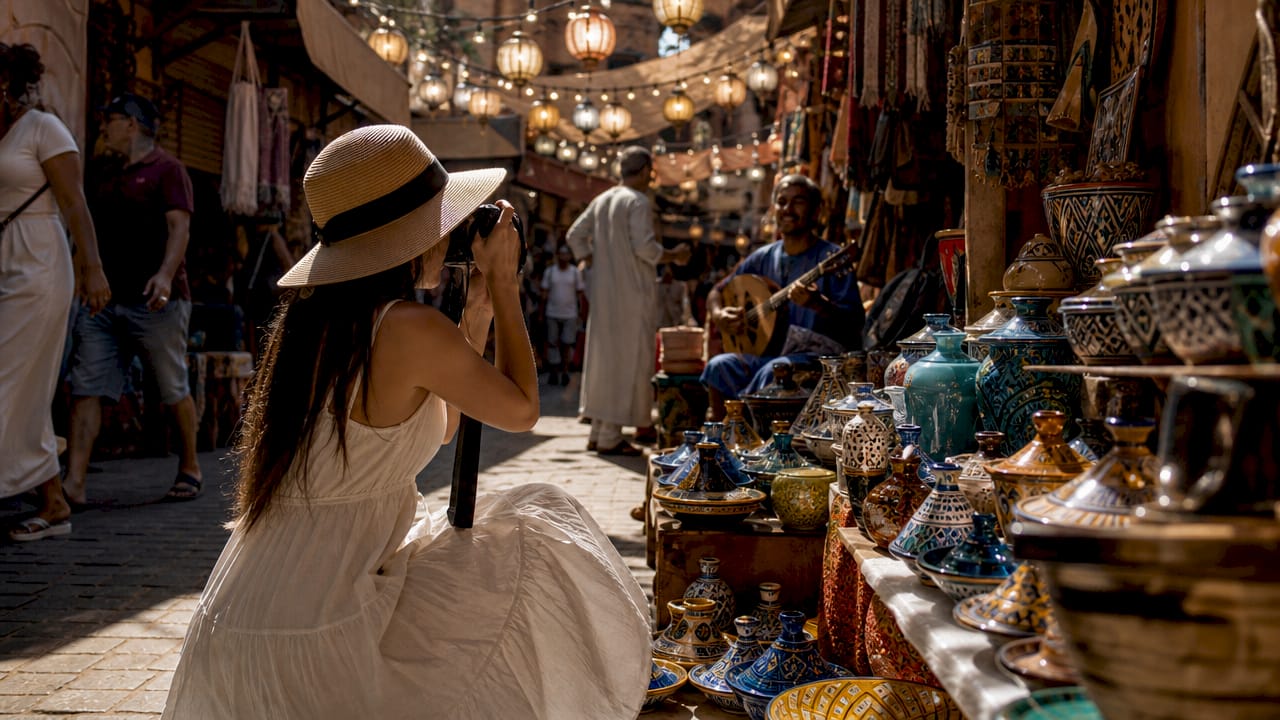
Violent crime against tourists is very rare. The threats most visitors actually encounter are scams, petty theft, and harassment, all of which are preventable with preparation. The UK Foreign, Commonwealth and Development Office (FCDO), Smartraveller, and SafeTravel New Zealand all frame Morocco’s risks as manageable rather than prohibitive. The country has a functioning tourist infrastructure, a government that actively protects its tourism economy, and millions of repeat visitors.
Where Morocco’s safety profile gets more complicated is in remote regions, border areas, and specific urban environments at night. Those nuances matter, and the sections below break them down by risk type and traveler profile.
What are the main safety risks tourists face in Morocco?
Terrorism threat
Tourist areas, hotels, transport hubs, and places associated with Western interests are considered possible terrorist targets in Morocco. This includes schools, clubs, and crowded public spaces. The threat is not hypothetical. Morocco has experienced attacks in the past, and security services remain on active alert. Staying aware of your surroundings in Marrakech’s Djemaa el-Fna square, Casablanca’s city center, and Fez’s medina is not paranoia. It is the standard practice recommended by every major travel advisory.
Petty crime and street harassment
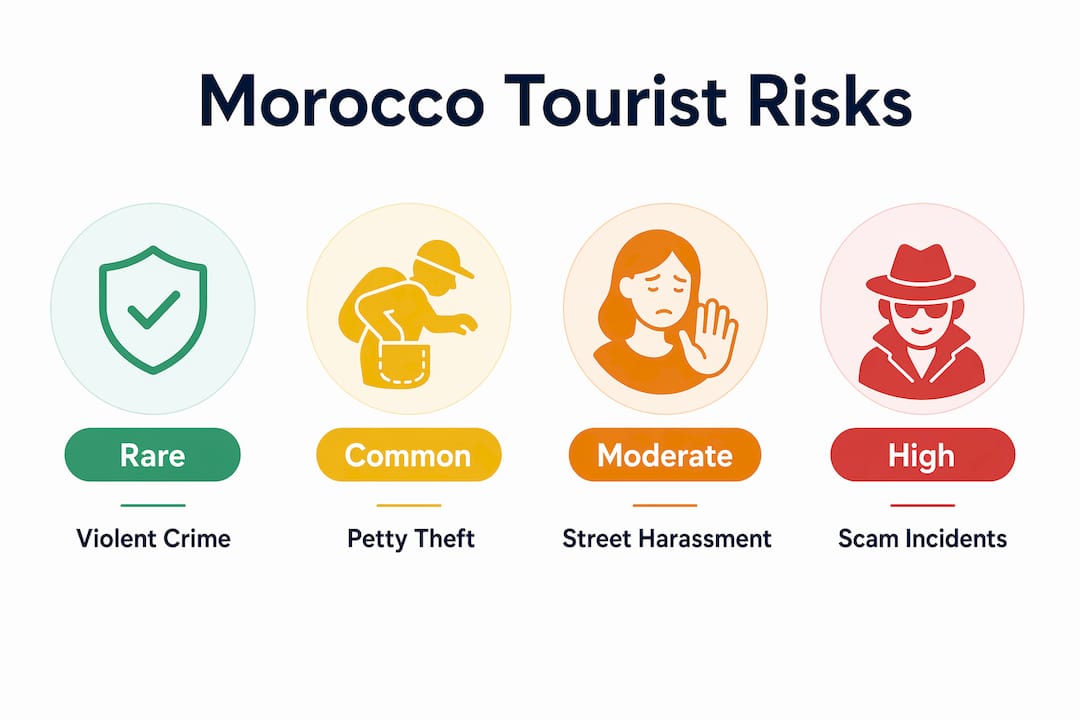
Pickpocketing, bag snatching, and aggressive begging are the most common issues tourists report, particularly in medinas and crowded souks. Tourists have been mugged walking alone at night, and female travelers face a specific risk of sexual harassment near ATMs. These incidents cluster around predictable locations and times, which means they are largely avoidable with the right habits.
Scams targeting tourists
Fake guides, price inflation, and aggressive vendors are frequent in tourist zones across Marrakech, Fez, and Chefchaouen. Common scams include:
- Unsolicited “guides” who lead you to a shop and demand payment
- Taxi drivers who refuse to use meters and charge inflated fares
- Henna artists who apply henna without consent and demand large sums
- Carpet shop owners who use high-pressure tactics after offering “free” mint tea
- Fake police officers who ask to inspect your wallet
Pro Tip: Always agree on a price before accepting any service, including taxis, guided walks, and food stalls. Licensed guides in Morocco carry official identification cards issued by the Ministry of Tourism. Ask to see one.
Remote regions and border areas
SafeTravel New Zealand warns of kidnapping threats in remote regions and advises against hiking alone in mountainous or border areas. The Sahara border zones near Algeria and the Western Sahara territory carry the highest risk. Landmines remain a documented hazard in parts of the Western Sahara. Civil unrest and violent protests can occur with little warning, and SafeTravel specifically advises avoiding all demonstrations.
Weather-related hazards
Flooding in northern Morocco causes road closures and travel disruptions, particularly during autumn and winter. Heavy rainfall can trigger evacuations and render mountain roads impassable. If you are traveling through the Atlas Mountains or the Rif region between October and March, check local conditions daily and build flexibility into your itinerary.
How do risks vary for solo travelers and women?
Safety in Morocco is not uniform across traveler profiles. Solo travelers and women face a meaningfully different experience than couples or groups, and understanding that distinction helps you prepare rather than avoid.
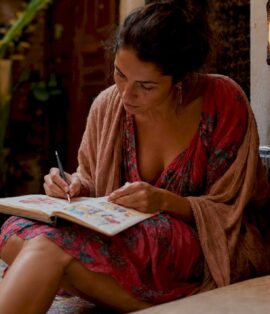
Solo female travelers report the highest frequency of unwanted attention, verbal harassment, and persistent following in medinas. This is harassment, not physical violence, but it is persistent enough to affect the quality of a trip if you are unprepared for it. The distinction matters: Morocco’s harassment problem is real, but it rarely escalates to physical danger for tourists who stay in well-trafficked areas.
Practical steps that reduce risk for solo and female travelers include:
- Dress conservatively in medinas and rural areas. Loose clothing that covers shoulders and knees signals cultural respect and reduces unwanted attention.
- Stay in riads and hotels with strong security reputations. Accommodation with a locked courtyard and attentive staff provides a reliable, safe base.
- Avoid walking alone in medinas after dark. Stick to main streets and use licensed taxis for evening travel.
- Book a solo trip to Morocco through a reputable operator who can arrange vetted guides and pre-negotiated transport.
- Use ATMs inside banks or shopping centers rather than street-facing machines, particularly at night.
Cities like Essaouira, Chefchaouen, and Agadir consistently receive better safety feedback from solo female travelers than Marrakech or Casablanca. That does not mean Marrakech is unsafe. It means the volume of tourist-targeting activity is higher there, and your guard needs to be higher too. For a thorough breakdown, Top Morocco Travel’s guide on solo women traveling Morocco covers accommodation choices, transport, and cultural navigation in detail.
How does Morocco compare with other popular destinations?
Putting Morocco’s safety profile in context helps calibrate your actual risk level rather than relying on abstract advisory language.
| Destination | Primary tourist risk | Violent crime rate vs. Morocco | Government advisory level |
|---|---|---|---|
| Morocco | Scams, petty theft, terrorism threat | Comparable | High degree of caution |
| Mexico (tourist zones) | Cartel violence, kidnapping | Significantly higher | Exercise increased caution |
| Egypt | Terrorism, petty crime | Comparable | Exercise a high degree of caution |
| Southern Spain | Petty theft, pickpocketing | Lower | Normal precautions |
| Turkey | Terrorism, petty crime | Comparable | Exercise a high degree of caution |
Morocco sits in the same advisory tier as Turkey and Egypt, two destinations that receive tens of millions of tourists annually without widespread incident. The nature of the threat in Morocco is primarily opportunistic crime and scam activity rather than organized violent crime targeting tourists. That is a meaningful difference from destinations like parts of Mexico, where cartel activity creates unpredictable risk even in tourist corridors.
Morocco’s government treats tourism as a core economic pillar. Tourist police operate in Marrakech, Fez, Agadir, and other major cities. The Brigade Touristique specifically handles crimes against visitors and has a visible presence in high-traffic areas. This institutional commitment to tourist safety has no direct equivalent in many destinations with similar advisory ratings.
What practical safety tips should every tourist follow?
Preparation is the single biggest factor separating tourists who have problems in Morocco from those who do not. The UK FCDO stresses that traveler preparation and insurance choices determine outcomes more than destination safety labels. Follow these steps before and during your trip:
- Register your travel plans with your country’s official travel registry (Australia’s Smartraveller, the US State Department’s STEP program, or the UK FCDO’s travel alerts). You receive real-time updates if conditions change.
- Get comprehensive travel insurance that covers medical evacuation, trip cancellation, and emergency repatriation. Morocco’s public hospitals in rural areas have limited capacity. Private clinics in Casablanca and Marrakech are significantly better equipped.
- Use licensed taxis and pre-arranged transport. Petit taxis in Marrakech and Fez use meters by law. If a driver refuses to use the meter, exit and find another cab. For longer journeys, private transport options arranged through your hotel or tour operator eliminate fare disputes entirely.
- Secure your valuables. Use a money belt or hidden pouch for your passport and large amounts of cash. Keep a photocopy of your passport stored separately. Leave expensive jewelry at home.
- Avoid isolated areas at night. The highest-risk moments cluster around night medina walks, ATM use, and remote hiking. Travel with at least one other person in these scenarios.
- Stay away from protests and demonstrations. Civil unrest can escalate quickly, and being caught near a demonstration as a foreign tourist creates unnecessary legal and physical risk.
- Monitor local weather and road conditions. Flooding causes road closures and evacuations, particularly in northern Morocco. Check conditions before driving mountain routes.
- Hire licensed guides for remote areas. Traveling with guides in remote regions significantly reduces risk compared to solo exploration. This applies especially to Atlas Mountain treks and Sahara excursions.
Pro Tip: Download the offline maps app Maps.me or Google Maps offline for your Moroccan destinations before you arrive. Getting lost in a medina without data is the fastest way to become a target for aggressive touts and fake guides.
For a deeper breakdown of security protocols and what to watch for city by city, Topmoroccotravel’s travel safety guide for Morocco covers each major destination in detail.
Key takeaways
Morocco is safe for tourists who prepare deliberately, stay alert in high-risk environments, and use licensed guides and transport rather than accepting unsolicited help.
| Point | Details |
|---|---|
| Overall safety level | Morocco requires high caution, not avoidance. Millions visit annually without serious incident. |
| Primary risks | Scams, petty theft, and harassment are far more common than violent crime against tourists. |
| Solo and female travelers | Face higher harassment frequency. Dress conservatively, avoid medinas alone at night, and book vetted accommodation. |
| Remote and border regions | Carry kidnapping and landmine risks. Never hike alone and follow all government advisories for border areas. |
| Preparation is decisive | Travel insurance, licensed transport, and registered itineraries reduce risk more than any destination label. |
My honest assessment after years of Morocco travel
The question “Is Morocco safe to visit?” gets answered in extremes online. You either read horror stories about harassment and scams, or you read breathless reassurances that Morocco is perfectly safe and everyone is wonderful. Neither is accurate, and both do travelers a disservice.
What I have observed, working with travelers across Marrakech, Fez, the Atlas Mountains, and the Sahara, is that the tourists who struggle are almost always the ones who arrived without context. They did not know that an unsolicited “guide” is not a guide. They did not know that a taxi without a meter is a negotiation trap. They did not know that wandering a medina alone at 11pm in a tourist-heavy city is a different risk calculation than doing the same in Essaouira.
The tourists who thrive in Morocco are not necessarily more experienced travelers. They are simply more prepared. They read the advisories, they booked vetted transport, they dressed appropriately, and they treated Morocco as a place with specific cultural and logistical norms rather than a generic holiday backdrop.
Morocco rewards preparation with some of the most extraordinary travel experiences available anywhere. The Sahara at sunrise, a private riad in Fez’s medina, and a home-cooked tagine in a Berber village. None of that is accessible to someone who spends the trip anxious and reactive. Preparation converts Morocco from a source of stress into one of the most memorable destinations on earth.
The safety concerns are real. They are also specific, predictable, and largely preventable. That combination makes Morocco one of the most rewarding destinations for travelers who do their homework.
— Topmoroccotravel.com
Plan your Morocco trip with expert guidance
Topmoroccotravel.com designs every itinerary with traveler safety built into the structure, not added as an afterthought. Vetted local guides, pre-arranged licensed transport, and carefully selected riads and hotels remove the guesswork that creates risk for independent travelers. Whether you are planning a first visit to Marrakech, a multi-city imperial tour, or a Sahara desert excursion, every route is built around authentic cultural access and practical security.
Explore Topmoroccotravel’s Moroccan city tour concepts for curated experiences that combine luxury, cultural immersion, and the kind of local knowledge that keeps you safe and engaged throughout your trip. For travelers who want to understand the full value of expert-led travel, the advantages of guided tours in Morocco guide explain exactly why independent travel carries higher risk in this specific destination.
FAQ
Is Morocco safe to visit right now in 2026?
Yes, with precautions. Morocco maintains a “high degree of caution” advisory from Smartraveller and the UK FCDO, meaning specific risks require awareness, but the country is not under a “do not travel” warning and receives millions of visitors annually without serious incident.
What are the most common safety concerns in Morocco for tourists?
Scams, petty theft, and verbal harassment are the most frequent issues tourists report. Fake guides, overcharging taxis, and henna scams in medinas top the list. Violent crime against tourists is rare.
Is Morocco safe for solo female travelers?
Solo female travelers face a higher frequency of verbal harassment than other traveler profiles, particularly in the Marrakech and Fez medinas. Dressing conservatively, avoiding isolated areas at night, and booking vetted accommodation significantly reduces risk.
Which areas of Morocco should tourists avoid?
Border regions near Algeria and the Western Sahara territory carry the highest risk, including kidnapping threats and landmines. SafeTravel New Zealand advises against hiking alone in mountainous or remote border areas.
Do I need travel insurance for Morocco?
Yes. The UK FCDO recommends comprehensive insurance covering medical evacuation and emergency expenses. Private medical facilities in rural Morocco are limited, and medical evacuation costs without insurance can be substantial.
Comments are closed