




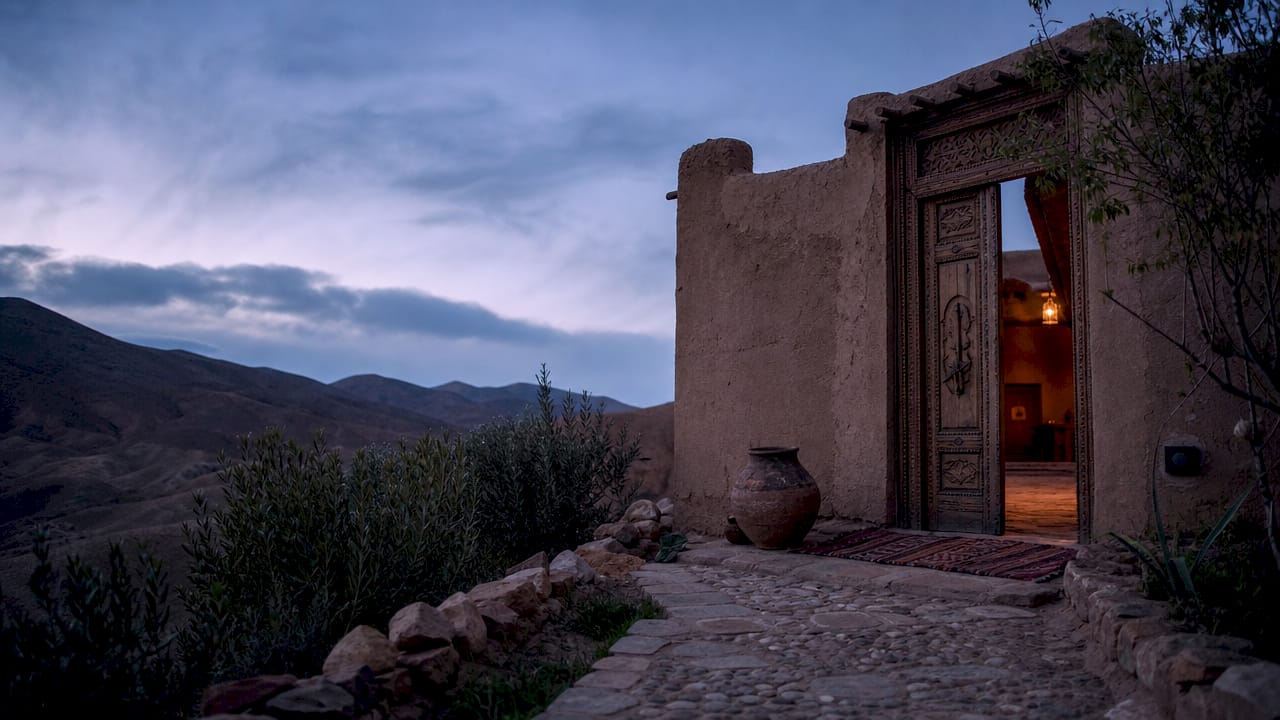
- A Moroccan auberge is a small, tourist-oriented inn that offers authentic local hospitality in rural regions.
- It differs from homestays, gîtes, and riads by providing road access, online booking, and immersive cultural experiences.
- Most auberges are located near scenic landscapes such as the Dades Gorge, the Sahara edge, and the Atlas foothills, offering communal meals and local guides that enhance the travel experience.
A Moroccan auberge is defined as a small, traditional inn offering authentic local hospitality, primarily found in the rural and Berber regions of Morocco. The word “auberge” is French for “inn,” and in Morocco it refers to a specific category of guest-oriented lodging that sits between a basic homestay and a full-service hotel. These inns are deeply rooted in Berber culture, known for communal meals, warm personal service, and scenic locations along desert edges, Atlas foothills, and mountain valleys. If you want to understand what auberge in Morocco really means, think of it as a place where the host is also your guide into local life.
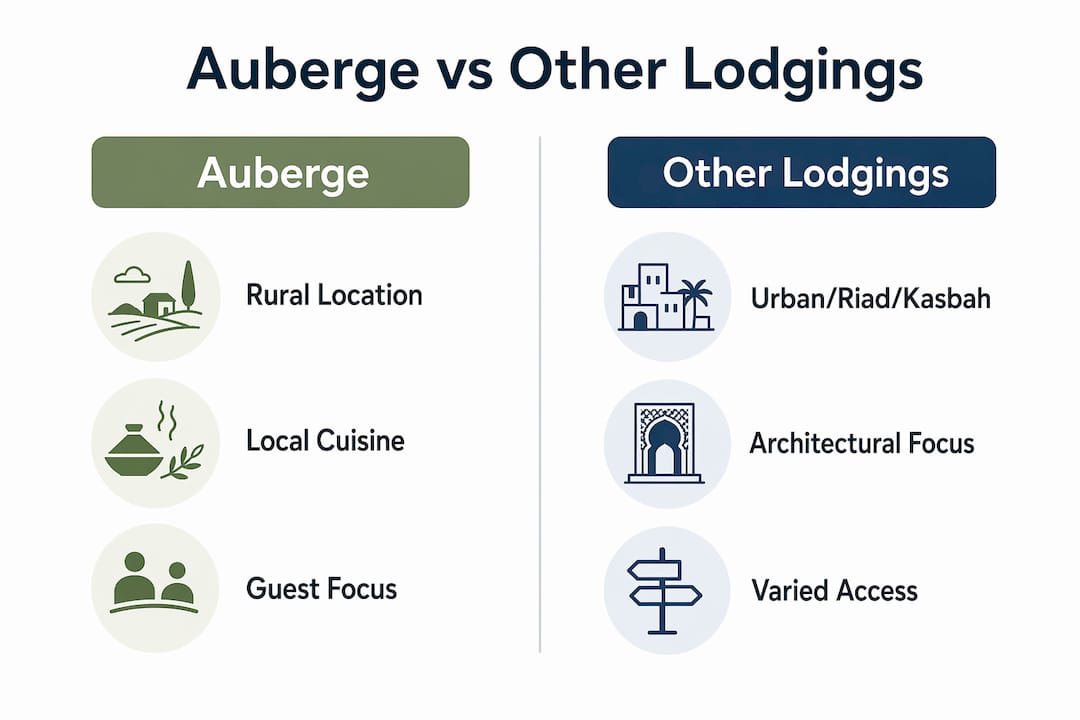
What is a Moroccan auberge, and how does it differ from other lodgings?
A Moroccan auberge is a guest-focused inn built specifically for travelers, not simply a family home that accepts visitors. That distinction matters more than it sounds. Riads, kasbahs, homestays, and gîtes d’étape all serve travelers in Morocco, but each operates on a different model with different expectations.
A riad is a traditional Moroccan house built around an interior garden courtyard, almost always located inside a historic city medina. Riads are urban, inward-facing, and architecturally formal. An auberge, by contrast, sits in open countryside and faces outward toward the landscape. The two share nothing in terms of setting, structure, or atmosphere.
Kasbahs are fortified compounds built historically for defense, with thick rammed-earth walls and towers. Some kasbahs have been converted into hotels, but their original purpose was protection, not hospitality. Auberges were built from the start to welcome guests.
The distinction between an auberge and a rural homestay is equally clear. A rural homestay often requires foot access along hiking routes and lacks vehicle access or online booking. Auberges are designed with road access and standardized booking channels. Gîtes d’étape, another option, are remote rest stops used mainly by trekkers and accessed only on foot. Auberges sit firmly on the tourist-friendly side of that spectrum.
| Lodging type | Location | Architecture | Access | Booking |
|---|---|---|---|---|
| Auberge | Rural, desert, mountains | Simple inn style | Vehicle road access | Online and phone |
| Riad | Urban medina | Courtyard house | Walking, city streets | Online platforms |
| Kasbah | Rural or urban | Fortified compound | Varies | Online platforms |
| Homestay | Deep rural | Family home | Often foot only | Direct or word-of-mouth |
| Gîte d’étape | Remote trail | Basic shelter | Foot only | Limited |
Auberges balance authenticity with guest comfort in a way that none of the other categories quite match. They are small enough to feel personal, accessible enough to reach without a hiking permit, and local enough to deliver a genuine cultural experience.
Where are Moroccan auberges located, and what do they offer?
Auberges are typically located in the Berber south of Morocco, along desert edges, and in the Atlas foothills. These are the landscapes that most travelers come to Morocco specifically to see. Placing an auberge in the Dades Valley, the Draa Valley, or near the Sahara edge is not accidental. It puts guests directly inside the scenery rather than driving to it from a distant city hotel.
The regions where auberges cluster most densely include the following:
- The Dades and Todra Gorges in the High Atlas, where dramatic canyon walls rise above small inns perched on valley floors
- The Draa Valley, stretching south toward Zagora, lined with palm groves and kasbahs where auberges offer front-row views of the oasis landscape
- The Sahara edge near Merzouga and M’Hamid, where auberges serve as base camps for desert excursions into the Erg Chebbi dunes
- The Anti-Atlas foothills around Tafraoute, a less-visited region where auberges offer access to Berber villages and almond orchards
- The Ourika Valley south of Marrakech, a popular day-trip destination where auberges provide an overnight option close to Berber market towns
Access to most auberges is straightforward. Nearly all auberges provide vehicle access and guest-oriented facilities, which separates them clearly from remote homestays or trekking shelters. You can reach the majority by rental car or shared taxi, and many are reachable on organized tours from Marrakech, Fez, or Ouarzazate.
The travel experience at an auberge goes well beyond the room. Owners frequently arrange mule treks, guided village walks, and stargazing sessions on rooftop terraces. The setting itself does much of the work. Waking up to the sound of a river in the Todra Gorge or watching the sun hit the dunes from a rooftop in Merzouga is an experience that no city hotel can replicate.
Pro Tip: When choosing an auberge, match the location to your travel pace. If you want active hiking, the Atlas foothills deliver. If you want stillness and star-filled skies, the desert edge near Merzouga is the better choice.
What cultural role do auberges play in Moroccan rural tourism?
Auberges act as cultural ambassadors in rural Morocco, not just as places to sleep. The owner of a typical auberge is often a local Berber man or woman who grew up in the region, speaks the local Tamazight dialect alongside Arabic and French, and has deep personal ties to the surrounding villages. That background shapes every interaction a guest has.
Auberges support sustainable rural tourism by preserving Berber traditions and contributing income directly to local communities. When you pay for a night at an auberge, the money stays in the village. It pays for the cook’s wages, the guide’s fee, and the family that supplies the vegetables. That economic chain is short and direct in a way that a large resort chain cannot replicate.
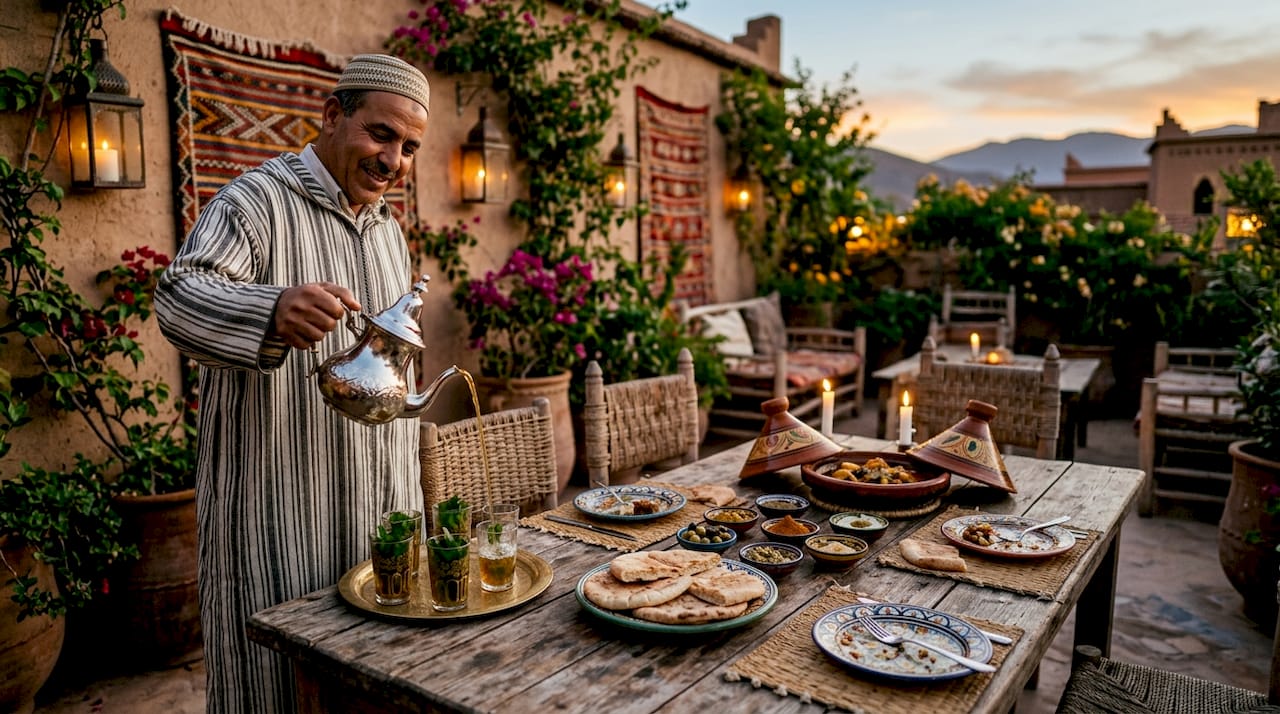
Berber hospitality at an auberge follows a specific cultural logic. Guests are welcomed with mint tea, a ritual that signals respect and generosity. Meals are communal and unhurried. Conversation at the dinner table often covers local history, Berber customs, and the ecology of the surrounding landscape. This is not a performance for tourists. It is simply how hosts in these communities treat guests.
“Hospitality experts consistently highlight Berber hospitality and locally inspired cuisine as the defining guest experiences at Moroccan auberges.”
Authentic auberges feature communal dining with local Berber dishes as the centerpiece of the stay. Dishes like tagine cooked over charcoal, harira soup, and msemen flatbread made fresh each morning are not menu items. They are expressions of place and identity. Eating them at a table shared with other travelers and the host family is a form of cultural exchange that no guided tour can fully substitute.
Pro Tip: Ask your auberge host about the origin of the ingredients in your meal. Most hosts are proud to explain which vegetables come from their own garden and which spices are sourced from the local souk. That conversation alone is worth the stay.
How does staying at an auberge enhance your Moroccan travel experience?
Staying at an auberge delivers a quality of experience that larger hotels and urban riads simply cannot offer. The difference is not about luxury or price. It is about proximity to real Moroccan life. The blend of comfort and authenticity at auberges makes them ideal for travelers who want both ease and cultural depth.
The guest experience at a typical auberge includes several elements that set it apart:
- Communal meals served family-style at a shared table, where guests eat the same food as the host family and conversation flows naturally across languages
- Rooftop terraces with unobstructed views of gorges, dunes, or mountain ridges, used for breakfast, evening tea, and late-night stargazing
- Local guides on call, often the owner’s brother or neighbor, who know every trail, village, and hidden waterfall within walking distance
- Berber music evenings, common in desert-edge auberges, where local musicians play guembri and bendir after dinner around a fire
- Handmade decor using local materials: zellige tilework, carved cedar doors, woven Berber rugs, and hand-painted pottery that reflects regional craft traditions
The atmosphere at an auberge is relaxed and intimate in a way that a 50-room hotel cannot manufacture. You are likely to share a meal with a French cyclist, a German photographer, and a Moroccan family all at the same table. That social mix is one of the most memorable parts of the experience.
Authentic Berber hospitality and local cuisine are the two features travelers most consistently cite when recommending auberges to others. The food alone justifies the choice for many visitors. A slow-cooked lamb tagine with prunes and almonds, eaten on a terrace overlooking the Dades Valley at sunset, is a meal travelers remember for years.
For first-time auberge visitors, the most common adjustment is pace. Auberges operate on a slower clock than city hotels. Breakfast arrives when it is ready. The hot water may take a few minutes. That slowness is the point. Lean into it and the experience becomes richer.
How to find and book an authentic Moroccan auberge
Finding a quality auberge requires a slightly different approach than booking a city hotel. The process is straightforward once you know where to look.
- Search by region first, not by star rating. Decide which landscape you want to wake up in. The Dades Gorge, Merzouga, or the Draa Valley each offer dozens of auberges at different price points. Narrowing by geography before comparing properties saves time.
- Use general travel booking platforms with location filters. Many auberges now list on mainstream booking platforms, which makes comparing prices and reading guest reviews easy. Filter by “guesthouse” or “inn” rather than “hotel” to surface auberge-style properties.
- Contact the auberge directly after finding it online. Most owners respond quickly by WhatsApp or email and can confirm availability, arrange airport transfers, and customize meals for dietary needs. Direct contact also often yields a better rate than third-party platforms.
- Book through a specialized Morocco travel agency. Agencies like Topmoroccotravel include authentic auberge stays within their tour itineraries, which removes the guesswork of vetting properties independently. This is especially useful for first-time visitors who want a curated route through multiple regions.
- Check for vehicle access and meal inclusion before confirming. Auberges designed for tourism provide road access and standardized facilities. If a property requires a two-hour hike to reach and has no online presence, it is likely a homestay or gîte d’étape rather than a true auberge. Confirm whether dinner and breakfast are included, as most auberges bundle meals into the nightly rate.
- Read recent guest reviews with cultural context in mind. A review complaining about slow Wi-Fi or no air conditioning in a mountain auberge is not a red flag. A review noting that the host was absent, the food was pre-packaged, or the location did not match the photos is worth taking seriously.
Travelers who want to explore Moroccan villages as part of their itinerary will find that auberges are the natural lodging choice. They sit inside the villages rather than outside them, which means the cultural experience begins the moment you arrive.
Key takeaways
A Moroccan auberge is the most direct way to experience Berber hospitality, rural landscapes, and authentic local cuisine in a single stay.
| Point | Details |
|---|---|
| Core definition | An auberge is a small, tourist-oriented inn in rural Morocco, distinct from homestays and urban riads. |
| Key locations | Most auberges sit in the Berber south, Atlas foothills, and desert-edge regions near Merzouga and Zagora. |
| Cultural role | Auberges preserve Berber traditions and direct tourism income into local rural communities. |
| Booking approach | Most auberges offer vehicle access and online booking, making them far easier to reach than homestays or gîtes d’étape. |
| Guest experience | Communal meals, rooftop terraces, and local guides define the auberge stay and set it apart from larger hotels. |
Why auberges changed how I think about Moroccan travel
The first time I stayed at an auberge in the Dades Valley, I expected a basic room and a decent tagine. What I got was a three-hour conversation with the owner about the history of the Ait Atta tribe, a predawn walk to watch the gorge walls turn orange at sunrise, and a breakfast of fresh msemen with argan oil that I still think about years later.
The biggest misconception travelers carry into Morocco is that authenticity requires suffering. People assume that a truly local experience means no hot water, no road access, and no way to communicate with the host. Auberges disprove that entirely. They are built for guests, not just tolerated by them. The comfort is real. The cultural depth is also real. The two are not in conflict.
What I tell every traveler planning a Morocco trip is this: spend at least two nights at an Auberge outside the major cities. One night is not enough to slow down. By the second morning, you stop checking your phone, you start noticing the light on the mountains, and you actually talk to the person sitting across from you at breakfast. That shift in attention is what travel is supposed to produce.
The travelers who get the most from auberges are the ones who arrive with curiosity rather than a checklist. Ask the host about the region. Try the food you do not recognize. Accept the mint tea even if you have already had three cups. The auberge experience rewards openness more than any other lodging type in Morocco.
— Topmoroccotravel.com
Plan your Morocco trip with TopMoroccoTravel
Topmoroccotravel.com designs customized Morocco tours that include carefully selected auberge stays in the Dades Valley, Draa Valley, and Sahara edge regions. Each itinerary is built around authentic cultural experiences, not just sightseeing stops. The team handles logistics, vetting, and booking so travelers arrive at properties that genuinely deliver on the auberge promise. For travelers who want to combine city exploration with rural immersion, Topmoroccotravel’s tailored Morocco packages connect medina stays in Fez or Marrakech with nights at hand-picked auberges in the countryside. Every detail is managed, from vehicle transfers to meal preferences.
FAQ
What does “auberge” mean in Morocco?
In Morocco, “auberge” refers to a small, tourist-oriented inn typically found in rural areas, desert edges, and mountain regions. It is the French word for “inn” and describes a specific category of local guesthouse built for travelers rather than a converted family home.
How is a Moroccan auberge different from a riad?
A riad is an urban courtyard house located inside a city medina, while an auberge is a rural inn in the countryside or desert. The two differ in location, architecture, and atmosphere.
Are Moroccan auberges easy to book?
Most auberges offer vehicle road access and list on mainstream booking platforms or respond directly via WhatsApp. Booking an auberge is significantly easier than arranging a rural homestay, which often requires local contacts and foot access.
What food do auberges typically serve?
Auberges serve communal Berber meals featuring locally sourced ingredients and traditional recipes such as tagine, harira soup, and freshly made flatbread. Dinner and breakfast are usually included in the nightly rate.
Which regions of Morocco have the best auberges?
The Dades and Todra Gorges, the Draa Valley, and the Sahara edge near Merzouga consistently offer the strongest concentration of quality auberges. These regions combine dramatic scenery with deep Berber cultural traditions.
Comments are closed