




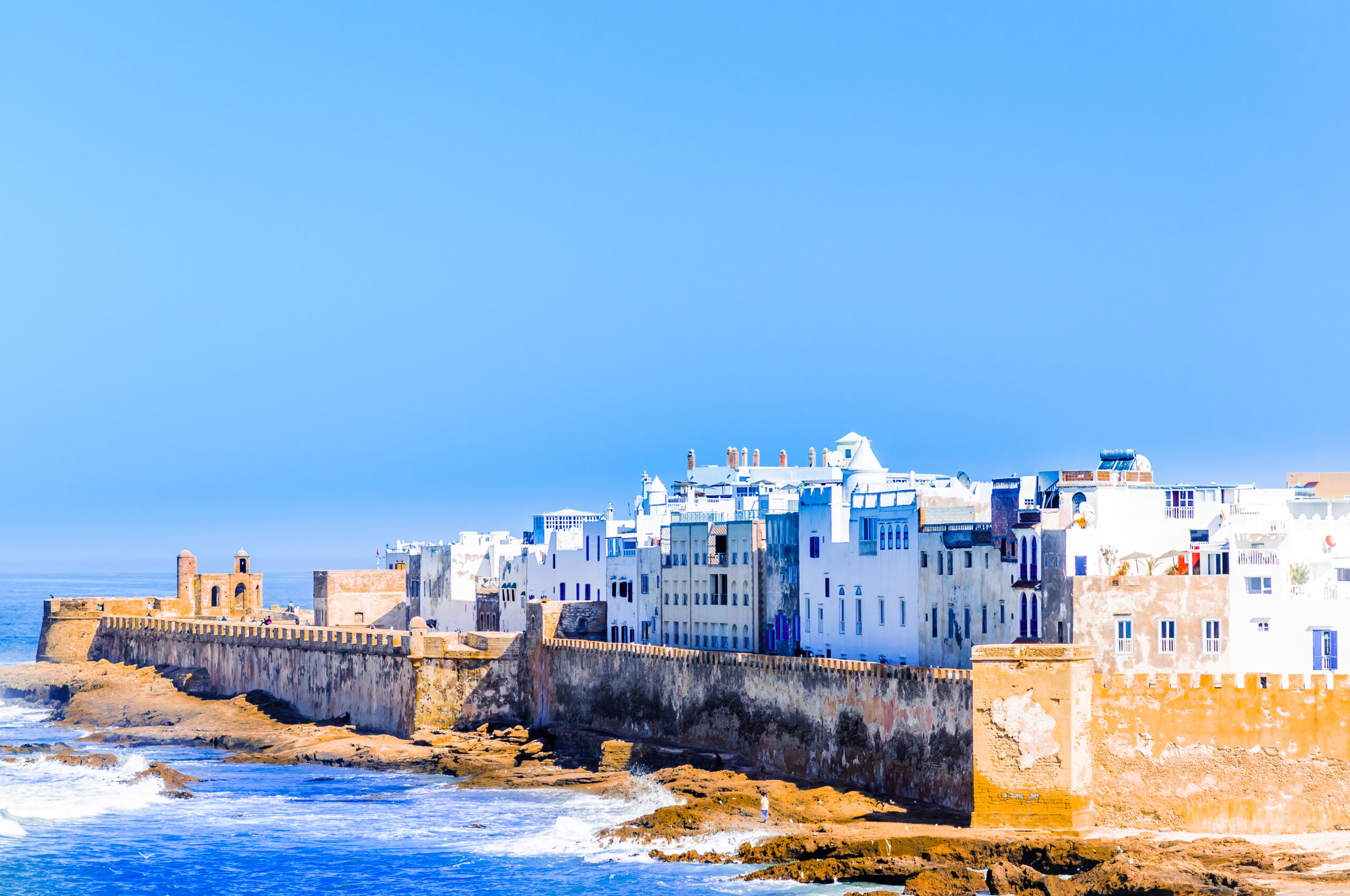
- Essaouira defies the typical Moroccan coast image with its vibrant, UNESCO-recognized medina and lively Gnawa music culture.
- The city’s strong Atlantic winds shape outdoor activities like kite surfing, bird-watching, and coastal hikes, offering unique natural experiences.
- Growing tourism and authentic local hospitality make Essaouira a culturally rich and sustainable destination worth exploring beyond surface-level attractions.
Most people picture Morocco’s coasts as places to lounge under an umbrella with a cold drink in hand. Essaouira flips that idea completely. This is a city where the UNESCO Creative Cities Network recognized an Old Medina alive with Gnawa music, hand-carved woodwork, and centuries of Atlantic history. Here, salt-laced winds shape daily life, artists crowd whitewashed studios, and travelers who came for a beach day end up staying a week. This guide gives you everything you need to experience Essaouira the right way.
Table of Contents
- What makes Essaouira unique?
- Cultural immersion in Essaouira’s Old Medina
- Winds, wildlife, and the perfect days outdoors
- Hospitality insights: Where to stay and why overnight stays are booming
- The real Essaouira: What guidebooks miss and what you need to know
- Plan your perfect Essaouira experience with expert-guided adventures
- Frequently asked questions
Key Takeaways
| Point | Details |
|---|---|
| UNESCO heritage and creativity | Essaouira’s Old Medina is a global center for music and culture recognized by UNESCO. |
| Wind shapes the experience | Expect strong Atlantic winds—perfect for adventure, but plan your gear and timing. |
| Tourism is on the rise | A boom in overnight stays reflects Essaouira’s growing appeal for culture-oriented travel. |
| Local insight matters | Authentic and safe experiences require up-to-date local guidance, not just guidebooks. |
| Unique stays enhance immersion | Choosing a riad or boutique hotel deepens your cultural connection with Essaouira’s vibe. |
What makes Essaouira unique?
Essaouira sits on Morocco’s Atlantic coast, roughly 175 kilometers north of Agadir and about 2.5 hours west of Marrakech by road. That geography alone makes it different. The Atlantic doesn’t pamper you here. It pushes back with steady, reliable winds that shape every corner of local life.
What truly separates Essaouira from other Moroccan coastal towns is its cultural identity. The city joined UNESCO’s Creative Cities Network in 2019, a recognition tied directly to its Old Medina and its deep connection to musical tradition. The Gnawa people, with roots in sub-Saharan Africa, built a spiritual music culture here that still thrives. You can hear it in courtyards, in festival squares, and in tiny venue corners where musicians play for the love of it rather than the photo opportunity.
The city is also famously known as the “Windy City of Africa.” Peak winds hit hardest from June through August, when kite surfers and windsurfers travel from across Europe to train on these waves. The wind has been both a challenge and a gift. It kept the city from becoming overdeveloped, because mass tourism struggled to plant roots here the way it did in Agadir. That resistance preserved the character travelers now specifically seek out.
Here is a snapshot of what makes Essaouira stand out compared to similar destinations:
| Feature | Essaouira | Typical beach town |
|---|---|---|
| UNESCO recognition | Creative Cities Network (2019) | Rarely recognized |
| Music culture | Living Gnawa tradition | Limited or absent |
| Wind conditions | Consistently strong (Atlantic) | Mild or seasonal |
| Medina authenticity | UNESCO World Heritage site | Usually modern or commercial |
| Artisan scene | Active workshops, galleries | Souvenir-focused |
| Overtourism level | Moderate and manageable | Often extreme |
Key reasons travelers with a taste for things to do in Essaouira consistently choose this city over easier options:
- The medina is compact and walkable without the chaos of Marrakech’s souks
- Local artisans still use traditional techniques in wood carving, silverwork, and weaving
- The Gnawa music festival (held annually in June) draws world-class musicians alongside local masters
- Street life feels genuinely local, not staged for tourist consumption
- The food scene leans heavily on fresh Atlantic seafood with real local flavor
Essaouira’s creative economy is no accident. Centuries of trade through the port brought African, Berber, Jewish, Arab, and European influences together inside one walled city. That mix created an unusually open, artistic atmosphere that has never fully disappeared.
Cultural immersion in Essaouira’s Old Medina
The Old Medina is the pulse of everything. This UNESCO World Heritage site was designed by French architect Théodore Cornut in the 18th century under Sultan Mohammed III, which gives it a distinctive grid-like layout unusual for a North African medina. Walking through it feels organized but still genuinely alive.
The best hours to explore are early morning before 9 a.m. and late afternoon after 4 p.m. Midday brings tour groups and heat, even in a city this windy. Morning hours give you the medina at its most honest, with shopkeepers opening shutters, women buying fresh bread, and musicians warming up near the ramparts.
Here is a practical comparison to help you separate genuinely local experiences from tourist-packaged versions:
| Experience | Local version | Tourist version |
|---|---|---|
| Music | Gnawa musicians playing in a neighborhood courtyard | Staged performances near hotel lobbies |
| Food | Fish grills near the port bought by locals | Waterfront restaurant menus in three languages |
| Souvenirs | Argan cooperatives or wood-carving workshops | Mass-produced tagines sold near main gates |
| Accommodation | Family-run riad with home-cooked breakfasts | Renovated riad run by foreign investors |
| Guided tours | Local guide with neighborhood roots | Generic English-language coach tours |
The art scene here is worth slowing down for. Over 50 galleries and workshops operate within the medina walls. Thuya wood carving is a local specialty. The wood comes from a native juniper tree found only in this region of Morocco, and craftsmen shape it into everything from decorative boxes to detailed furniture using hand tools passed through generations.
Knowing how to behave respectfully matters. Here is what we recommend:
Do’s:
- Greet shopkeepers with “Salam alaikum” before browsing
- Ask permission before photographing people or private spaces
- Accept tea when offered; it signals genuine hospitality, not an obligation to buy
- Bargain gently and with humor, never with frustration
- Attend a live Gnawa music session rather than watching a short tourist clip
Don’ts:
- Don’t photograph the port fish auction without checking with sellers first
- Don’t push to enter spaces marked private or sacred
- Don’t dismiss the first price as a scam. It is the start of a conversation
- Don’t rush the medina. Blocking narrow alleyways irritates locals
- Don’t expect Western-style service timing. Meals and conversations run at their own pace
Pro Tip: If you want to meet working artists rather than shopkeepers selling their work, visit in the morning and ask at any gallery whether the artist is present. Many workshops open their back rooms to genuinely curious visitors. A brief, sincere conversation about the craft often leads to invitations most travelers never receive.
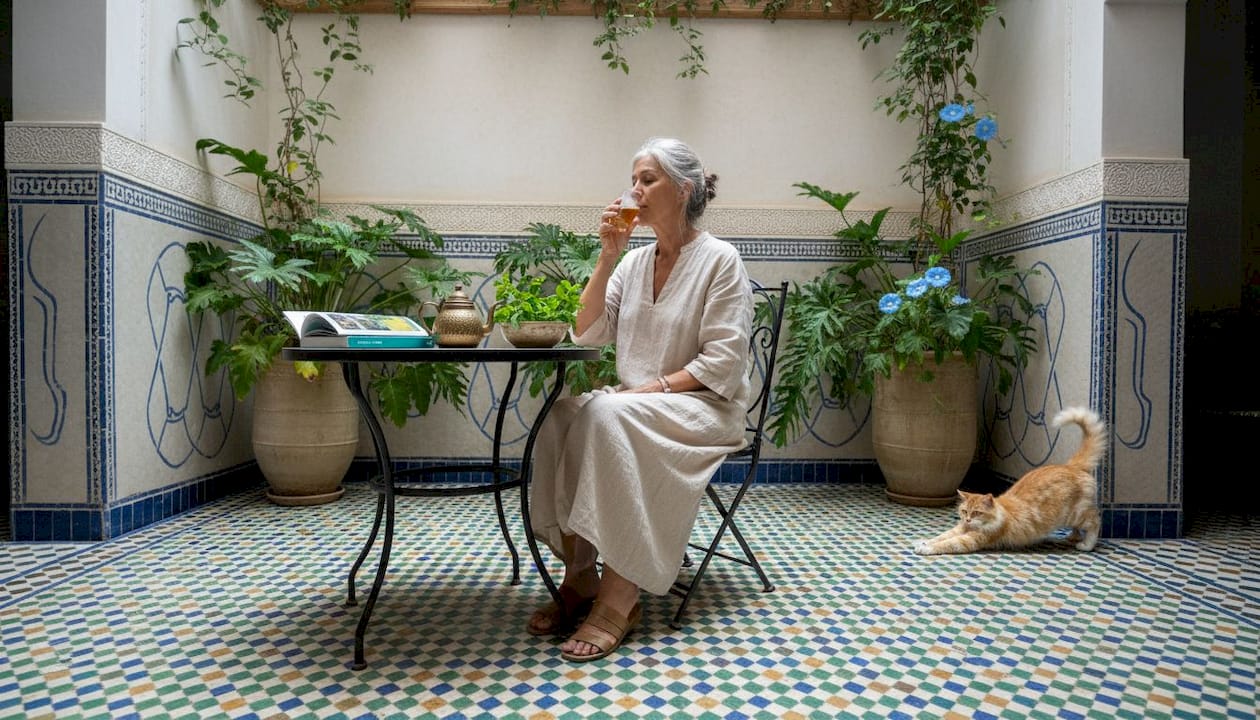
Staying in a riad in the medina rather than a hotel on the outskirts changes everything. Riads are traditional Moroccan houses built around a central courtyard. They put you inside the neighborhood’s rhythm from the moment you wake up. You hear the call to prayer, smell bread baking, and naturally drift toward the most interesting streets rather than following a map to tourist highlights. Pair that with a shortlist of must-do Morocco experiences and your itinerary starts shaping itself organically.
Winds, wildlife, and the perfect days outdoors
Essaouira’s outdoor identity is inseparable from its wind. This is not just a weather feature. It is the reason the city exists the way it does, and it will shape every hour you spend outside the medina walls.
“The wind here is not an obstacle. It’s a living part of the city’s personality. Once you stop fighting it and start working with it, Essaouira opens up in ways most beach destinations never could.”
The Atlantic coastline stretching south of the medina runs for miles of flat, firm sand. That beach is home to one of Africa’s strongest kitesurfing scenes. Spot Dakhla and Essaouira are often mentioned in the same sentence among serious wind sports athletes. The Essaouira wind conditions peak from June through August, with consistent speeds that make learning easier and advanced riding exceptional. Schools offering lessons operate along the beachfront, and most will rent equipment by the hour or day.
Beyond kitesurfing, the outdoor options here are genuinely varied:
- Camel rides along the beach at sunset are a classic activity that still holds up
- Bird-watching at the Oued Ksob estuary just south of town draws birders specifically for flamingos, herons, and migratory species passing through on Atlantic flyways
- Horseback riding is available through several stables south of the city; the terrain is flat and wide enough for complete beginners
- Sea kayaking operates on calmer days closer to the medina ramparts
- Coastal hikes toward Cap Sim offer a completely empty Atlantic landscape within 30 minutes of the medina gate
Planning your outdoor time by season matters. Spring (March through May) is ideal for nearly everything. Temperatures sit between 18 and 24 degrees Celsius, winds are moderate, and the city is not yet packed. Summer brings the wind sports crowd and the famous Gnawa festival. Fall mirrors spring. Winter is the quietest season, occasionally rainy, but remarkably peaceful and still mild by European standards.
How to prepare for a day outdoors in Essaouira:
- Layer up even in summer. The wind drops the felt temperature significantly. A light windbreaker is essential past 4 p.m.
- Apply sunscreen with high SPF. The Atlantic glare is intense, and the wind makes you forget you’re burning.
- Bring a scarf or hat. Not just for cultural reasons; the sand in the air near the beach gets into eyes, ears, and cameras.
- Time your beach walk. Early morning and late afternoon offer the best light and the most manageable wind speeds.
- Carry water and snacks. The beachfront lacks consistent food options away from the main stretch.
- Book wind sports lessons in advance for summer. Spots fill up fast, particularly for kitesurfing schools with certified instructors.
Pro Tip: Split your days between outdoor activity and medina time. Two to three hours on the beach or coastline, followed by lunch in a quiet medina restaurant, gives your body and senses a chance to reset. The wind can be exhilarating in bursts, but it’s genuinely exhausting over long exposure. Alternating between the two sides of the city creates a natural rhythm that makes the whole trip feel more sustainable and more enjoyable.
Among all the top Morocco destinations, Essaouira is one of the few where the natural environment actively shapes what you do each day rather than just providing a backdrop. That makes it memorable in a way that passive beach destinations simply are not.
Hospitality insights: Where to stay and why overnight stays are booming
Something measurable is happening in Essaouira. Classified tourist accommodations recorded 104,492 overnight stays by the end of February 2025, a 22% increase year-over-year. That is not a minor bump. It signals a city moving from niche destination to genuine travel priority for a growing number of international visitors.
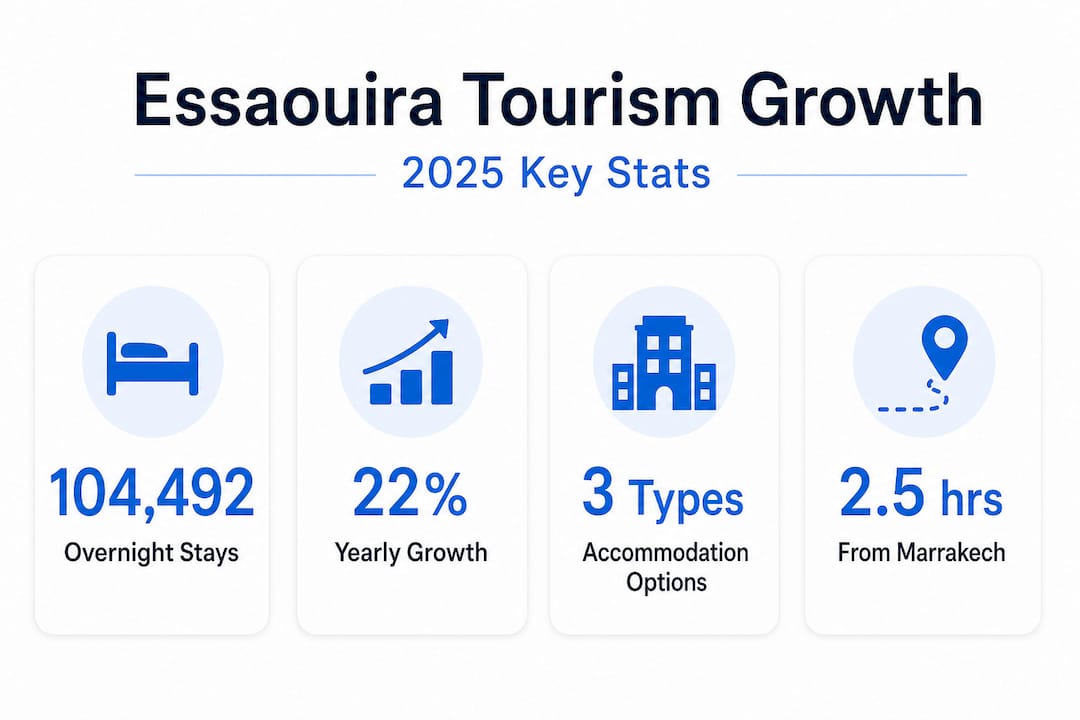
| Metric | End of February 2024 | End of February 2025 | Change |
|---|---|---|---|
| Overnight stays in classified accommodations | ~85,600 (estimated) | 104,492 | +22% YoY |
| Market trend | Steady growth | Accelerating | Strong upward |
| Traveler profile | Niche cultural seekers | Broader international mix | Expanding |
This growth matters practically for your trip planning. Demand is rising, which means availability during peak season is no longer guaranteed weeks out. It also means the hospitality offer has expanded and diversified to meet new expectations.
The types of places to stay in Essaouira range widely:
Riads inside the medina remain the most culturally immersive option. A well-run riad gives you a home base within walking distance of everything, usually includes breakfast, and offers genuine hospitality that hotel chains cannot replicate. Many are family-owned or managed by hosts with deep local connections.
Boutique hotels near the medina walls offer more amenities while still keeping you close to the action. These work especially well for travelers who want reliable WiFi, a consistent water temperature, and slightly more privacy than a shared riad courtyard provides.
Beachfront guesthouses south of the medina attract the wind sports crowd and families who want direct beach access. The trade-off is a 15- to 20-minute walk into the medina, which becomes part of your daily routine rather than a problem.
Luxury properties have appeared in and around Essaouira in recent years, some with rooftop terraces overlooking the Atlantic and spa facilities that blend Moroccan hammam traditions with contemporary wellness approaches.
When selecting where to stay, weigh these factors:
- Location relative to the medina gate. Five minutes on foot changes the experience entirely
- Authenticity of the building. An original riad courtyard versus a renovated concrete shell with tagine decor tells different stories
- Host knowledge and connections. The best stays come with a host who knows which musician is playing where this week
- Reviews mentioning breakfast quality. Moroccan breakfasts in good riads are genuinely exceptional and set the tone for the day
- Booking flexibility for peak months. June and the Gnawa festival period require advance planning; last-minute availability is very limited
For a curated selection of where to stay, our Essaouira hotels and riads guide covers the full range from budget-friendly medina rooms to Atlantic-view suites. If you are combining Essaouira with a broader itinerary, checking out our Morocco travel itinerary options helps sequence your stops efficiently. And for travelers who want to elevate the whole trip, our Morocco luxury hotels guide highlights properties where exceptional comfort and genuine local character actually coexist.
The real Essaouira: What guidebooks miss and what you need to know
Most travel content about Essaouira reads like a love letter written after a three-day visit on a perfectly blue-skied weekend. That is not criticism of the writers. It is a structural problem with how travel media works. Short trips during ideal conditions produce glowing, slightly incomplete accounts.
Here is what we have learned from years of guiding travelers through this city.
The medina’s “authenticity” is real, but it is also layered. There are genuinely local spaces where life unfolds without performance, and there are spaces that have adapted to tourist expectations while keeping the surface appearance of tradition. A first-time visitor cannot always tell the difference from the street. Connecting with a trusted local guide or a host with neighborhood roots is not just convenient. It is the difference between seeing Essaouira and actually understanding it.
On the subject of safety: Essaouira is generally a safe city for travelers, including solo women travelers. But verified, updated local guidance always matters more than a blog post written two years ago. Conditions change seasonally, and the tourist-facing parts of the medina attract opportunistic scams that shift in form and location. The most common involve unsolicited “guides” who lead you to specific shops and collect a referral fee. Politely declining with confidence and continuing to walk almost always resolves it.
Staying informed through current local sources and connecting with reliable hosts protects your experience better than any amount of pre-trip research from home.
A few things most guides do not tell you plainly:
The fish market near the port is a genuine local experience, not just a photo stop. Arrive before 8 a.m., and you can watch the catch being sorted and auctioned to local restaurant buyers. Stay at a nearby grill for breakfast, and the fresh fish you eat will have been in the ocean two hours ago.
The ramparts are best at sunset, not midday. The afternoon light turns the white walls golden, the wind softens slightly, and the view toward the Île de Mogador (a protected island visible offshore) becomes genuinely striking. Midday visits are flat by comparison.
Not all riads are equal, and the price gap is significant. Some charge Medina premium prices for spaces that offer very little beyond location. Reading recent reviews rather than relying on star ratings gives you a much clearer picture of what you are actually booking.
Using essential Morocco travel tips before arrival helps set realistic expectations, covers practical matters like currency, SIM cards, and tipping customs, and protects you from the avoidable surprises that sour otherwise great trips.
Plan your perfect Essaouira experience with expert-guided adventures
Reading about Essaouira gives you a map. Experiencing it with people who know it well gives you a story. At TopMoroccoTravel.com, we specialize in turning what you have learned here into a real, fully supported itinerary designed around your interests, your travel style, and your timeline. Our local specialists know which workshops actually welcome visitors, which riads are worth their price, and how to time your days so the wind works for you rather than against you. Explore our Moroccan city travel tips for practical destination planning, or browse our curated cultural immersion activities to find experiences that go well beyond the standard itinerary. When you are ready to book, our team is available to customize every detail.
Frequently asked questions
Why is Essaouira popular among travelers?
Essaouira attracts visitors for its UNESCO-listed medina with spaces celebrated for music and cultural expression, its relaxed creative atmosphere, and its unique Atlantic coastal setting that feels genuinely different from Morocco’s other tourist centers.
What is the best time to visit Essaouira?
Spring (March to May) and fall (September to November) offer mild temperatures and manageable winds for most activities; summer from June through August is the peak wind season, ideal for kitesurfing and the annual Gnawa music festival.
Is Essaouira suitable for family travel?
Yes, the medina is compact and walkable, the beach is wide and accessible, and the city’s relaxed pace makes it one of Morocco’s more family-friendly destinations for travelers combining culture with outdoor activity.
How has tourism grown in Essaouira recently?
Overnight stays in classified accommodations reached 104,492 by the end of February 2025, representing a 22% year-on-year increase that signals accelerating popularity among international visitors.
Are there safety concerns for travelers in Essaouira?
Essaouira is generally safe for tourists, but updated local safety guidance always reflects current conditions better than older travel narratives; standard precautions like declining unsolicited guides and staying aware in busy areas keep most visits entirely trouble-free.



Comments are closed