




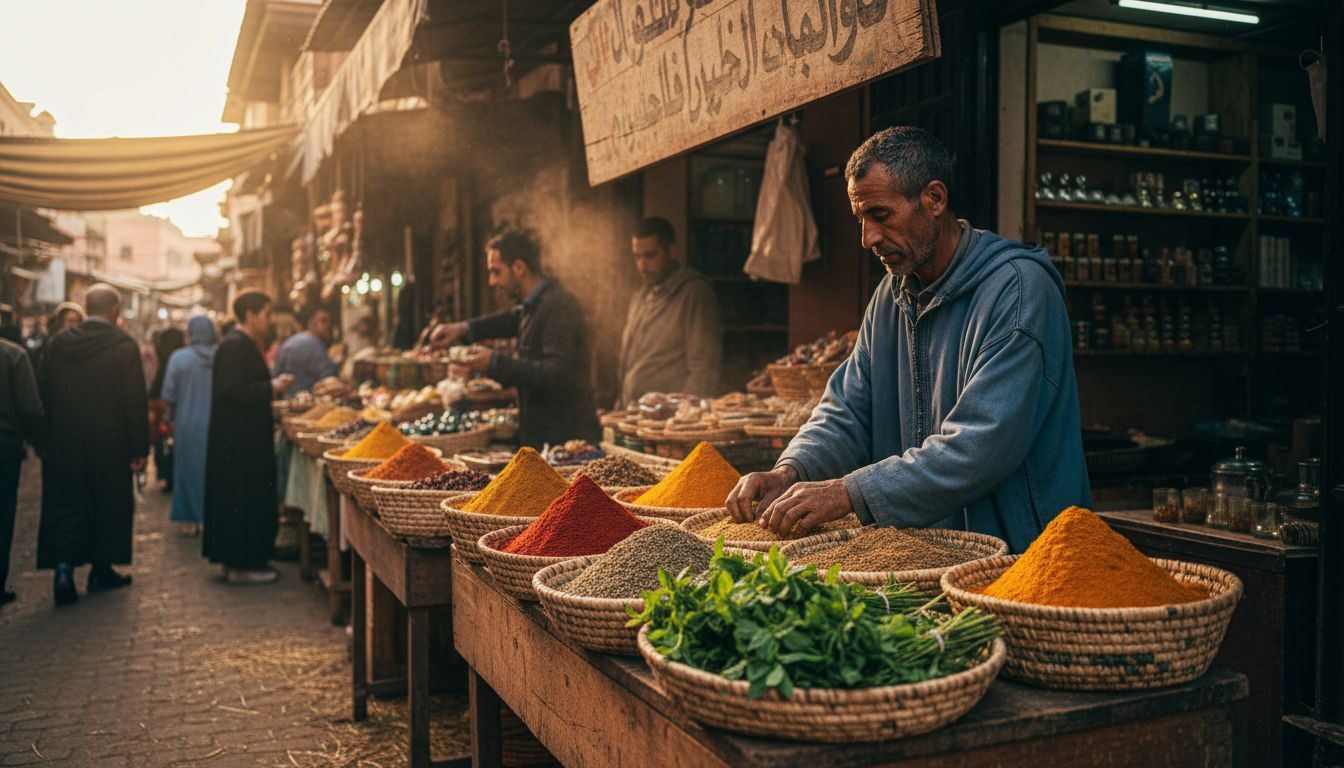
Most travelers arrive in Morocco with visions shaped by movies and guidebooks, yet the country’s cultural reality is far richer and more diverse than most imagine. With more than four major cultural influences woven into daily Moroccan life, uncovering authentic experiences goes far beyond tourist clichés. This guide reveals how regional traditions, social customs, and everyday hospitality offer travelers the chance to connect with Morocco’s living heritage rather than settle for surface impressions.
Table of Contents
- Defining Moroccan Culture And Misconceptions
- Major Cultural Influences And Regional Varieties
- Moroccan Customs, Traditions, And Social Practices
- Cuisine, Festivals, And Artistic Expressions
- Hospitality, Etiquette, And Traveler Considerations
Key Takeaways
| Point | Details |
|---|---|
| Cultural Complexity | Moroccan culture is shaped by diverse influences, including Berber, Arab, African, and European traditions, making it rich and multifaceted. |
| Social Dynamics | Hospitality and familial connections are core values, highlighting a collective approach to well-being over individualism. |
| Artistic Traditions | Moroccan cuisine and arts reflect historical narratives and cultural exchanges, with vibrant festivals celebrating traditional and contemporary expressions. |
| Etiquette Awareness | Understanding local customs, such as dress codes and greeting practices, is essential for respectful interactions while visiting Morocco. |
Defining Moroccan Culture and Misconceptions
Moroccan culture represents a complex tapestry of historical influences, defying simplistic stereotypes and demanding nuanced understanding. Evolving cultural studies have challenged traditional Eurocentric frameworks that previously reduced Morocco’s rich heritage to narrow, reductive narratives. The nation’s cultural identity emerges from intricate layers of Berber, Arab, African, and European interactions, creating a dynamic social landscape that resists easy categorization.
Contrary to common Western misconceptions, Moroccan society is not monolithic but remarkably diverse. Language diversity exemplifies this complexity, with Moroccan Arabic (Darija) representing a sophisticated linguistic system often misunderstood by outsiders. Research exploring language ideologies reveals how initial perceptions of Moroccan dialects as less prestigious gradually transform through direct cultural exposure, highlighting the importance of direct engagement over superficial stereotyping.
At its core, Moroccan culture celebrates hospitality, familial connections, and profound respect for community traditions. This cultural framework prioritizes collective well-being over individualistic pursuits, a fundamental characteristic that distinguishes Moroccan social interactions from more atomized Western models. Religious practices, particularly Islamic traditions, provide a significant backdrop to daily life, influencing everything from social etiquette to artistic expression, yet allowing remarkable space for individual interpretation and cultural flexibility.
Pro tip: When exploring Moroccan culture, approach with genuine curiosity and humility, recognizing that authentic understanding requires suspending preconceived notions and embracing cultural complexity.
Major Cultural Influences and Regional Varieties
Moroccan cultural studies reveal a profound complexity of regional influences that transcend simplistic categorizations. The nation’s cultural landscape emerges from a rich intersection of Berber, Arab, Andalusi, African, and European traditions, creating a uniquely dynamic social mosaic. This intricate blend reflects Morocco’s historical position as a geographical crossroads, where multiple civilizations have converged and interacted over centuries.
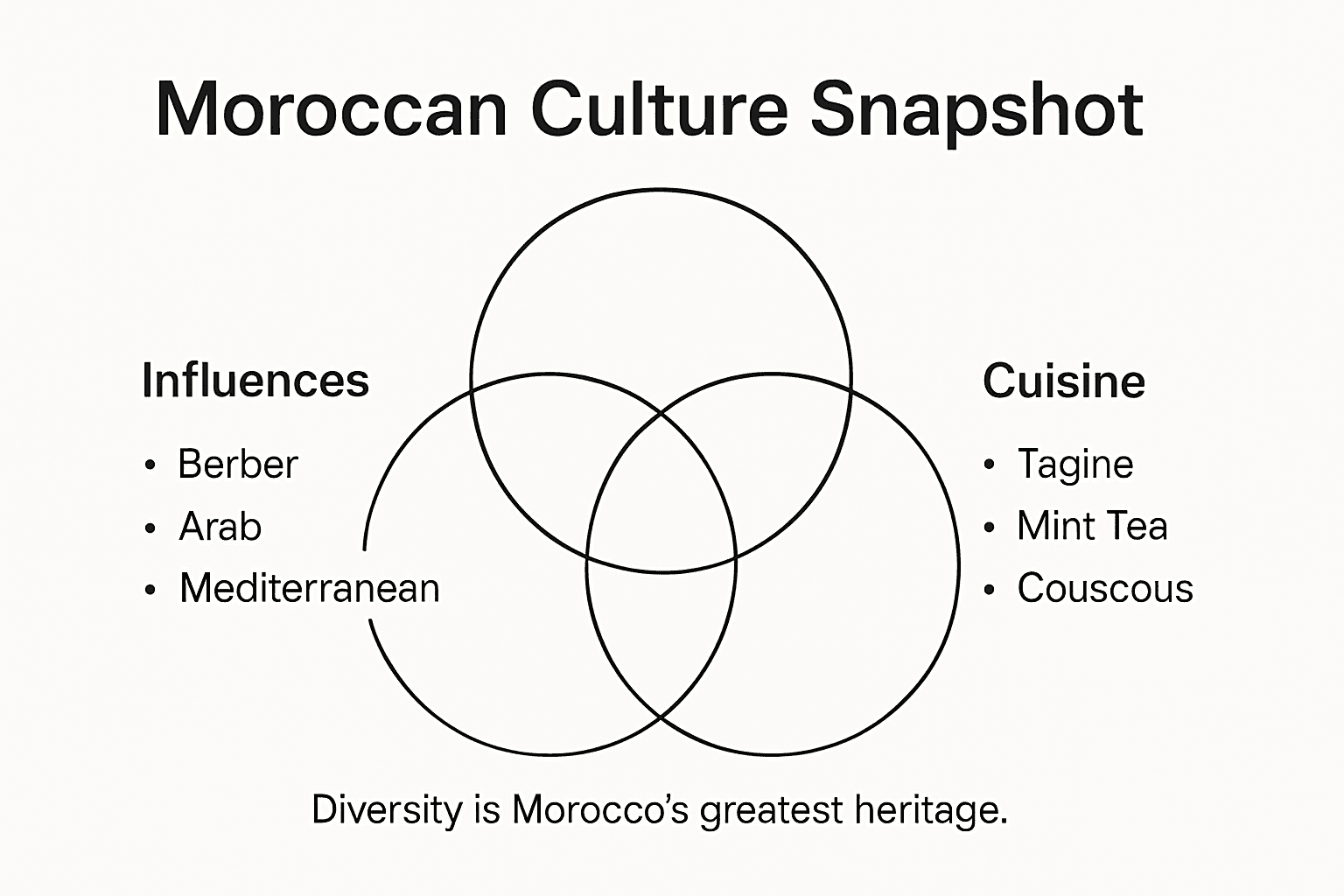
The cultural diversity manifests most distinctly through three primary cultural circles: Arab, Berber, and Western Mediterranean European. Official languages underscore this complexity, with Modern Standard Arabic and Standard Moroccan Berber representing different historical and cultural streams. Regional dialects and local traditions vary dramatically across different geographical zones, from the mountainous Rif region to the Atlantic coastal areas and the Saharan landscapes, each preserving unique cultural expressions that reflect generations of localized historical experiences.
Berber indigenous culture plays a particularly significant role in Morocco’s cultural identity, representing the oldest continuous cultural tradition in North Africa. Despite centuries of Arab and Islamic influence, Berber communities have maintained distinctive linguistic, artistic, and social practices that continue to shape national identity. This preservation of indigenous culture alongside broader regional influences creates a nuanced cultural environment that resists simple narrative frameworks, celebrating complexity and continuous cultural evolution.
Pro tip: When exploring Morocco’s diverse regions, engage with local communities directly and approach cultural differences with genuine respect and curiosity, recognizing that each area has its own unique historical narrative.
Here’s how Morocco’s primary cultural influences compare:
| Influence | Historical Roots | Key Contributions | Regional Prominence |
|---|---|---|---|
| Berber | Indigenous North Africa | Language, art, traditional customs | Rif, Atlas, Souss |
| Arab | Arab migrations, Islamization | Religion, language, architecture | Urban centers, plains |
| European | Colonial era, trade | Urban design, education, cuisine | Coastal cities |
| African | Sub-Saharan connections | Music, crafts, social practices | Southern Morocco |
Moroccan Customs, Traditions, and Social Practices
Moroccan social practices represent a complex tapestry of cultural interactions deeply rooted in historical and religious traditions. Family structures form the fundamental cornerstone of social life, with extended family networks providing critical emotional and economic support. Hospitality emerges as a paramount cultural value, where welcoming guests involves intricate social rituals that demonstrate respect, generosity, and community connection.
Religious observances profoundly shape daily social interactions, particularly during significant periods like Ramadan. Traditional social etiquette emphasizes respect, modesty, and communal harmony, with specific protocols governing greetings, dress codes, and interpersonal communication. These practices reflect deeply ingrained Islamic values that prioritize mutual understanding, collective well-being, and personal dignity. Social interactions are characterized by elaborate greeting customs, where physical contact and verbal exchanges demonstrate profound cultural respect and emotional intelligence.
Gender roles in Moroccan society exhibit nuanced complexity, balancing traditional expectations with progressive social transformations. While conservative social structures persist in many regions, urban centers increasingly demonstrate more flexible interpretations of gender dynamics. Community gatherings, religious celebrations, and family events serve as critical spaces where these social negotiations occur, highlighting the ongoing evolution of Moroccan cultural practices. The interplay between traditional values and contemporary social changes creates a dynamic cultural landscape that resists simplistic categorization.
Pro tip: When engaging with Moroccan social customs, approach interactions with genuine respect, observe local behaviors carefully, and demonstrate sincere interest in understanding cultural nuances rather than making quick judgments.
Cuisine, Festivals, and Artistic Expressions
Moroccan cultural heritage reveals a vibrant landscape of artistic and culinary traditions that blend historical depth with contemporary creativity. Cuisine stands as a cornerstone of cultural expression, with dishes like tagine, couscous, and pastilla representing more than mere sustenance—they embody complex historical narratives of trade, conquest, and regional diversity. Moroccan cooking reflects a sophisticated interplay of Berber, Arab, Mediterranean, and African influences, transforming simple ingredients into elaborate culinary masterpieces that tell stories of cultural exchange.
Festivals provide another critical window into Morocco’s rich cultural tapestry. Celebrations like the Fes Festival of World Sacred Music demonstrate how artistic expressions transcend geographical and cultural boundaries, showcasing traditional music genres including Andalusian classical music and Gnawa spiritual performances. These events are not mere entertainment but profound cultural dialogues that connect contemporary Moroccans with their multifaceted historical roots, bridging generations through shared artistic experiences.
Visual and performative arts further illuminate Morocco’s cultural complexity. Traditional crafts such as intricate tile work (zellige), detailed metalwork, and elaborate textile designs represent sophisticated artistic languages that communicate cultural identity. Contemporary Moroccan artists increasingly blend traditional techniques with modern artistic approaches, creating dynamic visual narratives that challenge and celebrate cultural memory. Music, particularly genres like Chaabi and Gnawa, serves as a powerful medium of cultural preservation and innovation, reflecting the ongoing negotiation between tradition and modernity.
Pro tip: When exploring Moroccan artistic and culinary experiences, approach with an open mind and genuine curiosity, recognizing that each flavor, melody, and artistic expression carries profound cultural significance.
Hospitality, Etiquette, and Traveler Considerations
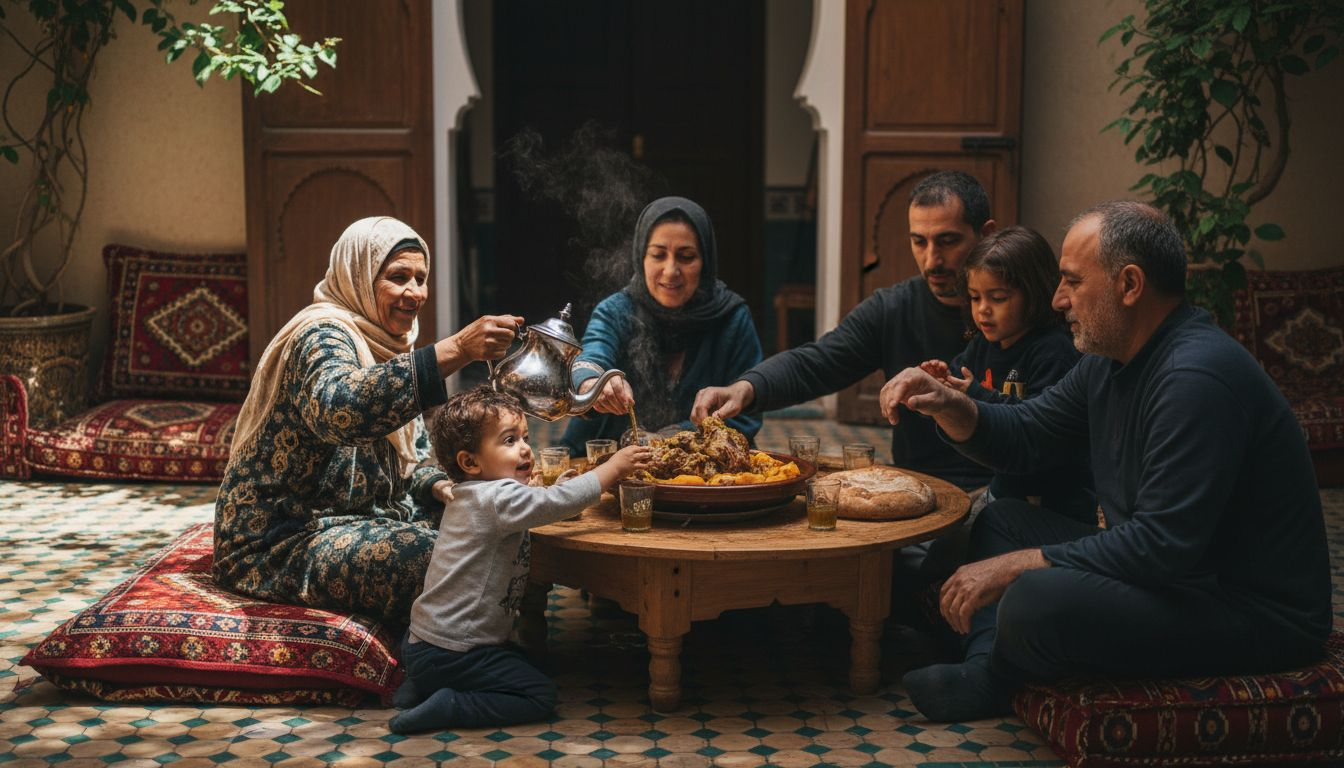
Moroccan hospitality transcends mere social convention, representing a profound cultural philosophy deeply rooted in spiritual and social traditions. The fundamental principle of welcoming guests manifests through intricate rituals that transform simple interactions into meaningful cultural exchanges. The ceremonial serving of mint tea, accompanied by the greeting ‘Mrahba,’ symbolizes more than polite reception—it embodies a genuine commitment to human connection, respect, and communal generosity.
Travelers navigating Moroccan social landscapes must understand nuanced etiquette protocols that govern interpersonal interactions. Dress codes reflect cultural sensitivities, with modest clothing demonstrating respect for local customs. Religious and social practices demand a respectful approach, particularly during significant periods like Ramadan. Communication involves subtle non-verbal cues, with indirect communication often preferred over direct confrontation. Understanding these unspoken social rules helps travelers navigate complex social environments with grace and cultural intelligence.
Practical considerations for travelers include recognizing regional variations in social norms, which can differ dramatically between urban centers and rural communities. Language skills, even basic Arabic or French phrases, can significantly enhance social interactions. Understanding local customs around dining, gift-giving, and personal space helps prevent unintentional social misunderstandings. Travelers should approach interactions with genuine curiosity, humility, and a willingness to learn, recognizing that cultural exchange is a mutual journey of understanding and respect.
Pro tip: Always carry small gifts when visiting Moroccan homes, learn a few basic local greeting phrases, and approach social interactions with genuine respect and openness to cultural learning.
Key elements of Moroccan hospitality and etiquette for travelers:
| Aspect | Why It Matters | Traveler’s Tip |
|---|---|---|
| Mint Tea Ceremony | Symbolizes welcome, respect | Accept graciously and thank host |
| Dress Code | Shows cultural sensitivity | Wear modest, loose clothing |
| Greetings | Builds social connection | Use local phrases like ‘Salam’ |
| Gift Giving | Expresses gratitude | Bring sweets or small gifts |
Experience Authentic Moroccan Culture with Expert Guided Tours
Discovering Morocco’s complex cultural tapestry can feel overwhelming without the right guidance. This article reveals how Moroccan traditions, linguistic richness, and regional diversity create a social fabric that demands genuine engagement and respect. If you want to move beyond stereotypes and truly connect with the Berber heritage, vibrant festivals, and warm hospitality, you need more than a quick visit — you need immersive, thoughtfully crafted experiences.
At Top Morocco Travel, we specialize in turning cultural exploration into unforgettable journeys. Our tailored tours, including guided city excursions and desert adventures, offer you firsthand encounters with the authentic social customs, artistic expressions, and culinary delights detailed in this article. Stop wondering about Moroccan culture and start living it. Explore our customized travel experiences designed to deepen your understanding and enrich your connection with Moroccan heritage. Don’t wait to transform curiosity into meaningful discovery—plan your trip today and embrace the full richness of Morocco’s traditions.
Frequently Asked Questions
What are the key elements of Moroccan culture?
Moroccan culture is characterized by a diverse blend of Berber, Arab, African, and European influences, showcasing a rich tapestry of traditions, languages, and social practices.
How does Moroccan cuisine reflect cultural diversity?
Moroccan cuisine blends historical influences from Berber, Arab, Mediterranean, and African cooking styles, resulting in unique dishes like tagine and couscous that tell stories of cultural exchange.
What is the significance of hospitality in Moroccan culture?
Hospitality in Moroccan culture is a profound philosophy that emphasizes generous welcoming rituals, such as the ceremonial serving of mint tea, symbolizing respect and community connection.
How do social customs and etiquette affect interactions in Morocco?
Understanding social customs in Morocco, such as dress codes and greeting rituals, helps facilitate respectful interactions, as these customs reflect deeply ingrained cultural values and traditions.
Recommended
- Morocco Holidays: Offer Adventure Culture And Luxury Tours
- Morocco Travel Itinerary: Your Guide to an Unforgettable Adventure – Top Morocco Travel
- Complete Guide to Morocco: Culture, Travel, and Experiences
- Why Experience Moroccan Music: Cultural and Emotional Impact


Comments are closed