




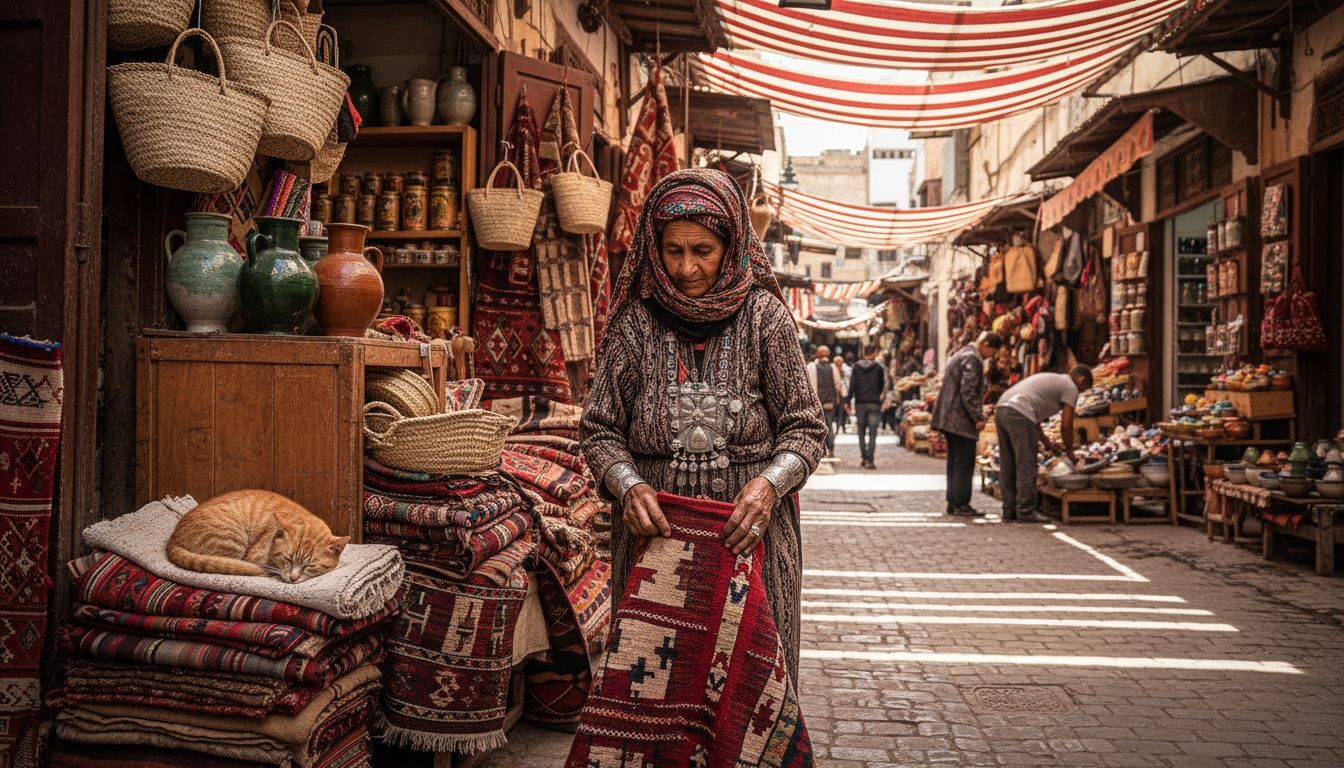
Over 40% of Morocco’s population identify as Amazigh, revealing a vibrant culture that many American and European travelers rarely experience deeply. For those seeking luxury combined with authenticity, understanding Amazigh identity unlocks a world far beyond surface tourism. This guide exposes common myths, reveals the true history behind Amazigh traditions, and highlights how their language, art, and social values shape the country’s cultural fabric.
Table of Contents
- Amazigh Culture Defined and Common Myths
- Main Amazigh Groups and Key Distinctions
- Core Traditions, Art, and Social Values
- Tamazight Language and Tifinagh Script
- Modern Revival and Its Impact in Morocco
Key Takeaways
| Point | Details |
|---|---|
| Amazigh Cultural Heritage | The Amazigh culture is an ancient, dynamic identity in North Africa, with a rich heritage extending over 4,000 years and a significant proportion of Morocco’s population. |
| Cultural Distinction and Diversity | There are multiple Amazigh groups in Morocco, each with unique linguistic and cultural traits, highlighting the internal diversity within their identity. |
| Art and Social Values | Amazigh traditions encompass profound community values, showcasing resilience through artistic expressions and festivals that strengthen cultural identity. |
| Modern Revival Efforts | The contemporary Amazigh revival in Morocco is driven by grassroots movements and national policies aimed at preserving linguistic and cultural rights, reflecting a shift towards multicultural acknowledgment. |
Amazigh Culture Defined and Common Myths
The Amazigh culture represents an ancient indigenous civilization in North Africa with a rich heritage spanning over 4,000 years, predating Arab influences and challenging many prevalent misconceptions about its origins and identity. Linguistic and cultural distinctiveness characterize this remarkable community, which comprises approximately 40% of Morocco’s population and maintains a complex historical narrative of resilience and cultural preservation.
Contrary to popular belief, Amazigh culture is not a monolithic or static tradition but a dynamic, evolving identity that has consistently adapted while maintaining its core linguistic and social characteristics. The emergence of Amazigh literature marks a critical transition from oral storytelling to written expression, effectively challenging historical marginalization and reclaiming their narrative through powerful literary works.
Some common myths about Amazigh culture include misconceptions that it is purely a rural or isolated tradition, that it lacks sophistication, or that it has been entirely absorbed by Arab cultural influences. In reality, the Amazigh people have maintained a complex social structure, intricate linguistic system, and profound connection to their ancestral lands. Their culture encompasses rich traditions in music, crafts, agricultural practices, and social organization that have survived multiple historical transformations.
Pro Tip: When visiting Morocco, engage respectfully with local Amazigh communities by learning a few basic phrases in their language and showing genuine interest in their cultural traditions.
Main Amazigh Groups and Key Distinctions
Morocco’s Amazigh population represents a complex tapestry of distinct regional groups, each characterized by unique linguistic, cultural, and historical traditions. Diasporic Amazigh communities reveal remarkable internal diversity that challenges simplistic perceptions of their identity, highlighting nuanced variations across different geographic regions.
The primary Amazigh groups in Morocco include the Rif Amazigh in northern Morocco, the Central High Atlas Amazigh, the Sous Valley Amazigh, and the Saharan Amazigh, each distinguished by specific language dialects, traditional practices, and social structures. Regional linguistic variations of Tamazight demonstrate profound cultural distinctions, with each group maintaining distinctive musical traditions, architectural styles, and social customs that reflect their unique environmental and historical contexts.
Historically significant Amazigh groups like the Almoravids and Almohads have played crucial roles in shaping North African civilization, challenging the notion that Amazigh culture is a monolithic or static tradition. These groups developed sophisticated political systems, advanced agricultural techniques, and complex trade networks that extended far beyond Morocco’s current borders, showcasing the intellectual and economic sophistication of Amazigh societies throughout history.
Pro Tip: When exploring Moroccan Amazigh regions, respect local cultural differences and learn about the specific traditions of the area you are visiting to gain a more nuanced understanding of their rich heritage.
Here’s a comparison of Morocco’s main Amazigh groups and their distinguishing features:
| Group Name | Geographic Region | Unique Language/Dialect | Cultural Highlights |
|---|---|---|---|
| Rif Amazigh | Northern Morocco | Riffian | Distinct music, fishing traditions |
| Central High Atlas | High Atlas Mountains | Central Tamazight | Mountain architecture, pottery |
| Sous Valley Amazigh | Sous Valley, Southwest | Tashelhiyt | Intricate textiles, rich agriculture |
| Saharan Amazigh | Saharan South | South Tamazight | Nomadic heritage, desert crafts |
Core Traditions, Art, and Social Values
Amazigh culture represents a profound tapestry of traditions deeply rooted in community, land, and collective memory. Cultural activism preserves collective identity through artistic expressions that communicate complex social narratives and maintain historical continuity across generations. The intricate artistic practices, ranging from detailed jewelry crafting to elaborate textile design, serve as living archives of Amazigh cultural wisdom and resilience.
The social values of Amazigh communities center on profound principles of collective solidarity, respect for ancestral knowledge, and deep connection to their geographical landscape. Traditional festivals like Imilchil marriage celebration exemplify these values, showcasing community cohesion, mutual support, and the preservation of cultural practices that transcend individual experiences. Music, dance, and oral storytelling become powerful mediums through which social values are transmitted, reinforcing community bonds and cultural identity.
Amazigh artistic traditions are characterized by extraordinary craftsmanship and symbolic complexity, with each artistic form carrying embedded cultural meanings. Embroidery, pottery, metalwork, and traditional musical instruments are not merely decorative elements but intricate communication systems that encode historical experiences, spiritual beliefs, and social relationships. These art forms represent a sophisticated language of cultural preservation, allowing Amazigh communities to maintain their unique identity amid contemporary challenges.
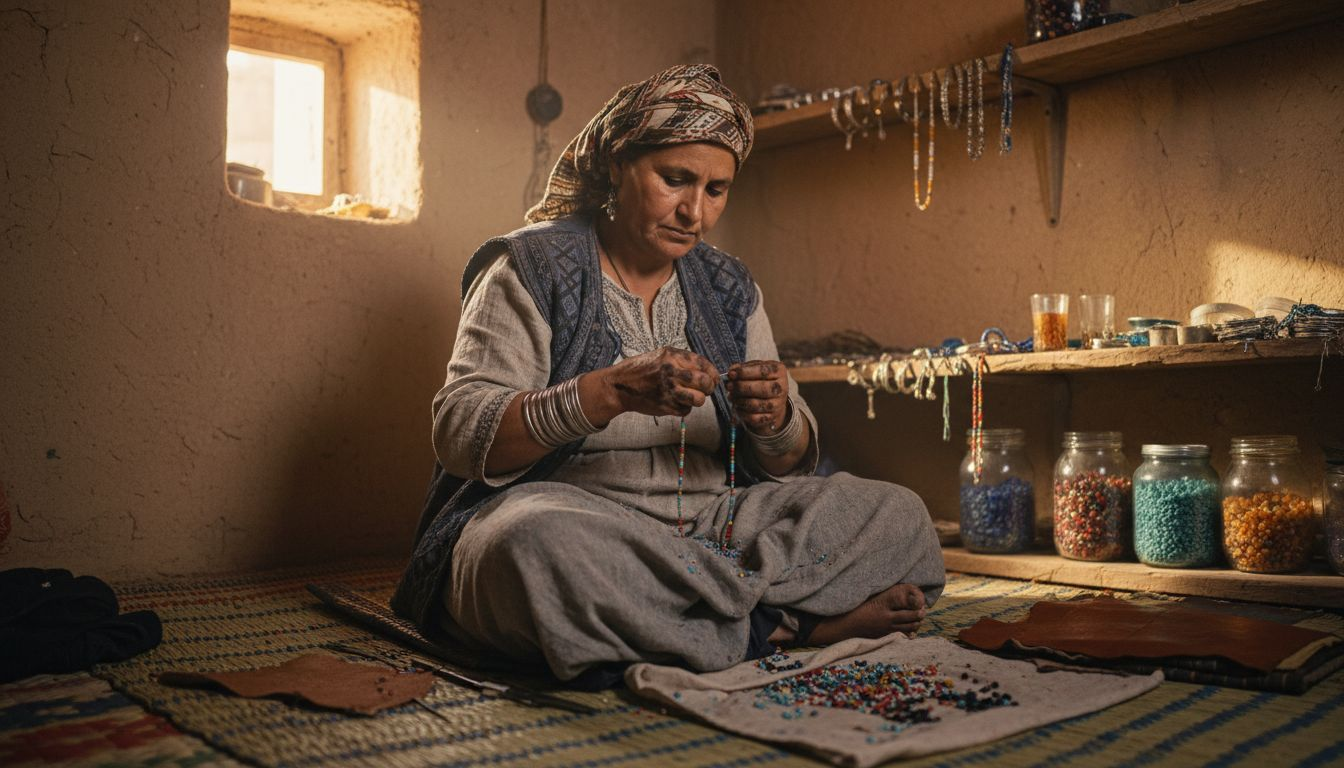
Pro Tip: When experiencing Amazigh art and traditions, approach them with genuine respect and curiosity, understanding that each artistic expression represents a profound narrative of cultural survival and identity.
For quick reference, here are the core aspects of Amazigh cultural traditions and their significance:
| Tradition Type | Example Practice | Social Function | Symbolic Meaning |
|---|---|---|---|
| Art | Jewelry and textile design | Heritage preservation | Identity and resilience |
| Festival | Imilchil marriage celebration | Community bonding | Continuity of lineage |
| Music & Dance | Oral storytelling and dance | Values transmission | Collective memory |
Tamazight Language and Tifinagh Script
Tamazight represents a vibrant linguistic heritage that embodies the profound cultural resilience of the Amazigh people, with its unique Tifinagh script serving as a powerful symbol of identity and historical continuity. Community-driven language technology initiatives are actively working to preserve and promote Tamazight, addressing historical challenges of digital representation and language standardization.
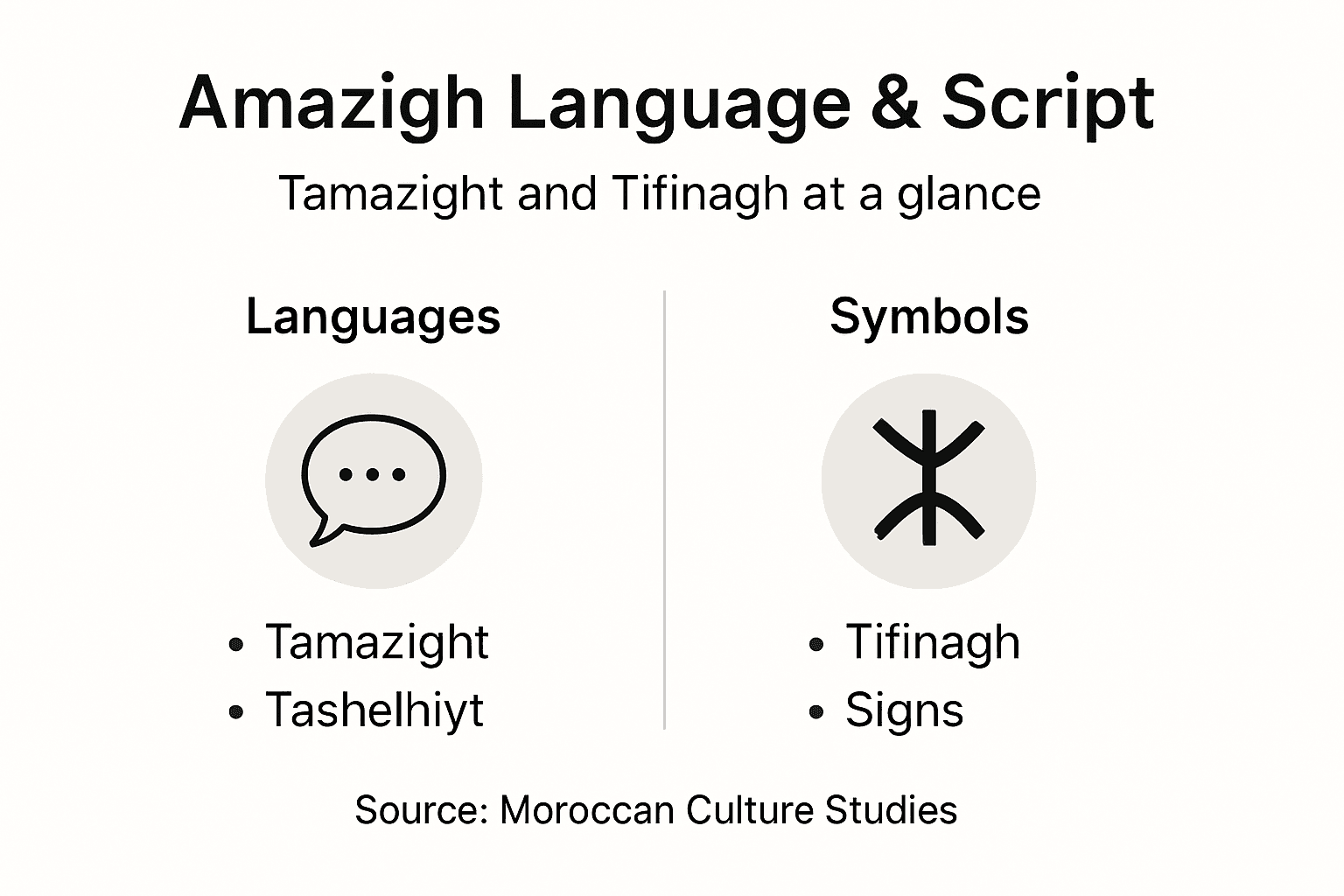
The Tifinagh script, an ancient writing system with roots dating back thousands of years, has experienced a remarkable renaissance in modern Morocco. Tifinagh script symbolizes Amazigh cultural identity beyond mere communication, functioning as a visual representation of cultural pride and historical resistance. While debates continue about its practical implementation alongside Arabic and Latin scripts, the script remains a critical element of Amazigh cultural preservation and linguistic identity.
Modern Tamazight language exists in multiple regional dialects, each reflecting the rich geographic and cultural diversity of Amazigh communities across North Africa. Linguists recognize at least three primary variants: Riffian in northern Morocco, Tashelhiyt in the central and southern regions, and Tamazight of the Middle Atlas. These dialects share a common linguistic root but demonstrate unique phonetic, grammatical, and vocabulary variations that reflect the complex historical experiences of different Amazigh groups.
Pro Tip: If you’re interested in learning Tamazight, start by familiarizing yourself with the Tifinagh script and focus on one regional dialect to build a deeper understanding of its linguistic nuances.
Modern Revival and Its Impact in Morocco
The modern Amazigh revival represents a profound transformation of cultural identity in Morocco, driven by strategic national policies and grassroots movements committed to cultural preservation and recognition. Sociolinguistic strategies for Amazigh revitalization have emerged as critical mechanisms for addressing historical marginalization and promoting linguistic and cultural diversity.
Morocco’s national leadership, particularly under King Mohammed VI, has played a pivotal role in institutionalizing Amazigh cultural rights. National efforts for cultural integration have included constitutional recognition of the Tamazight language, establishing the Royal Institute for Amazigh Culture, and implementing educational reforms that support Amazigh language instruction. These initiatives represent more than symbolic gestures, signaling a fundamental shift towards acknowledging Morocco’s multicultural heritage.
The Amazigh revival extends beyond legal and institutional frameworks, manifesting in vibrant cultural expressions, artistic movements, and growing social awareness. Young Amazigh generations are increasingly embracing their heritage, using digital platforms, literature, music, and social media to celebrate and propagate their cultural identity. This dynamic resurgence challenges historical narratives of cultural homogeneity and demonstrates the resilience of Amazigh communities in maintaining their distinctive cultural ecosystem.
Pro Tip: When exploring Morocco’s cultural landscape, engage with local Amazigh communities respectfully and show genuine interest in understanding their contemporary cultural experiences.
Discover the Living Amazigh Culture with Top Morocco Travel
Understanding the rich Amazigh heritage reveals a world of vibrant traditions, diverse dialects, and deep-rooted social values that many travelers seek to experience authentically. If you want to move beyond common myths and witness firsthand the distinctive customs, artistic expressions, and historic sites of the Rif, High Atlas, Sous Valley, or Saharan Amazigh communities you will appreciate a travel experience tailored to immerse you deeply in their culture. The challenge many visitors face is finding knowledgeable guides who honor the complexity and evolution of the Amazigh identity while connecting you respectfully with local communities.
Top Morocco Travel specializes in designing personalized journeys that embrace the full scope of Amazigh culture as explained in “What Is Amazigh Culture and Its Role in Morocco.” Through our expert-curated cultural tours and immersive experiences, you can explore traditional festivals, language, and craftsmanship while supporting sustainable tourism that respects the values of collective solidarity and cultural preservation.
Book your unforgettable cultural adventure now on Top Morocco Travel and dive into the heart of Amazigh heritage. Don’t miss the opportunity to learn the Tifinagh script, enjoy the music and dance unique to each region, and engage meaningfully with communities that have shaped Morocco’s identity for thousands of years. Start your bespoke journey today and unlock the true spirit of Morocco’s Amazigh roots.
Frequently Asked Questions
What is Amazigh culture?
Amazigh culture is an ancient indigenous civilization in North Africa that boasts a rich heritage spanning over 4,000 years, characterized by its unique linguistic and social identity, and a strong tradition of cultural preservation.
How does Amazigh culture differ from other cultures in North Africa?
Amazigh culture is not monolithic; it is a dynamic and evolving identity with distinct regional variations, sophisticated social structures, and artistic expressions in music, crafts, and literature, setting it apart from other cultural influences, such as Arab culture.
What languages are spoken within Amazigh culture?
The primary language is Tamazight, which has multiple dialects including Riffian, Tashelhiyt, and Central Tamazight, each reflecting the unique linguistic and cultural diversity of different Amazigh groups.
How is the modern Amazigh revival impacting cultural identity?
The modern Amazigh revival is transforming cultural identity through grassroots movements, educational reforms, and increased recognition of cultural rights, allowing younger generations to celebrate their heritage and promote Amazigh culture through various artistic and digital platforms.
Recommended
- Moroccan Culture Explained: Traditions, Cuisine, and Heritage
- Why Morocco Matters for Cultural Immersion Travel
- Why Experience Moroccan Music: Cultural and Emotional Impact
- Complete Guide to Morocco: Culture, Travel, and Experiences



Comments are closed