




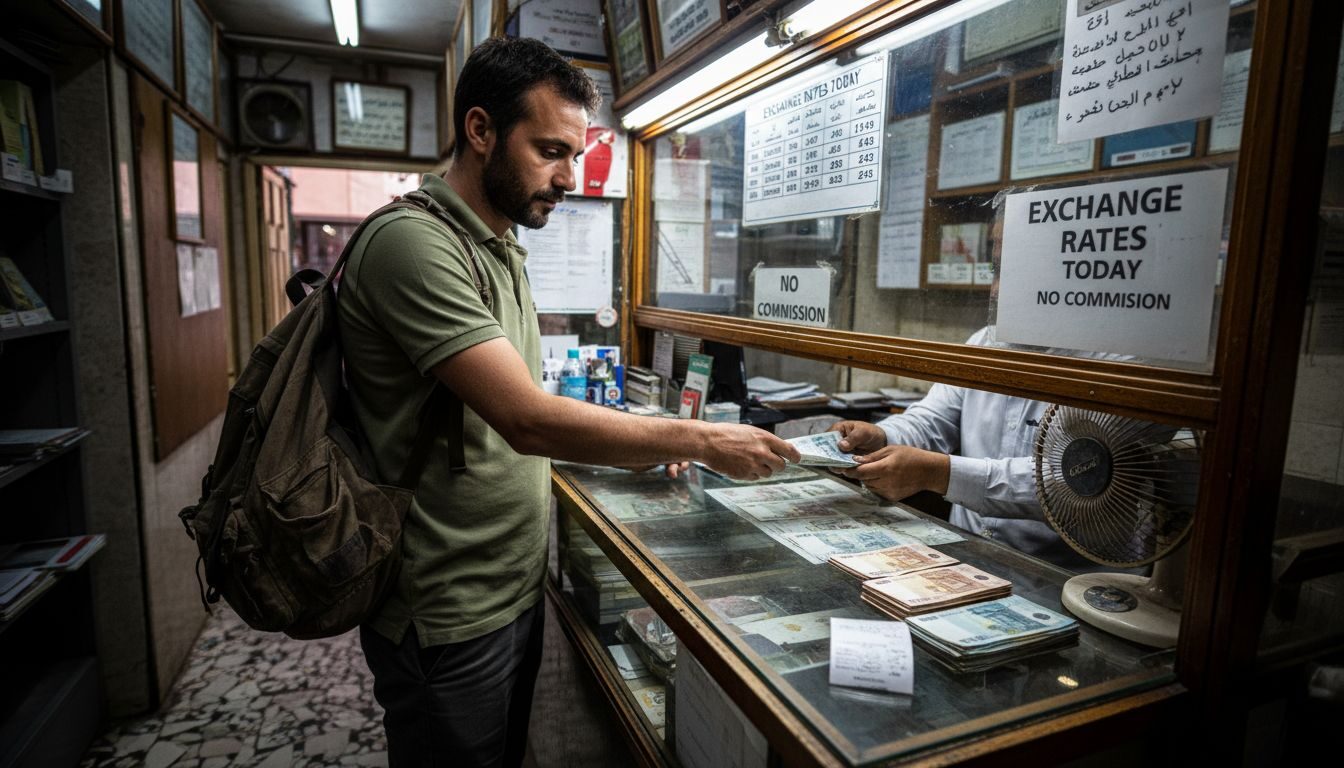
Many travelers arrive in Morocco assuming they can swipe credit cards everywhere or exchange Dirhams before they land. Both assumptions lead to frustration and wasted money. The Moroccan Dirham operates under strict government control as a closed currency, meaning you can only exchange it legally inside Morocco. Understanding how this system works, where to get the best rates, and how to balance cash with digital payments transforms your travel experience from stressful to seamless.
Table of Contents
- What Is The Moroccan Dirham?
- Understanding Exchange Rate Mechanism And Stability
- Where And How To Exchange Moroccan Dirham?
- Cash Vs Digital Payments In Morocco
- Typical Travel Budget Impact Of Moroccan Dirham
- Common Misconceptions About Moroccan Dirham
- Historical Background Of The Moroccan Dirham
- Practical Tips For Travelers Managing Moroccan Dirham
- Explore Morocco Confidently With Top Morocco Travel
- Frequently Asked Questions About Moroccan Dirham
Key takeaways
| Point | Details |
|---|---|
| Closed currency system | Moroccan Dirham cannot be exchanged outside Morocco due to government regulation, requiring local exchange only. |
| Cash dominates transactions | Over 80% of tourism purchases require cash, especially in rural areas and small vendors. |
| Exchange strategically | Major city bureaus offer rates up to 8% better than airports or hotels, saving significant money. |
| Budget 400-700 MAD daily | Average daily expenses per person cover meals, transport, and attractions with some flexibility. |
| Monitor exchange rates | Currency fluctuations impact your budget, so check rates before and during your trip. |
What is the Moroccan Dirham?
The Moroccan Dirham (MAD) is a closed currency regulated by the Moroccan government, meaning it cannot be freely exchanged outside Morocco and tourists must exchange locally. Morocco adopted the Dirham in 1960, replacing the Moroccan franc at a conversion rate of 10 francs to 1 dirham. This change occurred as part of post-independence economic reforms designed to establish monetary sovereignty and stabilize the national economy.
The closed currency designation means the Moroccan government tightly controls where and how Dirhams can be exchanged. You cannot legally obtain Dirhams at foreign banks or exchange bureaus before arriving in Morocco. Similarly, you must convert any remaining Dirhams back to your home currency before leaving, as taking them out of the country violates currency regulations.
This regulatory framework serves multiple purposes for Morocco’s economy. It prevents currency speculation, maintains exchange rate stability, and gives the central bank greater control over monetary policy. For travelers, it means planning your currency exchange carefully becomes essential rather than optional.
The Dirham subdivides into 100 centimes, though centime coins are rarely used in daily transactions anymore. Banknotes come in denominations of 20, 50, 100, and 200 Dirhams, while coins circulate in 1, 2, 5, and 10 Dirham denominations. Familiarizing yourself with these denominations helps prevent confusion when making purchases.
Understanding exchange rate mechanism and stability
The Moroccan Central Bank manages the Dirham’s value through a pegged system tied to a weighted basket of currencies, primarily the Euro and US Dollar. This managed float approach means the Dirham doesn’t fluctuate wildly like free-floating currencies, but it also doesn’t remain completely fixed.
The Euro carries the heaviest weight in the basket because Morocco conducts most international trade with European Union countries. The Dollar plays a secondary but important role given its dominance in global finance. This dual-currency peg creates relative stability for travelers from Europe and North America.
Key factors affecting Dirham exchange rates include:
- Morocco’s trade balance with major partners
- European Central Bank monetary policy decisions
- Global commodity prices, especially oil and wheat
- Tourism revenue fluctuations throughout the year
- Political stability and economic reforms
The central bank intervenes when necessary to prevent sudden rate movements that could disrupt the economy. These interventions smooth out volatility but don’t eliminate exchange rate changes entirely. A typical yearly fluctuation ranges between 2% and 5% against major currencies.
For your travel planning, this stability means you can budget with reasonable confidence. However, monitoring exchange rates during the weeks before your trip still makes sense. A 3% rate movement on a $2,000 budget equals $60 in purchasing power, enough to cover several meals or attraction entries.
Seasonal patterns also emerge in exchange rates. High tourism months from October through April sometimes see slightly different rates compared to summer periods when fewer visitors arrive. These variations remain modest but savvy travelers take them into account.
Where and how to exchange Moroccan Dirham?
Airport exchange counters offer convenience but extract a premium through poor rates and high fees. Hotels provide similar convenience at similarly unfavorable terms. Expert advice recommends exchanging at major city exchange bureaus to get rates closest to the market and avoid exchange fee losses.
Street changers approach tourists in medinas and popular areas, promising better rates than official bureaus. These transactions are illegal and frequently involve scams like counterfeit bills, shortchanging, or sleight of hand switches. The small potential savings never justify the substantial risks.
Best exchange locations ranked by value:
| Location Type | Rate Quality | Fees | Convenience | Recommended |
|---|---|---|---|---|
| Major city bureaus | Excellent | Low to none | Moderate | Yes |
| Bank branches | Good | Moderate | Low | Sometimes |
| Airport counters | Poor | High | Very high | Avoid |
| Hotel desks | Poor | Very high | Very high | Avoid |
| Street changers | Variable | Hidden scams | High | Never |
When you arrive in Morocco, exchange a moderate amount at the airport to cover immediate needs like taxi fare and first meals. Then locate a reputable bureau in your destination city for larger exchanges. Cities like Marrakech, Casablanca, Fes, and Rabat have numerous licensed bureaus competing for business, which keeps rates competitive.
Bring US Dollars or Euros for exchange, as these offer the best rates. British Pounds and other major currencies work but typically receive slightly less favorable treatment. Ensure your bills are in good condition without tears or excessive wear, as damaged currency may be rejected.
Pro Tip: Keep your exchange receipts throughout your trip. You’ll need them to convert remaining Dirhams back to foreign currency when departing, and they serve as proof of legal exchange if questions arise.
For additional guidance on optimizing your currency exchange strategy, explore detailed traveler resources that break down city-specific exchange options.
Cash vs digital payments in Morocco
Cash remains king throughout Morocco, with over 80% of tourism transactions still conducted in physical Dirham notes. Credit cards and digital payment systems have gained ground in recent years, but acceptance remains concentrated in urban centers and upscale establishments.
Where cards typically work:
- International hotel chains and riads in major cities
- Upscale restaurants in tourist districts
- Large shopping centers and modern retail stores
- Car rental agencies and tour operators
- Some museums and major attractions
Where you’ll need cash:
- Traditional medina shops and souks
- Street food vendors and local restaurants
- Taxis and local transportation
- Small accommodations and family-run guesthouses
- Rural areas and smaller towns
- Tips for guides, drivers, and service staff
ATMs provide another cash option, widely available in cities and tourist areas. Most accept international cards on Visa and Mastercard networks. Check with your bank about foreign transaction fees before relying heavily on ATM withdrawals, as these charges add up quickly.
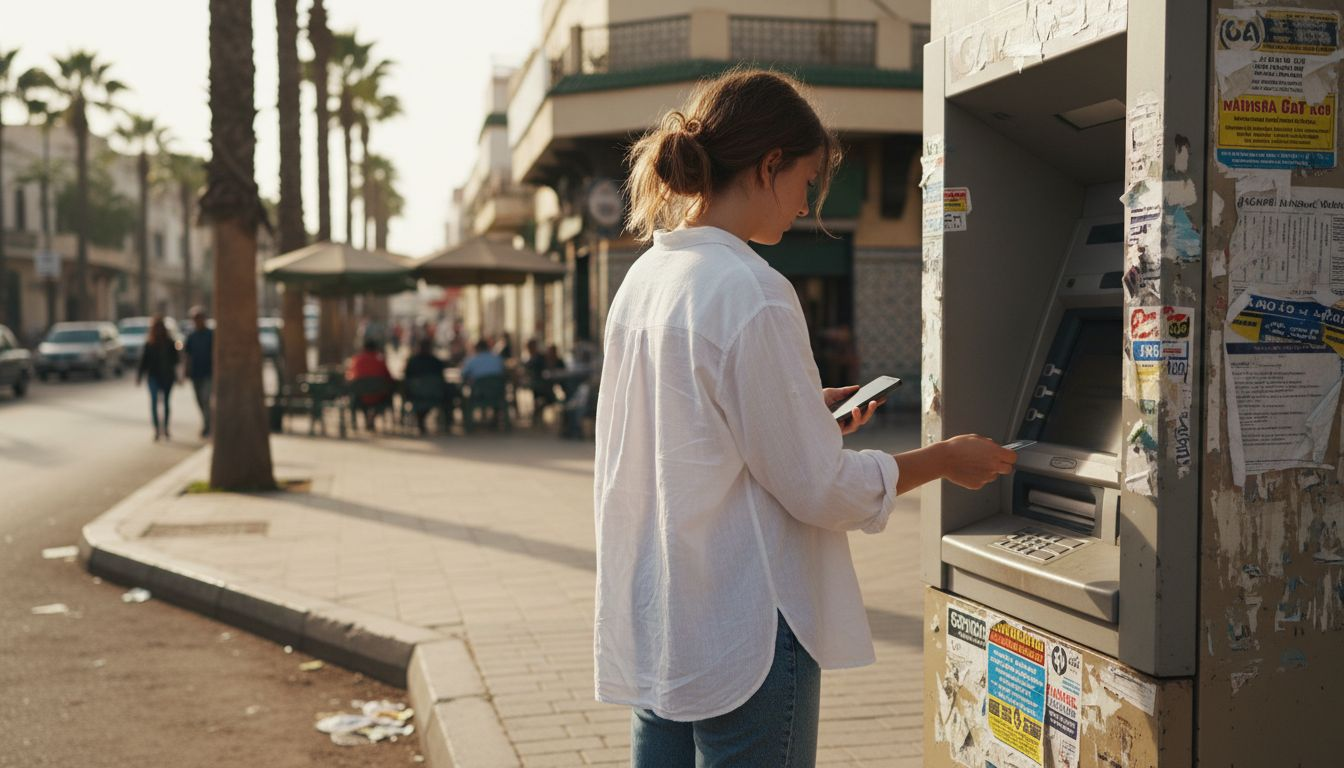
Pro Tip: Withdraw larger amounts less frequently to minimize per-transaction fees. Many Moroccan ATMs impose their own withdrawal fees on top of your bank’s charges, so consolidating withdrawals saves money.
Digital payment infrastructure continues expanding, particularly in Casablanca, Rabat, and Marrakech. Contactless payment terminals are becoming more common, and some vendors accept mobile payment apps. However, this remains the exception rather than the rule outside major urban centers.
Balancing your payment approach makes sense. Carry sufficient cash for daily needs while keeping a credit card for larger purchases and emergencies. This strategy, detailed further in comprehensive Morocco travel guides, maximizes flexibility without excessive risk.
Typical travel budget impact of Moroccan Dirham
Daily travel expenses in Morocco typically range between 400-700 MAD per person, depending on your travel style and preferences. Budget travelers can survive on 400-500 MAD, mid-range visitors spend 500-650 MAD, and luxury travelers easily exceed 700 MAD daily.
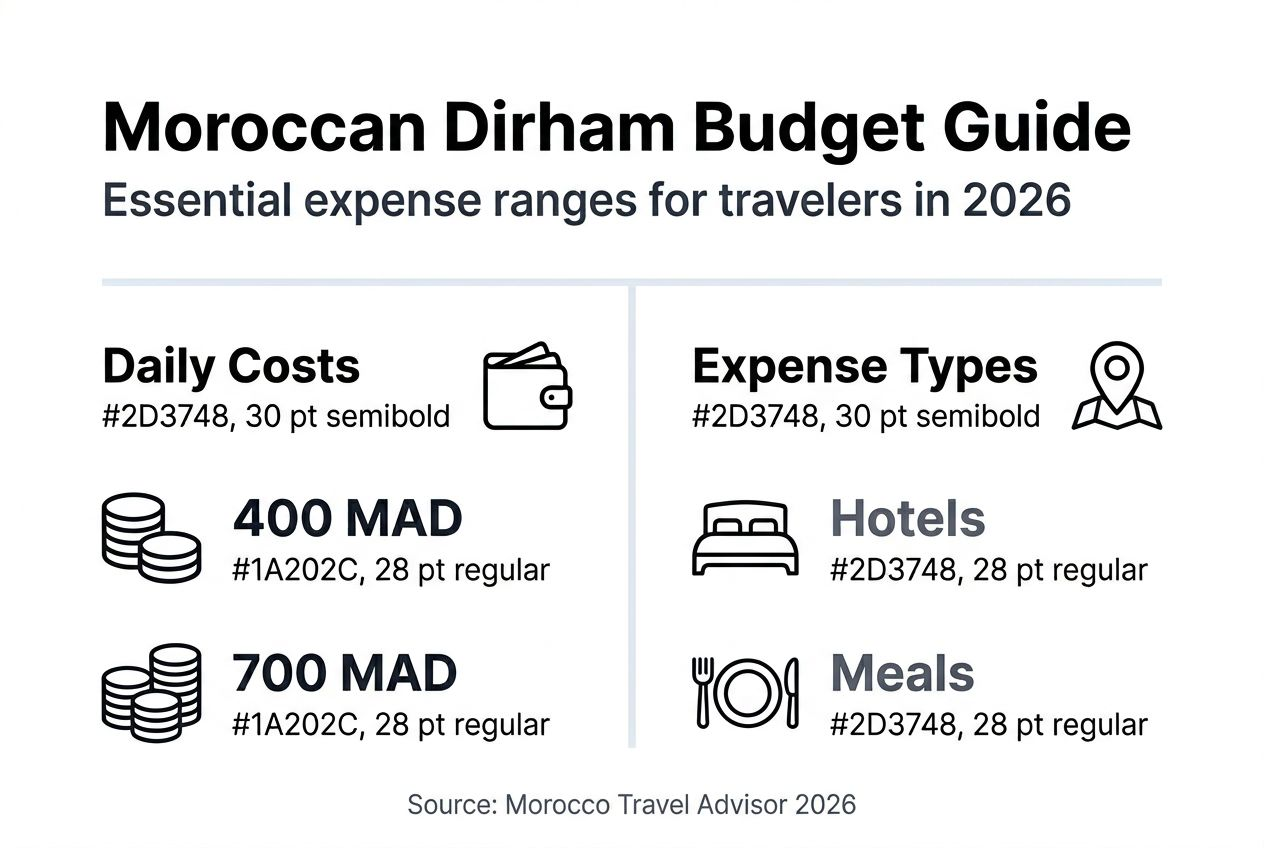
Expense breakdown by category:
| Expense Category | Budget (MAD) | Mid-Range (MAD) | Luxury (MAD) |
|---|---|---|---|
| Accommodation | 150-200 | 300-450 | 600+ |
| Meals | 100-150 | 200-300 | 400+ |
| Local transport | 30-50 | 50-100 | 150+ |
| Attractions | 50-80 | 100-150 | 200+ |
| Miscellaneous | 70-100 | 150-200 | 300+ |
| Daily Total | 400-500 | 500-650 | 700+ |
Exchange rate fluctuations directly affect these costs. When the Dirham strengthens against your home currency, your purchasing power decreases and Morocco becomes more expensive. Conversely, a weaker Dirham means your money goes further.
Consider a traveler with a $2,000 budget:
- At 9.5 MAD per USD: 19,000 MAD total budget
- At 10.0 MAD per USD: 20,000 MAD total budget
- Difference: 1,000 MAD (roughly two full days of mid-range travel)
Exchange fees compound this impact. The difference between airport rates and city bureau rates can reach 8%, translating to 160 MAD lost on a 2,000 MAD exchange. That’s equivalent to a nice restaurant meal or entry to multiple attractions.
Seasonal price variations also matter. High season from October through April sees increased prices for accommodations and tours, while summer months offer better deals but hotter weather. Planning your currency exchanges and overall Morocco family vacation budget around these patterns optimizes your spending power.
Tracking your daily expenditures in Dirham helps you stay on budget and adjust as needed. Simple smartphone apps or a small notebook work equally well for this purpose.
Common misconceptions about Moroccan Dirham
The belief that you can exchange Dirhams before arriving in Morocco represents the most widespread misconception. The Dirham is a closed currency controlled by the Moroccan government and cannot legally be exchanged outside Morocco. Attempting to obtain Dirhams abroad through unofficial channels risks receiving counterfeit currency or paying exorbitant premiums.
Another common myth suggests credit cards offer universal acceptance throughout Morocco. Reality tells a different story, particularly outside major tourist zones. Many travelers discover this the hard way when their card gets declined at a restaurant or souk vendor, leaving them scrambling for an ATM.
Misconceptions about where to exchange money also persist:
- Myth: Airport exchange offers fair rates due to competition.
- Reality: Airport counters consistently provide the worst rates, often 5-8% below market.
- Myth: Hotels exchange money as a customer service at reasonable rates.
- Reality: Hotels charge premium rates and fees, treating exchange as a profit center.
- Myth: All banks offer identical exchange rates.
- Reality: Banks vary in their rates and some charge higher fees than licensed bureaus.
Some travelers believe carrying large amounts of foreign currency to exchange gradually makes financial sense. This approach exposes you to theft or loss risk while offering no advantage over making one or two strategic exchanges at good rates.
The key to managing Moroccan currency effectively lies in understanding its closed nature, planning exchanges at optimal locations, and balancing cash needs with card usage based on your itinerary.
A final misconception involves the ease of using Dirhams in neighboring countries. Morocco’s currency regulations mean Dirhams hold no value outside national borders. Even in nearby Algeria or Spain, you cannot spend or exchange Dirhams. Plan to convert remaining currency before departure.
Learning these realities before your trip, as outlined in essential Morocco travel tips, prevents costly mistakes and frustration.
Historical background of the Moroccan Dirham
Morocco’s Dirham was introduced in 1960, replacing the Moroccan franc, as part of economic modernization linked to independence and efforts to stabilize national currency. The country gained independence from France in 1956, and establishing a national currency represented an important step in asserting economic sovereignty.
The Moroccan franc had circulated since the French protectorate era, creating an unwanted symbolic link to colonial rule. Replacing it with the Dirham served both practical economic purposes and national identity goals. The name “dirham” itself has deep historical roots, derived from the Greek “drachma” and used throughout Islamic history.
The transition occurred smoothly, with the government setting a clear conversion rate and timeline. Citizens exchanged their francs for Dirhams at banks and post offices throughout the country. The process demonstrated the young nation’s administrative capability and helped build confidence in its institutions.
Initial exchange rate policies pegged the Dirham to the French franc, maintaining economic ties with France while asserting monetary independence. Over subsequent decades, Morocco gradually shifted toward the current basket peg system linking the Dirham to multiple currencies. This evolution reflected changing trade patterns and economic relationships.
The closed currency policy emerged from concerns about capital flight and currency speculation during the early independence period. Maintaining these controls decades later remains controversial, with some economists advocating for liberalization while others defend the stability benefits. The government has taken small steps toward eventual convertibility but moves cautiously to avoid economic disruption.
Understanding this historical context helps explain why Morocco maintains stricter currency controls than many comparable countries. The policies reflect specific historical circumstances and continue to shape the practical realities travelers face today.
Practical tips for travelers managing Moroccan Dirham
Mastering Dirham management comes down to five strategic practices that save money and prevent headaches:
-
Exchange your currency at reputable bureaus in cities like Marrakech, Casablanca, or Fes rather than airports or hotels. The rate difference saves 5-8% of your exchange amount, meaningful savings on any trip budget.
-
Carry sufficient cash in small denominations for daily needs, especially when visiting rural areas, medinas, or small vendors who don’t accept cards. Having 20 and 50 Dirham notes prevents overpaying when vendors claim they cannot make change.
-
Monitor Dirham exchange rates during the two weeks before your trip and adjust your exchange timing if rates move significantly. A 2-3% favorable shift on a large exchange delivers free money for your travel fund.
-
Use digital payments and credit cards strategically in urban hotels, upscale restaurants, and established tour operators where acceptance is reliable. This approach minimizes cash carrying risk while earning credit card rewards points.
-
Avoid street exchangers completely, regardless of promised rates. The scam risk far outweighs any potential savings, and you’ll have no recourse if problems arise.
Pro Tip: Photograph your exchange receipts with your phone as backup documentation. Moroccan customs may request proof of legal currency exchange when you depart, and digital copies provide insurance against lost paper receipts.
Timing your exchanges matters more than many travelers realize. Exchanging your full trip budget immediately upon arrival locks in one rate for better or worse. A smarter approach exchanges 60-70% initially, then makes a second exchange mid-trip if rates move favorably. This strategy balances convenience with opportunistic rate optimization.
Keep a cushion of 200-300 MAD more than you think you’ll need for the final day. Last-minute souvenir purchases, unexpected taxi rides, or meal plan changes happen frequently, and scrambling for an ATM or exchange bureau while racing to catch a flight creates unnecessary stress.
Additional strategic guidance appears in resources covering currency exchange optimization and family vacation budgeting, offering destination-specific advice.
Explore Morocco confidently with Top Morocco Travel
Managing currency represents just one element of a successful Moroccan adventure. Top Morocco Travel designs expertly planned tours that handle all logistical details, including strategic guidance on currency exchange and budget optimization. Our local knowledge ensures you get the best value from your Dirhams while experiencing Morocco’s rich cultural heritage and stunning landscapes.
Explore diverse options from immersive city tours showcasing Marrakech, Fes, and Casablanca to comprehensive imperial cities journeys covering Morocco’s historical capitals. Understanding why guided tours excel in Morocco reveals how professional planning eliminates currency confusion and maximizes your travel investment.
Frequently asked questions about Moroccan Dirham
Can I exchange Moroccan Dirhams outside Morocco?
No, the Dirham operates as a closed currency under Moroccan government control, meaning legal exchange only occurs inside Morocco’s borders. Attempting to exchange Dirhams abroad through unofficial channels risks counterfeit currency or illegal transactions.
Where is the best place to exchange money in Morocco?
Major city exchange bureaus consistently offer the best rates, typically 5-8% better than airport counters or hotels. Look for licensed bureaus in Marrakech, Casablanca, Fes, and Rabat where competition keeps rates competitive.
Are credit cards widely accepted in Morocco?
Credit cards work primarily in urban hotels, upscale restaurants, and modern retail stores, but over 80% of transactions still require cash. Rural areas, medinas, small vendors, and local restaurants almost exclusively accept Dirhams.
How much cash should I carry daily in Morocco?
Budget travelers need 400-500 MAD daily, mid-range visitors require 500-650 MAD, and luxury travelers should carry 700+ MAD. Adjust based on your planned activities and dining preferences.
What should I do with leftover Dirhams when leaving Morocco?
Exchange remaining Dirhams back to your home currency at airport exchange bureaus before departure, bringing your original exchange receipts as proof of legal currency acquisition. Taking Dirhams out of Morocco violates currency regulations.
Recommended
- How to Change Euro to Dirham Morocco: Complete Traveler Guide
- Your Ultimate Morocco Travel Guide for an Unforgettable Trip – Top Morocco Travel
- Marrakech Travel Guide: Explore Morocco’s Vibrant Heart
- 8 Essential Morocco Travel Tips for Every Type of Traveler
- Travelers Taxi Guide: Your Ultimate Companion – Capital Cars



Comments are closed