




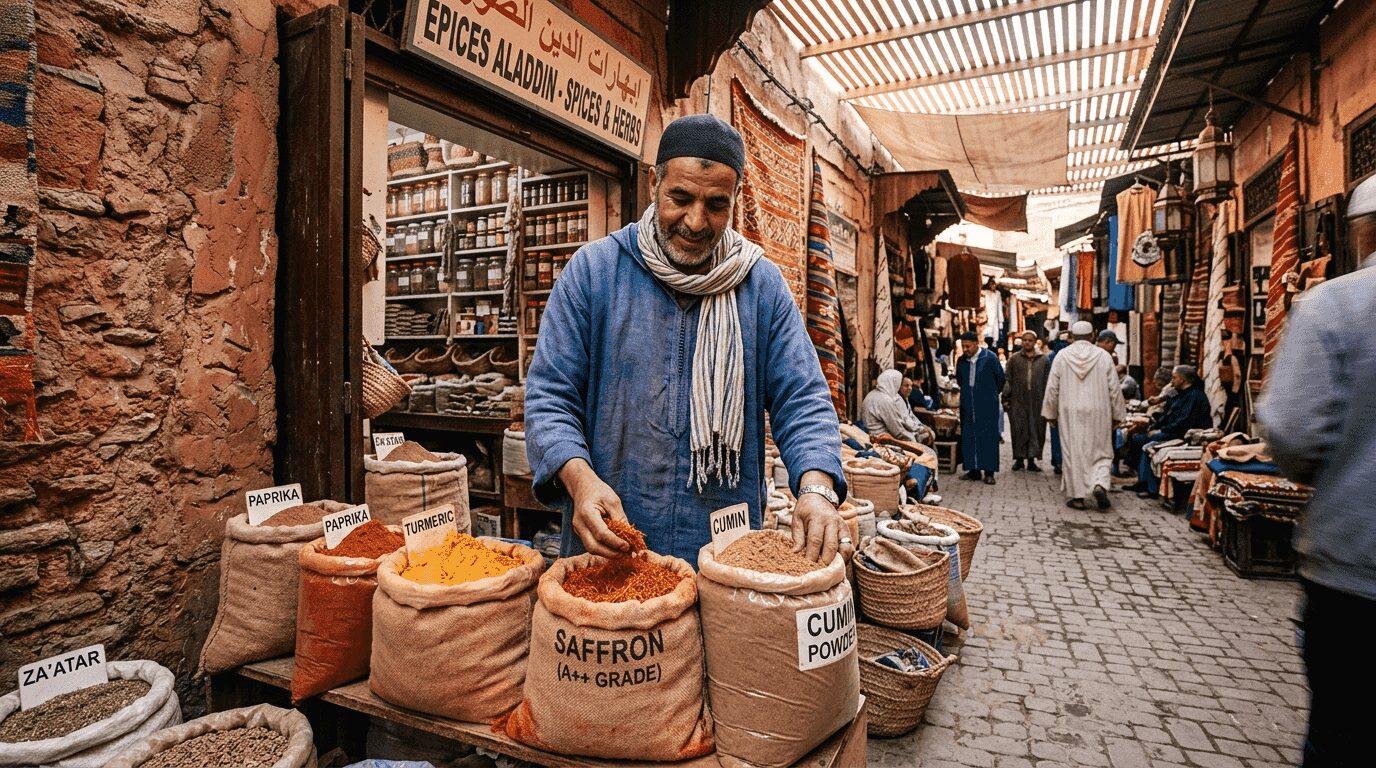
Stepping into Marrakech Medina feels like entering a living museum where nearly 1,000 years of continuous habitation has preserved over 9,000 historic monuments across 400 hectares. This UNESCO World Heritage site isn’t just a tourist attraction. It’s a vibrant ecosystem where ancient traditions, artisan crafts, and architectural marvels create an immersive cultural experience that transforms casual visitors into cultural explorers seeking authentic Moroccan heritage.
Table of Contents
- Introduction To Marrakech Medina’s Significance
- Historical Roots And Evolution Of Marrakech Medina
- Authentic Cultural Practices And Traditions
- The Medina’s Architectural And Sensory Experience
- Common Misconceptions About Marrakech Medina
- Comparative Insights: Marrakech Medina Vs Other Moroccan Medinas
- Practical Tips To Maximize Your Medina Visit
- Experience Marrakech Medina With Expert Guided Tours
Key takeaways
| Point | Details |
|---|---|
| UNESCO recognition | Marrakech Medina earned World Heritage status in 1985 for exceptional preservation of Moroccan cultural architecture and urban design. |
| Living traditions | Over 18 traditional craft trades thrive within the souks, sustaining centuries-old artisan techniques and cultural practices. |
| Safety reality | Tourist satisfaction with Medina safety exceeds 80%, contradicting common misconceptions about chaos or danger. |
| Sensory immersion | The labyrinth design creates unique climate-adaptive spaces filled with distinctive scents, sounds, and visual vibrancy. |
| Guided advantage | Expert tours provide 60% more cultural insight and safer navigation compared to independent exploration. |
Introduction to Marrakech Medina’s significance
Marrakech Medina stands as one of Morocco’s most extraordinary cultural treasures. UNESCO designated it a World Heritage site in 1985 due to its unparalleled preservation of traditional Moroccan architecture and urban planning. The site spans 400 hectares, housing more than 9,000 historical buildings that document nearly a millennium of continuous cultural evolution.
This isn’t a reconstructed historical theme park. Real families live here, artisans practice traditional crafts, and community life flows through the same narrow streets that merchants traveled centuries ago. Understanding what is a medina morocco helps contextualize why Marrakech’s version holds such global significance.
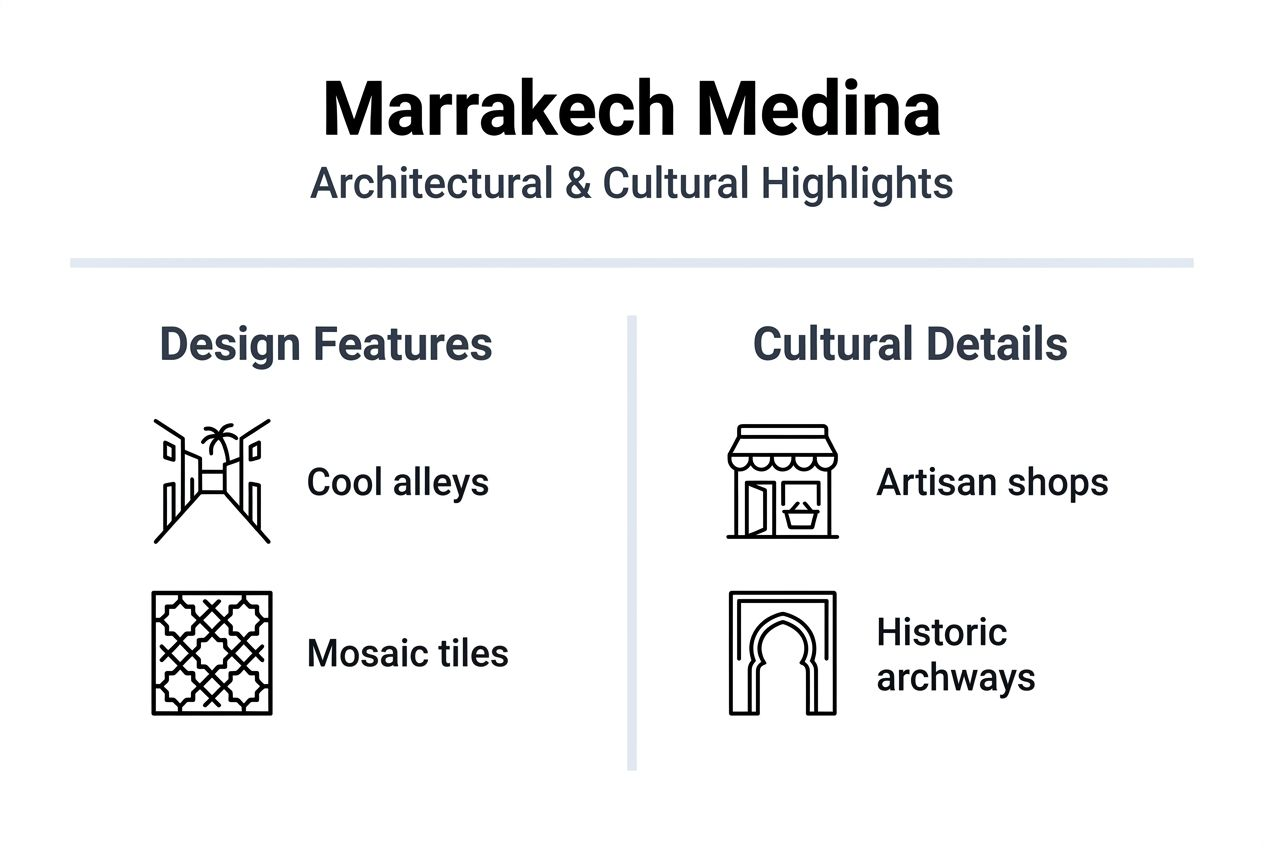
The Medina functions as a living laboratory of climate-adaptive architecture. Its complex urban design features:
- Narrow winding alleys that create natural cooling corridors
- High walls providing shade and privacy while maintaining social connectivity
- Courtyard homes (riads) with internal gardens offering temperature regulation
- Strategic placement of fountains and water features for atmospheric cooling
- Thick earthen walls constructed from local materials for thermal insulation
This architectural genius reflects centuries of refinement. Each element serves practical purposes while creating aesthetic beauty. The UNESCO World Heritage designation recognizes how these design principles represent humanity’s cultural heritage at its finest.
Historical roots and evolution of Marrakech Medina
The story begins in 1070 when the Almoravid dynasty founded Marrakech as an imperial city. This strategic decision transformed a desert settlement into Morocco’s political and cultural powerhouse. The city’s continuous habitation since then has created remarkable cultural layering that visitors experience today.
Understanding the chronological development reveals why the Medina feels so richly textured:
- Almoravid foundation (1070-1147): Established the original city walls, irrigation systems, and first major mosques that still anchor the urban landscape.
- Almohad expansion (1147-1269): Added the iconic Koutoubia Mosque and expanded defensive fortifications that define the Medina’s boundaries.
- Marinid period (1269-1465): Introduced new architectural styles and madrasas (Islamic schools) that enriched educational and religious life.
- Saadian renaissance (1554-1659): Created palatial complexes and tombs showcasing elaborate decorative arts and garden design.
- Alaouite dynasty (1659-present): Maintained and restored historical structures while adapting the Medina to modern needs without destroying its character.
This royal heritage meant Marrakech attracted Morocco’s finest craftspeople, scholars, and merchants. Their collective expertise created the sophisticated urban culture visitors encounter in marrakech medina morocco travel tips today. The Medina evolved continuously but never lost its essential character as a center of commerce, culture, and community.
Authentic cultural practices and traditions
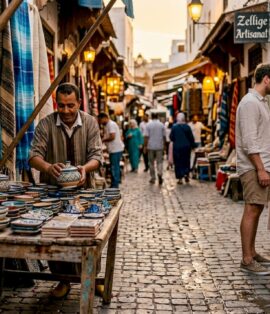
The Medina pulses with living traditions that connect contemporary life to ancient practices. Over 18 traditional craft trades continue thriving within the souks, creating an authentic cultural ecosystem rarely found in modern tourist destinations.
Key cultural expressions include:
- Textile production: Weavers create intricate carpets using centuries-old patterns and natural dyes passed through family lineages.
- Leatherwork: Tanneries process hides using traditional methods, producing the distinctive Moroccan leather goods prized worldwide.
- Metalcraft: Artisans hammer brass and copper into lamps, trays, and decorative objects using hand tools and inherited techniques.
- Woodworking: Carpenters craft elaborate geometric patterns (zellige) for doors, screens, and furniture following Islamic artistic principles.
Festivals reinforce cultural continuity. The annual Marrakech Festival of Popular Arts brings musicians, dancers, and performers from across Morocco to celebrate regional traditions. These events aren’t staged for tourists. They serve community functions, strengthening cultural identity and intergenerational knowledge transfer.
Religious practices remain central to daily rhythms. The call to prayer punctuates the day, markets pause for midday prayers, and Friday gatherings at neighborhood mosques maintain social bonds. Visitors who respect these practices gain access to authentic cultural experiences beyond surface tourism.
Pro Tip: Visit artisan workshops in the morning when craftspeople begin work. They’re more relaxed and willing to explain their techniques before the afternoon tourist rush. Purchasing directly from makers ensures fair compensation and authentic quality.
Engaging with medina artisan crafts and traditions requires cultural sensitivity. Ask permission before photographing people or workshops. Show genuine interest in the craft, not just the transaction. These small courtesies open doors to meaningful cultural exchange.
The Medina’s architectural and sensory experience
The Medina’s labyrinth design creates sensory experiences unique to this environment. Unlike grid-pattern cities, the organic street layout evolved over centuries based on practical needs and social customs. This produces constant discovery as you navigate its passages.
The sensory dimensions engage visitors on multiple levels:
- Visual vibrancy: Vivid textiles in crimson, saffron, and cobalt create kaleidoscopic displays. Geometric tile work covers walls and fountains. Natural light filtering through wooden lattices produces shifting shadow patterns.
- Olfactory richness: Spice markets fill the air with cumin, saffron, and cinnamon. Leather tanneries contribute earthy, pungent notes. Fresh mint from tea shops provides aromatic counterpoints.
- Acoustic landscape: Metalworkers’ hammering creates rhythmic percussion. Street vendors’ calls blend with motorbike engines and conversation. Musicians add flute melodies and drum patterns.
- Tactile variety: Smooth plaster walls contrast with rough stone foundations. Soft wool carpets differ from cool ceramic tiles. Brass door knockers offer weighted solidity.
This multisensory immersion distinguishes the marrakech medina sensory experience from typical tourist sites. The narrow alleys force slower movement, encouraging observation and interaction. You might duck into a doorway to let a donkey cart pass, then discover a hidden courtyard garden. These unplanned encounters create memorable moments that guided tours can enhance but never fully script.
The climate-adaptive design means the Medina feels significantly cooler than surrounding modern neighborhoods. High walls provide shade, while strategic openings channel breezes. This demonstrates how traditional architecture solved environmental challenges without modern technology, offering lessons for contemporary sustainable design.
Common misconceptions about Marrakech Medina
Many potential visitors harbor concerns that prevent them from fully experiencing the Medina. Addressing these misconceptions with facts helps travelers make informed decisions.
Myth: The Medina is chaotic and unsafe for tourists
Recent surveys show over 80% visitor satisfaction with Medina safety, contradicting fears of chaos or danger. Like any major tourist destination, the Medina has well-managed spaces with visible security presence. Pickpocketing exists but remains less common than in many European tourist centers.
Safety improvements include:
- Increased police patrols in major tourist corridors
- Official guide programs that vet and train cultural ambassadors
- Tourist assistance offices providing directions and conflict resolution
- Improved lighting in previously dark passages
Myth: You need a guide or you’ll get hopelessly lost
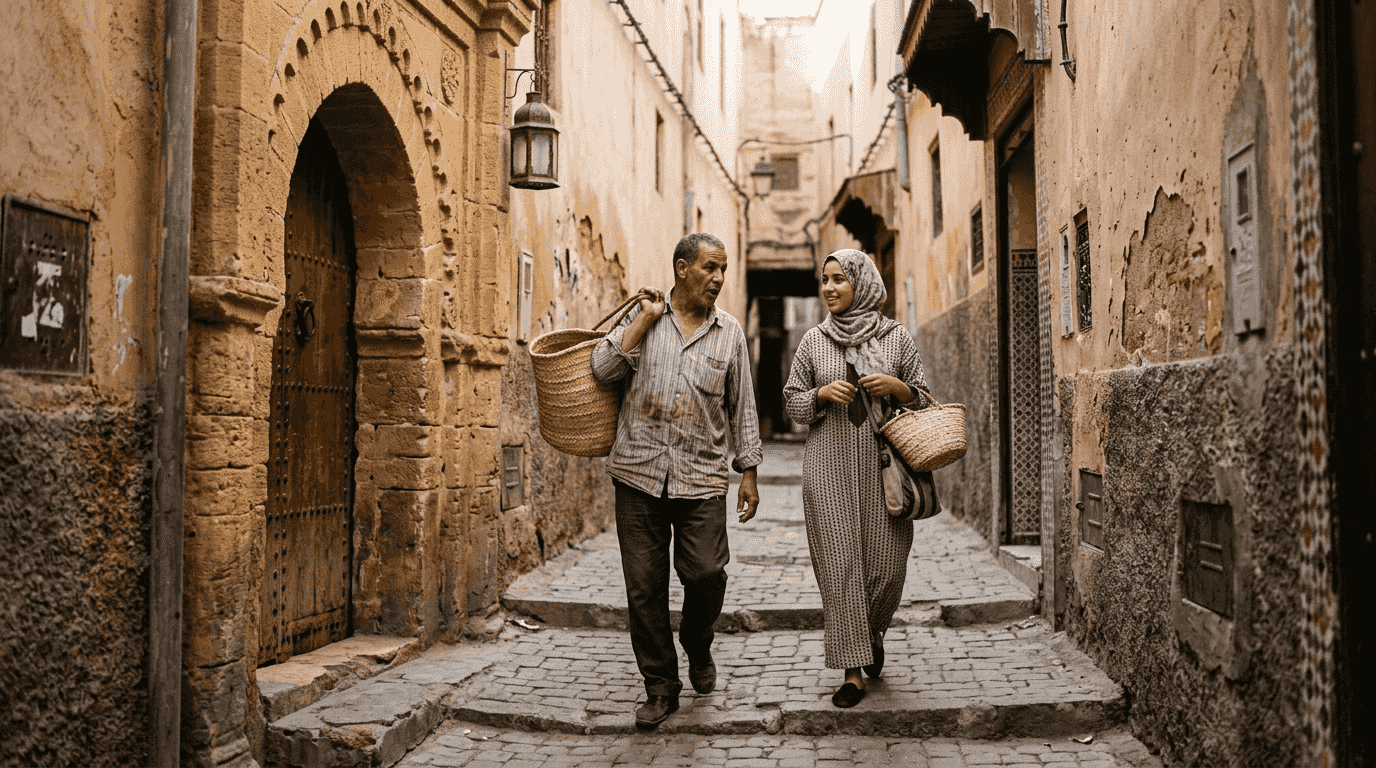
While guides enhance the experience, getting temporarily disoriented is part of the adventure. The Medina’s walls contain the area, so you can’t wander too far. Major landmarks like the Koutoubia Mosque provide orientation points. Locals readily offer directions, often leading visitors personally to destinations.
The labyrinth isn’t designed to confuse outsiders. It evolved organically based on property boundaries, water rights, and family compounds. Understanding this removes the anxiety of getting lost.
Myth: Merchants are aggressive and will harass you
Merchants earn their living through sales, so they initiate conversation. This isn’t harassment but cultural difference in commercial interaction. Polite firmness works well. A simple “No, thank you” (La, shukran) suffices. Learning this phrase and maintaining friendly but clear boundaries creates positive exchanges.
Respectful behavior includes dressing modestly, asking permission for photos, and understanding that bargaining is expected in souks but not in fixed-price shops. These marrakech medina safety tips transform potentially stressful encounters into enjoyable cultural learning.
Comparative insights: Marrakech Medina vs other Moroccan medinas
Marrakech Medina uniquely blends modern and traditional culture attracting younger tourists, unlike the more historically preserved Fes or coastal Essaouira. Understanding these differences helps travelers choose destinations matching their interests.
| Feature | Marrakech | Fes | Essaouira |
|---|---|---|---|
| Primary character | Dynamic, tourist-oriented, blend of old and new | Medieval authenticity, educational heritage | Relaxed coastal, maritime influences |
| Visitor pace | Fast, energetic, constant activity | Moderate, contemplative, scholarly | Slow, peaceful, artistic |
| Craft focus | Leather, textiles, metalwork | Ceramics, woodwork, scholarly books | Woodwork, textiles, fishing traditions |
| Atmospheric feel | Vibrant, sensory overload, theatrical | Ancient, mysterious, intellectual | Breezy, creative, bohemian |
| Best for | First-time Morocco visitors, luxury seekers | History enthusiasts, culture scholars | Artists, relaxation seekers, beach lovers |
Each medina offers distinct advantages:
- Marrakech provides accessibility with modern amenities while maintaining authentic quarters. Its infrastructure supports diverse traveler needs from budget backpackers to luxury seekers.
- Fes preserves medieval urban planning with minimal modern intrusion. The must see in fes morocco includes the world’s oldest continuously operating university and leather tanneries unchanged for centuries.
- Essaouira combines medina exploration with beach relaxation. Its smaller scale feels less overwhelming, and the coastal setting provides different sensory experiences.
The medina chefchaouen morocco travel guide represents another alternative, famous for blue-painted buildings and mountain settings. Serious cultural explorers often visit multiple medinas to appreciate regional variations in Moroccan urban culture.
Practical tips to maximize your Medina visit
Transforming knowledge into action requires specific strategies. These practical tips help you navigate the Medina confidently while respecting local culture.
-
Engage expert guides early: Guided tours provide 60% more cultural insight and safer navigation compared to solo exploration. Guides access private workshops, explain architectural details, and handle merchant interactions.
-
Time your visits strategically: Morning hours (8-11 AM) offer cooler temperatures and less crowded souks. Late afternoon provides dramatic lighting for photography. Avoid Friday mornings when mosques and some shops close for prayers.
-
Dress appropriately: Cover shoulders and knees out of respect. Comfortable walking shoes with good grip navigate uneven cobblestones safely. Light, breathable fabrics handle the heat while maintaining modesty.
-
Carry small denominations: Many vendors lack change for large bills. Having 10, 20, and 50 dirham notes facilitates smooth transactions and fair bargaining.
-
Learn basic Arabic phrases: “Salam alaikum” (peace be upon you), “Shukran” (thank you), and “La, shukran” (no, thank you) show respect and ease interactions significantly.
-
Support authentic artisans: Purchase directly from workshops rather than tourist shops. This ensures fair compensation and genuine quality. Ask about production processes to verify authenticity.
-
Stay hydrated and energized: Carry water bottles and snack on dates or nuts. The sensory intensity and physical navigation drain energy faster than expected.
Pro Tip: Download offline maps before entering the Medina. GPS works within the walls, helping you track position even without cellular data. Mark your riad or hotel location for easy return navigation.
The marrakech medina visit tips extend beyond logistics to cultural engagement. Take time to sit in cafes observing daily life. Accept tea invitations from shopkeepers even if not buying. These moments create authentic connections beyond transactional tourism.
Consider the top things to do in marrakech morocco within broader trip planning. The Medina deserves multiple visits at different times to fully appreciate its complexity. Combining why guided tours best morocco with independent exploration balances structure and spontaneity.
Experience Marrakech medina with expert guided tours
While independent exploration offers adventure, expert guidance unlocks cultural layers invisible to casual visitors. Professional guides navigate the Medina’s intricate passages while explaining architectural significance, historical context, and cultural practices that transform sightseeing into genuine learning.
Our moroccan imperial cities tour guide integrates Marrakech Medina within broader cultural exploration across Morocco’s historic capitals. These curated experiences connect architectural styles, dynastic histories, and regional variations that independent travelers often miss. Understanding why guided tours best morocco reveals how expert facilitation enhances safety, cultural access, and authentic engagement.
Explore our moroccan city tour concepts blending luxury accommodation with immersive cultural experiences. From private artisan workshops to exclusive riad dining, these tailored journeys balance comfort with authentic discovery.
FAQ
Is Marrakech Medina safe for solo travelers?
Yes, the Medina maintains high safety standards for solo visitors. Tourist safety satisfaction exceeds 80% according to 2026 surveys. Daytime exploration carries minimal risk, while evening visits benefit from staying in well-lit main thoroughfares. Respectful engagement with locals and basic street awareness ensure positive experiences.
What traditional crafts are unique to Marrakech Medina?
Leatherwork, textiles, metalwork, and pottery represent the core of 18+ traditional crafts thriving in the Medina. Artisan workshops offer direct insight into Moroccan heritage through hands-on demonstrations. The medina artisan crafts and traditions maintain techniques passed through family lineages for centuries, creating authentic cultural encounters beyond typical tourism.
How can guided tours enhance my experience in the Medina?
Guided tours provide 60% more cultural insight and improve navigation safety within the labyrinth. Expert guides access hidden historical sites, private artisan workshops, and cultural spaces closed to independent visitors. They facilitate authentic interactions through language skills and cultural knowledge, transforming surface tourism into meaningful cultural exchange. Understanding why guided tours best morocco reveals how professional facilitation maximizes both safety and learning.
When is the best time to visit Marrakech Medina?
Spring (March-May) and fall (September-November) offer ideal weather with moderate temperatures and clear skies. Morning hours provide cooler conditions and authentic local life before tourist crowds arrive. Avoiding summer heat (June-August) and winter rain (December-February) ensures comfortable exploration, though each season offers distinct atmospheric qualities for different traveler preferences.
What should I wear when exploring the Medina?
Modest clothing covering shoulders and knees respects local customs while keeping you comfortable. Light, breathable fabrics handle the heat, while comfortable walking shoes with good grip navigate cobblestones safely. Women benefit from carrying a scarf for entering religious sites or covering in conservative neighborhoods. Dressing appropriately facilitates positive local interactions and cultural respect.
Recommended
- 7 Essential Facts About Famous Moroccan Cities
- Exploring Marrakech Medina Morocco: Guide for All Travelers
- 7 Must-See UNESCO World Heritage Morocco Sites Explained
- Top 10 Things to Do in Marrakech Morocco for Travelers
- Cultural Experiences in Safari – Why They Matter – Namibia Luxury Safaris | Book Your 2025/2026 Adventure Today


Comments are closed