




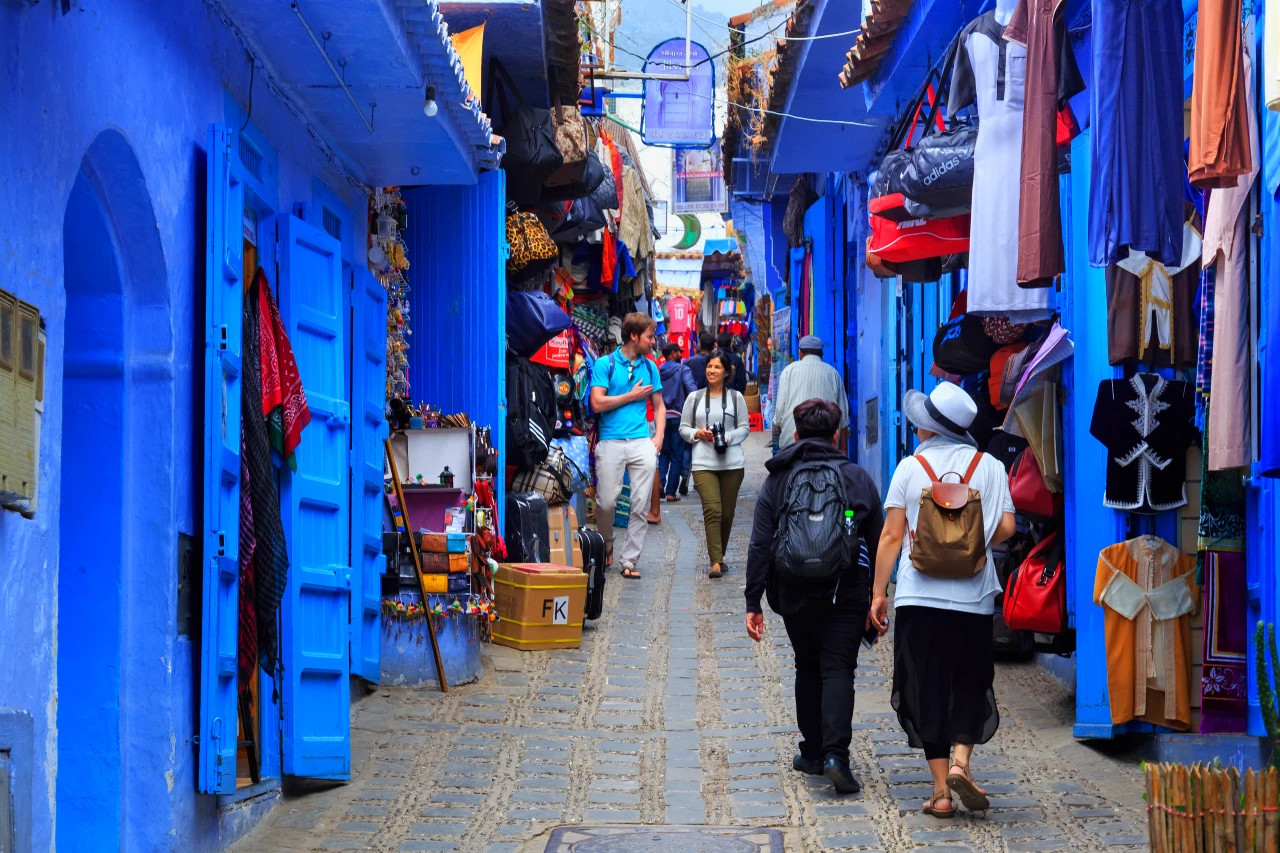
- Chefchaouen is Morocco’s blue city, renowned for its indigo walls rooted in Jewish tradition and functional insect-repelling properties.
- Its compact medina offers authentic, lived-in charm, best explored early morning or on foot to avoid crowds and capture photos with warm light.
- Reaching it involves bus or taxi travel from major hubs, with safety and accessibility manageable through proper planning and local guidance.
Most travelers planning a Moroccan trip gravitate toward Marrakesh’s famous medina or the ancient alleyways of Fes. Both are extraordinary. But there’s a smaller, quieter city tucked into the Rif Mountains that stops people mid-step and makes them reach for their camera before they’ve even said a word. Chefchaouen, Morocco’s celebrated “blue city,” is a place where every wall, staircase, and doorframe seems dipped in a shade of indigo or cerulean. This guide covers everything you need: the history behind the blue, how to get there, what to do, how to stay safe, and how to experience the city beyond the surface.
Table of Contents
- Why Chefchaouen is Morocco’s blue jewel
- How to get to Chefchaouen: Travel logistics
- Experiencing the blue city: What to do and see
- Safety, accessibility, and travel etiquette
- Why Chefchaouen stays unforgettable: Beyond the photos
- Plan your Morocco adventure: Expert tours and more
- Frequently asked questions
Key Takeaways
| Point | Details |
|---|---|
| Unique blue heritage | Chefchaouen’s blue-washed streets and spiritual roots make it stand out in Morocco. |
| Accessible from major hubs | Reach Chefchaouen by bus or taxi from cities like Tangier or Fez since it has no train or airport. |
| Iconic experiences | Walking the medina, artisan shopping, and panoramic views are highlights travelers should not miss. |
| Plan for terrain | The town’s stairs and steep paths pose accessibility challenges—prepare accordingly. |
| Safety and respect | Chefchaouen is safe for most travelers when basic precautions and local etiquette are observed. |
Why Chefchaouen is Morocco’s blue jewel
There’s a question every visitor asks within their first five minutes in Chefchaouen: why is everything blue? The answer isn’t simple, and that’s part of what makes the city so fascinating.
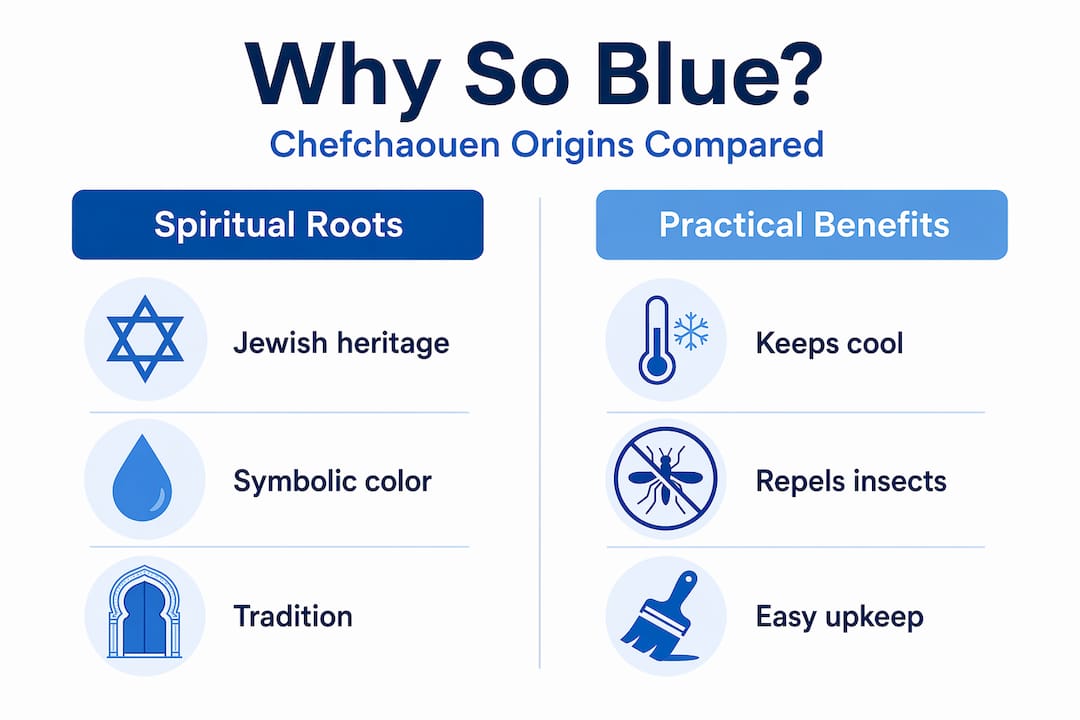
The most widely cited origin story traces the blue walls to the city’s Jewish population, who settled here in large numbers during the 15th century after fleeing the Spanish Inquisition. In Jewish tradition, the color blue (specifically a shade called “tekhelet”) represents divinity, sky, and heaven. Painting the walls blue was a way to keep spiritual awareness constant, surrounding daily life with a visual reminder of something sacred. This tradition took root so deeply that when many Jewish residents emigrated to Israel during the 20th century, Moroccan residents continued the practice, keeping it alive for new generations.
A second, more practical theory involves the color’s functional benefits. Blue paint was historically mixed with local indigo plants, which act as a natural insect repellent. In a mountainous region with warm summers and limited access to chemical pesticides, this was no small advantage. Some historians also point to blue’s ability to reflect sunlight, keeping stone walls cooler in the afternoon heat.
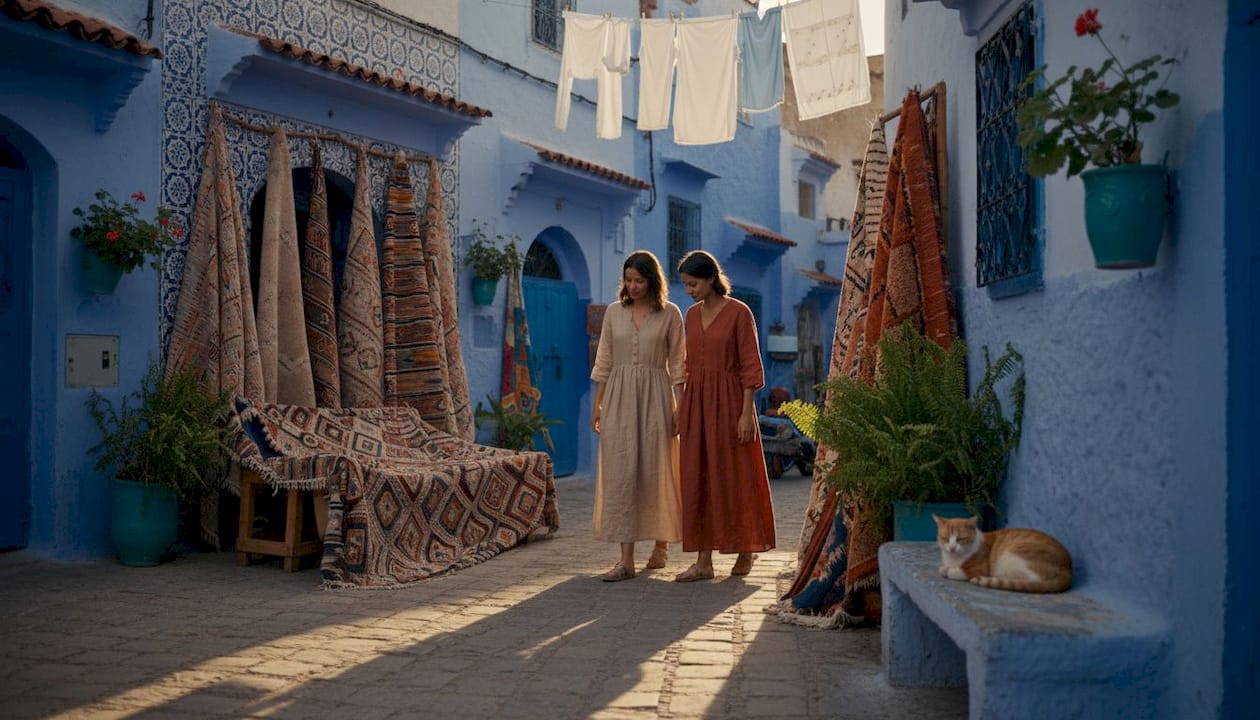
What’s remarkable is that the blue-painted medina of Chefchaouen sets it apart culturally and visually from every other Moroccan city. No other place in Morocco has built an entire cultural identity around a single color this deliberately. Today, the city’s blue identity isn’t just decorative. It influences the souvenirs sold in local shops, the color of café furniture, the painted pots on window ledges, and even the textiles woven by local artisans.
Walking through the medina feels nothing like navigating a tourist attraction. The streets slope and wind without warning. Cats curl around doorsteps. The smell of fresh-baked bread drifts from open kitchen windows. Residents hang laundry across narrow alleys, and children play football between blue walls barely wide enough for two adults to pass side by side. It’s this texture, the lived-in ordinariness of it, that makes the city so visually compelling. Everything photographable here also happens to be real.
“Chefchaouen rewards those who wander without a map. The city’s most beautiful corners are rarely the ones on the posted tourist trail.”
For an overview of the city’s layout, neighborhoods, and cultural context, the Chefchaouen city guide at TopMoroccoTravel is worth bookmarking before your trip.
Key reasons Chefchaouen stands apart:
- The blue medina is a living neighborhood, not a museum
- The mountain setting gives the city a cool, crisp atmosphere even in summer
- Artisan shops sell locally woven wool goods, leather bags, and hand-painted ceramics
- Street food here skews simpler and more affordable than Marrakesh
- The city’s size means you can cover most of it on foot in a single day
Pro Tip: The best photography light hits Chefchaouen’s blue walls in the early morning, typically between 7:00 and 9:00 a.m. Shadows are long, the light is warm, and most tourists are still at breakfast. Arrive before the day-tripper buses pull in from Tangier or Fes, and you’ll have many of the famous alleys entirely to yourself.
How to get to Chefchaouen: Travel logistics
Getting to Chefchaouen requires a little planning because, unlike Morocco’s biggest cities, it doesn’t have a train station or commercial airport. No trains or flights serve the city directly, so most visitors arrive via bus or shared taxi from nearby hubs. That said, the journey itself is part of the experience. Mountain roads wind through cedar forests and small Berber villages, offering views you won’t see from any plane window.
Here’s a practical breakdown of your main approach options:
| Departure city | Approximate distance | Estimated travel time | Best transport option | Estimated cost (USD) |
|---|---|---|---|---|
| Tangier | 120 km | 2.5 to 3 hours | CTM bus or shared taxi | $5 to $15 |
| Fes | 200 km | 4 to 5 hours | CTM bus or private taxi | $10 to $25 |
| Casablanca | 460 km | 7 to 9 hours | CTM bus (overnight option) | $20 to $35 |
| Marrakesh | 610 km | 10 to 12 hours | Bus with connection at Fes | $30 to $50 |
Note: These are example figures based on general market averages and may vary depending on season, operator, and booking method. Always confirm current pricing directly with transport providers.
Step-by-step arrival guide:
- Fly into a major hub. Tangier Ibn Battouta Airport and Fes-Saïs Airport are the closest international airports. Both receive regular flights from European cities. If you’re planning a Morocco itinerary that includes northern Morocco, Tangier makes a logical first stop.
- Head to the bus station or taxi rank. CTM (the main national bus company) runs reliable scheduled services from both Tangier and Fes to Chefchaouen. Tickets should be purchased in advance at the station, especially in summer. Shared “grand taxis” (large Mercedes sedans) fill up with six passengers and leave when full. They’re faster than buses but less comfortable on winding mountain roads.
- Arrive at Chefchaouen’s main bus station. The station sits about 1 kilometer from the medina. Petit taxis cover this last stretch for a small fare. Alternatively, it’s a walkable distance if you’re traveling light.
- Navigate to your riad or hotel. Many accommodations in the medina’s heart are only reachable on foot since vehicles can’t access the narrow lanes. Your host will usually provide detailed walking directions from a nearby landmark.
For essential facts about Moroccan travel and what to know before you land, this resource covers currency, safety, tipping norms, and SIM card options that apply across the country.
Pro Tip: Mountain roads to Chefchaouen can slow significantly in bad weather or behind agricultural vehicles. If you have an afternoon bus departing Fes, build in an extra hour of buffer. Missing a connection in an unfamiliar city is far more stressful than arriving with time to spare.
Experiencing the blue city: What to do and see
Chefchaouen is compact, but it packs a surprising amount of variety into its small footprint. The medina’s winding streets, mountaintop views, and artisan shops give cultural travelers and photographers more than enough to fill two or three days without repeating themselves.
Here’s a comparison of the city’s key activities to help you prioritize:
| Activity | Best time | Accessibility | Photography appeal |
|---|---|---|---|
| Medina walking tour | Early morning or late afternoon | Moderate (cobblestones, stairs) | Very high |
| Kasbah and Plaza Uta el-Hammam | Any time | Easy (flat plaza area) | High |
| Ras El Maa waterfall | Morning | Easy to moderate | Moderate |
| Spanish Mosque viewpoint | Sunrise or sunset | Moderate (uphill hike) | Very high |
| Artisan shopping in souks | Mid-morning to midday | Easy | Moderate |
| Blue alleys photography walk | Early morning | Moderate | Extremely high |
A walk through the medina and kasbah:
The medina is the obvious starting point. Give yourself at least two hours with no agenda, just walking. Streets lead unexpectedly to small squares, hidden staircases, and doorways so perfectly framed they look like paintings. The 15th-century kasbah at Plaza Uta el-Hammam houses a small museum with exhibits on the city’s Andalusian and Moroccan history. Entry costs a few dirhams and is worth every cent for the rooftop view alone. For more detail on navigating the alleys, this medina Chefchaouen guide maps out the most photogenic routes and less-visited corners.
Ras El Maa waterfall:
Locals do their laundry here. Children wade in the cold mountain water. The waterfall sits at the edge of the medina, where the city literally runs into the Rif Mountains, and it’s a sharp, beautiful reminder that this isn’t a theme park. It’s a real place where real people live. The sound of running water mingles with the call to prayer from the mosque just upstream.
The Spanish Mosque viewpoint
This short uphill hike rewards you with one of the most iconic views in northern Morocco. The ruined mosque sits on a ridge above the city, looking down over a sea of blue rooftops and terracotta pots. Sunset here is remarkable, but sunrise is better. You’ll likely share the space with a few early-rising hikers rather than the midday crowds.
Must-visit spots at a glance:
- Plaza Uta el-Hammam (central square and social hub)
- The Grand Mosque (exterior viewing)
- Kasbah Museum
- Ras El Maa waterfall and washing area
- Spanish Mosque viewpoint (best panoramic shots)
- Artisan quarter near Bab El Ain gate
A note on photo etiquette:
Chefchaouen’s residents are accustomed to photographers, but that doesn’t mean everyone welcomes a camera in their face. Ask before photographing people, especially in private moments like prayer or shopping. A smile and a simple “Mumkin sura?” (May I take a photo?) go a long way. Some locals near busy tourist spots will ask for a small payment in return for posing. That’s entirely reasonable. Budget travelers who feel uncomfortable with this arrangement should simply photograph the architecture and skip the portraits. The city itself will give you more than enough to work with.
If Chefchaouen has you curious about other visually striking regions, exploring the top Morocco destinations will help you understand how the blue city fits into a broader Moroccan itinerary.
Safety, accessibility, and travel etiquette
Chefchaouen has a well-earned reputation as one of Morocco’s safer and more relaxed cities for visitors. Violent crime is genuinely rare. Most travelers, including solo women, report feeling comfortable walking the medina during the day. That said, “safe” doesn’t mean “hassle-free,” and there are specific things worth knowing before you arrive.
While generally safe for tourists, Chefchaouen does see its share of tourist scams and persistent vendors. Being aware of common patterns makes a real difference.
“The most common frustration visitors report isn’t danger. It’s the low-level persistence of some vendors and unofficial ‘guides’ who attach themselves to tourists near the main gates.”
Street safety and etiquette checklist:
- Dress conservatively. This is a predominantly Muslim city. Covering shoulders and knees is a basic sign of respect that also tends to reduce unwanted attention.
- Be firm but polite with unofficial guides. If someone you haven’t hired starts “showing you around,” they will likely expect payment. A clear, calm “no thank you” repeated once or twice works better than ignoring them.
- Watch for the “closed medina” scam. Some visitors are told their destination is closed and offered a detour via a carpet shop. The medina is almost never closed. Trust your own navigation.
- Keep your phone discreet in crowded areas. Petty theft is uncommon but not impossible, especially in busy market areas.
- Avoid the Spanish Mosque hike alone at night. The path is unlit and isolated. Go in a group or save it for daylight.
- Stay on well-lit streets after dark. The main medina is generally lively and safe in the evening. Smaller peripheral alleys are quieter and warrant more caution.
Accessibility is a genuine challenge in Chefchaouen. The city’s charm comes partly from its terrain, steep hills, narrow staircases, and uneven cobblestones worn smooth over centuries.
Steep terrain and uneven paths create real obstacles for travelers using wheelchairs or walkers or those with significant mobility limitations. The flat areas around Plaza Uta el-Hammam are far more navigable than the upper medina streets. If mobility is a concern, focusing your exploration on the lower medina and central plaza is a practical way to still experience most of what makes the city special.
For stress-free Chefchaouen travel that accounts for your specific needs, including medical considerations and accessibility questions, connecting with a local expert before arrival can save significant hassle on the ground.
Pro Tip: If you or someone in your group has limited mobility, book a riad or hotel that sits as close as possible to the main entrance of the medina. Some accommodations advertise “medina location” but require a 10-minute uphill walk from the nearest drivable road. Always confirm exact access details before booking.
For detailed medina travel tips, including neighborhood-specific advice on crowd patterns and best walking times, the TopMoroccoTravel medina guide provides granular, on-the-ground knowledge.
Why Chefchaouen stays unforgettable: Beyond the photos
Here’s something that most Chefchaouen travel content won’t tell you directly: the photos lie. Not because they’re fake or filtered (though many are), but because they capture the one dimension of this place that’s easiest to replicate. You can scroll through a thousand Instagram posts and feel like you’ve already been there. You haven’t.
What a photograph cannot transmit is the smell of cedar smoke drifting from a tea house at 7:00 a.m. It can’t carry the sound of a muezzin’s call bouncing off blue walls and reverberating down empty alleys. It doesn’t show you the moment a shopkeeper stops mid-sale to offer you a small glass of mint tea because you looked genuinely interested in his craft, not just his price. These are the experiences that actually stick.
We’ve guided travelers through many of Morocco’s most iconic places, and Chefchaouen provokes a particular kind of quiet awe that doesn’t hit people the same way in Marrakesh or Fes. Those cities are loud, layered, and energizing. Chefchaouen is still there. It has a pace that slows you down without you noticing, and most visitors walk out of it having had conversations they didn’t plan, eaten meals they didn’t expect, and spent an extra day they hadn’t budgeted simply because leaving felt wrong.
The contrarian truth about Chefchaouen is this: it’s become popular for photographic reasons, but it survives on atmospheric ones. The travelers who love it most are rarely the ones who optimized their visit around getting the perfect shot. They’re the ones who sat in the plaza until the light changed, ordered whatever the café recommended without looking at the menu, and let the city unfold rather than checking off its highlights.
This is why we’d push back against the popular framing of Chefchaouen as a “bucket list destination.” That framing implies you visit it, photograph it, and move on. The city offers something more durable than that. Treat your Chefchaouen visit as time spent rather than a destination reached, and you’ll come home with something a photo can’t hold.
Plan your Morocco adventure: Expert tours and more
Chefchaouen is genuinely one of those places that rewards preparation. Knowing which alley to walk down at dawn, which local café to choose over the tourist-facing spots on the main plaza, and how to connect the blue city to a wider Morocco itinerary without burning out on logistics: these things make an enormous difference between a good trip and an unforgettable one.
At TopMoroccoTravel, we build Moroccan city tour concepts around exactly that kind of local knowledge. Whether you’re planning a focused northern Morocco escape that centers on Chefchaouen or you want to weave the blue city into a multi-destination journey through Fes, the Sahara, and beyond, our team can tailor every detail. Our city exploration tips and curated Morocco travel packages are designed to get you beyond the tourist surface and into the Morocco that most visitors never see. Reach out and let’s start building your journey.
Frequently asked questions
Why are the buildings in Chefchaouen painted blue?
The blue walls trace back to Jewish spiritual traditions around the sacred color tekhelet, combined with practical benefits like insect repellent properties and heat reflection from natural indigo pigments. The practice continued long after the Jewish community emigrated, becoming a defining part of local Moroccan identity.
What’s the best way to get to Chefchaouen?
Most travelers reach Chefchaouen by CTM bus or shared grand taxi from Tangier or Fes, since no train or airport serves the city directly. Tangier is the fastest connection at roughly two and a half to three hours by road.
Is Chefchaouen safe for solo travelers?
Chefchaouen is considered one of Morocco’s safer tourist destinations, with low violent crime rates, though solo travelers should stay alert to persistent vendors, unofficial guides, and common tourist scams and should stick to well-lit routes after dark.
Is Chefchaouen accessible for travelers with limited mobility?
The city’s steep terrain and cobblestone paths create significant challenges for those with mobility limitations. Focusing on the lower medina and central plaza area, and booking accommodation near the main entrance, makes the experience considerably more manageable.


Comments are closed