




TL;DR:
- Casablanca (1942) was produced under intense pressure, with an incomplete script and challenging circumstances, yet it became a timeless classic.
- Its deeper themes of moral sacrifice and political allegory have resonated globally, making it an enduring cultural touchstone.
- The film’s iconic lines, complex characters, and historical significance ensure its continued influence in cinema and popular culture.
Few films were born under as much pressure as the Casablanca movie, 1942. Shot with an incomplete script, a cast that didn’t always get along, and a studio racing against wartime headlines, Casablanca had every reason to fail. Instead, it became one of the most celebrated films in the history of American cinema. What made it extraordinary wasn’t just the love story or the politics. It was how those two things collided in a single, unforgettable setting and why that collision still hits hard more than 80 years later.
Table of Contents
- Key Takeaways
- The Casablanca Movie 1942: How It Was Made
- What Casablanca is really about
- The cast of Casablanca 1942
- Cultural impact and enduring legacy
- My honest take on why Casablanca still matters
- Experience the real Casablanca with Topmoroccotravel
- FAQ
Key Takeaways
| Point | Details |
|---|---|
| Rushed but remarkable production | Filming began May 25, 1942, with only half the script written, yet the chaos produced authentic, enduring performances. |
| Themes beyond the romance | The film uses a love triangle to explore the tension between personal comfort and moral responsibility during wartime. |
| Iconic, improvised dialogue | Several of the most famous Casablanca quotes were not in the original script and emerged organically on set. |
| Record-breaking critical acclaim | The 1942 Casablanca film won three Academy Awards and is consistently ranked in the top three greatest American films by the AFI. |
| A living cultural touchstone | The film’s influence runs through decades of cinema, television, and pop culture references that most viewers don’t even recognize as coming from Casablanca. |
The Casablanca Movie 1942: How It Was Made
The story behind Casablanca starts not on a film set, but in a theater producer’s drawer. The source material was an unproduced stage play called Everybody Comes to Rick’s, which Warner Bros. purchased for $20,000 in January 1942. In today’s terms, that’s roughly $300,000, a steep price for a script that had never been staged. The studio believed the story had something. What they couldn’t have predicted was just how much.
Production moved fast. The cameras started rolling on May 25, 1942, under director Michael Curtiz. The challenge? Only half the script was ready when filming began. Writers Julius and Philip Epstein, along with Howard Koch, were drafting scenes while actors were learning their lines for others. Bogart reportedly didn’t know until late in production whether Rick ends up with Ilsa or lets her go. That unresolved tension wasn’t manufactured for the screen. It was real.
The budget came in at $1,039,000, about $75,000 over the original estimate. The overage wasn’t from extravagance. It came from constant rewrites, reshoots, and the logistical difficulty of recreating the crowded, smoky streets of wartime Morocco on a Warner Bros. soundstage in Burbank, California. The actual city of Casablanca was, of course, inaccessible during the war. So Curtiz built it from scratch, layering in extras who were often real European refugees, giving scenes an authenticity no casting director could have manufactured.
Here’s what makes the production timeline almost stranger than fiction. The film premiered November 26, 1942, in New York City, just eighteen days after Allied forces landed in North Africa during Operation Torch. The city of Casablanca was suddenly front-page news. Warner Bros. had accidentally, or very cleverly, timed the release to one of the war’s most dramatic turning points.
Key production facts worth knowing:
- Filming wrapped in August 1942, with post-production completed in under three months
- The film’s budget overrun came primarily from script revisions and extended shooting days
- Many background extras were genuine European émigrés fleeing Nazi-occupied countries
- The airport scene was shot with a cardboard cutout of a plane and short extras to create forced perspective
- The famous fog was partly practical necessity, partly a way to hide the obvious limitations of the set
Pro Tip: If you watch the film knowing the ending was undecided during most of shooting, Bogart’s performance takes on a completely different weight. His ambiguity wasn’t acting distance. It was genuine uncertainty.
What Casablanca is really about
Most people summarize Casablanca as a love story set during World War II. That’s accurate the way saying Moby-Dick is about fishing is accurate. The 1942 Casablanca film operates on at least two simultaneous levels, and missing the second one means missing why the film holds up.
The surface story follows Rick Blaine, an American expatriate running a café in Vichy-controlled Casablanca. When his former lover Ilsa Lund arrives with her husband Victor Laszlo, a resistance leader, Rick is forced to decide whether to help them escape, and at what personal cost. That’s the Casablanca movie summary most people carry with them.
The deeper story is about isolationism. Rick’s character arc mirrors America’s own political struggle in the early 1940s. He’s a man who was once idealistic, fought in the Spanish Civil War, ran guns for Ethiopia. Then he got hurt, withdrew, and adopted a personal philosophy summed up in his own words: “I stick my neck out for nobody.” He’s America before Pearl Harbor. Cynical, self-protective, telling itself that staying out of other people’s problems is wisdom rather than cowardice.
The film’s central themes, which still resonate today:
- Sacrifice vs. self-preservation: Rick’s choice at the airport is one of the most studied moral decisions in American cinema
- Love as political allegory: Ilsa represents not just a woman but the Europe Rick abandoned, and eventually must choose to save
- Complicity through inaction: The Vichy characters represent how ordinary people participate in evil by doing nothing
- Music as resistance: “La Marseillaise” drowning out the Nazi anthem in Rick’s café is one of cinema’s most charged political moments
The film blends romantic sweetness with a dark warning about the dangers of disengagement. The romance pulls you in emotionally so the political argument can do its work without feeling like a lecture.
“We’ll always have Paris.”
That line, spoken by Rick to Ilsa, is often read as pure romanticism. But in context, it’s a farewell not just to a woman but to a version of himself. He’s choosing the harder, more meaningful path. The romance and the politics are inseparable. The airport climax is ranked by film historians as one of the most impactful endings in movie history, precisely because it refuses the easy resolution.
The cast of Casablanca 1942
Understanding the cast of Casablanca 1942 means understanding how much of the film’s magic was unplanned. Humphrey Bogart plays Rick Blaine with a kind of weary authority that no amount of direction could have manufactured. He was 42 at the time of filming, a working actor who had spent years in gangster pictures, not exactly the romantic lead type. That casting against type is exactly why it works.
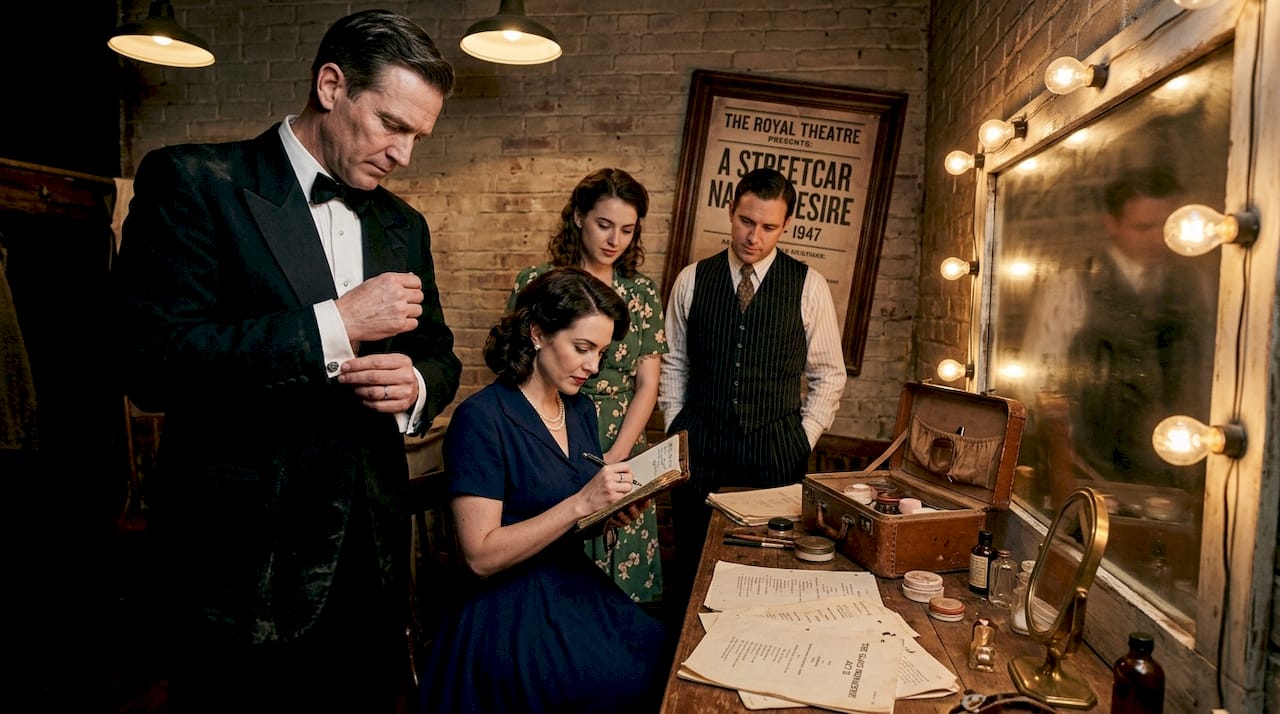
Ingrid Bergman plays Ilsa with a luminous uncertainty that has fascinated audiences ever since. She has said in interviews that she genuinely didn’t know which man Ilsa was supposed to love most during filming. Curtiz and the writers weren’t telling her, partly because they didn’t know yet themselves. That ambiguity lives in every frame she’s in.
Paul Henreid as Victor Laszlo completes the triangle as a man of almost impossible moral virtue. He’s the resistance hero, and in lesser hands the character would be unbearable. Henreid plays him with quiet dignity, making him someone you admire even as you hope Ilsa ends up with Rick.
- Humphrey Bogart (Rick Blaine): Was not the first choice. George Raft reportedly turned down the role, one of the most expensive decisions in Hollywood history.
- Ingrid Bergman (Ilsa Lund): Borrowed from producer David O. Selznick, who was none too pleased about the arrangement and had no idea the film would become iconic.
- Paul Henreid (Victor Laszlo): Initially reluctant to take the part, fearing being typecast as the “other man.” He negotiated equal billing with Bogart and Bergman.
- Claude Rains (Captain Renault): Widely considered the film’s secret weapon. His morally flexible police captain is witty, corrupt, and ultimately redeemable.
- Dooley Wilson (Sam): Played the piano-playing Sam with warmth that anchors the film’s emotional memory sequences, even though Wilson himself couldn’t actually play piano.
The iconic line “Here’s looking at you, kid” was not in the original script. Bogart reportedly used the phrase while teaching Bergman to play poker during breaks from shooting. It felt right, Curtiz kept it, and it became perhaps the most recognized line in American film history. The final line, “This is the beginning of a beautiful friendship,” came even later. Producer Hal Wallis wrote it after the shoot wrapped and had Bogart dub it in post-production.
Pro Tip: Watch Claude Rains in every scene he shares with Bogart. His reactions tell a second story running parallel to the main plot, one about a cynical man rediscovering his own conscience.
Cultural impact and enduring legacy
The numbers tell part of the story. The 1942 Casablanca film won three Academy Awards: Best Picture, Best Director for Michael Curtiz, and Best Adapted Screenplay. It’s consistently placed in the top three on the American Film Institute’s rankings of the greatest American films ever made. No other wartime film has maintained that kind of staying power.

But the cultural impact goes deeper than trophies. The famous Casablanca quotes have permeated popular culture so thoroughly that people often use them without knowing their origin. “Here’s looking at you, kid.” “Round up the usual suspects.” “We’ll always have Paris.” These lines have appeared in presidential speeches, advertising campaigns, song lyrics, and countless film parodies.
Here’s a look at how Casablanca compares to other wartime classics in terms of lasting recognition:
| Film | Year | Academy Awards Won | AFI Top 100 Ranking | Quoted in Pop Culture |
|---|---|---|---|---|
| Casablanca | 1942 | 3 (incl. Best Picture) | Top 3 (consistently) | Extensively, globally |
| Mrs. Miniver | 1942 | 6 (incl. Best Picture) | Not in top 50 | Rarely |
| The Best Years of Our Lives | 1946 | 7 (incl. Best Picture) | Top 40 | Occasionally |
| From Here to Eternity | 1953 | 8 (incl. Best Picture) | Top 60 | Rarely |
What separates Casablanca from films with more awards and comparable critical recognition? The answer lies in its characters. Rick, Ilsa, Sam, Renault. They feel like people you know. Their dilemmas are specific to 1942, yet the emotions are permanently recognizable.
The film also shaped the romantic drama genre in ways that persist today. The idea of a love story where the “right” ending isn’t the emotionally satisfying one, where noble sacrifice beats personal happiness, runs through decades of films from The English Patient to Atonement. Casablanca built that template and has never been bettered on it.
Contemporary filmmakers still cite the film openly. Steven Spielberg has referenced its moral clarity as a direct influence. The structure of Rick’s café as a microcosm of the larger world, a single location where every political faction collides, has been borrowed by writers in every medium from stage to television.
My honest take on why Casablanca still matters
I’ve spent years studying classic films and helping travelers connect with the places that inspired them. Casablanca comes up more than almost any other movie when people think about Morocco, and I find that fascinating because the film has almost nothing to do with the real city. It was shot in California. The Casablanca in the film is a myth, a pressure cooker of wartime anxiety dressed up in a foreign location.
What strikes me most, and what I think modern viewers consistently miss, is that the film’s chaotic creation was not a flaw to overcome. It was the engine of its authenticity. When you watch Bogart not knowing whether he gets the girl, you are watching an actor genuinely uncertain about his character’s fate. That’s not method acting. That’s something rarer: real stakes reflected in performance.
The other thing I’d push back on is the idea that Casablanca is primarily a love story. It’s fundamentally a cautionary tale about the cost of looking away when the world demands engagement. Rick’s arc from self-exile to sacrifice is as politically charged today as it was in 1942. The love story is the vehicle. The moral argument is the destination.
My advice to anyone watching it for the first time, or returning to it: pay attention to what Rick does, not just what he feels. The feelings are obvious. The choices are the film.
— Topmoroccotravel
Experience the real Casablanca with Topmoroccotravel
The film may have been shot on a soundstage, but the real city of Casablanca is every bit as captivating in its own right. Topmoroccotravel offers curated experiences that let you walk through Morocco’s most iconic cities with the context to appreciate their history and culture. From the grand Hassan II Mosque to the art deco streets of the city center, you can explore Casablanca’s modern highlights and understand why this coastal city has enchanted travelers for generations. For those drawn by the romance and intrigue of the 1942 film, a romantic Morocco trip through the country’s imperial cities offers exactly the kind of atmosphere the movie tried to conjure. Browse Topmoroccotravel’s Moroccan city tour concepts to find the experience that fits your vision of Morocco perfectly.
FAQ
What is the Casablanca movie 1942 about?
Casablanca follows Rick Blaine, an American expatriate in wartime Morocco, who must choose between his love for Ilsa Lund and helping her husband, a resistance leader, escape. Beneath the romance, the film is a political allegory about the moral cost of isolationism.
Who are the main cast members of Casablanca 1942?
The cast of Casablanca 1942 includes Humphrey Bogart as Rick Blaine, Ingrid Bergman as Ilsa Lund, Paul Henreid as Victor Laszlo, and Claude Rains as the memorably corrupt Captain Renault.
What are the most famous Casablanca quotes?
The most famous Casablanca quotes include “Here’s looking at you, kid,” “We’ll always have Paris,” and “Round up the usual suspects.” Notably, “Here’s looking at you, kid” was improvised by Bogart and never appeared in the original script.
Why is Casablanca so popular after more than 80 years?
Casablanca endures because its central conflict between personal happiness and moral responsibility is permanently relevant. Its characters feel archetypal rather than dated, and its dialogue has become part of the shared cultural vocabulary of English-speaking audiences worldwide.
How many Academy Awards did Casablanca win?
The 1942 Casablanca film won three Academy Awards: Best Picture, Best Director for Michael Curtiz, and Best Adapted Screenplay, cementing its place as one of Hollywood’s greatest achievements.




Comments are closed