




TL;DR:
- Marrakech offers a rich blend of Islamic architecture, bustling markets, and scenic day trips, best experienced with thoughtful pacing.
- Visitors should prioritize historic sites, early garden visits, and flexible exploration to avoid sensory overload and fully enjoy the city’s vibrant culture.
- Planning around Ramadan and engaging local guides enhances the authentic experience, revealing the city’s true rhythm and depth.
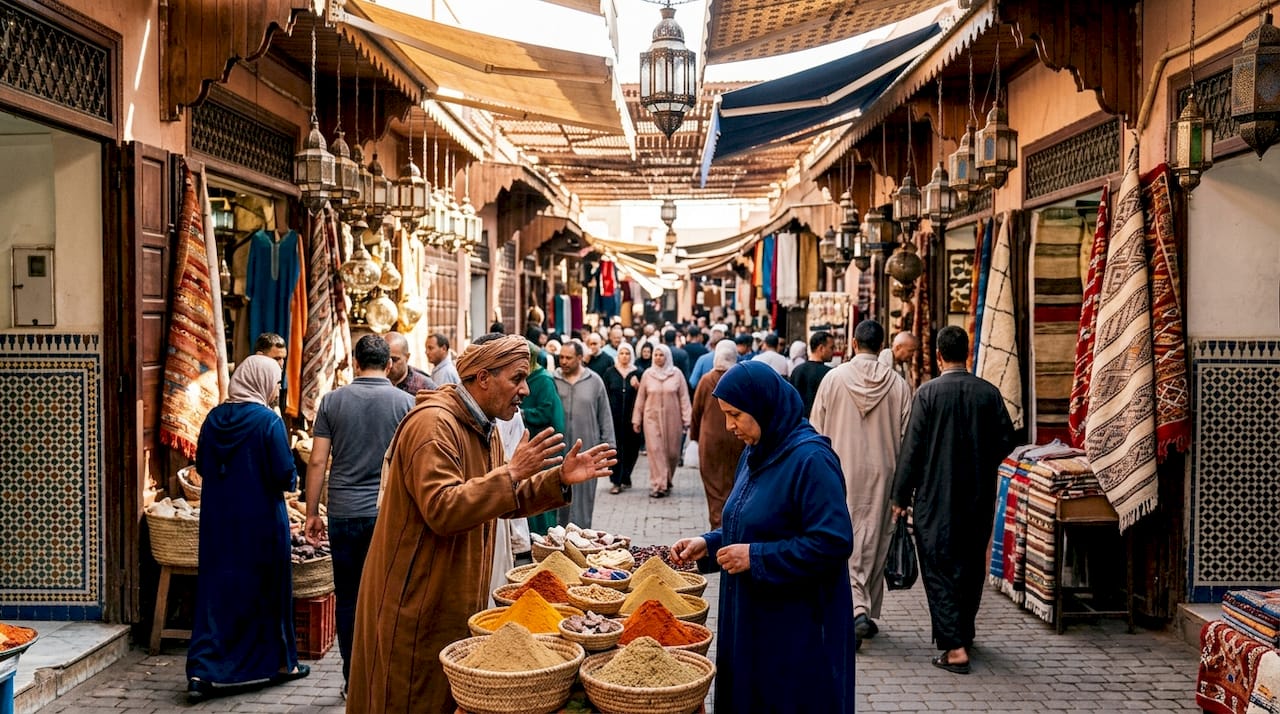
Marrakech is defined by the collision of ancient Islamic architecture, sensory-rich souks, and some of North Africa’s most accessible natural scenery, all packed into a city you can meaningfully explore in three days. The things to do in Marrakech range from walking the 14th-century Ben Youssef Madrasa to watching acrobats perform at Jemaa el-Fna at dusk and from booking a traditional hammam to riding camels across the Agafay Desert at sunset. Bahia Palace, Jardin Majorelle, and Ourika Valley each represent a different dimension of what the city offers. A well-planned trip balances the medina’s intensity with quiet gardens and day trips, keeping energy high and memories vivid.
What are the top cultural and historic attractions in Marrakech?
Bahia Palace is one of Marrakech’s architectural masterpieces, combining marble floors, hand-painted cedar ceilings, zellige tilework, and lush interior gardens across 150 rooms. Built in the late 19th century for a grand vizier, it remains the clearest single-site demonstration of Moroccan Islamic craftsmanship in the city. Arrive before 9 a.m. to walk the courtyards without crowds pressing in from every direction.
The Saadian Tombs, sealed by Sultan Moulay Ismail in the 17th century and only rediscovered in 1917, hold the remains of over 60 members of the Saadian dynasty. The mausoleum’s carved stucco and Italian Carrara marble columns make it one of the most ornate burial sites in the Islamic world. The site is compact, so plan 30 to 45 minutes and go mid-week to avoid tour group congestion.
El Badi Palace tells a different story. Once described as one of the most magnificent palaces on earth, it was stripped of its gold, marble, and onyx by Moulay Ismail to build his imperial capital in Meknes. What remains is a vast, roofless ruin with sunken gardens and stork nests on every parapet. The contrast between its documented former glory and its current skeletal state is genuinely striking.
Ben Youssef Madrasa, a 14th-century Quranic school, is the best place in Marrakech to study Islamic geometric art up close. The central courtyard’s carved plaster, cedar latticework, and zellige base panels represent three distinct craft traditions working in harmony. Students once lived in the 130 small cells above the courtyard, which you can still enter.
- Bahia Palace: Best before 9 a.m.; allow 60 to 90 minutes
- Saadian Tombs: Compact site; 30 to 45 minutes; go mid-week
- El Badi Palace: Rooftop views over the medina; allow 45 minutes
- Ben Youssef Madrasa: Best for architectural detail; allow 60 minutes
- Koutoubia Mosque: Exterior and gardens only for non-Muslims; iconic minaret visible from most of the medina
Pro Tip: Buy a combined ticket for El Badi Palace and the Saadian Tombs at the palace entrance. It saves time at both sites and costs less than purchasing separately.
How to experience Marrakech’s gardens, markets, and traditional hammams
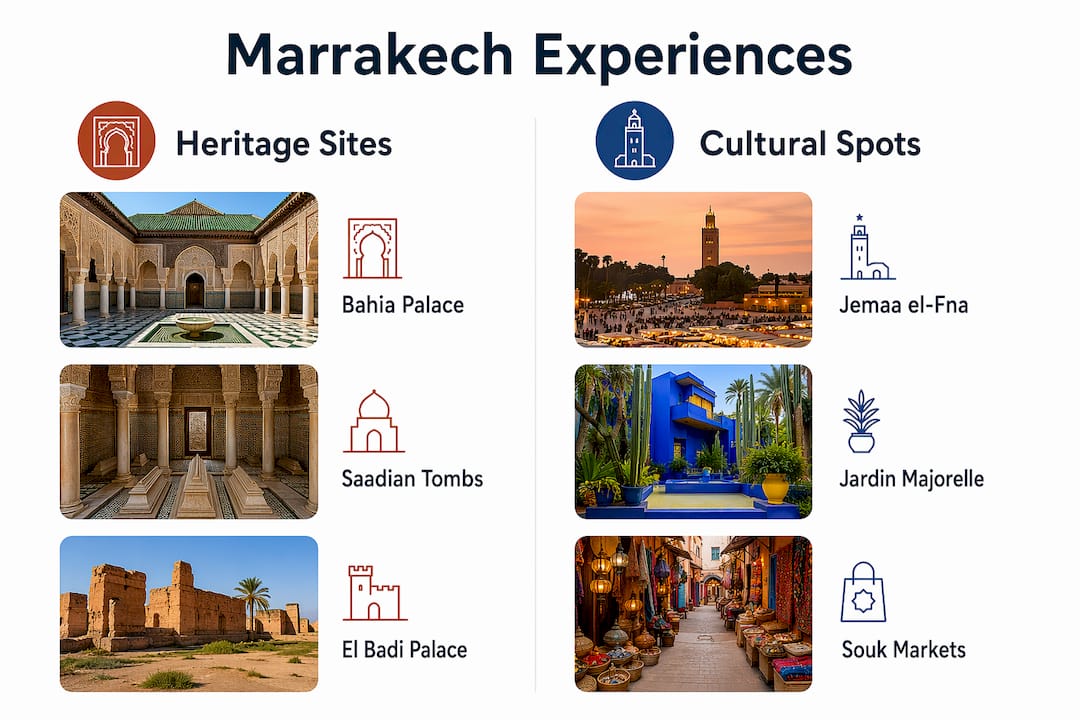
Jardin Majorelle opens at 8:30 a.m. and the first hour is the only time you will experience it as Yves Saint Laurent intended: quiet, cobalt-blue, and genuinely restorative. By 10 a.m., tour groups fill the narrow paths and the calm evaporates. The garden houses the Berber Museum, which is worth 30 minutes of your time even if you are not a museum person, because the jewelry and textile collections reframe everything you will see in the souks afterward.
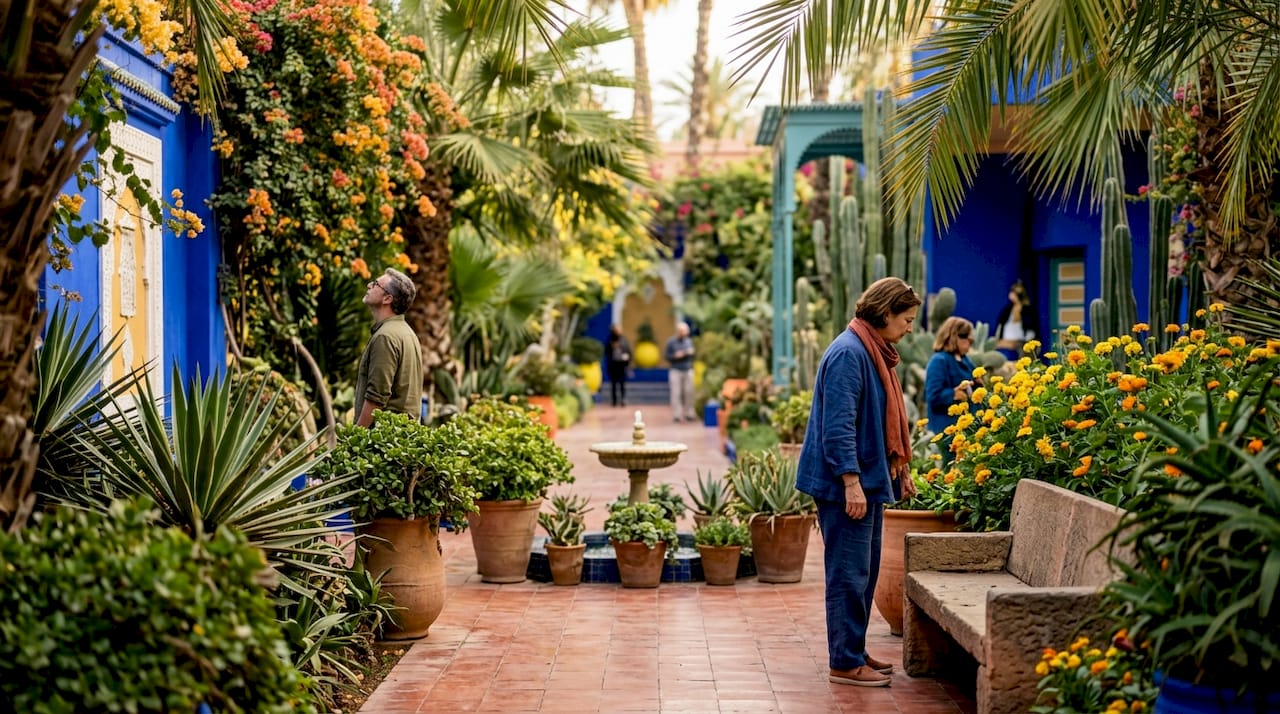
Le Jardin Secret, tucked inside the medina itself, is far less visited than Majorelle and arguably more interesting for architecture lovers. The restored 19th-century riad garden combines an Islamic geometric garden with an exotic garden, and the rooftop terrace gives one of the best views over the medina’s rooflines. Menara Gardens, on the city’s western edge, offers a different mood entirely: a vast olive grove surrounding a 12th-century reservoir with the Atlas Mountains as a backdrop.
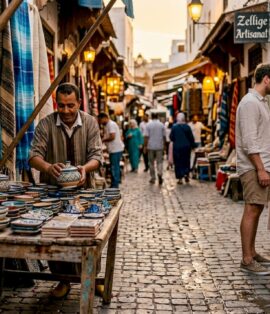
The medina souks are organized by craft: Souk Semmarine handles clothing and textiles, Souk Haddadine specializes in metalwork, and Souk des Teinturiers is the famous dyers’ quarter where wool hangs in vivid skeins above the street. This organization is practical knowledge. If you know which souk you want, you can navigate directly rather than wandering for an hour before finding leather goods or spice merchants.
A traditional hammam is not a spa in the Western sense. It is a structured sequence of steam, black soap scrub, and exfoliation that Moroccans treat as a weekly hygiene ritual. For travelers, it is one of the most direct cultural experiences available. Hammam el Bacha in the medina is a working local hammam that accepts tourists; Hammam de la Rose offers a more curated experience for those who prefer guidance. You can read a full breakdown of what to expect in this hammam guide before you book.
Jemaa el-Fna at dusk is its own category. Food stalls serving harira soup, merguez, and snail broth set up from around 6 p.m. Snake charmers, storytellers, and Gnawa musicians compete for space and attention. The square is chaotic, but it is also the living center of Marrakech’s social life and has been a UNESCO Intangible Cultural Heritage site since 2001.
Pro Tip: Visit the souks between 9 a.m. and noon on weekdays. Afternoons bring heat and heavier foot traffic, and Friday midday sees many stalls close for prayers.
What family-friendly and adventure activities are available near Marrakech?
The Agafay Desert, a rocky plateau about 30 kilometers from the city center, is the most accessible adventure zone for families. Unlike the Sahara, it requires no overnight travel. Activities include quad biking, camel riding, and hot air balloon flights, all bookable as half-day excursions. Camel rides timed around 4 p.m. Let you avoid the midday heat and catch the desert at its most photogenic, with the light turning the stone plateau amber before sunset.
For day trips, the two most popular options differ significantly in commitment and payoff:
- Ourika Valley: 60 kilometers from Marrakech, roughly a 90-minute drive. The valley follows a river into the Atlas foothills, passing Berber villages and terraced gardens. The waterfalls at the valley’s end require a 20-minute uphill walk on stone steps. Manageable for most children over six, and the scenery justifies the effort.
- Ouzoud Waterfalls: Three hours each way from Marrakech, but Morocco’s most dramatic waterfall system. Boat rides take you to the base of the 110-meter falls. Best as a full-day trip with an early start; not ideal for families with very young children given the drive length.
| Activity | Distance from Marrakech | Best for | Time needed |
|---|---|---|---|
| Agafay Desert quad biking | 30 km | Teens and adults | Half day |
| Ourika Valley hike | 60 km | Families with children | Full day |
| Ouzoud Waterfalls boat ride | 150 km | Adventure seekers | Full day |
| Hot air balloon over Atlas | Departs city edge | All ages | 3 to 4 hours |
Hot air balloon flights over the Atlas Mountains and the Haouz Plain depart at dawn and last roughly an hour in the air, with transfers and a post-flight breakfast adding another two hours. Most operators are certified and carry international insurance, but confirm this before booking. For families, this is often the single most memorable activity of the trip.
Pro Tip: Book adventure activities through a licensed local operator rather than through hotel concierges, who typically add a 20 to 30 percent markup. Topmoroccotravel’s Marrakech excursions page lists vetted options with transparent pricing.
How to plan your Marrakech itinerary for a balanced visit
A 3-day itinerary covers Marrakech’s key monuments, souks, and hammams without rushing. Three days is the minimum for first-time visitors who want to see the medina’s major sites, experience a hammam, and take at least one day trip. Extend to five or six days if you plan to add the Agafay Desert, Ourika Valley, and a slower pace through the souks.
A practical three-day structure looks like this:
- Day 1: Bahia Palace and Ben Youssef Madrasa in the morning, souk exploration after lunch, Jemaa el-Fna at dusk for dinner from the food stalls.
- Day 2: Jardin Majorelle at opening time, Le Jardin Secret mid-morning, hammam in the afternoon, Koutoubia Mosque gardens at sunset.
- Day 3: Full-day excursion to Ourika Valley or Agafay Desert, returning for a final evening in the medina.
Alternating high-energy souk visits with quieter garden and palace retreats is the single most effective pacing strategy for avoiding exhaustion. The medina is genuinely disorienting for first-time visitors. Its narrow alleys, persistent vendors, and sensory density are part of its appeal, but two consecutive hours inside the souks without a break will drain most travelers. Build in 30-minute garden or riad pauses between major sites.
Timing matters more in Marrakech than in most cities. Avoid the medina between noon and 3 p.m. from May through September, when temperatures regularly exceed 38°C (100°F). Morning light also makes photography significantly better at every site. During Ramadan, restaurants close during daylight hours, some riads reduce services, and the city’s rhythm shifts entirely toward evening. This is not a reason to avoid Ramadan travel. The night atmosphere during Ramadan is extraordinary. But you need to plan meals and activity timing differently.
Leave at least one half-day unscheduled. Marrakech rewards spontaneity. The best experiences often come from following a sound down an alley or accepting a shopkeeper’s invitation for mint tea without an agenda. Rigid itineraries miss the texture of the city.
Pro Tip: Check the Islamic calendar before booking. Ramadan dates shift by roughly 11 days each year. If your travel window overlaps, verify the dates and adjust your dining and activity plans accordingly.
Key takeaways
Marrakech rewards travelers who balance structured sightseeing with unscheduled time, pairing the medina’s intensity with gardens, hammams, and well-timed day trips.
| Point | Details |
|---|---|
| Start with historic sites | Bahia Palace, Ben Youssef Madrasa, and the Saadian Tombs cover the city’s architectural core. |
| Time garden visits early | Jardin Majorelle is best at 8:30 a.m. before crowds arrive and the calm disappears. |
| Pace souk visits carefully | Alternate medina exploration with quiet retreats to avoid sensory fatigue. |
| Choose day trips by energy level | Ourika Valley suits families; Ouzoud Waterfalls rewards those with a full day and stamina. |
| Check Ramadan dates before booking | Ramadan shifts dining availability and city rhythm in ways that require advance planning. |
Why Marrakech works best when you stop trying to see everything
After years of helping travelers plan Morocco trips, the pattern I see most often is this: people arrive with a list of 20 things to do in Marrakech and leave feeling like they missed half of them. The city punishes over-scheduling in a way that, say, Paris does not. The medina is not a museum you can walk through systematically. It is a living organism with its own pace, and the travelers who enjoy it most are the ones who surrender to that pace rather than fight it.
My honest recommendation is to hire a local guide for your first souk walk. Not because you cannot navigate it alone, but because a knowledgeable local guide provides context that transforms what you are seeing. The difference between watching a coppersmith work and understanding that his family has held that stall for four generations is the difference between tourism and travel. That context also makes bargaining feel less adversarial and more like a conversation.
The mistake I see most often is skipping the gardens. Travelers treat Jardin Majorelle as a photo stop and move on. Spending a full hour there, sitting by the fountain, watching the light change on the cobalt walls, is one of the most genuinely restorative things you can do in a city this intense. The same applies to the courtyard of a good riad. Your accommodation is part of the experience, not just a place to sleep. If you are still deciding where to stay, the hotels and riads guide from Topmoroccotravel covers the medina’s best options across every budget.
Marrakech is not a city you understand on the first visit. It is a city that gets better every time you return, because each visit you know where to slow down and what to skip. Give yourself permission to miss things. The city will still be there.
— Topmoroccotravel
Plan your Marrakech experience with TopMoroccoTravel.
Topmoroccotravel designs guided tours that take the logistical pressure off your Marrakech visit without removing the authenticity. Whether you want a medina walking tour with a licensed local guide, a full-day Agafay Desert excursion, or a six-day itinerary combining Marrakech with the Atlas Mountains and Essaouira, the team builds it around your pace and priorities. Families, couples, and solo travelers each get a different structure because the city genuinely requires different approaches for each group. Browse the Moroccan city tour options to see how cultural depth and comfort can work together, or explore the 6-day Marrakech holiday itinerary for a ready-made framework you can customize.
FAQ
What are the must-see places to visit in Marrakech?
Bahia Palace, Ben Youssef Madrasa, the Saadian Tombs, Jardin Majorelle, and Jemaa el-Fna are the five sites that define the city’s cultural and historic identity. Most first-time visitors can cover all five in two full days with early starts.
How many days do you need in Marrakech?
A 3-day trip covers the key monuments, souks, and a hammam without rushing. Add two more days if you plan to include a day trip to Ourika Valley or the Agafay Desert.
When is the best time to visit Marrakech?
March through May and September through November offer the most comfortable temperatures for sightseeing. Summer months exceed 38°C regularly, making midday activity in the medina genuinely difficult.
Is Marrakech suitable for families with young children?
Yes. The Agafay Desert, hot air balloon rides, Jardin Majorelle, and Ourika Valley are all accessible for families. The medina itself requires supervision in narrow souk alleys, but most major sites are manageable with children over five.
How does Ramadan affect travel in Marrakech?
During Ramadan, restaurants close during daylight hours and some riads reduce services. The evening atmosphere becomes festive and memorable, but travelers need to plan meals and activity timing around the fast schedule.


Comments are closed