




- Agadir seamlessly combines urban culture, natural scenery, and accessible outdoor activities, making it a versatile Moroccan destination.
- Visitors can explore historic sites like Kasbah Oufella, enjoy the vibrant Souk El Had, and relax on a family-friendly beach or take day trips to nearby parks and villages.
- Planning with guided tours enhances the experience, allowing travelers to immerse themselves in local culture, wildlife, and outdoor adventures efficiently.
Agadir is Morocco’s most visitor-ready coastal city, combining a wide Atlantic beach, a rebuilt modern center, and some of the country’s most accessible natural escapes within a single destination. The things to do in Agadir range from climbing the ruins of Kasbah Oufella for panoramic city views to surfing beginner-friendly waves at Taghazout, shopping the sprawling stalls of Souk El Had, and spotting endangered birds inside Souss-Massa National Park. Few Moroccan cities let you move so fluidly between urban culture and raw nature. This guide covers every category of Agadir attraction worth your time, with specific timing tips and day trip recommendations to help you build a trip that actually delivers.
What are the top things to do in Agadir for culture and history?
Agadir’s cultural identity is shaped by a single defining event: the 1960 earthquake that leveled the original city and killed approximately 15,000 people. The rebuilt city that rose from that disaster is modern and planned, but the ruins of Kasbah Oufella survived on a hilltop above the city and remain the most powerful historic site in the region. Standing at the kasbah, you get a full panoramic sweep of the bay, the marina, and the Atlas foothills. The contrast between the ruined walls and the modern city below tells the story of Agadir more directly than any museum exhibit.
Souk El Had: the city’s living marketplace
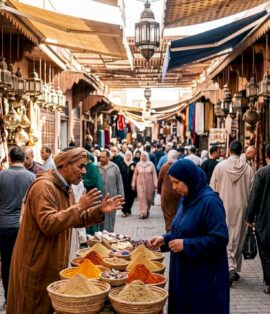
Souk El Had is not a curated tourist market. It is a working local institution where vendors sell spices, fresh produce, daily household goods, and handmade crafts side by side. The scale is significant. You will find everything from argan oil and saffron to leather sandals and ceramic tagines, all at prices that reflect local demand rather than tourist markup. The market operates seven days a week, which is unusual for Morocco, and draws a genuinely mixed crowd of residents and visitors.
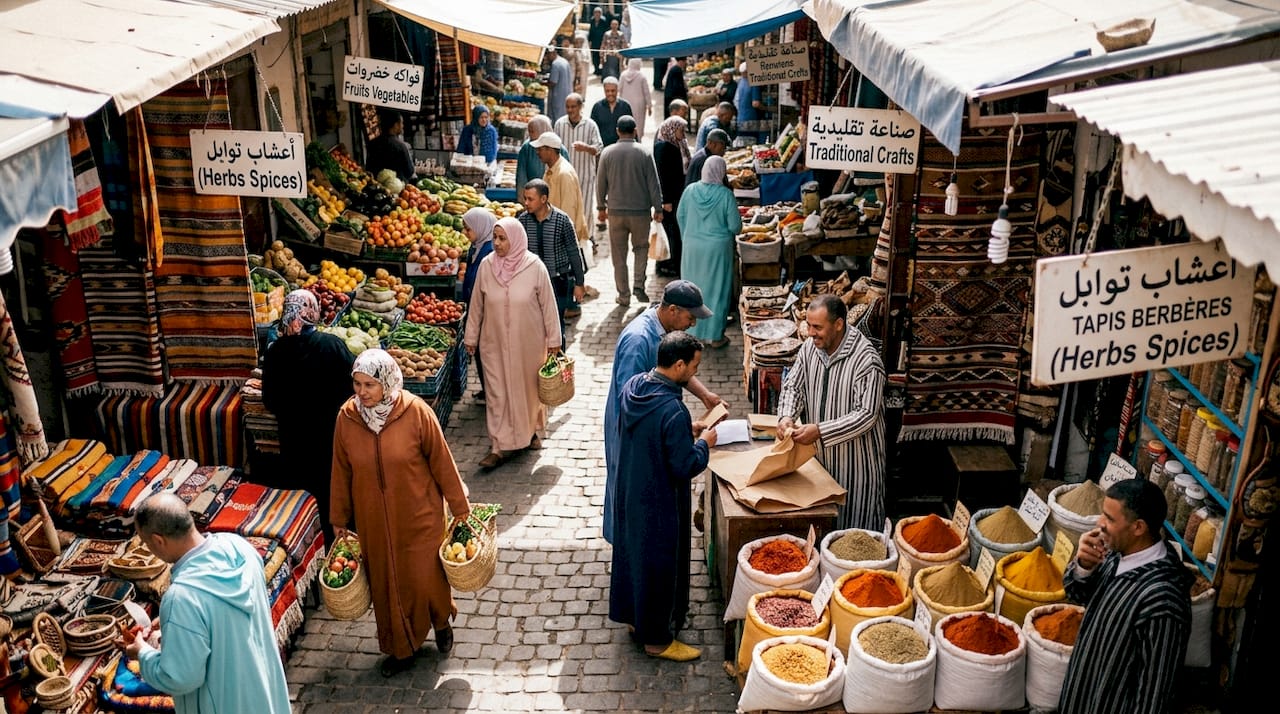
Pro Tip: Visit Souk El Had in the morning for a calmer, cooler experience with more vendor availability. Late afternoon visits bring more energy and crowd density, which suits travelers who want to absorb the full sensory atmosphere but can feel overwhelming in summer heat.
The Musée du Patrimoine Amazigh, located on Avenue Hassan II in the city center, is a compact but well-organized museum dedicated to Amazigh (Berber) culture. Its collections of jewelry and crafts document the artistic traditions of the Souss region in particular, with silver work and woven textiles that you will not find explained this clearly anywhere else in the city. Admission is inexpensive and a visit takes about 45 minutes. It is the right context-setter before you start shopping for crafts at the souk.
Jardin de Olhão, the city’s main public garden, offers a quieter counterpoint to the market energy. Named after Agadir’s Portuguese twin city, the garden features midcentury Moroccan landscape design with tiled fountains, shaded paths, and a small aviary. It is a genuine local gathering space rather than a tourist attraction, which makes it worth an hour of your afternoon.
- Kasbah Oufella: Best visited at sunset for the light and the view. The climb takes about 20 minutes on foot from the parking area.
- Souk El Had: Allocate two hours minimum. Bring cash in small denominations and be prepared to negotiate on crafts.
- Musée du Patrimoine Amazigh: Pairs well with a morning at the souk. The museum gives vocabulary to what you see in the market stalls.
- Jardin de Olhão: Free entry. Best on weekday afternoons when families use the space and the garden is at its most authentic.
How can visitors enjoy outdoor and beach activities in Agadir?
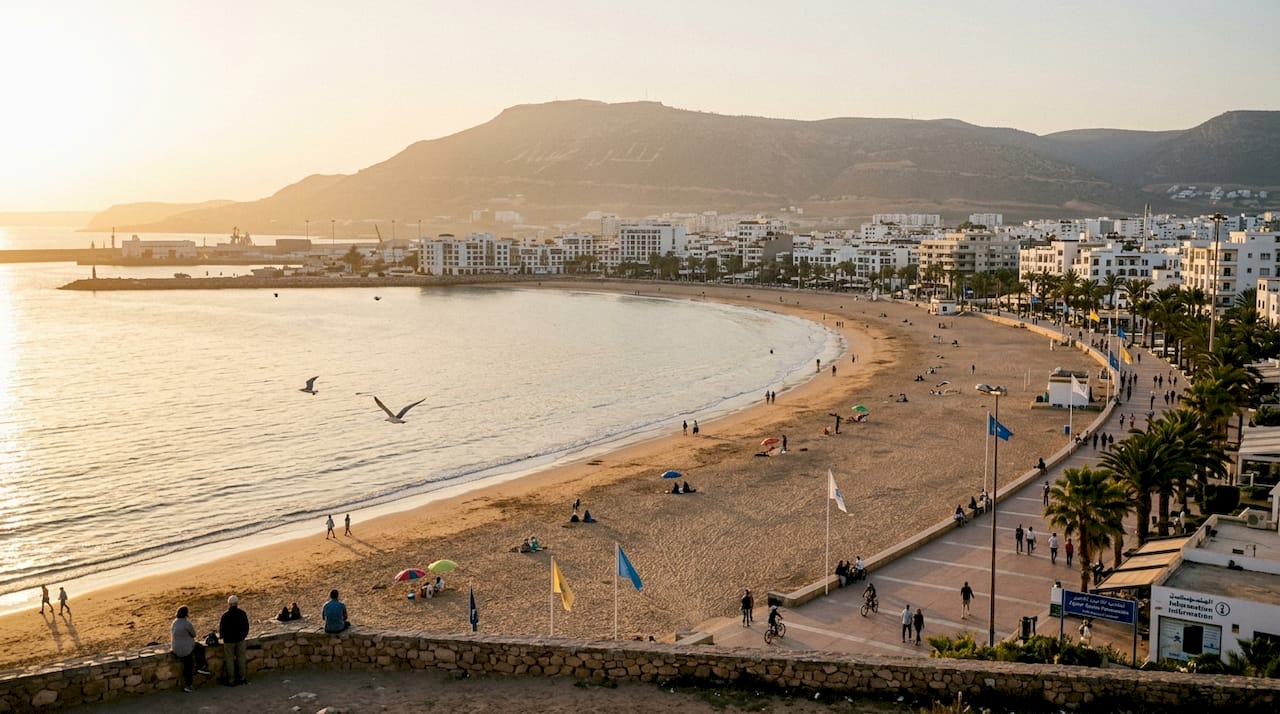
Agadir Beach is a 10-kilometer crescent of sand with calm, lifeguarded waters and consistent sunshine for more than 300 days per year. The beach is family-friendly by design, with organized rows of rental sunbeds and umbrellas, shower facilities, and a promenade lined with cafés and juice bars running its full length. The water temperature stays comfortable from April through October, and the Atlantic swell is gentle enough for children and non-swimmers along most of the shoreline. This is one of the best outdoor activities Agadir offers for travelers who want low-effort, high-reward relaxation.
The Corniche promenade is the social spine of the beach zone. Walking its full length takes about 40 minutes at a relaxed pace, passing restaurants, ice cream vendors, and open-air cafés where you can sit with a mint tea and watch the Atlantic. The promenade is most active in the early evening when local families come out after the heat of the day breaks.
For travelers who want more than sunbathing, here are the top active options along and near the coast:
- Surfing at Taghazout and Tamraght: These two villages sit 20 kilometers north of Agadir and are Morocco’s most established surf destinations. Taghazout offers consistent point breaks suitable for intermediate and advanced surfers, while Tamraght has gentler beach breaks that work well for beginners taking lessons. Surf schools in both villages offer half-day and full-day instruction packages. You can reach either village by grand taxi from Agadir’s city center in under 30 minutes.
- Boat tours from the marina: Agadir’s marina is a full-service facility with daily departure options for fishing excursions, dolphin-watching tours, and sunset cruises along the coast. Dolphin sightings are common between April and October. Half-day fishing trips are popular with families and require no prior experience.
- Stand-up paddleboarding and jet skiing: Rental operators along the beach offer both activities at fixed hourly rates. The calm inshore waters make paddleboarding accessible for first-timers, and the flat water near the marina is the safest zone for jet ski rentals.
- Beach volleyball and football: Organized courts and informal pitches run the length of the beach. Local pickup games happen most evenings near the central beach access points, and visitors are generally welcomed.
- Cycling the Corniche: Several rental shops near the beach entrance offer bicycles and e-bikes by the hour. The flat promenade path is ideal for a morning ride before the heat peaks.
For a broader look at Morocco’s beach options beyond Agadir, the Atlantic coast has several alternatives worth considering if you are extending your trip.
Which day trips near Agadir are worth your time?
The area surrounding Agadir contains some of the most geographically varied terrain in Morocco, and the best day trips each deliver a completely different experience from the city itself.
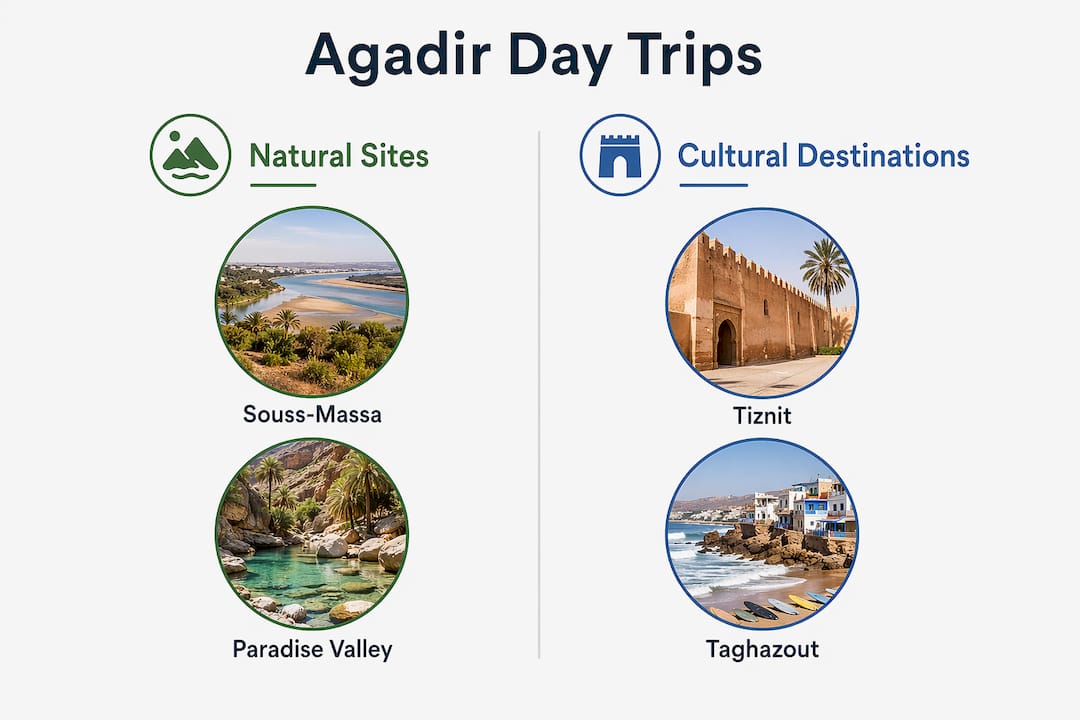
| Destination | Distance from Agadir | Highlight | Best For |
|---|---|---|---|
| Souss-Massa National Park | 40 km south | Northern bald ibis colony, coastal dunes | Wildlife, birdwatching |
| Paradise Valley | 30 km northeast | Natural pools, palm gorges, hiking | Swimming, hiking |
| Taghazout | 20 km north | Surf breaks, bohemian village culture | Surfing, relaxed day out |
| Tiznit | 90 km south | Berber silver jewelry, medina walls | Crafts, traditional culture |
| Taroudant | 80 km east | Intact medieval medina, spice souks | History, architecture |
Souss-Massa National Park is the most ecologically significant site near Agadir. Established in 1991 and covering 33,800 hectares, it protects Atlantic coastal dunes, estuaries, argan forests, and the last known wild colony of the critically endangered Northern bald ibis. That single fact makes it one of the most important conservation sites in North Africa. Plan your visit for early morning when the ibis are most active and the light is best for photography. The park also hosts flamingos, ospreys, and over 270 recorded bird species, making it a serious destination for birdwatchers.
Paradise Valley sits in the Anti-Atlas foothills 30 kilometers from the city and offers a landscape that feels entirely disconnected from the coast. The valley features a series of natural rock pools fed by a seasonal river, shaded by date palms and oleander. Swimming in the pools is the main draw, but the hiking trails through the gorge are genuinely scenic and accessible to most fitness levels. The drive through the argan forest on the way there is itself worth the trip.
Tiznit, 90 kilometers south, is the right destination if you want to buy authentic Berber silver jewelry without tourist-market pricing. The town has been a silversmithing center for centuries, and the medina’s jewelry souk operates at a pace and scale that Agadir’s market cannot match for this specific craft. The town walls and central spring are also worth an hour of exploration.
Pro Tip: For surfing in Morocco beyond Agadir’s immediate coastline, Taghazout offers the most consistent conditions between October and April. Booking a surf lesson in advance during peak season is worth it since the best schools fill up quickly.
What local food and cultural experiences define Agadir?
Agadir’s food scene is anchored by the Atlantic, and the harbor fish market is the clearest expression of that. Fresh catches arrive daily, and several informal restaurants adjacent to the port will grill your selection to order at prices that undercut any restaurant on the Corniche. Sardines, sea bass, and red mullet are the local staples. Eating here at lunch, surrounded by fishing boats and working dock activity, is one of the most authentic Agadir sightseeing experiences available without buying a tour ticket.
The souk area around Souk El Had generates its own street food culture. Look for vendors selling msemen (layered flatbread with honey or cheese), harira soup in the early morning, and fresh-squeezed orange juice from carts that appear throughout the day. These are not tourist concessions. They are the same food local workers eat between shifts.
- Argan oil products: The Souss region produces the majority of Morocco’s argan oil, and Agadir is the best place in the country to buy it directly from cooperatives. Women’s argan cooperatives near the city sell culinary and cosmetic grades at transparent prices. Buying from a cooperative rather than a souvenir shop supports the producers directly.
- Hammam spa experience: A traditional Moroccan hammam involves a steam bath, black soap scrub, and full-body exfoliation. Many spa facilities in Agadir offer this as a standalone treatment or as part of a longer wellness package. It is a genuine cultural practice, not a tourist invention, and the physical effect after a day of sightseeing is significant.
- Moroccan craft shopping: Beyond argan oil, the best souvenirs from Agadir are thuya wood objects (carved from a local tree with a distinctive grain), hand-woven Berber rugs from the Atlas region, and hand-painted ceramic pieces. The Musée du Patrimoine Amazigh’s gift shop sells authenticated pieces at fixed prices, which is useful as a reference point before you negotiate at the souk.
- Mint tea ritual: Accepting tea in a shop or home is a social contract in Morocco. If a vendor offers you tea, sitting down for the ritual is not an obligation to buy. It is a genuine expression of hospitality, and refusing it abruptly is considered impolite.
Pro Tip: For deeper cultural immersion in Morocco, learning five words of Darija (Moroccan Arabic) before your trip changes how vendors and locals interact with you. “Shukran” (thank you) and “Bsaha” (to your health, said before eating) open more doors than any guidebook phrase.
Key takeaways
Agadir rewards travelers who combine its beach and city life with at least one or two day trips into the surrounding natural landscape.
| Point | Details |
|---|---|
| Kasbah Oufella is the top historic site | Visit at sunset for panoramic views and direct connection to the 1960 earthquake history. |
| Souk El Had timing changes the experience | Morning visits are calmer and cooler; late afternoon brings energy and crowds. |
| Souss-Massa National Park is ecologically unique | The park protects the last wild colony of the Northern bald ibis across 33,800 hectares. |
| Taghazout is 20 km north for surfing | Beginners use Tamraght’s beach breaks; intermediate and advanced surfers prefer Taghazout’s point breaks. |
| Local food is best at the harbor and souk | The port fish market and souk street vendors offer the most authentic and affordable meals in the city. |
What I’ve learned from planning Agadir trips
After helping dozens of travelers plan their time in Agadir through Topmoroccotravel, one pattern stands out clearly: the visitors who leave most satisfied are the ones who resist spending every day on the beach. The beach is excellent. It is also the easiest thing to do in Agadir, which means it tends to expand to fill whatever time you give it.
The travelers who get the most from the city are the ones who treat the beach as a reward structure. Spend the morning at Souk El Had or the Musée du Patrimoine Amazigh, take a late lunch at the harbor, and then use the afternoon for the beach and Corniche. That rhythm gives you cultural substance in the morning when your energy is high and relaxation in the afternoon when the heat peaks.
The day trip question is where most itineraries go wrong. People either skip day trips entirely or try to pack too many into a short visit. My honest recommendation: if you have four days in Agadir, dedicate one full day to Souss-Massa National Park and Paradise Valley as a combined excursion. They are in different directions, so you cannot do both in a single loop, but a local guide can help you prioritize based on the season and your interests. Topmoroccotravel’s Morocco travel itineraries include Agadir-specific day trip combinations that account for this.
The other thing I would tell any traveler: do not underestimate Tiznit. Most people skip it because it requires 90 minutes of driving each way. The silversmithing tradition there is genuinely different from anything you will find in Agadir’s markets, and the medina is calm in a way that Marrakech and Fes never are. If you care about crafts and authentic market culture, it is worth the drive.
— Topmoroccotravel.com
Plan your Agadir visit with Topmoroccotravel
Topmoroccotravel designs curated city tours that combine Agadir’s urban highlights with guided excursions to Souss-Massa, Paradise Valley, and the surf villages north of the city. Every itinerary is built around your travel dates, group size, and specific interests, whether that means a wildlife-focused day trip, a deep dive into Amazigh craft culture, or a surf lesson at Taghazout followed by a hammam session in the evening. Local guides handle logistics, timing, and access so you spend your time experiencing Agadir rather than organizing it. Browse the full range of guided tour options to find the format that fits your trip.
FAQ
What is the best time of year to visit Agadir?
Agadir’s climate is mild year-round, but April through October offers the best beach conditions with consistent sunshine and warm water temperatures. Surfers targeting Taghazout should plan for October through April when Atlantic swells are most consistent.
How far is Taghazout from Agadir?
Taghazout sits 20 kilometers north of Agadir and is reachable by grand taxi in under 30 minutes. The village offers surf lessons for all skill levels and is the most popular day trip for active travelers.
Is Souk El Had worth visiting in Agadir?
Souk El Had is one of the most authentic market experiences in southern Morocco, operating seven days a week with a genuine mix of local vendors and tourist goods. Morning visits offer a calmer pace; late afternoon brings more energy and crowd activity.
What wildlife can you see at Souss-Massa National Park?
Souss-Massa National Park hosts the last known wild colony of the critically endangered Northern bald ibis, along with flamingos, ospreys, and over 270 recorded bird species across its 33,800 hectares of coastal and forest habitat.
Do I need a guide to explore Agadir’s attractions?
Most city-center attractions like Kasbah Oufella, Souk El Had, and the Corniche are accessible independently. For day trips to Souss-Massa or Paradise Valley, a local guide significantly improves the experience by handling transport, entry logistics, and wildlife spotting.
Comments are closed