




- Travelers to Morocco should ensure their passports are valid for at least six months beyond their departure date to avoid denied boarding.
- Respect cultural norms by dressing modestly, using your right hand for transactions, and asking permission before photographing locals.
- Visiting during spring or autumn offers the most comfortable weather, while safety precautions and health preparations enhance the overall experience.
Visiting Morocco means stepping into a country where ancient medinas, Saharan dunes, and Atlantic coastlines coexist within a single border. What to know before visiting Morocco comes down to five practical pillars: valid passport and entry rules, cultural etiquette, personal safety, health preparation, and seasonal timing. Get these right, and Morocco rewards you with some of the most memorable travel experiences on earth. Miss them, and you risk denied boarding, unintentional offense, or a trip cut short by preventable illness.
What are the visa and passport requirements to enter Morocco?
Morocco allows visa-free entry for citizens of the United States, the United Kingdom, the European Union, Canada, and dozens of other nationalities for stays of up to 90 days. That 90-day allowance is not a formal visa. It is a border police stamp issued on arrival, which means no pre-trip application, no embassy appointment, and no fee. This distinction matters because travelers sometimes assume the stamp is negotiable or extendable. It is not.
The single most overlooked rule is passport validity. Airlines strictly enforce the requirement that your passport must be valid for at least six months beyond your planned departure date from Morocco. A passport that expires three months after your trip ends will get you denied at check-in, not at the Moroccan border. Renew early. For full details on current entry rules, Topmoroccotravel’s visa requirements guide covers airport, land, and sea border procedures.
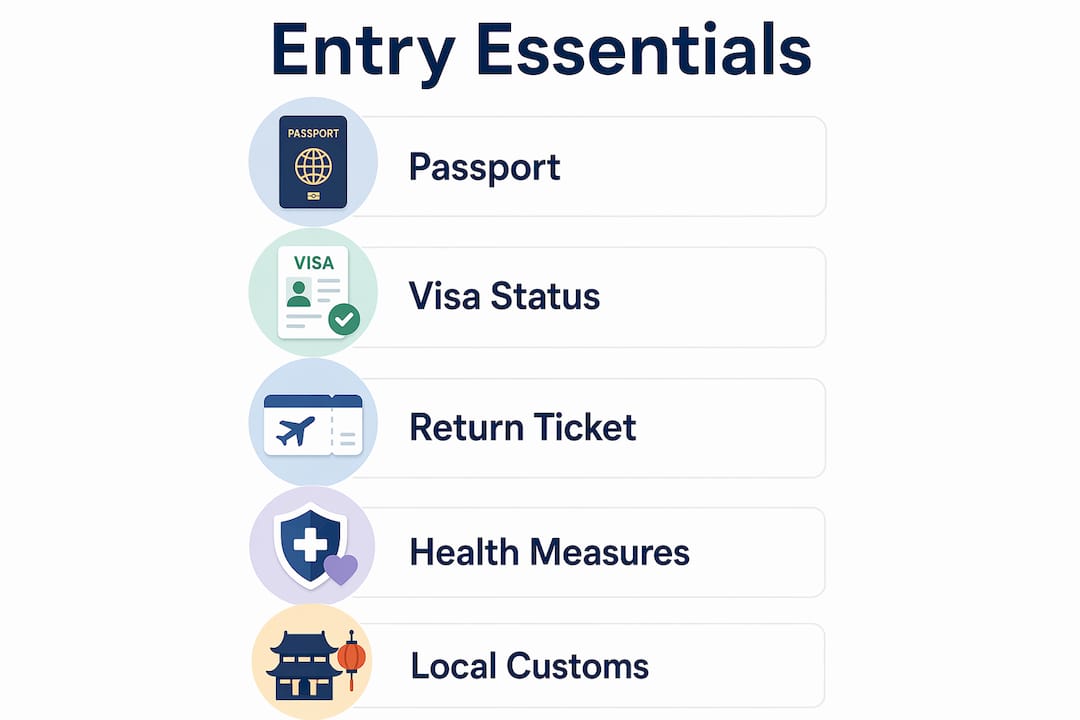
Key entry requirements at a glance:
- Passport valid for at least 6 months beyond your departure date
- A return or onward ticket strongly recommended and sometimes requested at the border
- Proof of accommodation for your first night is occasionally asked for at airports
- Overstaying the 90-day stamp can result in fines, detention, or a future entry ban
- Land border crossings from Algeria are currently closed; the Ceuta and Melilla crossings from Spain operate under separate rules
Pro Tip: Check your passport expiration date the moment you book flights, not the week before departure. Airlines have denied boarding to travelers whose passports were valid but fell short of the six-month rule.
| Entry scenario | What to prepare |
|---|---|
| Visa-free nationalities | Valid passport (6-month rule), return ticket, accommodation proof |
| Nationalities requiring a visa | Apply at Moroccan consulate before travel; check current list |
| Land border entry (Spain/Ceuta) | Separate crossing rules apply; confirm current status before travel |
| Overstay risk | Fines and potential entry ban on future visits |
How does Moroccan culture and etiquette shape traveler behavior?
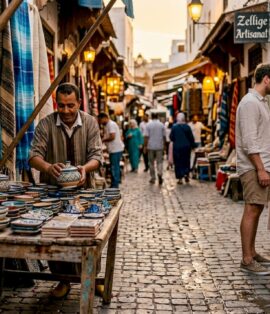
Modest dress is the single most visible sign of respect you can show in Morocco. Covering shoulders and knees applies to all genders, and the expectation intensifies in rural areas, small towns, and religious sites like mosques and shrines. In Marrakech’s Djemaa el-Fna square or Fez’s medina, you will see tourists in shorts without incident, but the respectful standard remains. Think linen trousers, loose shirts, and a scarf you can wrap quickly. This is not about wearing a djellaba. It is about cultural sensitivity that locals notice and appreciate.
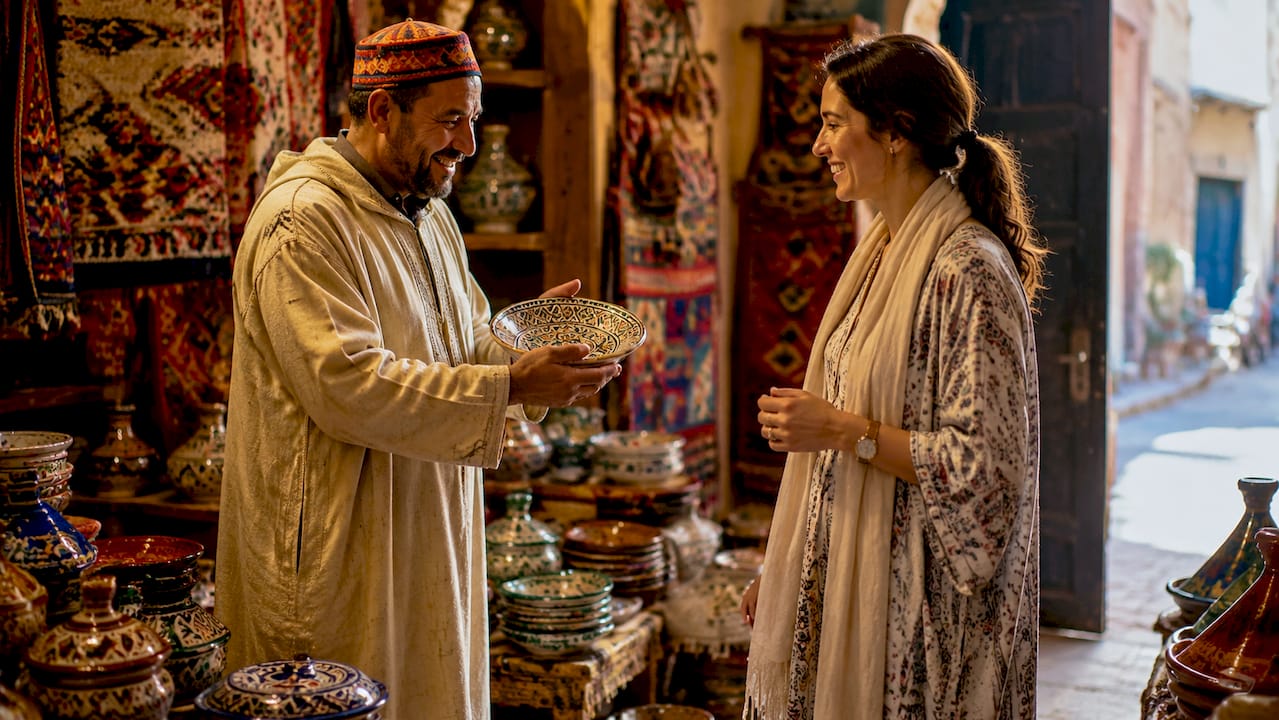
The right-hand rule is equally non-negotiable. Using your right hand for eating, handing over money, and greeting people is a sign of respect. The left hand is traditionally considered unclean in Moroccan culture. Violating this in a home or at a shared meal causes genuine discomfort, known locally as “hshuma” (shame). Practice the habit before you arrive.
Photography is a common friction point. Always ask before photographing people, especially women, older residents, and anyone in traditional dress. A simple “photo?” with a smile goes a long way. Some people will ask for a small payment in return, which is entirely reasonable.
“Hospitality in Morocco is not a performance. When a shopkeeper or family invites you for mint tea, the polite response is to accept at least once. Refusing repeatedly reads as cold. Accepting opens a genuine conversation.”
Cultural norms that affect daily traveler behavior:
- Public displays of affection between couples are frowned upon, even for married tourists
- Discussing politics, the monarchy, or religion with strangers is best avoided
- During Ramadan, eating, drinking, and smoking in public during daylight hours is disrespectful and can draw negative attention
- Alcohol is available in licensed hotels, restaurants, and some supermarkets, but drinking in public spaces or near mosques is not acceptable
- Greet shopkeepers and hosts with “Salam alaikum” before any transaction. It signals respect and almost always improves the interaction
Pro Tip: Pack a lightweight scarf or pashmina in your day bag. It doubles as a shoulder cover for mosques, a sun shield in the desert, and a polite gesture when entering conservative neighborhoods.
What safety and security measures should travelers take in Morocco?
Morocco is considered one of Africa’s safer tourist destinations, but travelers should exercise a high degree of caution due to terrorism risks and opportunistic crime in certain areas. The UK Foreign Office, the US State Department, and Canada’s travel advisory system all rate Morocco as a destination requiring heightened awareness rather than avoidance. That is a meaningful distinction. Millions of tourists visit safely every year.
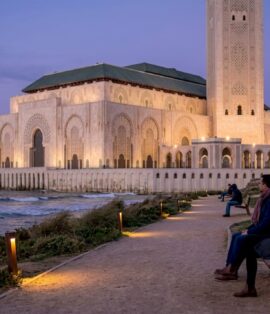
The areas that warrant genuine caution are specific. Avoid non-essential travel to the Western Sahara region and areas near the Algerian border. Within cities, the main risks are petty theft, scams targeting tourists, and aggressive touts in medinas. Marrakech, Fez, Chefchaouen, and Casablanca are all heavily visited and generally safe with standard precautions.
Practical safety steps for every traveler:
- Keep your passport and a copy of your travel insurance in a hotel safe. Carry a color photocopy in your bag instead.
- Use licensed petit taxis (clearly marked) or ride-hailing apps like Careem rather than unmarked vehicles.
- Agree on taxi fares before getting in, or insist the meter is used. Unmetered rides are a common overcharge tactic.
- Avoid displaying expensive cameras, jewelry, or phones in crowded souks and markets.
- Book accommodation in well-reviewed riads or hotels with 24-hour reception, especially for your first night.
Solo women travelers face a specific set of challenges in Morocco. Street harassment is real and documented, but it is manageable. Dressing modestly, walking with purpose, avoiding poorly lit alleys after dark, and responding to unwanted attention with firm silence rather than engagement are the most effective strategies. Many solo women travel Morocco safely every year using these precautions. For a deeper breakdown of safety by city and situation, Topmoroccotravel’s Morocco safety guide is worth reading before you finalize your itinerary.
Pro Tip: Download offline maps of Marrakech or Fez on Google Maps before you land. Getting lost in a medina is part of the experience, but having a fallback navigation tool prevents the kind of disorientation that makes tourists easy targets.
How to prepare health-wise for a trip to Morocco?
Book a personalized travel health appointment at least six weeks before your departure. Six weeks is the minimum because some vaccine courses require multiple doses spaced weeks apart, and your doctor needs time to tailor recommendations to your specific itinerary. A traveler spending two weeks in Marrakech and Essaouira needs different advice than one heading into rural Atlas Mountain villages or the Draa Valley.
Vaccinations and health precautions to discuss with your doctor:
- Routine vaccines: measles, mumps, rubella (MMR), tetanus, diphtheria, and pertussis
- Recommended travel vaccines: Hepatitis A (food and water transmission) and Hepatitis B (blood and body fluid exposure)
- Typhoid: recommended for travelers eating outside of major hotels
- Rabies: relevant if you plan extended rural travel or animal contact
- COVID-19: check current entry requirements and your own vaccination status before travel
Food and water safety is the most common health issue tourists face. Tap water in Morocco is technically treated but not reliably safe for travelers with no prior exposure. Drink bottled water, avoid ice in drinks outside of upscale hotels, and peel all fruit yourself. Street food from busy, high-turnover stalls is generally safer than food sitting in the sun at quiet vendors.
Insect-borne risks are low in Morocco compared to sub-Saharan Africa, but sandfly fever and West Nile virus are present in some regions. A DEET-based repellent and long sleeves at dusk cover most of the risk. Tailored health consultations are particularly important for travelers doing rural trekking, visiting farms, or spending time near livestock, where disease exposure profiles change significantly.
Pro Tip: Pack oral rehydration salts, a broad-spectrum antibiotic (prescribed by your doctor), and antidiarrheal medication. Traveler’s diarrhea affects a significant percentage of first-time visitors to North Africa, and having treatment on hand means one bad meal does not ruin three days of your trip.
What is the best time to visit Morocco for comfortable weather?
Spring and autumn are the ideal seasons for visiting Morocco. March through May and September through November deliver moderate temperatures across most of the country, manageable crowds compared to peak summer, and the best conditions for both city sightseeing and desert excursions. For a full seasonal breakdown, TopMoroccoTravel’s best time to visit Morocco guide maps weather patterns by region and activity type.
Summer (June through August) is the most challenging season for inland travel. Fez and Marrakech regularly exceed 40°C (104°F) in July and August. The Sahara is even hotter. Coastal cities like Essaouira and Agadir benefit from Atlantic breezes and stay significantly cooler, making them viable summer destinations. Winter (December through February) brings cold nights in the mountains and desert, mild temperatures on the Atlantic coast, and some of the best stargazing conditions in the Sahara.
| Season | Temperature range | Best for |
|---|---|---|
| Spring (March–May) | 18–28°C (64–82°F) | City tours, trekking, desert trips |
| Summer (June–August) | 30–42°C inland | Coastal cities, Essaouira, Agadir |
| Autumn (September–November) | 18–30°C (64–86°F) | Desert excursions, date-harvest festivals |
| Winter (December–February) | 8–20°C (46–68°F) | Sahara stargazing, Atlas Mountain snow |
Two seasonal events are worth planning around specifically. The Almond Blossom Festival in Tafraoute (February) turns the Anti-Atlas mountains pink and white and draws relatively few international tourists. The date harvest in the Draa Valley (October) is one of the most visually striking agricultural events in North Africa. Both offer authentic cultural experiences that most Morocco travel guides underemphasize.
Key takeaways
Preparing for Morocco means mastering five areas: entry rules, cultural respect, personal safety, health readiness, and seasonal timing, all of which directly determine the quality of your experience.
| Point | Details |
|---|---|
| Passport validity | Your passport must be valid for at least 6 months beyond your departure date, or airlines will deny boarding. |
| Cultural dress code | Cover shoulders and knees in all non-resort settings; carry a scarf as a daily travel item. |
| Safety by region | Morocco is generally safe for tourists; avoid the Western Sahara and Algeria border areas. |
| Health preparation | Book a travel health appointment 6 weeks before departure to tailor vaccines to your itinerary. |
| Optimal travel season | Spring (March–May) and autumn (September–November) offer the best weather for most Morocco activities. |
Why Morocco rewards the traveler who prepares
After years of working with travelers heading to Morocco, the pattern is consistent. The visitors who struggle are not the ones who chose the wrong city or booked the wrong hotel. They are the ones who arrived without understanding that Morocco operates on its own cultural logic, and that logic is not difficult to learn. It just requires some attention before you land.
The most common oversight I see is treating cultural etiquette as optional. Travelers assume that because Morocco is a tourist-friendly country, local customs are flexible. They are not. A man who extends his hand to greet a conservative Moroccan woman, or a couple who kisses in a medina, or a tourist who eats a sandwich in public during Ramadan are not being adventurous. They are being careless. The consequences are usually just awkwardness, but they close doors that would otherwise open.
What I find genuinely underrated is how much a guided local experience changes the trip. Not because Morocco is too difficult to navigate independently, but because a knowledgeable local guide turns a confusing medina into a story. They know which carpet seller is honest, which riad serves the best bastilla, and which mountain road is worth the detour. Flexibility matters too. The travelers who build buffer days into their itinerary, who do not panic when a bus is two hours late or a souk is closed for a local holiday, consistently report better experiences than those running a tight schedule.
Morocco is not a destination that punishes curiosity. It rewards it. But curiosity works best when it is paired with preparation.
— TopMoroccoTravel.com
Plan your Morocco trip with expert guidance
Morocco’s entry rules, cultural norms, and regional diversity can feel like a lot to absorb before your first visit. TopMoroccoTravel specializes in removing that friction. Whether you are planning a medina walk through Fez, a Sahara overnight in Merzouga, or a multi-city cultural circuit, the team builds itineraries that account for seasonal timing, local customs, and your personal travel style. Read the full breakdown of why guided tours work best in Morocco, or explore the range of city tour concepts that blend luxury with authentic local access. Every tour includes on-the-ground support so you spend your time experiencing Morocco, not troubleshooting it.
FAQ
Do US citizens need a visa to visit Morocco?
US citizens do not need a visa for stays up to 90 days. They receive a border stamp on arrival, provided their passport is valid for at least six months beyond their planned departure date.
What should I pack for Morocco?
Pack lightweight, modest clothing that covers shoulders and knees, a scarf for mosques and conservative areas, bottled water for the first day, and a basic travel health kit including oral rehydration salts and antidiarrheal medication.
Is Morocco safe for solo female travelers?
Morocco is manageable for solo women travelers who dress modestly, walk confidently, and avoid poorly lit areas at night. Street harassment exists but is significantly reduced with these precautions in place.
When is the best time to visit Morocco?
Spring (March through May) and autumn (September through November) are the best seasons for comfortable temperatures and sightseeing across most of the country, including the Sahara and imperial cities.
Can I drink tap water in Morocco?
Tap water in Morocco is treated but not reliably safe for travelers without prior exposure. Drink bottled water, avoid ice outside of upscale hotels, and peel all fruit yourself to reduce the risk of stomach illness.
Comments are closed