




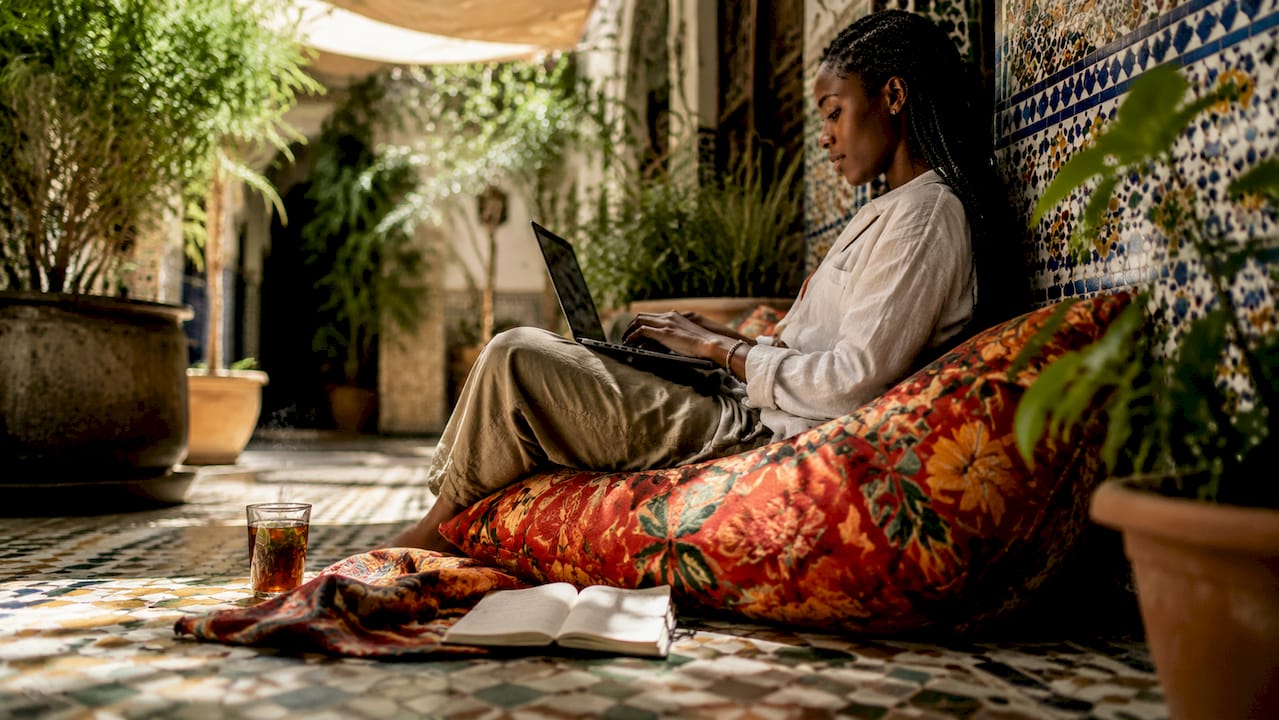
- Morocco is an affordable and culturally rich destination for digital nomads, offering visa-free entry for over 60 nationalities for 90 days.
- Staying longer than 183 days can trigger tax obligations, and reliable internet varies by location, making preparation essential.
- The best cities depend on your priorities, with Casablanca emphasizing productivity and Marrakech highlighting culture and community.
Morocco is one of the most affordable and culturally rich bases for remote workers in the world today. The Morocco Digital Nomad Guide covers everything you need to make it work: visa rules, real cost breakdowns, the best cities, connectivity realities, and how to engage with local culture without stepping wrong. Citizens of over 60 nationalities enter visa-free for 90 days; coworking spaces like The Moroccan Co. operate in Marrakech and Casablanca; and monthly living costs run well below most European or Southeast Asian nomad hubs. Morocco rewards the prepared and punishes the unprepared. This guide gets you ready.
What are the visa and legal rules for digital nomads in Morocco?
Morocco does not offer a formal digital nomad visa. That is the single most important fact to understand before you book a flight. The good news is that over 60 nationalities qualify for a 90-day visa-free entry on arrival, which covers most American, European, and Australian passport holders. You enter as a tourist and work remotely on your foreign employer’s payroll. No special permit is required for that arrangement.
The 90-day window resets after leaving and re-entering the country, though border officers have discretion. Many nomads do a short trip to Spain or Portugal and return. This works in practice, but it is not a guaranteed legal right. Plan for it, but have a backup.
Staying longer than 183 days in a calendar year triggers Moroccan tax residency, which means you could owe income tax on your worldwide earnings. That is a serious consideration if you plan to base yourself in Morocco for six months or more. Consult a local tax advisor before crossing that threshold.
Morocco’s labor code also lacks dedicated remote work legislation. If you work for a Moroccan company remotely, that company must handle compliance through contract amendments and internal policies. If you work for a foreign employer, your legal exposure is lower, but you should still document your arrangement clearly.
Pro Tip: Keep digital copies of your employment contract, proof of foreign income, and your return ticket. Border officers occasionally ask for evidence that you are not seeking local employment.
- Citizens of the US, UK, EU member states, Canada, and Australia qualify for 90-day visa-free entry
- No dedicated digital nomad visa exists
- Stays beyond 183 days may trigger tax residency obligations
- Long-term stays require a residence permit obtained through local authorities
- Remote workers employed by foreign companies face lower legal risk than those contracting with Moroccan firms
How much does it cost to live and work remotely in Morocco?
Median monthly expenses for digital nomads in Morocco run about $1,118, covering rent, utilities, food, transport, and a coworking pass. That figure sits comfortably below comparable nomad hubs like Lisbon, Bali, or Chiang Mai. The range is wide: a budget-conscious nomad can get by on $600 per month, while a mid-tier lifestyle with a private apartment and regular restaurant meals runs $1,600 or more.
Rent is the biggest variable. A furnished studio in Marrakech’s Gueliz district costs $300–$500 per month. A traditional riad in the medina runs $400–$700 and often includes more character than a modern apartment but has less reliable Wi-Fi. Casablanca commands higher rents, with decent apartments starting around $500–$700. Essaouira and Taghazout are cheaper, with furnished rooms available for $200–$400.
Pro Tip: Book your first two weeks in a short-term rental, then negotiate a monthly rate directly with the landlord. Monthly rates in Morocco are often 30–40% lower than weekly rates on platforms like Airbnb.
City-by-city cost comparison
| City | Monthly rent (studio) | Coworking pass | Avg. monthly total |
|---|---|---|---|
| Marrakech | $350–$500 | $80–$120 | $900–$1,400 |
| Casablanca | $500–$700 | $100–$150 | $1,100–$1,700 |
| Essaouira | $200–$350 | $50–$80 | $600–$1,000 |
| Taghazout | $200–$350 | $40–$70 | $550–$950 |
| Agadir | $300–$450 | $60–$100 | $800–$1,200 |
Food costs are genuinely low. A sit-down meal at a local restaurant runs $3–$15. 6. Street food like msemen flatbread or harira soup costs under $1. Cooking at home from a local market cuts your food budget to $150–$200 per month. Transport is cheap too: Marrakech petite taxis charge $1–$2 for most city trips, and intercity buses on CTM or Supratours cost $10–$20 for a four-hour route.
- Coworking day passes: $8–$15
- SIM card with 20GB data: $10–$15 per month
- Utilities (electricity, water, gas): $30–$60 per month
- Coffee at a work-friendly cafe: $1.50–$3
What are the best cities for digital nomads in Morocco?
Marrakech, Casablanca, Essaouira, Taghazout, and Agadir are the five cities that define the remote work scene in Morocco. Each serves a different type of nomad. Choosing the wrong city for your work style is the most common mistake first-timers make.
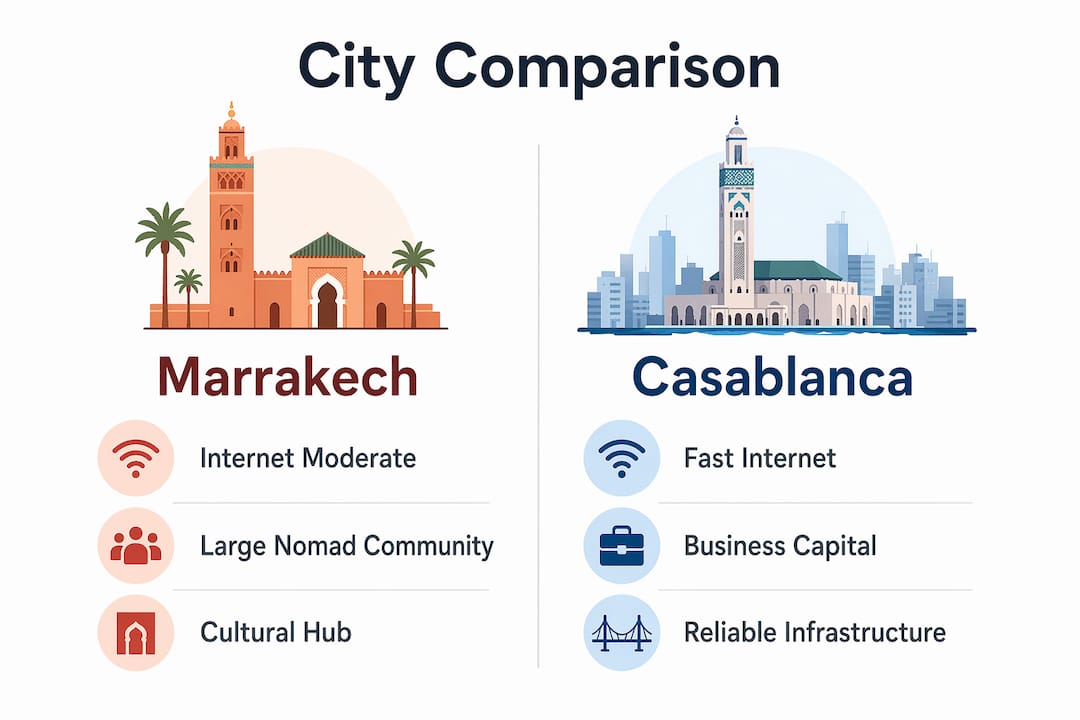
Marrakech is the most internationally visible hub. The Gueliz and Hivernage neighborhoods offer modern apartments, reliable fiber internet, and a growing number of coworking spaces. The medina is atmospheric but can be noisy, and connectivity there is inconsistent. Marrakech suits nomads who want a large expat community, good restaurants, and easy airport access via Marrakech Menara Airport.
Casablanca is Morocco’s business capital. It has the most stable infrastructure, the fastest average internet speeds, and the largest selection of coworking spaces. The Maarif and Gauthier neighborhoods are the best bases. Casablanca is less charming than Marrakech but more functional for heads-down work weeks. It also has the best transport links, including direct flights to the US and most of Europe.
City comparison at a glance
| City | Internet reliability | Nomad community | Best for |
|---|---|---|---|
| Marrakech | Moderate to good | Large | Culture, community, tourism |
| Casablanca | Good to excellent | Medium | Productivity, business travel |
| Essaouira | Moderate | Small | Creatives, slow travel |
| Taghazout | Variable | Small | Surfers, outdoor lifestyle |
| Agadir | Good | Small to medium | Beach lifestyle, families |
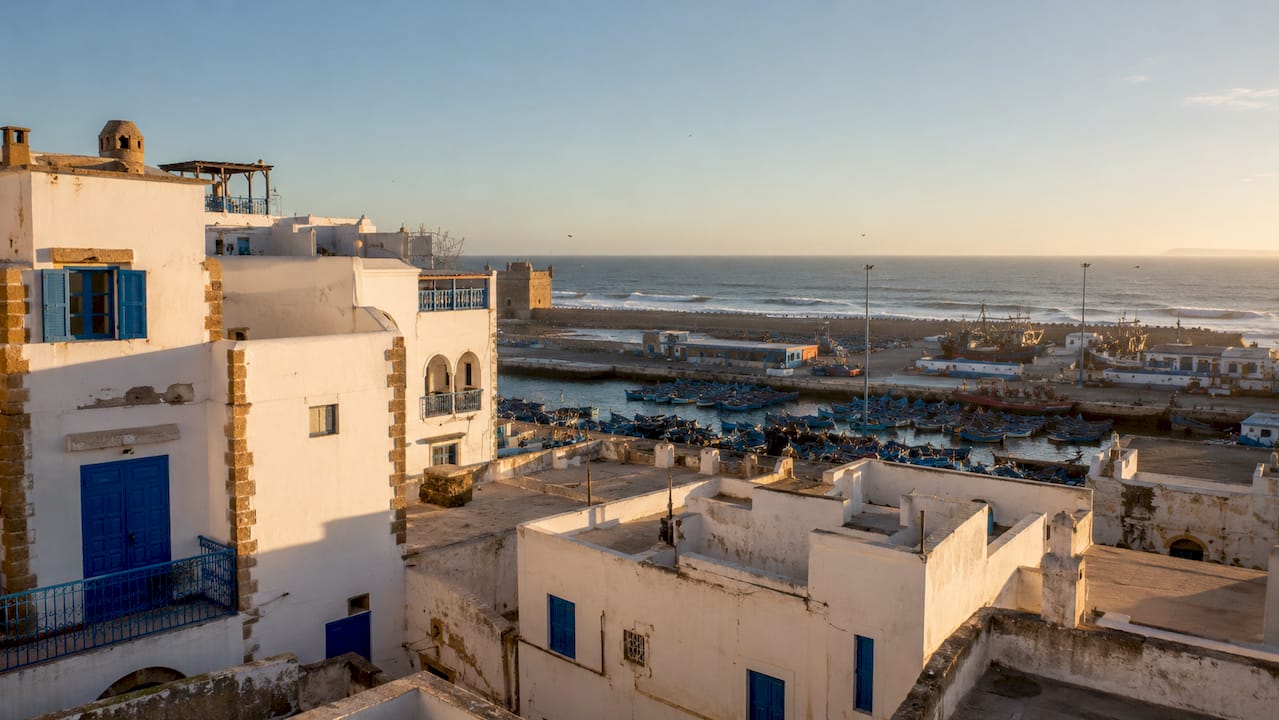
Essaouira attracts writers, artists, and nomads who want a slower pace. The Atlantic wind keeps temperatures mild year-round, and the medina is far quieter than Marrakech’s. The internet is workable but not exceptional. Taghazout is a surf village that has developed a small but tight-knit nomad scene. Connectivity is the weakest of the five cities, so a mobile data backup is non-negotiable there.
For SIM cards, Maroc Telecom and Orange Morocco both offer prepaid data plans that work well in urban areas. Buying a local SIM at the airport or a licensed retailer costs under $5, and a 20GB monthly plan runs $10–$15. eSIM options through providers like Airalo also work in Morocco for short stays. Check top destinations in Morocco if you want a broader look at which regions suit your travel style beyond the main nomad hubs.
How can digital nomads engage respectfully with Morocco’s culture?
Morocco’s cultural identity is one of the most layered in Africa. The Amazigh (Berber) people are the original inhabitants, and their nomadic traditions in regions like Merzouga and the Draa Valley continue today. Amazigh nomadic communities now integrate solar panels and mobile phones into their seasonal movements, but their core practices around hospitality, land, and family remain intact. Understanding this context changes how you experience the country.
Respectful engagement starts with preparation. Dress modestly outside beach resorts, especially in medinas and rural areas. Women covering their shoulders and knees face far less unwanted attention. Men should avoid shorts in traditional neighborhoods. During Ramadan, eating, drinking, or smoking in public during daylight hours is disrespectful and, in some contexts, illegal. Topmoroccotravel’s guide on Ramadan customs in Morocco explains how this month affects daily schedules and what to expect as a resident rather than a tourist.
“Authentic encounters with Berber nomadic communities require guides who speak the language and understand the culture. Without that, you get a performance, not a connection.” — Bewildered in Morocco
Trusted local guides with established community relationships are the only reliable way to visit nomadic communities without reducing the experience to a staged photo opportunity. This is especially true in the Sahara regions around Merzouga and Zagora.
Pro Tip: Learn ten words of Darija (Moroccan Arabic) before you arrive. “Shukran” (thank you), “La, shukran” (no, thank you), and “Bsaha” (to your health) open more doors than any translation app.
- Accept mint tea when offered. Refusing is considered impolite.
- Bargaining in souks is expected, but aggressive haggling is rude. Start at 50% and meet in the middle.
- Ask permission before photographing people, especially in rural areas.
- Visit local markets (souks) on weekdays to avoid tourist crowds and get better prices.
- Attend a local music festival like the Gnaoua World Music Festival in Essaouira to experience culture authentically.
What are the practical tips for working remotely in Morocco?
Internet reliability in Morocco is the infrastructure reality that separates successful nomads from frustrated ones. Urban areas like Casablanca’s and Marrakech’s modern districts have fiber optic connections that deliver 50–100 Mbps speeds. The medinas, rural areas, and coastal villages are a different story. Many Airbnb listings advertise Wi-Fi, but the actual fiber speed and stability must be confirmed directly with the host before booking. Ask for a speed test screenshot. If the host cannot provide one, assume the connection is inadequate for video calls.
Seasoned nomads emphasize contingency planning as a non-negotiable habit in Morocco. Your backup plan should include a local SIM with a large data package and a portable router that accepts a SIM card. Maroc Telecom’s 4G network covers most urban and semi-urban areas reliably. In Taghazout or Essaouira, mobile data is often more reliable than fixed Wi-Fi.
Pro Tip: Book coworking spaces by the day before committing to a monthly pass. Spaces vary significantly in noise level, air conditioning quality, and actual internet speed. Test before you pay.
Coworking spaces worth knowing include The Moroccan Co. in Casablanca, Cwork in Marrakech, and Surf Office Taghazout, which caters specifically to remote workers who want to combine surfing with productivity. Most spaces offer day passes, weekly rates, and monthly memberships. Prices range from $8 to $15 per day.
Power outages are rare in cities but do occur. A small UPS (uninterruptible power supply) unit for your laptop setup is worth the investment if you plan a stay longer than a month. For housing, prioritize apartments in modern buildings over medina riads if uninterrupted connectivity is your top requirement. Riads are beautiful and often worth exploring for their unique character, but their thick stone walls and courtyard layouts can interfere with Wi-Fi signals.
Key takeaways
Morocco works best for digital nomads who prepare for infrastructure variability and engage with the culture on its own terms, not as a backdrop.
| Point | Details |
|---|---|
| Visa-free entry | Citizens of 60+ countries get 90 days on arrival with no special work permit required. |
| Tax residency threshold | Staying over 183 days triggers Moroccan tax residency and potential worldwide income tax obligations. |
| Monthly cost range | Budget nomads spend around $600 per month; mid-tier lifestyles run $1,100–$1,600 depending on the city. |
| Internet verification | Always confirm fiber speed directly with hosts before booking, as advertised Wi-Fi often underperforms. |
| Cultural respect | Use trusted local guides for community visits and learn basic Darija phrases to build genuine connections. |
What I’ve learned after years of watching nomads succeed and fail in Morocco
Most nomads who struggle in Morocco make the same two mistakes. They underestimate how much the city choice matters, and they overestimate how forgiving the infrastructure is.
I’ve seen remote workers book a riad in Marrakech’s medina because it looked stunning on Instagram, then spend their first week fighting a 5 Mbps connection during client calls. The medina is a world wonder. It is not a coworking space. Casablanca’s Maarif district, by contrast, is not photogenic. But you will finish your work by noon and still have time to explore.
The cultural side of Morocco is where I think most guides get it wrong. They treat it as a backdrop, a list of dos and don’ts to avoid offense. Morocco’s culture is the reason to be there. The Amazigh traditions, the communal rhythm of Ramadan, the souk economy, and the mint tea ritual: these are not tourist attractions. They are a functioning social system. When you engage with them seriously, through language, through local guides, and through patience, Morocco gives you something that Bali or Lisbon simply cannot.
My honest recommendation: start in Casablanca for your first two weeks. Get your SIM card, your coworking routine, and your bearings. Then move to Marrakech or Essaouira once you know what you need. Do not try to figure out Morocco and your work setup at the same time in a medina with patchy Wi-Fi.
The Morocco travel guide from Topmoroccotravel is a solid starting point for logistics before you land. Use it alongside this article to build a plan that actually holds up on the ground.
— Topmoroccotravel.com
Combine remote work with real Moroccan experiences
Living in Morocco as a nomad is only half the story. The other half is what you do when you close the laptop. Topmoroccotravel specializes in exactly that: curated experiences that let you move through Morocco with depth and intention rather than as a tourist ticking boxes. From Moroccan city tours that blend cultural immersion with luxury to Sahara desert excursions that put you inside the landscape rather than just photographing it, Topmoroccotravel builds experiences around what Morocco actually is. If you are planning an extended stay and want to use your weekends and downtime well, browse the full range of cultural immersion activities available across the country.
FAQ
Does Morocco have a digital nomad visa?
Morocco does not offer a formal digital nomad visa. Citizens of over 60 countries can enter visa-free for 90 days and work remotely on a foreign payroll without a special permit.
How much money do I need per month to live in Morocco as a nomad?
Median monthly costs run about $1,118, covering rent, food, transport, and a coworking pass. Budget nomads can manage on $600, while a comfortable mid-tier lifestyle costs $1,400–$1,600 per month.
What is the best city in Morocco for remote work?
Casablanca offers the most reliable internet and the largest selection of coworking spaces, making it the strongest base for productivity. Marrakech is better for community and culture, while Essaouira and Taghazout suit nomads who prioritize lifestyle over infrastructure.
Will I owe taxes if I stay in Morocco longer than six months?
Staying more than 183 days triggers tax residency in Morocco, which can expose your worldwide income to Moroccan income tax. Consult a local tax advisor before extending your stay beyond that threshold.
How do I get reliable internet in Morocco as a remote worker?
Buy a local SIM card from Maroc Telecom or Orange Morocco on arrival and get a plan with at least 20GB of data. Always verify fiber internet speed directly with your host before booking accommodation, and use a coworking space as your primary work location.


Comments are closed