




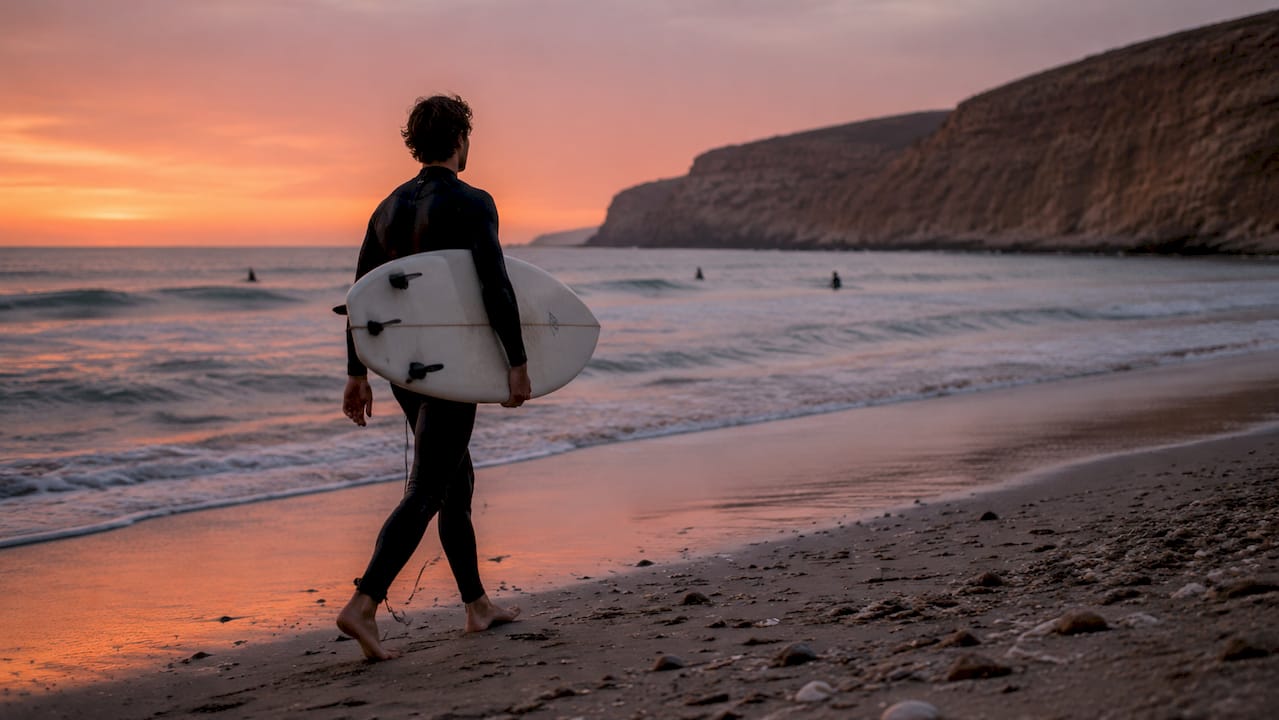
- Morocco offers world-class surf spots along its Atlantic coast, with peak season from October to March.
- Different areas cater to all skill levels, from beginner-friendly beaches to challenging reef breaks for advanced surfers.
- Travelers should plan ahead to enjoy flexible access, cultural experiences, and affordable surf camps.
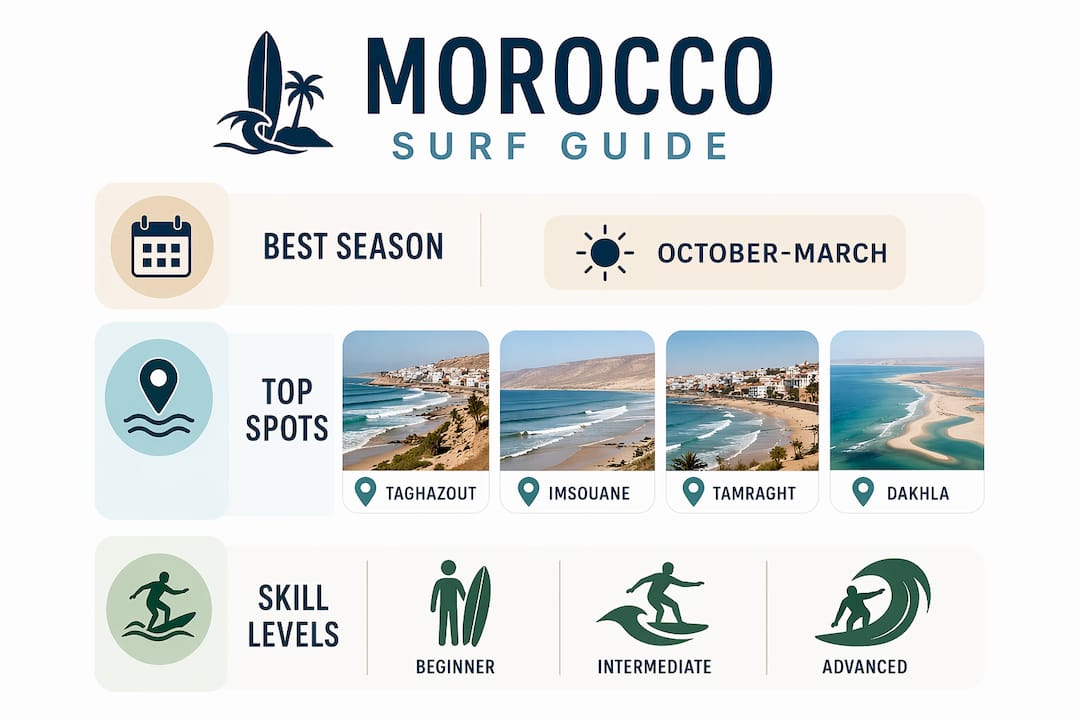
Morocco surfing is defined by world-class Atlantic point breaks, a prime season running October through March, and a surf culture that rewards travelers who look beyond the waves. The country sits at the crossroads of powerful North Atlantic swells and the warm Saharan coast, producing conditions that work for beginners, intermediates, and experienced surfers alike. Taghazout, Imsouane, Tamraght, and Dakhla are the four names every serious surf traveler needs to know before booking a flight. This guide covers every key decision: where to surf, when to go, what to pay, and how to get the most out of Morocco as both a surf destination and a cultural experience.
What are the best surfing spots in Morocco?
Morocco’s surf breaks are concentrated along its Atlantic coast, stretching from Agadir in the north down to Dakhla near the Western Sahara border. Each zone serves a different skill level and travel style.
Taghazout: Morocco’s surf capital
Taghazout is the undisputed center of Moroccan surf culture. The world-class point breaks within a 5 km radius of the village include Anchor Point, Hash Point, and Killers. Anchor Point is the headline act: a right-hand point break that produces rides over 400 meters in solid swell. That length gives intermediate and advanced surfers time to work through multiple sections on a single wave. Hash Point sits closer to the village and handles smaller swells better, making it a reliable option on lighter days. Killers is a powerful, hollow wave that demands experience and confidence.
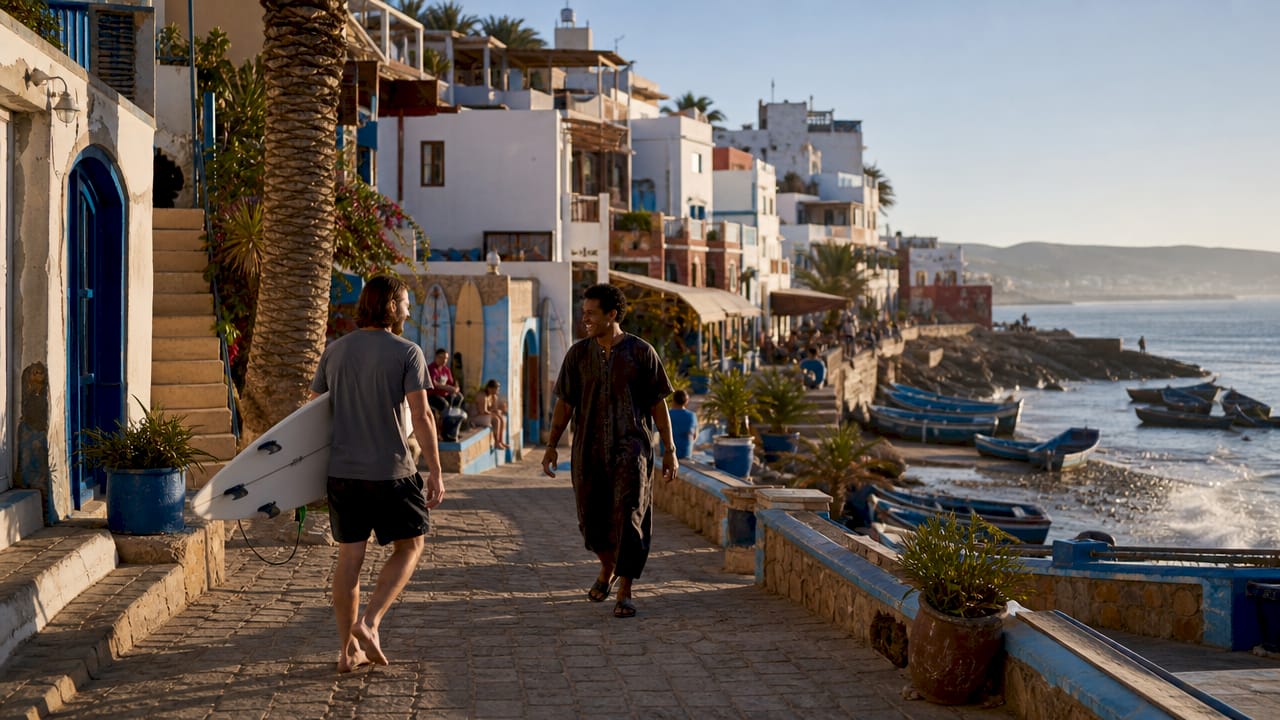
Imsouane: the longboarder’s paradise
Imsouane sits about 70 km north of Agadir and offers a completely different experience. The bay produces Africa’s longest right-hand rides, reaching over 800 meters in optimal conditions. That statistic is not just impressive on paper. It means a single wave can last two minutes or more, giving longboarders and intermediate surfers the chance to practice footwork, cross-stepping, and trimming in a way that no short, punchy beach break allows. The pace of life in Imsouane matches the waves: slow, mellow, and unhurried.
Tamraght and Panoramas: where beginners start
Tamraght is a small village just south of Taghazout. Its beach breaks are forgiving, consistent, and far less intimidating than the reef and point breaks nearby. Panoramas, a break just north of Taghazout, offers similar conditions. Both spots are the standard starting point for beginner surf lessons in Morocco. The sandy bottom reduces the risk of injury, and the waves break with enough regularity to give new surfers plenty of practice time.
Dakhla and Boilers: for advanced surfers only
Dakhla sits roughly 1,500 km south of Agadir, near the Western Sahara. The lagoon produces flat-water conditions ideal for kitesurfing and windsurfing, but the ocean-facing breaks deliver serious Atlantic power. The remoteness keeps crowds thin, which is a major draw for experienced surfers tired of fighting for waves at Taghazout. Boilers is a world-class reef break that demands full attention. Boilers is hazardous due to shallow reefs and sea urchins, and only advanced surfers should paddle out after careful observation from the shore.
Pro Tip: Before paddling out at any reef break in Morocco, spend at least 20 minutes watching from the beach. Identify the channel, the takeoff zone, and where waves close out. Local surfers will respect the observation and often share tips if you ask.
| Surf Spot | Skill Level | Wave Type | Standout Feature |
|---|---|---|---|
| Anchor Point | Intermediate/Advanced | Right-hand point break | Rides over 400 meters |
| Imsouane | Beginner/Intermediate | Long right-hand bay wave | Africa’s longest rides, 800+ meters |
| Tamraght | Beginner | Beach break | Sandy bottom, forgiving conditions |
| Killers | Advanced | Powerful point break | Hollow, fast sections |
| Boilers | Advanced only | Reef break | World-class but hazardous |
| Dakhla | Advanced | Ocean and lagoon | Remote, uncrowded, multi-discipline |
When is the best surf season in Morocco?
The best surfing conditions in Morocco run from October through March, when North Atlantic storms generate consistent, powerful swells. Water temperatures during this period range from 16°C to 23°C (61°F to 73°F). That range means a wetsuit is not optional. A 3/2mm full suit covers most of the season, though a 4/3mm is more comfortable in January and February when water temperatures drop toward the lower end.
October and November: the sweet spot
October and November deliver the best balance of swell size, crowd levels, and weather. Swells arrive with regularity, air temperatures stay warm enough for comfortable evenings, and the summer tourist crowds have thinned out. Intermediate surfers get the most value from this window. Waves are powerful enough to be exciting but not so large that they shut out anyone below expert level.
January and February: biggest waves, fewest crowds
January and February bring the largest swells of the year. Anchor Point and Killers fire at their best during this period, and experienced surfers who time their trip around a solid North Atlantic storm can score some of the best waves in Africa. The tradeoff is cooler air and water temperatures and occasional stormy weather that makes some days unsurfable.
April through September: summer conditions
The summer months bring smaller, weaker swells driven by trade winds rather than Atlantic storms. Waves are generally knee to waist high, which suits beginners and longboarders but frustrates surfers chasing performance conditions. Water temperatures climb to their warmest during this period, and a shorty or spring suit is often enough. The upside is that accommodation prices drop and the coast is less crowded with surf travelers.
Pro Tip: Book accommodation in Taghazout or Tamraght at least six weeks in advance for October and November trips. These months fill up fast with European surf travelers, and last-minute options are limited and expensive.
| Month | Swell Size | Water Temp | Best For |
|---|---|---|---|
| October | Medium to large | 20–23°C | All levels, best overall balance |
| November | Medium to large | 18–21°C | Intermediates and advanced |
| January | Large | 16–18°C | Advanced surfers |
| February | Large | 16–18°C | Advanced surfers |
| April to September | Small to medium | 19–23°C | Beginners, longboarders |
How do you plan accommodation, surf lessons, and gear in Morocco?
Morocco’s surf infrastructure is well-developed, particularly around Taghazout and Tamraght. Surfers at every budget level can find a workable setup without much advance planning, though booking ahead during peak season is strongly recommended.
Surf camps and accommodation costs
A full week-long surf camp in Morocco typically costs around 3,500 MAD, which is roughly $350 USD. That price generally includes accommodation, breakfast, and daily surf guiding. Daily gear rental starts at 150 MAD (approximately $15 USD), covering a board and wetsuit. These prices make Morocco one of the most affordable surf destinations in the world for the quality of waves on offer.
Staying in Tamraght offers budget and flexibility advantages that Taghazout cannot always match. The village is quieter, accommodation is cheaper, and its central location gives surfers easy access to multiple breaks depending on daily swell and wind direction. Taghazout itself has become more commercialized over the past decade, with prices reflecting its popularity.
Choosing the right surf school
- Beginners should book lessons at Tamraght or Panoramas, where sandy beach breaks reduce injury risk and instructors can supervise safely from the water.
- Intermediates benefit most from guided sessions at Hash Point or Imsouane, where a local guide can explain lineup positioning and wave selection.
- Advanced surfers gain the most from hiring a local guide for a day at Anchor Point or Killers, particularly on their first visit, to learn the specific takeoff zones and hazards.
- Longboarders should prioritize Imsouane, where the wavelength gives the most practice time per session.
- Budget travelers can rent a board and wetsuit daily at 150 MAD and self-guide using free surf forecasting tools like Surfline or Magicseaweed to time sessions around swell windows.
Morocco’s well-developed surf infrastructure means most surf camps include cultural extras like hammam visits, cooking classes, and day trips to Agadir or the Atlas Mountains. These additions are worth factoring into your choice of camp, since they significantly improve the overall trip experience.
For surfers who want comfort alongside waves, Morocco’s luxury beach resorts near Agadir offer high-end options within easy driving distance of the main surf breaks.
What cultural experiences complement a surf trip in Morocco?
Morocco rewards surfers who treat the country as more than a wave destination. The culture around the surf towns is accessible, generous, and genuinely different from anything in Europe or North America.
Food, tea, and local life
Mint tea is the social currency of Morocco. Accepting a glass from a shopkeeper or a surf camp host is not just polite. It is the entry point to a conversation, a local recommendation, or an invitation to return. The food in the surf towns reflects the Atlantic coast: fresh fish tagines, grilled sardines, and argan oil served with flatbread are standard fare at local cafes near Taghazout and Imsouane. Eating at these spots costs a fraction of what tourist-facing restaurants charge and tastes considerably better.
Markets, medinas, and day trips
- Agadir’s rebuilt city center and its souk offer a practical introduction to Moroccan market culture within 30 minutes of the main surf breaks.
- Tiznit, a walled silver-working town about 90 minutes south of Agadir, is one of the least-visited medinas in Morocco and worth a full day.
- Essaouira, roughly three hours north of Taghazout, is a UNESCO-listed coastal city with a famous wind-swept beach, a working fishing port, and a medina that has changed little in centuries.
- The Atlas Mountains are visible from the coast on clear days and reachable in under two hours from Agadir, offering a sharp contrast to the beach environment.
Understanding local surf culture
Moroccan surf culture has evolved rapidly over the past 20 years. Local surfers now compete at international levels, and the towns around Taghazout have produced a generation of young Moroccan athletes who grew up surfing these breaks. Respecting the lineup means following standard surf etiquette: do not drop in, wait your turn, and acknowledge local surfers who have priority at their home breaks.
Gender dynamics in the water are worth understanding. Female surfers surf freely at all the main breaks, and surf camps actively welcome women travelers. Outside the water, modest dress in the villages shows respect and is generally appreciated by local residents.
“The best surf trips I have seen in Morocco are the ones where travelers spend at least two days away from the beach entirely. The country has too much to offer for anyone to spend every hour in the water.”
For a broader view of what Morocco offers beyond the coast, the 7 must-do Morocco experiences guide covers the full range of adventure and cultural options worth adding to any surf itinerary.
Key Takeaways
Morocco surfing delivers world-class waves from Taghazout to Dakhla, with October through March as the definitive peak season for surfers at every level.
| Point | Details |
|---|---|
| Best season | October through March offers the most consistent Atlantic swells and manageable conditions. |
| Top spots by level | Tamraght is for beginners, Imsouane for intermediates, and Anchor Point and Killers for advanced surfers. |
| Wave quality | Anchor Point produces rides over 400 meters; Imsouane offers Africa’s longest rights at 800+ meters. |
| Trip costs | Weekly surf camps start at 3,500 MAD; daily gear rental starts at 150 MAD. |
| Cultural value | Surf towns sit within reach of medinas, markets, and mountain day trips that deepen the overall experience. |
What I have learned from years of Morocco surf travel
The most common mistake I see surf travelers make in Morocco is treating Taghazout as the only destination. Anchor Point is genuinely world-class, and I understand the pull. But peak season overcrowding at Anchor Point and Hash Point turns what should be a transcendent experience into a frustrating lineup battle. Forty surfers competing for the same takeoff zone is not what anyone flies to Africa for.
My honest recommendation is to base yourself in Tamraght rather than Taghazout. The difference in atmosphere is significant. Tamraght is quieter, the accommodation is cheaper, and you can reach Anchor Point, Hash Point, Panoramas, and Tamraght Beach itself within a 10-minute drive or a short walk. When conditions shift, and they do shift quickly in Morocco, flexibility is the deciding factor between a great session and a wasted morning.
The cultural side of Morocco is not a consolation prize for flat days. Tiznit, Essaouira, and the Atlas foothills are genuinely worth your time. I have met surfers who spent two weeks in Morocco and never left the Taghazout area. They had good waves, but they missed the country entirely. The surfers who come back year after year are the ones who figured out that the waves and the culture are both reasons to return.
One practical note on gear: bring your own board if you can. Rental boards in Morocco are functional but often beaten up. A board you know and trust makes a real difference at a fast, hollow break like Killers or Boilers. If you are flying with a board bag, check airline fees in advance since they vary widely and can add meaningful cost to a budget trip.
— Topmoroccotravel.com
Plan your Moroccan surf adventure with TopMoroccoTravel
TopMoroccoTravel.com specializes in building Morocco trips that combine surf access with genuine cultural depth. The team puts together packages that pair surf bases in Taghazout or Tamraght with guided excursions to Essaouira, the Atlas Mountains, and Morocco’s imperial cities. Every itinerary is customizable, whether you want a full week of surf-focused days or a split trip that balances sessions in the water with time in the medinas. For surfers who want to extend their trip beyond the coast, the Moroccan city tour concepts page outlines luxury and cultural options that pair naturally with a surf itinerary. TopMoroccoTravel’s tailored Morocco tours cover every detail from accommodation to transport so you spend your energy on the waves.
FAQ
What is the best time to surf in Morocco?
October through March is the peak surf season in Morocco, with consistent Atlantic swells and water temperatures between 16°C and 23°C. October and November offer the best balance of wave quality and manageable crowds.
Is Morocco good for beginner surfers?
Morocco is an excellent destination for beginners. Tamraght and Panoramas offer sandy beach breaks with consistent, forgiving waves, and surf lesson Morocco instructors are widely available at established surf schools in both villages.
How much does a surf camp in Morocco cost?
A week-long surf camp in Morocco starts at around 3,500 MAD, roughly $350 USD, typically including accommodation and daily surf guiding. Daily board and wetsuit rental starts at 150 MAD.
Is Taghazout or Tamraght better as a surf base?
Tamraght offers quieter surroundings, lower prices, and flexible access to multiple breaks depending on daily conditions. Taghazout is more central to the action but more crowded and more expensive, particularly during October and November.
Do I need a wetsuit to surf in Morocco?
A wetsuit is required during the peak surf season. Water temperatures drop to 16°C in January and February, making a 3/2mm or 4/3mm full suit necessary for comfortable sessions.


Comments are closed