




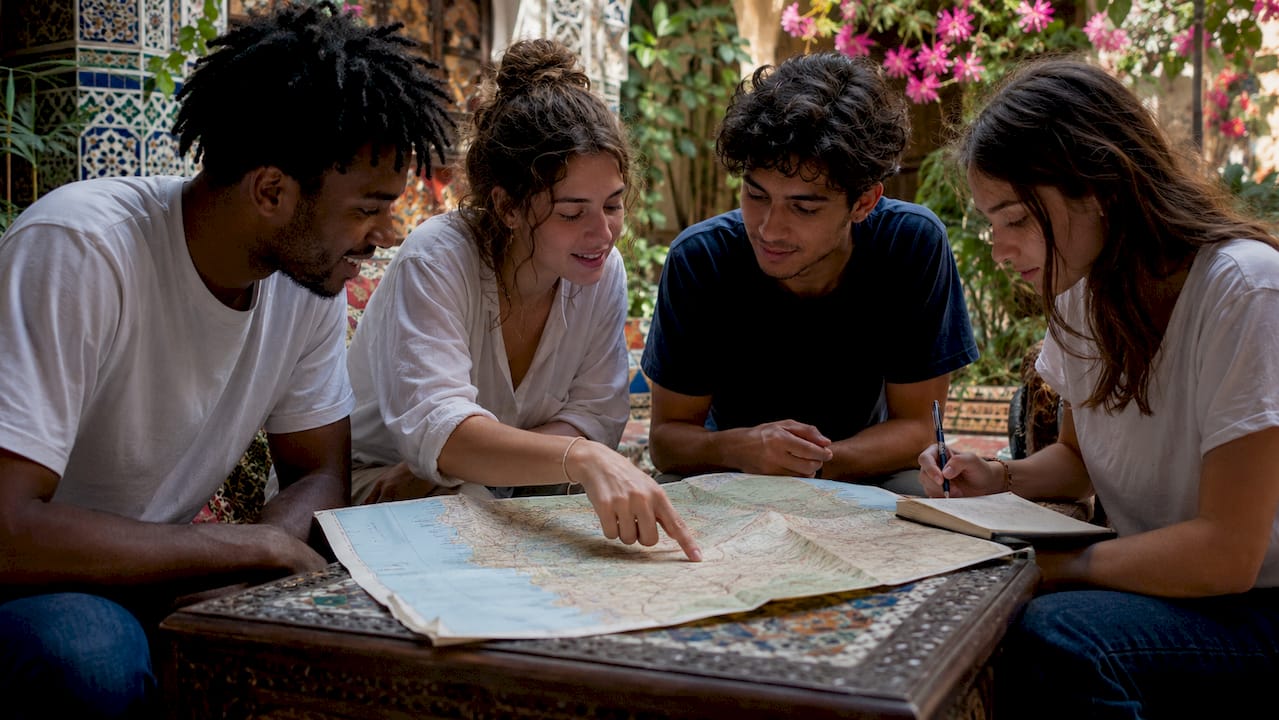
- Morocco educational travel provides immersive, curriculum-aligned experiences engaging students with local culture and history.
- Successful programs focus on deeper human connections, well-planned itineraries, and proper staffing to maximize learning outcomes.
Morocco educational travel is an experiential learning model where students engage directly with Moroccan culture, history, and communities through structured, hands-on programs. Unlike standard tourism, these immersive educational trips combine academic curriculum with real-world cultural encounters, from exploring medieval medinas to working alongside local cooperatives. Programs offered by organizations like Rustic Pathways and Nations Classroom set the standard for this field, delivering curriculum-aligned itineraries that serve high school and college students equally well. For educators seeking depth beyond a textbook, Morocco delivers geography, history, language, and sustainability lessons all in one destination.
What types of Morocco educational travel programs are available?
Educational travel programs in Morocco fall into four main categories: service-learning, Moroccan language immersion, cultural tours, and historical academic trips. Each type serves a different academic goal and suits different age groups and group sizes.
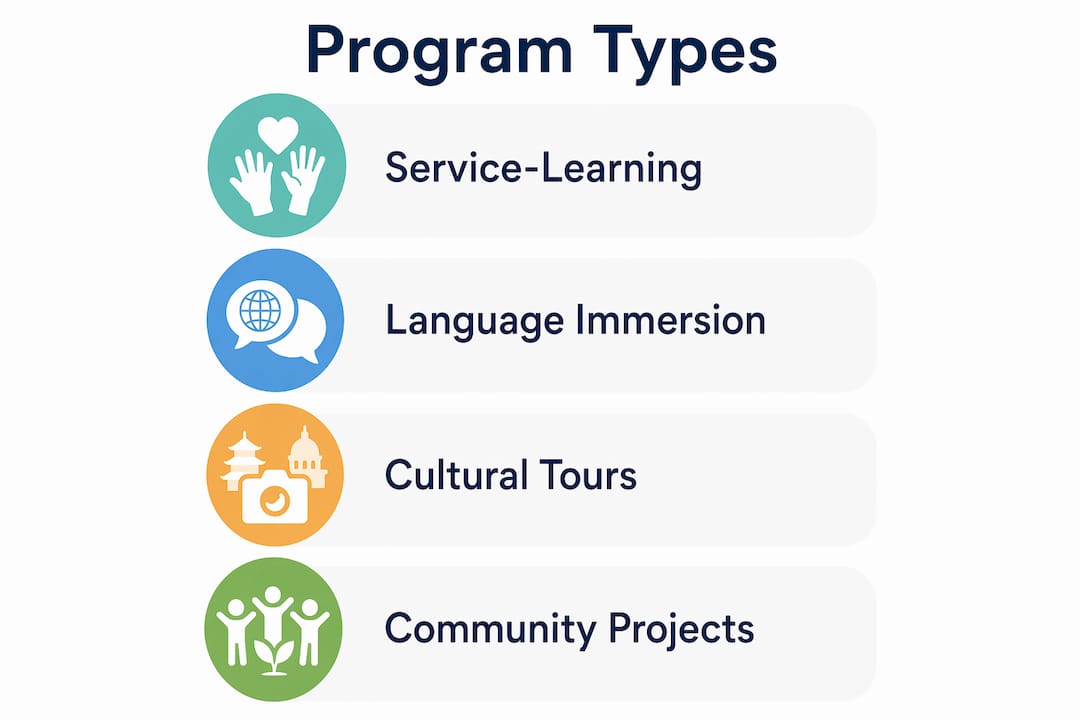
Service-learning programs place students inside Moroccan communities to complete supervised projects. Students typically earn 18 verified service hours through structured community engagement. That figure matters because many high school graduation requirements and college applications recognize verified service hours as academic credit.
Language immersion programs focus on Arabic or Darija (Moroccan Arabic) and French, placing students in homestays or small-group settings with local families. These programs run from one to four weeks and work best for students already studying Arabic or French at the secondary or university level.
Morocco cultural tours combine guided visits to historical sites in Morocco with structured reflection sessions. Programs like those offered by Nations Classroom include bilingual guides, pre-trip academic preparation, and post-trip assessment tools. These tours suit groups of 10–30 students and typically run 10–14 days.
Historical academic trips target college students and focus on specific disciplines: Islamic architecture, North African history, or Amazigh (Berber) cultural studies. These programs often partner with university faculty and include on-site lectures at sites like Fes El Bali or Aït Ben Haddou.
| Program type | Best age group | Typical duration | Key academic focus |
|---|---|---|---|
| Service-learning | High school | 2–3 weeks | Community development, sustainability |
| Language immersion | High school / college | 1–4 weeks | Arabic, French, cross-cultural communication |
| Cultural tours | Middle school / high school | 10–14 days | History, geography, Islamic studies |
| Historical academic trips | College | 2–4 weeks | Architecture, North African history |
- Service-learning programs build empathy and real-world problem-solving skills.
- Language immersion accelerates fluency faster than classroom instruction alone.
- Cultural tours offer the broadest interdisciplinary coverage for mixed-subject groups.
- Historical academic trips provide the deepest subject-matter depth for advanced students.
Pro Tip: Match your program type to your curriculum goals before comparing costs. A service-learning trip to the High Atlas Mountains serves a social studies unit differently than a historical academic tour of Fes. Alignment between the program and your learning objectives determines the academic return.
Which historical sites in Morocco offer the best student learning?
Morocco’s most educationally rich sites are not just visually impressive. They are living classrooms where history, architecture, commerce, and social structure intersect.
Marrakech Medina
Marrakech Medina is a UNESCO World Heritage Site and one of the most complex urban systems in the Arab world. Medinas like Marrakech are dynamic urban systems reflecting rich cultural continuity and commerce. Students studying urban planning, Islamic history, or economics find the souk network and Djemaa el-Fna square directly relevant to their coursework.
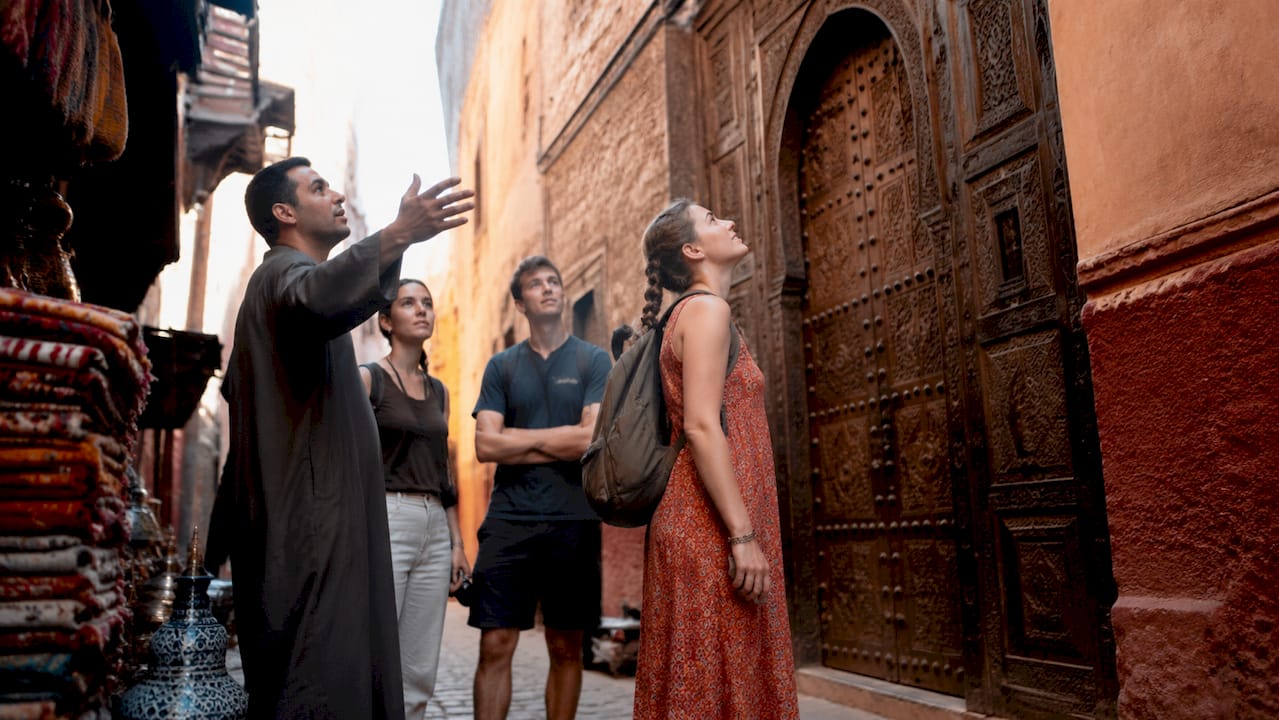
Fes El Bali
Fes El Bali is the world’s largest car-free urban area and home to the University of Al Quaraouiyine, founded in 859 CE and recognized as the oldest continuously operating university in the world. Walking its 9,000-plus alleyways teaches students more about medieval Islamic city planning than any textbook chapter. Educators running Morocco history tours consistently rank Fes as the single highest-value destination for academic depth.
Aït Ben Haddou
Aït Ben Haddou is a fortified ksar (earthen village) along the former caravan route between the Sahara and Marrakech. Visit early morning or late afternoon for better light and more comfortable temperatures when studying its architecture. Extending the visit to include the nearby Ounila Valley deepens understanding of Moroccan history and pre-Saharan trade routes beyond what the main site alone offers.
High Atlas Mountains villages
Village stays in the High Atlas Mountains enable authentic dialogue and cultural connection that crowded urban medinas cannot replicate. Students interact directly with Amazigh families, observe traditional agriculture, and discuss sustainability challenges facing mountain communities. This setting works especially well for environmental science and anthropology units.
Women-led argan oil cooperatives
Hands-on cooperative visits, like those at women-led argan oil cooperatives near Essaouira or Agadir, teach students about fair-trade economics, gender empowerment, and sustainable agriculture simultaneously. These visits produce stronger cultural learning outcomes than passive guided tours of the same region.
| Site | Primary disciplines | Best activity | Visitor tip |
|---|---|---|---|
| Marrakech Medina | Urban studies, Islamic history | Souk mapping exercise | Visit early in the morning to avoid crowds |
| Fes El Bali | Medieval history, architecture | Al Quaraouiyine campus walk | Hire a licensed local guide |
| Aït Ben Haddou | Architecture, trade history | Ksar sketch and analysis | Arrive at dawn or dusk |
| High Atlas villages | Anthropology, environmental science | Homestay and farm visit | Book through vetted operators |
| Argan oil cooperatives | Economics, gender studies | Cooperative production tour | Confirm women-led certification |
How to safely plan an educational trip to Morocco
Safe, academically productive trips to Morocco require planning that starts well before departure. The logistics are manageable, but the timeline is non-negotiable.
- Start planning 12–18 months in advance. Booking 12–18 months ahead secures preferred educational guides, vetted accommodations, and proper curricular alignment. Programs that book late often lose access to the best local facilitators and risk itinerary gaps.
- Confirm student-to-staff ratios. The industry standard ratio for safe educational travel is 6:1 to 8:1 students per staff member. Any program offering ratios above 10:1 reduces supervision quality and increases safety risk.
- Require bilingual staff and local facilitators. Bilingual staff lead student orientation sessions and prepare students for local customs and expected behavior in public spaces. This step reduces cultural misunderstandings and builds student confidence before arrival.
- Review what the package includes. Structured itineraries from reputable operators typically include lodging, meals, all activities, and comprehensive travel insurance. Verify each component in writing before signing any agreement.
- Prepare students for cultural etiquette. Dress codes in Morocco are conservative, particularly in medinas and religious sites. Women should carry a scarf for mosque visits. Students should greet locals with “As-salamu alaykum” and avoid public displays of affection. Review the Morocco greetings guide with your group before departure.
- Align the itinerary with your curriculum. Map each site visit and activity to a specific learning objective. Provide students with guided reflection journals to complete each evening. Post-trip assessments should reference on-site observations, not just general impressions.
- Verify accommodations for group suitability. Riads and guesthouses in medinas offer authentic settings, but confirm room configurations, security, and proximity to program sites. Topmoroccotravel provides vetted accommodation options suitable for student groups across Morocco’s major cities.
Pro Tip: Send students a pre-trip reading list covering Moroccan history, Islamic culture, and Amazigh traditions at least six weeks before departure. Students who arrive with cultural context engage more deeply on site and ask better questions. That preparation multiplies the academic return of every hour spent in the field.
What academic benefits do students gain from Morocco’s educational programs?
Students who complete structured educational trips to Morocco return with measurable academic and personal gains that extend well beyond the trip itself.
Students develop global awareness, cross-cultural communication skills, and sustainability insights through direct engagement with Moroccan communities. These are not soft outcomes. They translate directly into stronger performance in social studies, world history, and foreign language courses.
- Verified service hours: Students earn 18 documented service hours through community projects, which count toward graduation requirements and strengthen college applications.
- Interdisciplinary learning: A single day in Fes El Bali covers Islamic architecture, medieval trade history, urban geography, and Arabic language in one continuous experience.
- Cross-cultural communication: Daily interaction with Moroccan guides, families, and cooperative workers builds real conversational confidence that classroom role-play cannot replicate.
- Sustainability literacy: Visits to argan oil cooperatives and High Atlas farming communities connect environmental science curriculum to real economic and ecological challenges.
- Portfolio development: Students return with field notes, photographs, and reflective essays that serve as original research for history, geography, and social science projects.
Educators benefit too. Reputable programs supply curriculum-ready materials including pre-trip lesson plans, on-site activity guides, and post-trip assessment rubrics. That support reduces the preparation burden and makes it easier to justify the trip to school administrators. Explore the cultural immersion activities available through Topmoroccotravel to see how specific activities map to common curriculum standards.
Key Takeaways
Morocco educational travel delivers the strongest academic results when programs combine structured itineraries, proper staffing ratios, and curriculum-aligned activities across Morocco’s most historically significant sites.
| Point | Details |
|---|---|
| Plan 12–18 months ahead | Early booking secures the best guides, accommodations, and curricular alignment. |
| Maintain 6:1 to 8:1 ratios | Industry-standard staffing ratios protect student safety and supervision quality. |
| Prioritize high-value sites | Fes El Bali, Aït Ben Haddou, and High Atlas villages offer the deepest academic return. |
| Earn verified service hours | Students gain 18 documented service hours through supervised community projects. |
| Prepare students before departure | Pre-trip cultural reading and etiquette training multiplies on-site learning outcomes. |
What I’ve learned from planning Morocco educational trips:
The most common mistake educators make is treating Morocco as a backdrop rather than a classroom. They book the famous sites, snap the photos, and move on. The students have a good time, but the academic depth never materializes.
The trips that genuinely transform students are the ones built around slower, less obvious experiences. A morning spent at a women-led argan cooperative near Essaouira, where students ask real questions about fair-trade certification and income distribution, teaches more about global economics than three weeks of textbook reading. A homestay in a High Atlas village, where a family shares dinner and explains water scarcity in their own words, makes climate science personal in a way no documentary can.
I’ve also seen rushed itineraries destroy what could have been excellent programs. Visiting four cities in seven days leaves students exhausted and unable to process what they’ve seen. Two cities done deeply, with evening reflection sessions and genuine free time to wander, produce far better academic outcomes and far more meaningful personal growth.
The other issue I see repeatedly is inadequate staff preparation. Bilingual guides are not optional extras. They are the mechanism through which students access authentic cultural knowledge. A program that cuts costs by reducing guide quality is cutting the educational core of the experience.
My honest recommendation: spend less time on the famous sites and more time on the human connections. Morocco’s medinas are extraordinary, but it is the conversations, the meals, and the shared work that students remember and learn from years later. Build your itinerary around those moments, and the academic outcomes will follow. For educators who want a deeper framework before committing to a program, the Morocco cultural immersion guide from Topmoroccotravel is worth reading first.
— Topmoroccotravel.com
Plan your Morocco educational travel with TopMoroccoTravel
Topmoroccotravel designs customizable educational tour packages built around your curriculum goals, age group, and travel dates. Every itinerary includes vetted local guides, bilingual staff, and carefully selected accommodations suited to student groups. Programs cover Marrakech, Fes, the High Atlas Mountains, and beyond, with activities ranging from cooperative business visits to historical site analysis. Safety protocols, cultural orientation sessions, and full logistical support are built into every package. Whether you are planning a two-week service-learning program or a focused Morocco history tour, TopMoroccoTravel handles the details so you can focus on the learning. Contact the team directly to request a custom itinerary and quote for your group.
FAQ
What is Morocco educational travel?
Morocco educational travel is a structured form of experiential learning where students engage with Moroccan culture, history, and communities through curriculum-aligned programs. It combines guided site visits, service projects, and cultural immersion activities into a single academic experience.
How far in advance should I book an educational trip to Morocco?
Book at least 12–18 months before your intended travel date. That lead time secures preferred guides, accommodations, and proper academic alignment for your group.
What is the recommended student-to-staff ratio for Morocco school trips?
The industry standard is 6:1 to 8:1 students per staff member. Programs that exceed a 10:1 ratio reduce supervision quality and increase safety risk for student groups.
Which sites in Morocco are best for student learning?
Fes El Bali, Marrakech Medina, Aït Ben Haddou, and High Atlas Mountains villages offer the strongest interdisciplinary learning opportunities. Each site connects directly to history, architecture, economics, or environmental science curriculum.
Can students earn academic credit in Morocco’s educational programs?
Students typically earn 18 verified service hours through supervised community projects, which count toward graduation requirements and strengthen college applications. Some programs also partner with universities to offer transferable academic credit.


Comments are closed