




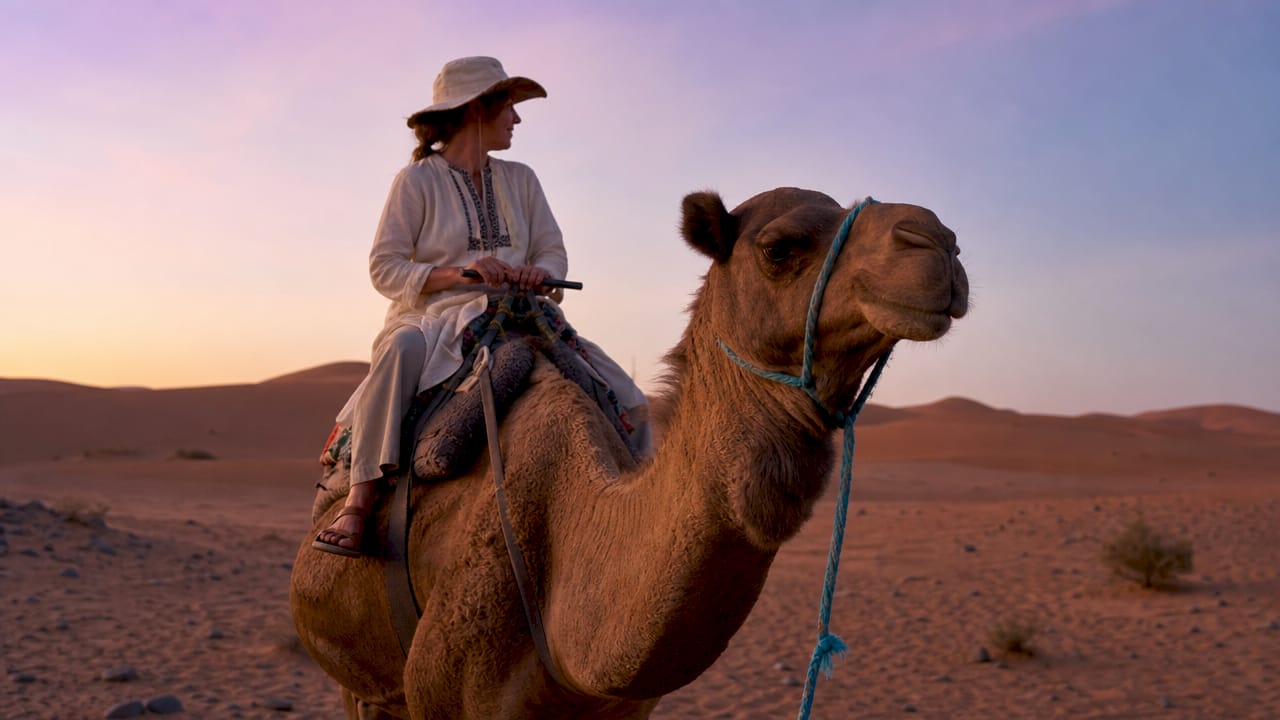
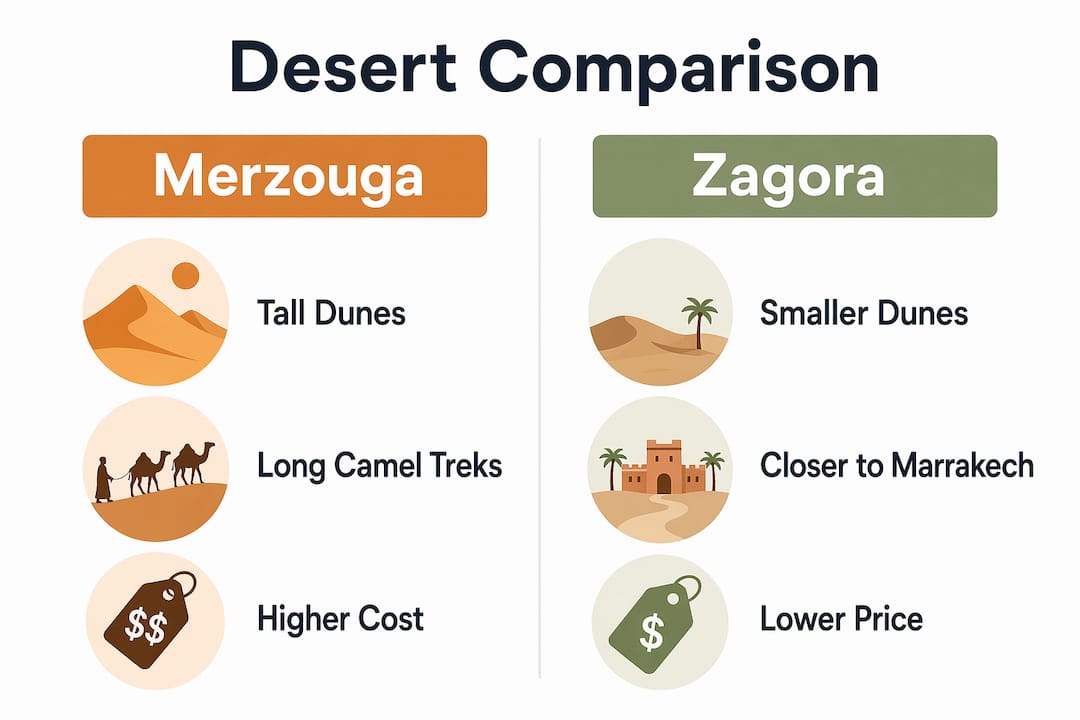
- Merzouga offers dramatic, towering dunes up to 150 meters tall, providing iconic Sahara scenery.
- Zagora features smaller dunes of 30 to 40 meters and includes cultural landscapes like kasbahs and palm groves.
- Travel from Marrakech to Zagora takes about 7 hours, while Merzouga requires around 10 hours, affecting trip duration planning.
Merzouga and Zagora are the two most visited desert destinations in Morocco, and they deliver very different experiences. Merzouga’s Erg Chebbi dunes reach up to 150 meters in height, creating the towering Saharan silhouettes most travelers picture when they think of Morocco. Zagora’s Erg Lehoudi dunes top out at 30–40 meters, offering a gentler landscape that sits closer to Marrakech. In the Merzouga vs. Zagora desert debate, the right choice depends on how much time you have, what you want to spend, and whether iconic dune scale matters to you.
What are the key landscape differences between Merzouga and Zagora?
Merzouga wins the dune comparison by a wide margin. The Erg Chebbi dune field produces the kind of dramatic, rolling Saharan ridgelines that appear on postcards and travel documentaries. The sand color shifts from deep amber at midday to burnt orange and violet at sunset, giving photographers an extraordinary range of light within a single afternoon.
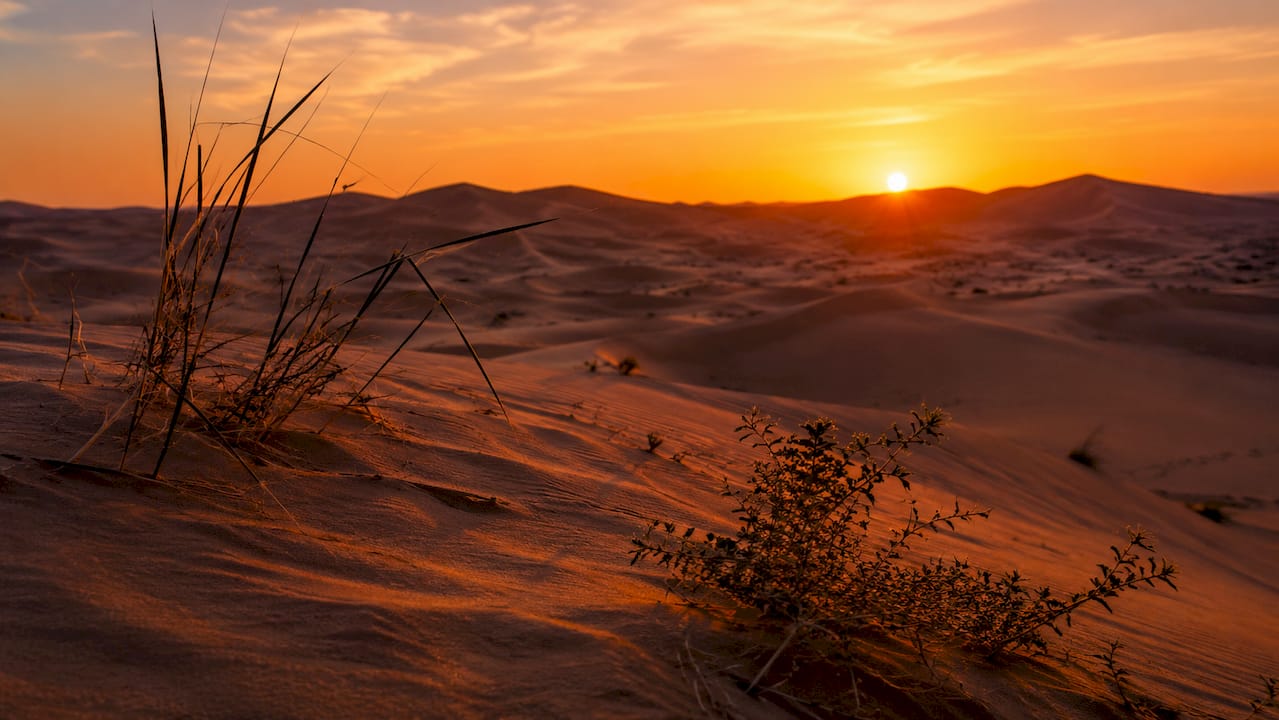
Zagora’s Erg Lehoudi dunes are a real desert, but they read as modest by comparison. The dunes sit closer to the Draa Valley, which means the surrounding terrain includes date palm groves, dry riverbeds, and ancient kasbahs. That context adds cultural texture that Merzouga’s open erg does not replicate. Travelers who want desert scenery framed by Moroccan village life often find Zagora more visually layered.
For those willing to go further, Erg Chigaga in the Zagora region offers a remote, dramatic alternative. Reaching it requires a multi-hour 4×4 drive from Zagora town. That effort filters out casual visitors and rewards those who want genuine solitude.
| Feature | Merzouga (Erg Chebbi) | Zagora (Erg Lehoudi) |
|---|---|---|
| Dune height | Up to 150 meters | 30–40 meters |
| Dune color | Deep amber to orange-red | Golden tan |
| Surrounding terrain | Open erg, flat plains | Draa Valley, palmeraies, kasbahs |
| Remote option | Accessible by camel or 4×4 | Erg Chigaga via 4×4 only |
| Photography impact | High contrast, dramatic ridgelines | Softer, culturally layered |
Pro Tip: Arrive at the dunes in Merzouga about 45 minutes before sunset. The low-angle light creates sharp shadow lines across the dune faces that disappear within 20 minutes of the sun dropping below the horizon.
The scale difference between the two deserts is not subtle. Many travelers arrive at Zagora expecting Merzouga-style dunes and feel surprised by the modest height. If towering Saharan dunes are your primary reason for visiting Morocco’s desert, Merzouga is the correct destination.
How do travel logistics and access differ between Merzouga and Zagora?
Distance from Marrakech is the single biggest practical difference between these two destinations. Zagora sits roughly 7 hours by road from Marrakech. Merzouga requires approximately 10 hours. That three-hour gap has real consequences for itinerary planning, especially for travelers with limited vacation days.
The road to both destinations passes through the High Atlas Mountains, which means winding mountain passes and dramatic scenery regardless of which desert you choose. The Tizi n’Tichka Pass on the Marrakech to Ouarzazate route is shared by both itineraries before they diverge. Merzouga continues east through Tinghir and the Todra Gorge, adding one of Morocco’s most spectacular canyon landscapes to the journey.
Here is how the logistics break down for each destination:
- Zagora from Marrakech: Drive approximately 7 hours via Ouarzazate and the Draa Valley. The route passes through Agdz and along the Draa palmeraie. A 2-day trip is realistic, with 1 night in the desert. A 3-day trip is comfortable.
- Merzouga from Marrakech: Drive approximately 10 hours via Ouarzazate, Skoura, Tinghir, and Erfoud. The Todra Gorge adds a worthwhile stop. A minimum 3-day trip is required to make the journey worthwhile. Most travelers recommend 4 days.
- Merzouga from Fes: Drive approximately 7–8 hours via Midelt and Erfoud. Travelers combining Fes and Merzouga in a single loop often find this the most efficient routing.
- Zagora from Fes: Not a natural pairing. The drive exceeds 10 hours, and the route is less scenic than the Marrakech approach.
- Erg Chigaga from Zagora: Add a half-day 4×4 transfer from Zagora town. This extends any Zagora trip by at least one full day and requires a specialized vehicle.
The logistics favor Zagora for travelers with 2–3 days available and a Marrakech base. Merzouga rewards travelers with 4 or more days who want to combine the desert with the Todra Gorge, Dades Valley, or a Fes circuit.
What activities and accommodations can travelers expect in each desert?
Merzouga offers the widest range of desert activities in Morocco. Camel trekking in Merzouga typically involves a 1–2 hour ride into the dunes to reach your overnight camp, with a return ride at sunrise. Quad biking across the erg is widely available and covers terrain that camels cannot reach. Sandboarding on the steep dune faces is a popular add-on, and the dune height makes the runs genuinely fast. Some operators also offer 4×4 excursions to the fossil sites near Erfoud and the salt lakes at Dayet Srji, where flamingos gather seasonally.
Zagora’s activity menu is shorter. Camel rides are available but cover flatter ground and shorter distances. Quad biking exists, but the terrain is less dramatic. The Draa Valley compensates with cultural activities that Merzouga cannot match: visits to ancient ksar villages, guided walks through date palm groves, and stops at the Tamegroute library, which holds one of Morocco’s oldest manuscript collections.
Accommodation quality in Merzouga
Merzouga camp quality spans a wider range than any other desert destination in Morocco. Budget camps offer shared facilities and basic Berber tents. Mid-range camps add private tents with proper beds and en-suite bathrooms. Luxury Merzouga camps include private bathrooms, electricity, and optional air conditioning per tent, though AC is typically charged as an add-on rather than included in the base rate. Evening entertainment at most camps includes Gnawa or Berber music performances around a fire.
Accommodation quality in Zagora
Zagora camps peak at mid-range comfort. Private bathrooms are available at better camps, but the ultra-luxury tier found in Merzouga does not exist in Zagora’s Erg Lehoudi area. Erg Chigaga camps are more remote and atmospheric, but facilities remain basic to mid-range. Travelers who prioritize camp comfort over camp location should choose Merzouga.
Pro Tip: Book a Merzouga camp that includes a sunrise camel ride back to the village. The morning light on the dunes is softer and cooler than the evening ride, and you will have the dunes almost entirely to yourself.
- Merzouga activities: camel trekking, quad biking, sandboarding, 4×4 excursions, fossil site visits, flamingo lake tours
- Zagora activities: camel rides, Draa Valley walks, ksar village tours, Tamegroute manuscript library, Erg Chigaga 4×4 expeditions
- Merzouga camp range: budget to ultra-luxury with private bathrooms and optional AC
- Zagora camp range: basic to mid-range, with Erg Chigaga camps adding remoteness
How do cost and budget considerations compare between the two deserts?
Merzouga costs more than Zagora, and the gap is consistent across tour categories. Typical 3-day Merzouga tours run approximately €250–450 per person on a shared basis. Zagora tours for a comparable shared itinerary cost approximately €180–320 per person. The price difference reflects longer driving distances, higher fuel costs, and the broader range of luxury camp options in Merzouga.
The cost gap widens when you add luxury camp upgrades. Private bathrooms and air conditioning in Merzouga are charged as extras, which means the headline tour price understates the real cost for travelers who want premium comfort. Budget travelers who are comfortable with shared facilities will find Merzouga more affordable than the luxury pricing suggests.
| Cost factor | Merzouga | Zagora |
|---|---|---|
| Shared tour price (3 days) | €250–450 per person | €180–320 per person |
| Trip duration needed | 3–4 days minimum | 2–3 days sufficient |
| Luxury camp availability | Wide range, including ultra-luxury | Mid-range maximum |
| AC in camp | Available, charged as add-on | Limited availability |
| Best value for budget travelers | Yes, if skipping luxury upgrades | Yes, shorter trip reduces total cost |
Zagora delivers the better value for travelers on tight schedules or budgets. A 2-day Zagora trip from Marrakech costs less in tour fees, fuel, and accommodation than a 3-day Merzouga trip. Travelers who want the most dramatic desert experience and are willing to invest the time and money should choose Merzouga without hesitation.
When is the best time to visit each desert?
The best months for both deserts overlap significantly, but the timing logic differs slightly. For Zagora, October, November, and March are the peak months, with daytime temperatures ranging from 24–30°C and clear skies that produce excellent photography light. Merzouga follows a similar seasonal pattern, with October through April offering the most comfortable conditions.
- October and November: The best overall window for both deserts. Temperatures are mild, crowds are manageable, and the light is warm and directional. This is the top choice for photographers.
- December and January: Cold nights in both deserts, sometimes dropping below freezing. Daytime temperatures are pleasant. Snow occasionally falls on the dunes at Merzouga, creating a rare and striking visual.
- February and March: Excellent conditions return. Spring wildflowers appear in the Draa Valley near Zagora. The Merzouga dunes are at their most photogenic before summer heat builds.
- April: Still good, but temperatures begin climbing. April works well for both destinations if you travel early in the month.
- May through September: Summer heat makes both deserts uncomfortable for most travelers. Midday temperatures regularly exceed 40°C. Experienced desert travelers who visit in summer do so for the solitude, not the comfort.
Zagora’s proximity to Marrakech makes it more practical for short shoulder-season trips in late February or early November. Merzouga’s longer drive means travelers are less likely to attempt it unless conditions are reliably good, which points toward October through March as the clear window.
Key takeaways
Merzouga delivers the more dramatic desert experience, while Zagora suits travelers who prioritize proximity, shorter trips, and lower cost.
| Point | Details |
|---|---|
| Dune scale | Merzouga’s Erg Chebbi dunes reach 150 meters; Zagora’s Erg Lehoudi tops out at 30–40 meters. |
| Travel time from Marrakech | Zagora takes about 7 hours; Merzouga requires roughly 10 hours. |
| Trip duration needed | Zagora works in 2 days; Merzouga needs at least 3 days to justify the drive. |
| Activities and camps | Merzouga offers more adventure options and a wider range of camp quality, including ultra-luxury. |
| Cost | Merzouga tours cost more; Zagora is the better choice for budget-conscious travelers. |
What I’ve learned from comparing these two deserts firsthand
Most travelers frame this as a quality versus convenience trade-off, and that framing is mostly correct. But there is a nuance that gets missed in standard comparisons. Zagora is not a lesser version of Merzouga. It is a different kind of desert experience, and for certain travelers, it is actually the better fit.
I have watched travelers arrive at Erg Chebbi and feel genuinely overwhelmed by the scale. The dunes are enormous, the silence is total, and the distance from anything familiar is real. That is exactly what some people want. For others, particularly those traveling with young children or older family members, that scale creates logistical stress rather than wonder. Zagora’s more accessible dunes, combined with the cultural richness of the Draa Valley, produce a trip that is easier to manage and still deeply memorable.
The accommodation gap is real and worth taking seriously. If you care about sleeping comfortably in the desert, Merzouga’s luxury desert camp options are genuinely impressive. Private tents with proper beds, hot showers, and fire-lit evenings with live Berber music represent a high-quality experience. Zagora’s camps are fine, but they do not reach that level.
My honest recommendation: if you have 4 or more days and the Sahara is the centerpiece of your Morocco trip, choose Merzouga. If you have 2–3 days, a Marrakech base, and want a real desert night without the extended drive, Zagora delivers. Do not let anyone tell you Zagora is not worth it. It is a different trip, not a worse one.
— Topmoroccotravel.com
Planning your Morocco desert trip with expert guidance
Choosing between Merzouga and Zagora is easier when you have a clear itinerary built around your schedule and priorities. TopMoroccoTravel designs Morocco desert tours that cover both destinations, with options ranging from 2-day Zagora escapes to 6-day Merzouga circuits that include the Todra Gorge and Dades Valley. Every tour includes private transport, licensed guides, and pre-selected camps matched to your comfort level. Travelers who want the advantages of a guided tour in Morocco get more than logistics support. They get local knowledge, cultural context, and access to camp experiences that independent travelers rarely find. Browse the full range of itineraries and find the desert trip that fits your timeline.
FAQ
What is the main difference between Merzouga and Zagora?
Merzouga’s Erg Chebbi dunes reach up to 150 meters, producing iconic Saharan landscapes. Zagora’s Erg Lehoudi dunes top out at 30–40 meters and sit closer to Marrakech, making them more accessible but less dramatic.
Which desert is better for a short trip from Marrakech?
Zagora is the better choice for a short trip. The drive takes approximately 7 hours from Marrakech, and a 2-day itinerary is realistic. Merzouga requires at least 3 days to justify the 10-hour drive.
Is Merzouga camel trekking better than in Zagora?
Merzouga camel trekking covers taller, more dramatic dunes and typically includes a longer ride to reach the overnight camp. Zagora camel rides are shorter and cover flatter terrain, though they still provide an authentic desert experience.
What is Erg Chigaga, and is it worth visiting?
Erg Chigaga is a remote dune field in the Zagora region, accessible only by a multi-hour 4×4 journey. It offers solitude and dramatic scenery that rivals Merzouga, but the extra travel time makes it best suited for extended itineraries.
When is the best time to visit Merzouga or Zagora?
October through March is the best window for both deserts. October, November, and March offer the most comfortable daytime temperatures and the best light for photography. Summer months exceed 40°C and are not recommended for most travelers.


Comments are closed