




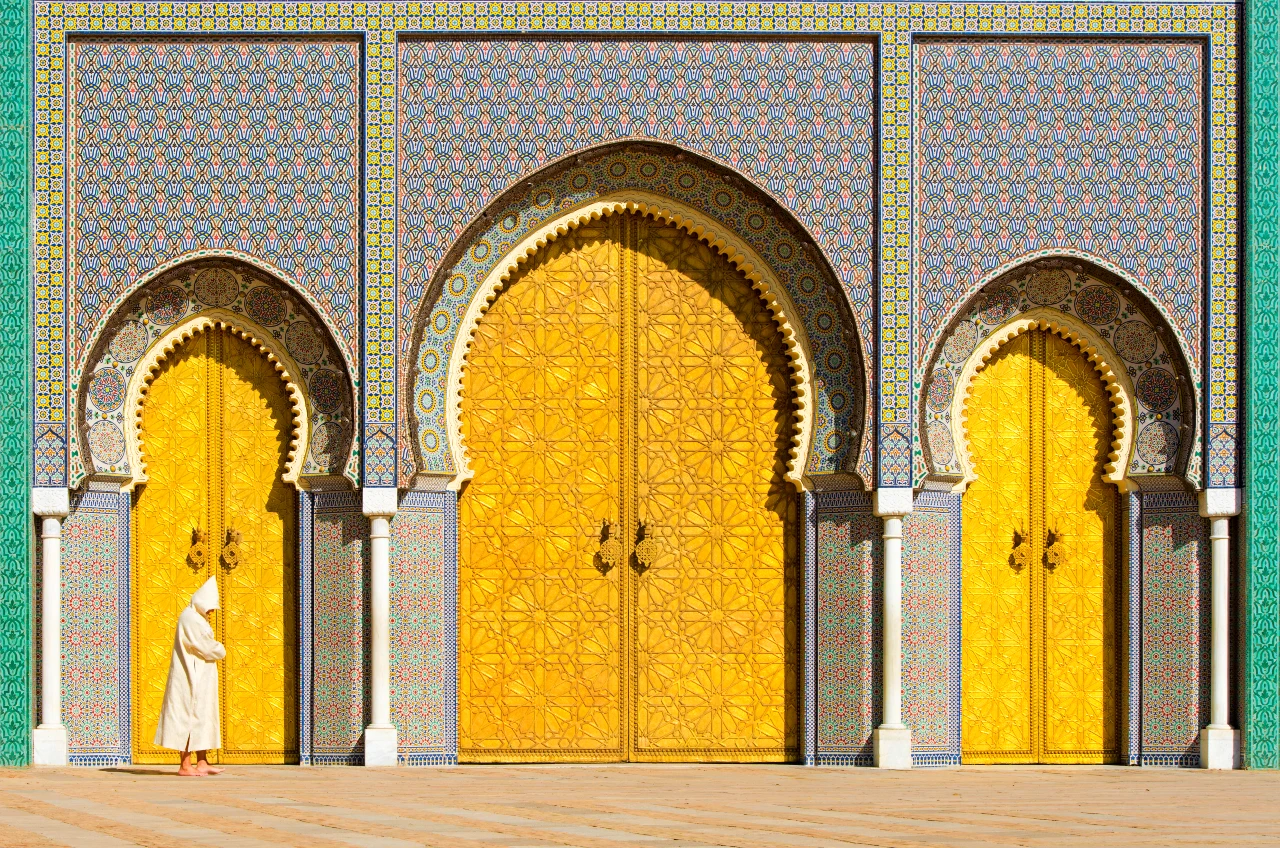
- Most visitors to Fes only see its surface through guided shops and popular landmarks, missing authentic cultural depth.
- True immersion involves engaging with local families, exploring hidden courtyards, and participating in traditional crafts and rituals that define Fes’s living history.
- Guided by licensed experts and staying in authentic riads, travelers can experience the city’s spiritual rhythms and craftsmanship beyond superficial tourism.
Fes pulls you in the moment you step through its ancient gates, but most visitors never get past the surface. They follow unofficial guides into commission-heavy shops, photograph the same famous tannery overlook, and leave believing they’ve seen the real thing. They haven’t. Authentic Fes sits behind unlocked doors, in quiet courtyards, inside workshops that smell of cedar shavings and leather dye, and in conversations with families who have called this medina home for generations. This guide breaks down exactly how to recognize real cultural immersion, choose trustworthy guidance, and make every hour in this extraordinary city count.
Table of Contents
- Understanding Fes: Beyond the surface
- Navigating the medina: Why legit guides matter
- Staying in a riad: Immersion through Moroccan hospitality
- How to design your immersive Fes experience
- A seasoned traveler’s take: What most Fes visitors overlook
- Unlock deeper experiences with top Morocco travel experts
- Frequently asked questions
Key Takeaways
| Point | Details |
|---|---|
| Verify your guide | Always confirm that your Fes guide carries official Ministry of Tourism credentials for a safe and authentic experience. |
| Stay in a riad | Choose a traditional riad to immerse yourself in Moroccan culture and hospitality at the heart of the medina. |
| Embrace slow travel | Engage with local rhythms, customs, and daily life rather than just sightseeing for deeper cultural insights. |
| Plan with intention | Curate your experience by vetting guides, picking hands-on activities, and learning basic etiquette for respectful travel. |
Understanding Fes: Beyond the surface
To understand how to dive deeper into Fes’s culture, first ground yourself in what makes this city truly unique.
Fes is Morocco’s spiritual and intellectual capital, a distinction it has held for more than twelve centuries. Founded in 789 CE, it houses the world’s oldest continuously operating university, the University of Al-Qarawiyyin, established in 859 CE. UNESCO recognized the medina, known locally as Fes el-Bali, as a World Heritage Site in 1981, not because it’s a relic, but because it remains a living, breathing organism of daily Moroccan life.
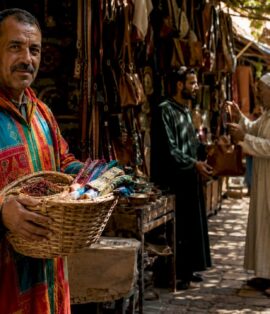
What separates Fes from other historic cities is the density of its living culture. The medina contains roughly 9,400 winding lanes within its walls. Donkeys still carry building materials through alleys too narrow for cars. Quranic schools sit beside copper workshops. Butchers, bakers, and embroidery artisans operate within meters of each other, just as they did in the medieval era. When you visit what to see in Fes, you quickly realize that every corner tells a story that is still being written today.
True immersion means more than taking photos of beautiful tiles. It means tuning into the city’s daily rhythm: the pre-dawn call to prayer echoing across rooftops; the mid-morning bustle of the souks (open-air markets); and the quiet that settles over the lanes during Friday prayer. These are the textures that make Fes unforgettable.
Key characteristics that make Fes’s cultural experience unique:
- The medina has no traffic except for pedestrians and pack animals, which creates an acoustic and sensory environment found almost nowhere else on earth
- Over 200 distinct crafts are still practiced inside the walls, including zellige tilework, fassi embroidery, and hand-beaten brass
- Arabic is the dominant language, but Darija (Moroccan Arabic dialect) flavors every interaction, and learning even three phrases creates instant warmth with locals
- Food in Fes follows deeply regional traditions distinct from Marrakech or Casablanca, with dishes like bastilla (a flaky meat and almond pastry) and harira soup remaining central to local identity
- The call to prayer sounds five times a day from hundreds of mosques, structuring the rhythm of commerce and social life in ways that directly affect how you experience the city
“Staying in a traditional riad in or near the medina positions you to witness Moroccan hospitality and daily life from the inside rather than as a passerby looking in.” Earth to Editorial
If you spend your visit navigating Fes only by guidebook landmarks, you will miss the real pulse of the city entirely. The medina is not a museum with opening hours. It is a neighborhood where families cook, pray, argue, laugh, and work. Your ability to recognize that truth determines the quality of your experience.
Navigating the medina: Why legit guides matter
Once you appreciate Fes’s living history, it’s critical to explore the medina with the right guidance for both safety and authentic learning.
The medina is genuinely disorienting. Even experienced travelers get lost in its labyrinthine alleys, and this creates an opening for unofficial, sometimes predatory, faux guides. These individuals position themselves near major entry points, hotels, and taxi drop-off zones. They are friendly, their English is often excellent, and their opening pitch sounds helpful. But their real business model depends on commissions from specific shops, which means your tour becomes a strategic walk between retail stops rather than a genuine cultural experience.
Unofficial “faux guides” are a well-documented recurring problem in Moroccan medinas, and Fes is no exception. Beyond financial manipulation, unofficial guides may not carry insurance, cannot be held accountable if something goes wrong, and rarely have the historical or cultural knowledge to provide real context for what you’re seeing.
How to choose and vet a licensed guide in Fes:
- Ask for the Ministry of Tourism ID card immediately. Every officially licensed guide in Morocco carries a laminated card with their photo, license number, and authorization stamp. If someone hesitates or claims they “left it at home,” walk away.
- Cross-reference the license number. Morocco’s Ministry of Tourism maintains official records. Your hotel front desk or riad host can help you verify legitimacy before you begin.
- Book through recognized channels. Reputable agencies, your riad, or platforms with verified local connections are your safest booking routes. Avoid booking guides from strangers who approach you on the street.
- Look for subject specialization. The best licensed guides in Fes often specialize in the history of Islamic architecture, artisan crafts, culinary traditions, or specific neighborhoods. A specialist provides exponentially more value than a generalist who rushes you through highlights.
- Discuss the itinerary upfront. Ask exactly which sites you’ll visit, how long you’ll spend at each, and whether any stops are shops or commercial locations. A trustworthy guide will answer this directly without deflecting.
Pro Tip: Before arriving in Fes, study the role of guides in Morocco so you know what a high-quality licensed guide interaction looks like. Being informed before you land changes the entire dynamic from your first conversation.
Licensed vs. unlicensed guides: What you actually get
| Feature | Licensed guide | Unlicensed faux guide |
|---|---|---|
| Ministry of Tourism ID | Always present | Never present |
| Historical and cultural knowledge | Deep, verified training | Variable, often superficial |
| Accountability | Fully accountable | No formal recourse |
| Itinerary transparency | Discussed upfront | Often redirected to shops |
| Insurance coverage | Typically included | None |
| Language skill (certified) | Tested and certified | Self-reported |
| Shop commissions | Disclosed or absent | Hidden primary motive |
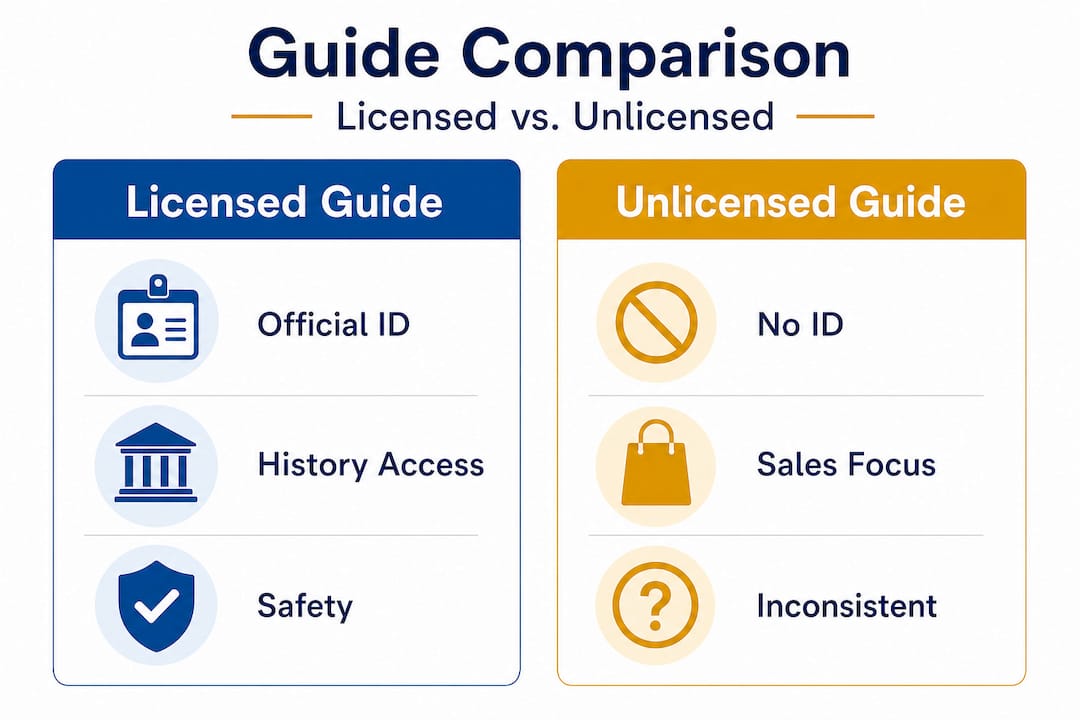
When you work with a licensed guide, you are not just buying safety. You gain access to stories, context, and access that changes how you see the city. A licensed guide at the must-see sites in Fes can explain the geometric logic behind Islamic tilework, translate inscriptions on centuries-old fountains, and introduce you to a craftsman who has been beating copper into lanterns for 40 years. That is the experience worth paying for.
For broader strategic advice on moving through Moroccan cities confidently, the city exploration tips resource covers everything from transportation to local customs that shift your status from tourist to respectful guest.
Staying in a riad: Immersion through Moroccan hospitality
With a trustworthy guide, your next immersion lever is where you stay. Let’s explore why riads are at the heart of authentic Fes experiences.
A riad (pronounced ree-AHD) is a traditional Moroccan house built around a central courtyard, typically featuring a garden or fountain at its core. The word comes from the Arabic “riad,” meaning garden. Unlike Western hotels that face outward with windows onto busy streets, riads face inward. Their exterior walls are often plain, even austere. But step through the front door, and the world transforms into zellige-tiled columns, carved stucco walls, and the sound of water. This architecture reflects a cultural philosophy: privacy, family, and interior beauty take priority over exterior display.
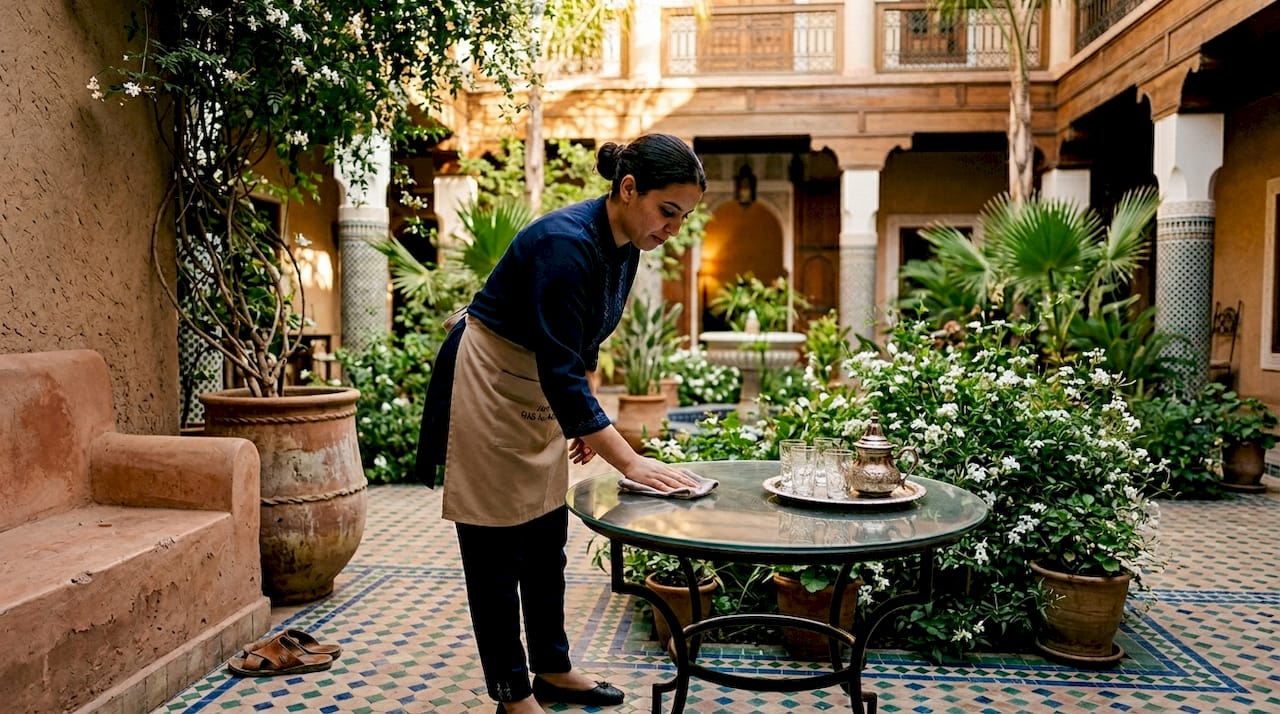
Riads in Fes are traditionally managed guesthouses that offer genuine cultural immersion rather than the standardized hotel-style perks you might expect from international chains. The difference is visceral. In a riad, your host might personally cook your breakfast using produce from the market they visited at 6 a.m. They’ll tell you which hammam (traditional bathhouse) is authentic vs. tourist-oriented. They’ll warn you about the lane that floods after rain. This information is not in any app.
What to consider when choosing your riad:
- Location matters enormously. A riad inside Fes el-Bali puts you within walking distance of the major souks, the tanneries, and the Al-Qarawiyyin mosque. A riad on the outskirts of the medina offers more modern amenities but removes you from the daily pulse.
- Family-owned vs. investor-owned. Some riads are now owned by foreign investors who run them from abroad. A locally owned, family-run riad almost always provides more authentic interaction and cultural knowledge.
- Size and guest capacity. Smaller riads (3 to 8 rooms) tend to offer more personalized attention. Larger ones with 20+ rooms begin to feel more like boutique hotels and less like genuine homes.
- Meal inclusion. Riads that offer homemade dinners or cooking classes create natural social moments where guests share a table with hosts, a setting that produces the best conversations and cultural exchanges.
- Courtyard access. Ask whether the central courtyard is a shared community space or purely decorative. A functioning courtyard where mint tea is served, cats wander, and conversations happen naturally is a cultural asset.
Pro Tip: For a deeper explanation of what makes this accommodation style so culturally significant, the “What a Riad Is” guide explains the architectural and social history in practical terms. Understanding why the design exists changes how you experience being inside one.
Riad comparison: What you get at each experience level
| Riad type | Cultural immersion | Local interaction | Price range (per night) | Best for |
|---|---|---|---|---|
| Family-run, medina-center | Very high | Daily, natural | $40 to $90 | Cultural immersion travelers |
| Boutique locally owned | High | Structured and informal | $90 to $180 | Comfort plus culture |
| Design-focused (foreign-owned) | Moderate | Mostly formal | $150 to $300 | Aesthetic travelers |
| Large riad-hotel hybrid | Low | Minimal | $200+ | Luxury seekers |
To understand the full spectrum of what riad means within Moroccan culture and architecture, it helps to read a dedicated overview before booking. Many travelers discover after the fact that they stayed in a beautiful but culturally hollow version when a genuine one was available at a similar price.
The Medina hospitality insights page adds useful context about how Medina accommodation across Moroccan cities compares in terms of hospitality culture and what to expect during your stay.
How to design your immersive Fes experience
Having explored how riads and guides unlock Fes, here’s how to put it all together for an unforgettable, authentic journey.
Good immersive travel does not happen by accident. It requires intention before you arrive and flexibility once you do. Most travelers who feel disappointed by Fes either overscheduled themselves chasing landmarks or were underprepared and got swept into the wrong hands within hours of arrival. Both outcomes are avoidable.
Step-by-step framework for planning your immersive visit:
- Define your primary interests before you book anything. Are you most drawn to Islamic architecture, Moroccan cuisine, traditional crafts, or local spiritual practice? Your answer shapes everything from your guide’s specialization to your riad’s location.
- Vet your guide and accommodation simultaneously. These two decisions are connected. A riad host who works with specific licensed guides can often secure better rates and guarantee a more cohesive experience.
- Reserve hands-on activities at least one week in advance. Cooking classes led by local Fassi (from Fes) women, zellige tilework workshops, and leather-tanning demonstrations often have limited spots. Booking late means missing out or accepting a tourist-trap substitute.
- Build at least two unscheduled mornings into your itinerary. The most powerful cultural moments in Fes happen when you wander slowly, not when you’re racing between appointments. Allow time to sit at a tea stall, watch a bread baker work, or simply follow an interesting sound down an unfamiliar alley.
- Learn the basics of Moroccan etiquette before arrival. Dress modestly, particularly near mosques and during Friday midday. Do not enter mosques unless specifically designated as open to non-Muslims. Ask before photographing people, especially women. Bargain respectfully in souks but do not treat it as a game at the merchant’s expense.
Activities that create genuinely immersive Fes moments:
- Cooking class with a local family, learning to prepare bastilla, tagine (a slow-cooked stew named after the clay pot it’s cooked in), and Moroccan mint tea
- Artisan workshop visits to watch brass beaters, ceramic painters, and leather dyers work their trades, ideally without a shopping-pressure component
- Early morning walk through the souks before tourist crowds arrive, around 7 to 8 a.m., when merchants are setting up and the energy is entirely local
- Hammam visit at a neighborhood bathhouse frequented by locals rather than a tourist-branded spa version
- Attendance at an evening cultural performance, such as Gnawa music or Andalusian classical music, in an authentic venue rather than a hotel ballroom setting
Pro Tip: Prioritize tours built around real context, meaning history, architecture, and daily life observation rather than shopping-focused routes. Ask any prospective guide specifically what percentage of the tour involves entering commercial shops. Any answer above 20% is a red flag.
For guidance on city exploration ethics, there are practical frameworks for how to engage respectfully with local communities, merchants, and sacred spaces. These practices directly affect how local people respond to you, which in turn determines the depth of experience you receive.
Fes’s medinas are protected environments for a reason. Understanding why Moroccan medinas matter culturally helps you approach them not as a theme park but as a neighborhood deserving of thoughtful presence.
A seasoned traveler’s take: What most Fes visitors overlook
Here is the uncomfortable truth that most Fes guides will not tell you directly: the majority of visitors to Fes approach the city as consumers rather than guests. They arrive with a checklist, they move quickly, they fill their camera rolls, and they leave satisfied on the surface. But they did not actually meet Fes.
The city reveals itself in proportion to your patience. We have seen this consistently across many visits and interactions with travelers who returned for a second or third time. First-timers describe the medina as chaotic, overwhelming, and hard to read. Returners describe it as layered, intimate, and endlessly surprising. The difference is not Fes. It is a pace.
The slow rituals are where the magic lives. The 15-minute tea ceremony that your riad host performs every afternoon is not a performance for tourists. It is a real cultural practice that communicates respect, welcome, and social connection. When you sit for it rather than rushing past it, you are participating in something genuinely ancient. When you accept the third glass of sweet mint tea even though you have had enough, you are communicating that you value the relationship over your own comfort. That shift changes everything about how local people engage with you afterward.
The call to prayer is another moment most visitors accidentally ignore. It happens five times a day, and it reorganizes the entire city’s social rhythm each time. If you are walking through the medina when the adhan (the call to prayer) sounds, slow down. Watch what happens. Merchants pause. Men move toward the mosque. A quiet settles over the lanes for 20 minutes. Then commerce and conversation resume. This cycle is the heartbeat of Fes, and observing it with full attention teaches you more about the city than any landmark can.
We also recommend resisting the urge to photograph everything. Some of the richest Fes moments exist only when your hands are empty. A conversation with a ceramics painter about how he learned his craft from his grandfather will not happen if your camera is between you. Eye contact and genuine curiosity open more doors than any lens.
Planning your Fes itinerary with these principles in mind changes the whole structure of your trip. It means building in time for stillness, for getting lost safely, and for accepting that not every moment needs to be captured or checked off a list. The travelers who leave Fes saying it changed them are almost always the ones who gave the city permission to move slowly.
Unlock deeper experiences with top Morocco travel experts
For those who want to take their Fes experience further, specialized help can make all the difference.
Translating the insights in this guide into an actual trip requires connections, timing, and local knowledge that take years to build on your own. That is exactly where Top Morocco Travel comes in. We offer luxury city tour concepts designed specifically around authentic cultural engagement, pairing travelers with Ministry-licensed guides who are specialists in Fes’s history, crafts, and culinary traditions. Our expert steps for cultural immersion resources give you a practical roadmap for preparing before you arrive and maximizing every day on the ground. For travelers who want a complete solution, our tailored tours in Morocco service builds a personalized Fes journey around your exact interests, pace, and travel style, from the riad we recommend to the artisan we introduce you to on day two.
Frequently asked questions
How can I verify my Fes guide is officially licensed?
Ask to see their Ministry of Tourism ID card and cross-reference their license number through official records, which your riad or hotel can help you access before the tour begins.
Is it worth staying in a riad instead of a hotel in Fes?
Absolutely. A riad offers cultural immersion you simply cannot replicate in a standard hotel, connecting you directly with local hosts, traditional architecture, and the unscripted rhythms of medina life.
How can I avoid scams in the Fes medina?
Work exclusively with guides who show official ministry credentials and politely decline all unsolicited offers from strangers near entrances, since faux guides target new arrivals at predictable choke points.
What types of immersive activities can I try in Fes?
The most rewarding options include Fassi cooking classes with local families, hands-on workshops with artisan craftspeople, early-morning souk walks before tourist crowds arrive, neighborhood hammam visits, and evenings attending authentic Gnawa or Andalusian music performances.


Comments are closed