




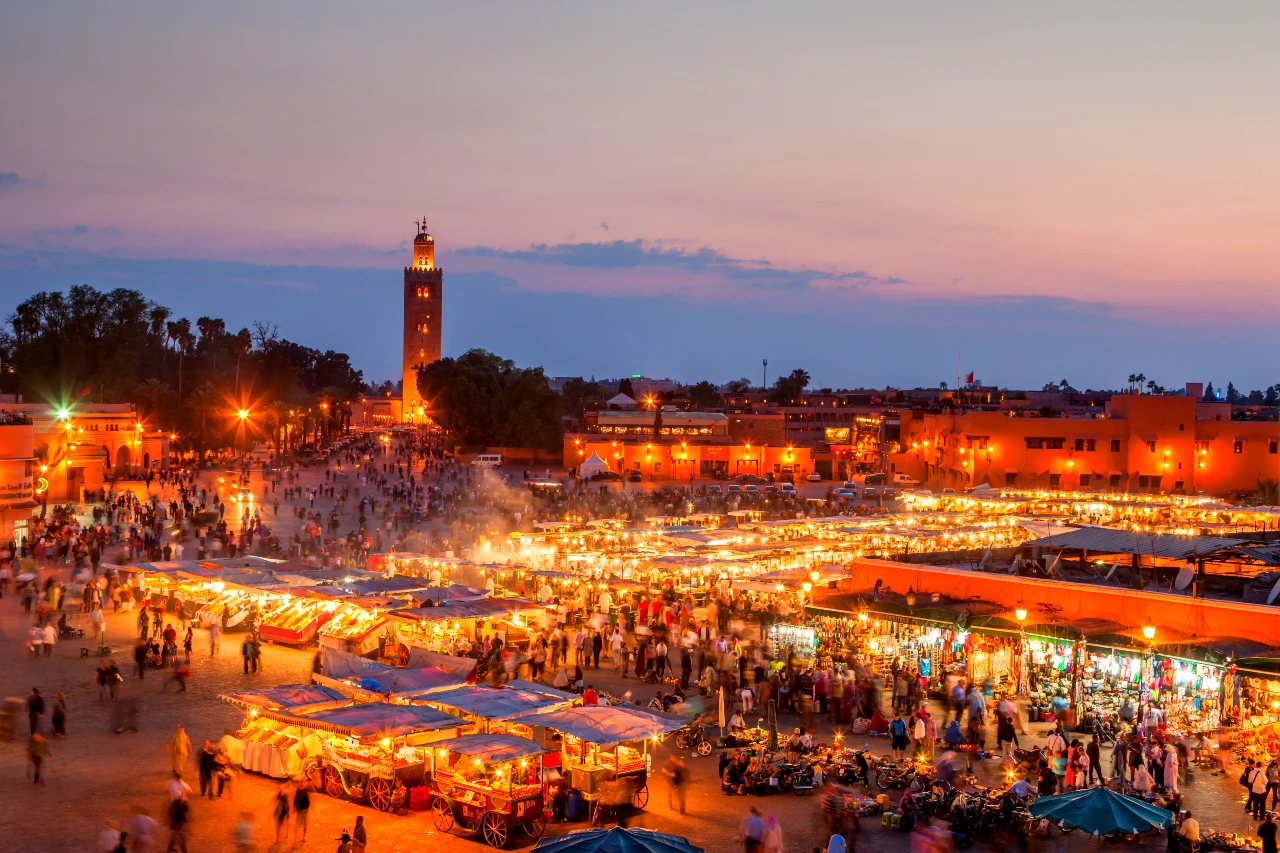
- Marrakech’s Medina offers a living, centuries-old neighborhood where tradition and daily life intertwine, not just a UNESCO site.
- The city balances the ancient Medina and the modern Ville Nouvelle, providing vibrant contrasts and harmonious coexistence of old and new.
- Travelers should explore thoughtfully, prioritizing depth over breadth, and embrace curiosity to discover Marrakech’s authentic, unfolding character.
Most travelers arrive in Marrakech with a short list of Instagram spots and leave feeling like they only saw the surface. That’s a shame, because this city rewards curiosity in ways that few destinations in the world can match. The UNESCO-inscribed Medina is not just a historic quarter frozen in time. It’s a living, breathing neighborhood where craftsmen, cooks, students, and storytellers move through the same narrow alleys they have for centuries. This guide cuts through the noise and gives you the practical knowledge, cultural context, and smart strategies to experience Marrakech the way it deserves to be experienced.
Table of Contents
- Understanding Marrakech’s essence: The Medina and beyond
- Navigating the city: Layout, neighborhoods, and practical tips
- Must-see sights and top cultural experiences
- Smart planning: Balancing adventure, culture, and comfort
- Our take: The real Marrakech is in its unexpected moments
- Ready to explore Marrakech? Travel with experts
- Frequently asked questions
Key Takeaways
| Point | Details |
|---|---|
| Medina’s UNESCO heritage | The Medina, Marrakech’s old city, is a UNESCO World Heritage site and cultural hotspot. |
| Plan for your style | Choose accommodations and explore neighborhoods based on your travel pace and family needs. |
| Mix culture with comfort | Balance busy sightseeing with downtime in gardens, museums, or local cafes for the best Marrakech experience. |
| Real experiences beat checklists | Let curiosity and open-mindedness guide you—the most memorable moments aren’t always on the map. |
Understanding Marrakech’s essence: The Medina and beyond
Marrakech is one of Morocco’s four imperial cities, and it carries that title with weight. Founded in the 11th century by the Almoravid dynasty, the city grew into a major center of Islamic scholarship, trade, and architecture. Today, it draws millions of visitors each year, yet its soul remains remarkably intact if you know where to look.
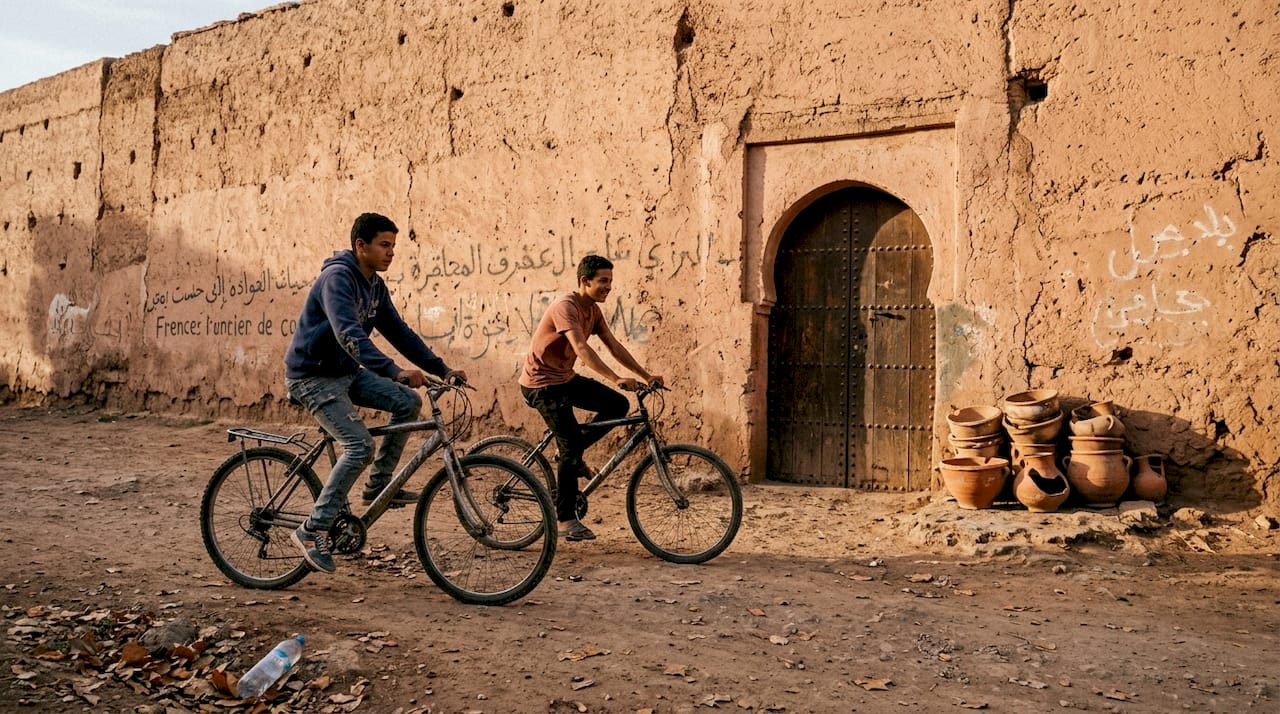
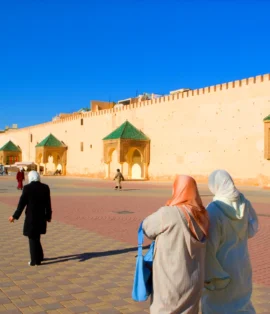
The Medina is the old walled city at the heart of Marrakech. Think of it as a city within a city. Its labyrinthine streets, called derbs, twist and fold around mosques, fountains, riads (traditional courtyard homes), and souks (markets). The Medina of Marrakesh earned its UNESCO World Heritage status in 1985, recognized for its exceptional architecture, urban fabric, and cultural continuity. That recognition matters because it signals that what you find here is not a reconstruction or a theme park. It’s the real thing.
“The Medina of Marrakech is not a museum. It’s a neighborhood where tradition and daily life overlap in ways that can surprise even seasoned travelers.”
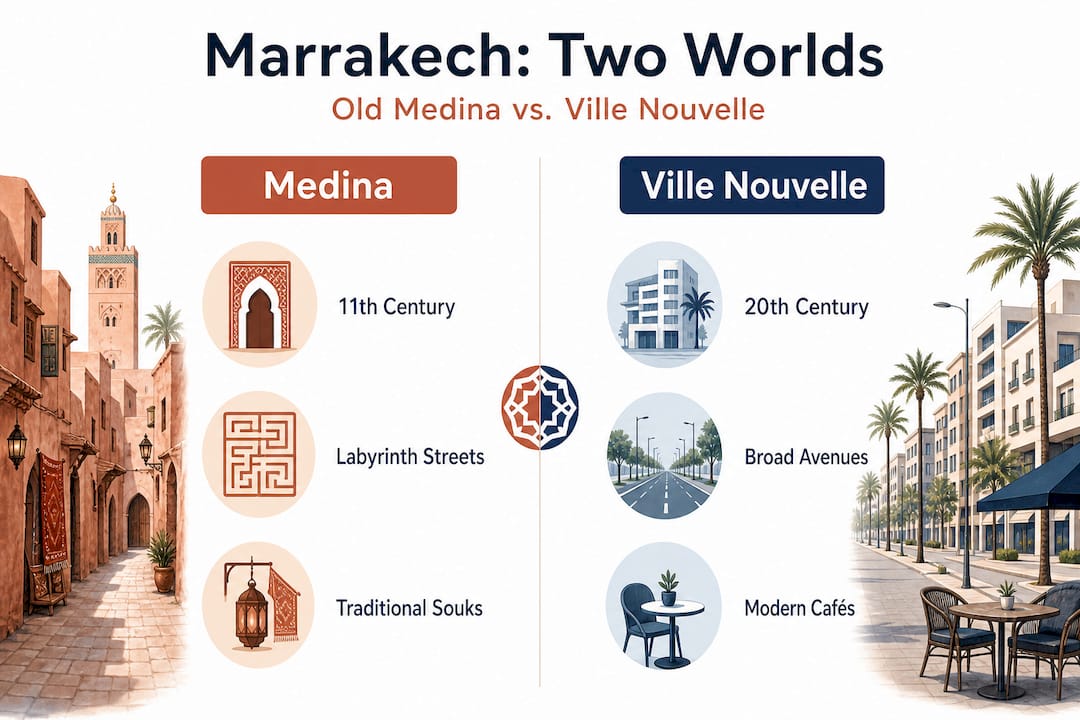
Contrast that with the Ville Nouvelle, the modern city built during the French colonial period in the early 20th century. Anchored by the Gueliz district, the Ville Nouvelle has wide boulevards, contemporary restaurants, art galleries, and international hotels. It’s polished and convenient, but it lacks the raw energy that makes Marrakech unforgettable.
What makes the city genuinely special is the tension and harmony between these two worlds. You can eat a slow breakfast in a rooftop riad overlooking ancient minarets, then walk twenty minutes to a sleek café serving specialty coffee. You can browse hand-stitched leather goods in a 14th-century souk, then visit a contemporary art gallery in Gueliz that afternoon. Marrakech is not a city that asks you to choose between the old and the new. It holds both at once.
For a broader sense of how Marrakech fits within Morocco’s rich travel landscape, exploring Marrakech’s insights and the country’s top places to visit gives you a strong foundation before you arrive.
| Feature | Medina (Old City) | Ville Nouvelle (Modern City) |
|---|---|---|
| Founded | 11th century | Early 20th century (French era) |
| Architecture | Islamic, Moorish, Andalusian | European colonial, contemporary |
| Atmosphere | Sensory, historic, maze-like | Ordered, cosmopolitan, relaxed |
| Best for | Culture, souks, authentic food | Cafés, galleries, modern hotels |
| Noise level | High (especially near Jemaa el-Fnaa) | Moderate |
Daily life in Marrakech blends tradition and innovation in ways that constantly catch visitors off guard. You’ll see a woman in a djellaba (traditional Moroccan robe) scrolling through her phone while waiting for fresh bread at a bakery that has operated for generations. You’ll hear the call to prayer echo over rooftops while a DJ sets up for a rooftop party nearby. This is not a contradiction. This is Marrakech.
Navigating the city: Layout, neighborhoods, and practical tips
Understanding Marrakech’s geography before you arrive saves you significant time and frustration once you’re on the ground. The city is not as overwhelming as it first appears when you break it into its main districts.
The Medina is the historic core and the primary draw for most visitors. It’s enclosed by 19 kilometers of ancient pink walls and divided into dozens of smaller neighborhoods. The northern section holds the main souks and the famous Jemaa el-Fnaa square. The southern Medina is quieter and contains some of the city’s most important monuments, including the Saadian Tombs and the El Badi Palace.
Gueliz is the main commercial district of the Ville Nouvelle. It’s where you’ll find international chain hotels, modern restaurants, and the city’s main shopping street, Avenue Mohammed V. Many travelers use Gueliz as a base and make daily trips into the Medina.
Hivernage sits just west of the Medina walls and south of Gueliz. It’s a leafy, upscale neighborhood favored by luxury hotels and is particularly popular with couples and honeymooners. It offers easy access to the Medina without being inside its sensory intensity.
Mellah is the historic Jewish quarter, adjacent to the Royal Palace. It’s less visited than the northern Medina but packed with history, including the Lazama Synagogue and a fascinating covered market.
| District | Best for | Distance to Medina | Price range (accommodation) |
|---|---|---|---|
| Medina | Cultural immersion, authenticity | On-site | Budget to luxury |
| Gueliz | Modern comforts, easy navigation | 15-20 min walk | Mid-range to luxury |
| Hivernage | Couples, luxury stays, quiet | 10-15 min walk | Luxury |
| Mellah | History buffs, budget travelers | 5-min walk | Budget to mid-range |
For families, the choice of where to stay deserves careful thought. Staying inside the Medina puts you closest to the cultural action, but the narrow, crowded alleys and constant sensory stimulation can tire young children quickly. As family itinerary planning sources note, staying near the Medina while building in regular breaks at quieter gardens and museums is one of the most effective ways to keep family trips enjoyable. Our family holiday tips offer more tailored guidance for traveling with kids.
Key practical tips for navigating Marrakech:
- Download an offline map before you arrive. GPS signals can be unreliable in the tightest Medina alleys.
- Wear comfortable, closed-toe shoes. The streets are uneven and often wet from market cleaning.
- Carry small change (Moroccan dirhams) for tipping guides, musicians, and market vendors.
- Learn a few words of Darija (Moroccan Arabic) or French. Even a simple “shukran” (thank you) earns genuine warmth.
- Agree on taxi fares before you get in. Petite taxis are metered, but drivers sometimes prefer to negotiate a flat rate.
Pro Tip: Marrakech has several garden spaces that function as genuine breathing room in a dense city. The Menara Gardens, Agdal Gardens, and even the courtyard of the Medersa Ben Youssef offer quiet moments that reset your energy for the next round of exploration. Build at least one of these into every full day you spend in the Medina.
For families specifically, planning your Marrakech trip with a structured approach makes a significant difference. Our guide on planning family trips walks you through the key decisions step by step.
Must-see sights and top cultural experiences
Marrakech has more to offer than any single trip can cover, so the goal is to prioritize experiences that match your interests and travel pace. Here’s a breakdown of what genuinely deserves your time.
Top attractions ranked by cultural depth:
- Jemaa el-Fnaa square is the pulsing center of Marrakech life. By day, it’s a market square with orange juice vendors, snake charmers, and henna artists. By night, it transforms into one of the world’s great outdoor spectacles, with dozens of food stalls, storytellers, musicians, and acrobats performing simultaneously. Go at both times. They’re completely different experiences.
- The souks spread north of Jemaa el-Fnaa in a dense web of specialized markets. The souk des teinturiers (dyers’ market) is where you’ll see wool being dyed in vivid colors using traditional methods. The souk des ferronniers is dedicated to metalwork. The Souk Semmarine is the main textile market. Each has its own rhythm and craft tradition.
- Majorelle Garden was created by French painter Jacques Majorelle in the 1920s and later restored by fashion designer Yves Saint Laurent. The garden’s signature cobalt blue buildings and exotic plant collection make it one of the most photographed spots in Morocco. Arrive when it opens (8:30 AM) to avoid the midday rush.
- The Saadian Tombs were sealed for centuries and only rediscovered in 1917. They contain the ornate mausoleums of the Saadian dynasty, decorated with intricate tilework and carved cedar wood. The site is small but extraordinary in its detail.
- Medersa Ben Youssef is a 14th-century Islamic school (medersa means “place of study”) that once housed hundreds of students. Its central courtyard is one of the finest examples of Moroccan architectural craftsmanship anywhere in the country, with carved stucco, zellige tilework, and cedarwood screens.
- El Badi Palace ruins offer a haunting contrast to the city’s intact monuments. Once described as one of the most magnificent palaces in the world, it was stripped of its materials by a later sultan. What remains are vast empty courtyards and stork nests, but the scale still impresses.
- A traditional hammam is not just a tourist activity. It’s a genuine cultural practice. A public hammam visit involves a steam room, a vigorous scrub with a kessa (exfoliating glove), and a black soap treatment. It’s affordable, social, and deeply relaxing.
The Medina’s UNESCO recognition is a reminder that these experiences exist within a protected cultural landscape, not just a collection of tourist attractions. That context changes how you engage with them.
Pro Tip: The best time to visit Jemaa el-Fnaa and the main souks is either before 9 AM or after 4 PM. Midday crowds and heat can make the experience feel rushed and overwhelming. Early mornings in particular reveal a quieter, more local side of the square.
For those wanting to extend their adventure beyond the city, an Atlas Mountains tour pairs beautifully with a Marrakech stay, and adventure ideas for families can help you plan activities that work for all ages.
Cultural activities worth your time:
- Artisanal workshops: Many cooperatives in the Medina offer hands-on sessions in pottery, leather dyeing, weaving, and mosaic tile cutting. These are not performances. They’re working studios where you learn a real skill.
- Cooking classes: A Moroccan cooking class typically starts with a market tour to buy ingredients, then moves into a home kitchen to prepare tagine, couscous, or pastilla. It’s one of the best ways to understand the culture through food.
- Street music and storytelling: The Gnawa musicians who perform in Jemaa el-Fnaa carry a musical tradition rooted in sub-Saharan African spiritual practice. Stop and listen. Their music is unlike anything else in the world.
Smart planning: Balancing adventure, culture, and comfort
The biggest mistake travelers make in Marrakech is trying to see everything. The city rewards depth over breadth. A morning spent getting genuinely lost in the souks, stopping to watch a craftsman at work, and sharing tea with a shopkeeper will stay with you longer than a rushed tour of six monuments.
Here’s how to structure your days for maximum enjoyment:
- Start early and rest at midday. Marrakech heats up significantly from late morning onward, especially in summer. Plan your most active exploration for 8 to 11 AM, then retreat to your riad, a garden, or a café from noon to 3 PM.
- Leave one afternoon completely unplanned. Seriously. Some of the best Marrakech experiences happen when you wander without a destination. A wrong turn in the Medina might lead you to a hidden fountain, a local bakery, or a craftsman’s workshop that no guidebook has ever listed.
- Eat where locals eat. The food stalls in Jemaa el-Fnaa are fun, but the best Moroccan food is often found in small neighborhood restaurants (called fondouks or local dairies) tucked inside the medina. Look for places with handwritten menus and no English signage.
- Use guided experiences strategically. A guide is not a crutch. A knowledgeable local guide can unlock context, stories, and access that would take you days to find on your own. Use one for your first full day in the Medina, then explore independently afterward with that foundation.
For families, research on Marrakech itineraries consistently highlights the value of building structured rest periods into each day. Kids (and adults) hit a wall in the Medina’s intensity. Planning a garden visit or a quiet museum break in the early afternoon prevents that wall from ruining your evening.
Pro Tip: If you’re traveling with children under ten, consider splitting your group for some activities. One adult takes the kids to Majorelle Garden while the other explores the deeper souks. You cover more ground, avoid meltdowns, and regroup for dinner with better stories.
Our curated top family tours and sample Morocco itineraries are designed with exactly this kind of balance in mind, mixing cultural depth with practical comfort.
Practical planning checklist:
- Book accommodations at least 6 to 8 weeks in advance for peak season (March to May, September to November).
- Confirm riad locations before booking. Some are deep in the medina and require a 10 to 15 minute walk from the nearest road.
- Pack a light scarf or shawl. It’s useful for mosque visits, sun protection, and cold evenings.
- Carry a reusable water bottle. Tap water is not safe to drink, but filtered water is available everywhere.
- Set a daily budget for souks and stick to it. Bargaining is expected, but knowing your limit keeps it fun rather than stressful.
Our take: The real Marrakech is in its unexpected moments
Here’s something we’ve observed after years of helping travelers plan Morocco trips: the people who come back most transformed are rarely the ones who followed the tightest itinerary. They’re the ones who sat down at a café when their feet gave out, started a conversation with the owner, and ended up being invited to a family dinner. Or the ones who got genuinely lost in the Medina for two hours and stumbled onto a neighborhood celebration they never could have planned.
Marrakech resists the checklist approach. Not because it’s chaotic, but because its best gifts are not scheduled. The city operates on its own rhythm, and travelers who try to impose a rigid external structure on it tend to leave frustrated. Those who learn to move with the city’s pace, who stop when something catches their eye and follow curiosity rather than a map, consistently report richer experiences.
This doesn’t mean you should arrive unprepared. Knowing the layout, the key sights, and the practical realities of navigating the Medina is genuinely important. But there’s a difference between being prepared and being over-programmed. The former gives you confidence. The latter gives you anxiety when things inevitably shift.
The most honest advice we can give is this: spend your first day getting oriented, your second day going deeper, and your third day letting the city lead. By that point, you’ll have enough context to recognize what’s genuinely interesting versus what’s staged for tourists. You’ll know which streets feel alive and which feel performative. That discernment is the real souvenir from Marrakech.
We also believe that respectful curiosity is the single most important thing you can bring to seeing Marrakech’s true side. Ask before photographing people. Learn the basic etiquette around mosque visits. Dress modestly in the medina, not because you’re required to, but because it signals respect and opens doors that stay closed to those who don’t bother. Marrakech is generous to travelers who approach it with genuine interest. It’s indifferent to those who treat it as a backdrop.
Ready to explore Marrakech? Travel with experts
If this guide has sparked your interest in going deeper, you don’t have to figure it all out alone. At TopMoroccoTravel.com, we specialize in turning the kind of rich, nuanced Marrakech experience described here into a reality for individuals, couples, and families. Our excursions in Marrakech are designed to move beyond the obvious and into the experiences that actually stay with you. Whether you’re drawn to hands-on Marrakech cultural activities like cooking classes and artisan workshops or you want a broader view through our Moroccan city tour options, our team builds itineraries around your pace, your interests, and your travel style. Reach out and let’s start planning your Marrakech story.
Frequently asked questions
What is the Medina of Marrakech, and why is it special?
The Medina is the historic walled old city at Marrakech’s heart, and its UNESCO World Heritage designation (awarded in 1985) recognizes its outstanding architecture, markets, and living cultural traditions that have survived for nearly a thousand years.
Is Marrakech a good destination for families?
Yes, Marrakech works well for families when you plan thoughtfully. As family travel sources confirm, building in midday breaks at quieter gardens or museums helps balance the city’s high energy with the rest kids and parents both need.
What are must-see sights in Marrakech?
Start with Jemaa el-Fnaa Square, the layered souks, Majorelle Garden, the Saadian Tombs, and Medersa Ben Youssef. Together, they give you a strong cross-section of Marrakech’s history, art, and daily life.
How long should I spend in Marrakech to experience it fully?
Three to five days is the sweet spot for most travelers. Three days covers the main sights and gives you one unplanned afternoon, while five days allows for day trips to the Atlas Mountains or Essaouira.
What tips help avoid crowds and overload in central Marrakech?
Arrive at major sights right when they open, take a full midday break away from the Medina’s core, and use the smaller parallel streets rather than the main souk corridors whenever possible.
Recommended
- Why explore Marrakech medina: unlock cultural heritage – Top Morocco Travel
- Exploring Marrakech Medina Morocco: Guide for All Travelers
- Best Excursions in Marrakech, Morocco, for All Travelers
- 7 Must Do Morocco Experiences for Every Type of Traveler



Comments are closed