





Hidden behind the walls of Morocco’s bustling medinas lies a secret that draws travelers from around the world. A riad is not just a place to sleep but a living work of art and tradition. These historic homes create peaceful private havens in the center of noisy cities and showcase the country’s love for intricate design. Discover why more and more visitors choose riads for a truly deep connection to Moroccan culture and hospitality.
Table of Contents
- Definition Of A Riad In Moroccan Culture
- Distinctive Architectural Features Of Riads
- Historical Origins And Evolution Of Riads
- Riads Versus Hotels: Key Differences
- Staying In A Riad: What To Expect
Key Takeaways
| Point | Details |
|---|---|
| Riad Definition | A riad is a traditional Moroccan dwelling characterized by its inward-facing design and central courtyard, emphasizing privacy and tranquility. |
| Architectural Features | Key elements include zellige tilework, intricate wood carvings, and multiple levels that highlight Moroccan aesthetics and craftsmanship. |
| Historical Significance | Riads evolved from Persian garden designs, adapting to climate and social needs, particularly in urban settings like Marrakesh. |
| Travel Experience | Staying in a riad offers personalized service and a unique cultural immersion compared to conventional hotel stays, creating a home-like atmosphere. |
Definition of a Riad in Moroccan Culture
In the heart of Morocco’s historic cities, a riad represents far more than just a traditional dwelling—it’s an architectural marvel that embodies centuries of cultural design and social philosophy. According to Wikipedia, a riad originates from the Arabic word for ‘gardens’ and historically refers to an architectural style featuring an interior garden or courtyard.
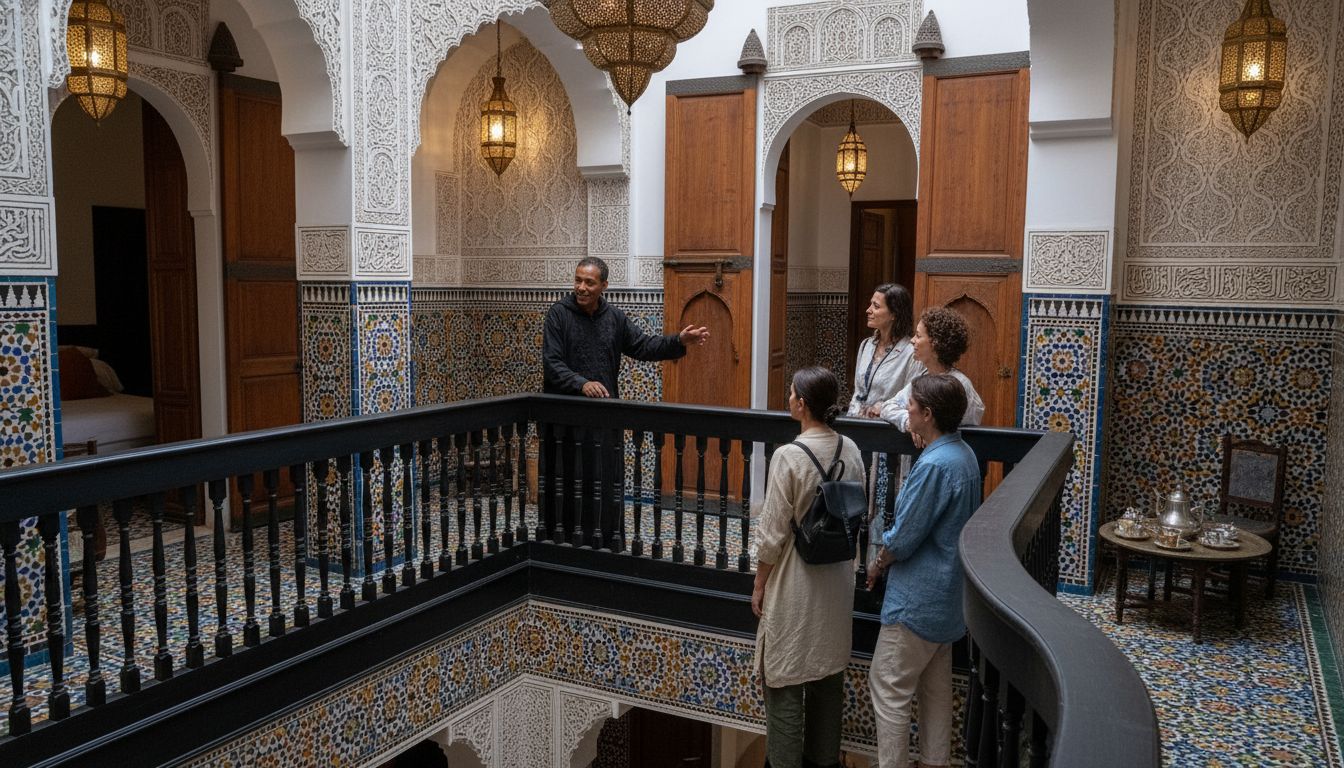
The defining characteristic of a riad is its unique inward-facing design. Unlike external-facing Western homes, riads are intentionally constructed to provide maximum privacy and protection from the outside world. The central courtyard or garden serves as the home’s heart, creating a serene interior sanctuary that shields inhabitants from the noise and heat of bustling medina streets. Sivo Blog describes this design as offering a tranquil retreat that is quintessentially Moroccan.
Typical architectural features of a riad include:
- Multi-level interior spaces surrounding a central courtyard
- Intricate tile work known as zellige
- Carved wooden details and ornate plasterwork
- Interior fountains or water features
- Rooms that open directly to the central garden space
Today, many traditional riads have been beautifully restored and transformed into boutique hotels and guesthouses, allowing travelers to experience this remarkable architectural tradition firsthand. When visiting Morocco, staying in a riad accommodation offers an authentic glimpse into the country’s rich cultural heritage and architectural ingenuity.
Distinctive Architectural Features of Riads
Riads are architectural masterpieces that represent the pinnacle of Moroccan design and craftsmanship, embodying a unique aesthetic that sets them apart from other architectural styles. Lbeldi asserts that the meticulously crafted central courtyards, the beating heart of the entire structure, distinguish these traditional homes.
Morocco’s rich artistic heritage is evident in the interior of a riad, which boasts several signature architectural elements:
- Zellige Tilework: Hand-cut ceramic tiles arranged in complex, symmetrical geometric patterns
- Intricate Cedarwood Carvings: Delicate wooden details that showcase exceptional woodworking skills
- Central Fountains: Often positioned in the courtyard, they provide both aesthetic beauty and a cooling effect.
- Multiple Levels: Rooms typically arranged around the central courtyard, creating a vertical living space
- Ornate Plasterwork: Detailed stucco decorations featuring intricate arabesque designs
When exploring Moroccan architecture, understanding these design principles helps travelers appreciate the cultural significance behind each riad. Visitors can dive deeper into Morocco’s top travel destinations to experience these architectural wonders firsthand, gaining insight into a design philosophy that prioritizes privacy, beauty, and family connection.
Historical Origins and Evolution of Riads
The architectural story of riads is a fascinating journey through centuries of cultural exchange and design innovation. Wikipedia reveals that the riad’s distinctive design can be traced back to traditional Persian gardens, which spread dramatically during the Islamic period and found a particularly vibrant expression in Moroccan architecture.
Specifically, Marrakesh, with its unique combination of spacious urban layouts and a warm climate, became the most prominent location for these remarkable dwellings. The architectural design was not just about aesthetics but a sophisticated response to environmental and social needs. Riads provided a perfect solution for extended families, offering privacy, temperature regulation, and a serene interior space that protected inhabitants from the bustling external world.
The evolution of riads reflects Morocco’s rich architectural heritage, demonstrating how design adapts to cultural and climatic requirements:
- Persian Influences: Original garden design concepts imported during Islamic expansion
- Family-Centric Layout: Rooms strategically arranged around central courtyards
- Climate Adaptation: Architectural features designed to create natural cooling
- Social Privacy: Inward-facing structures that shield family life from public view
Travel enthusiasts can explore more about Morocco’s architectural wonders by checking out our guide to historical monuments, which offers more profound insights into the country’s fascinating architectural landscape.
Riads Versus Hotels: Key Differences
When choosing accommodations in Morocco, travelers face a fascinating choice between traditional riads and conventional hotels. Moroccopedia explains that riads, originally private residences, have been thoughtfully transformed into boutique guesthouses that offer a dramatically different experience from standard hotel stays.
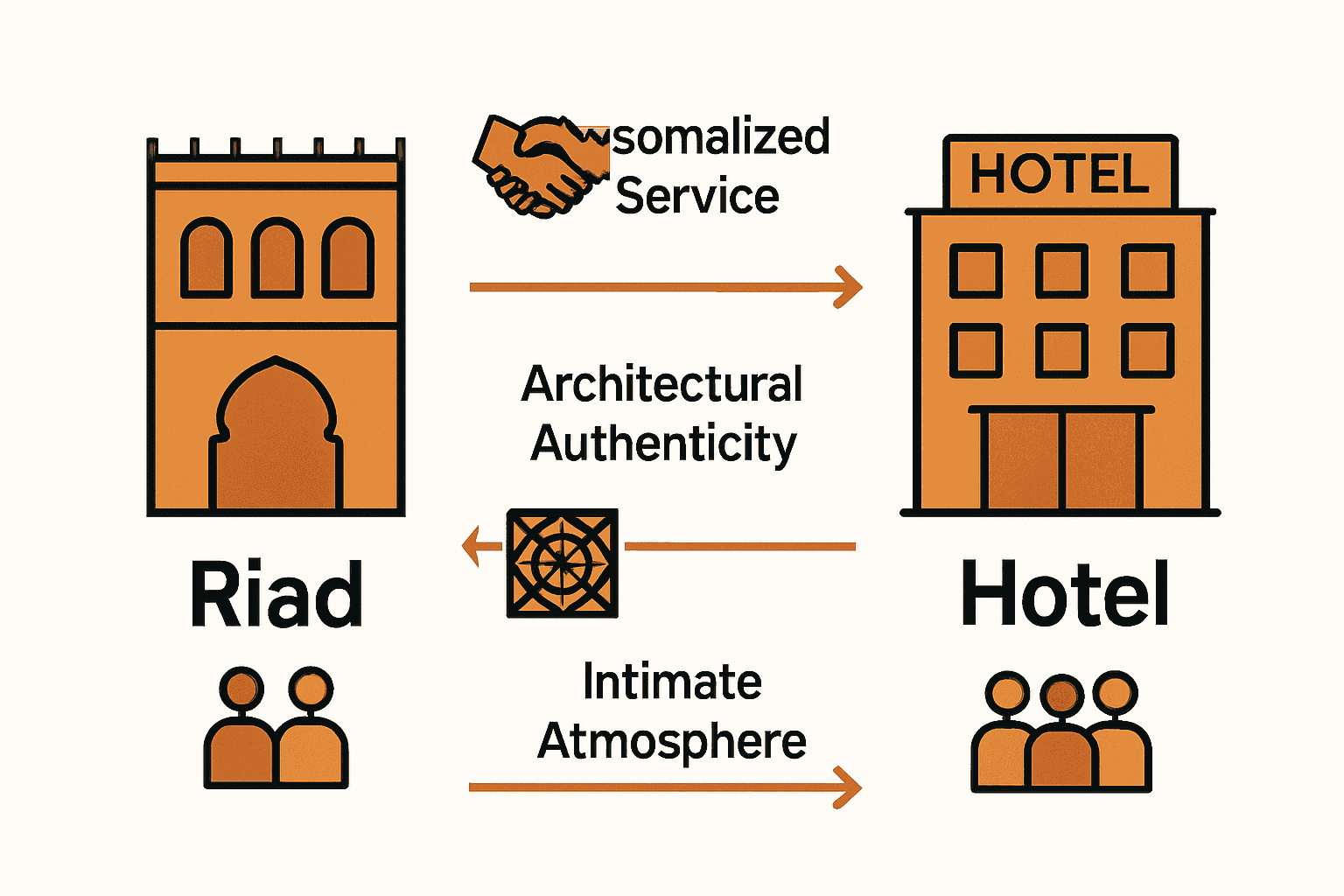
The key differences between riads and hotels are profound and touch every aspect of the traveler’s experience:
- Size and Scale: Riads typically have fewer rooms, creating a more intimate environment
- Personal Attention: Staff often provide highly personalized service reminiscent of staying with a local family
- Cultural Authenticity: Riads preserve traditional Moroccan architectural and design elements
- Social Atmosphere: Common areas like central courtyards encourage interaction among guests
- Privacy Design: Inward-facing structures offer a more secluded, peaceful environment
Travelers seeking a deeper cultural immersion will find riads offer something truly special.
 Unlike chain hotels that feel uniform and impersonal, riads reflect Morocco’s close-knit lifestyle and family values. For those interested in exploring accommodation options beyond traditional stays, our guide to Morocco’s top hotels and riads provides comprehensive insights into finding the perfect place to rest and recharge during your Moroccan adventure.
Staying in a Riad: What to Expect
Choosing to stay in a riad transforms your Moroccan travel experience from a simple accommodation to an immersive cultural journey. Moroccopedia highlights that riads offer an intimate atmosphere with highly personalized attention, ensuring travelers receive a uniquely authentic Moroccan hospitality experience.
What makes riad stays truly special are the distinctive features that set them apart from conventional hotels:
- Personalized Service: Staff often know guests by name and provide individualized recommendations
- Quiet Retreats: Enclosed design creates a peaceful sanctuary away from street noise
- Traditional Architecture: Rooms typically feature original Moroccan design elements
- Communal Spaces: Central courtyards encourage relaxed interaction with fellow travelers
- Home-Like Environment: Smaller scale creates a more comfortable, welcoming feeling
Practical considerations can help travelers maximize their road experience. Expect rooms to be uniquely decorated, potentially smaller than standard hotel rooms, but rich with character and cultural significance. For travelers eager to explore more of Morocco’s incredible destinations, our Marrakech travel guide offers additional insights into navigating and enjoying this vibrant cultural landscape.
Experience Authentic Moroccan Hospitality in a Riad
Understanding what a riad means in Morocco opens the door to an unforgettable travel experience centered on privacy, tradition, and cultural immersion. If you are dreaming of staying in a beautifully restored riad with its intricate tilework, peaceful courtyards, and personalized service, you are looking for more than just a place to sleep. This guide reveals the unique design and historical significance of riads that create a true home away from home. Travelers often seek not only comfort but also a genuine connection with Morocco’s heritage and local life.
Ready to transform your travel dreams into reality? Discover customized tours and accommodation options that feature authentic riads through TopMoroccoTravel.com. Whether you want guided city tours or cultural immersions, our expert team ensures your stay captures the essence of Moroccan living. Begin your journey now by exploring our complete travel resources and crafting your personalized itinerary to enjoy the true magic of riads and Moroccan architecture.
Frequently Asked Questions
What is a riad in Moroccan culture?
A riad is a traditional Moroccan dwelling characterized by its inward-facing design, featuring a central courtyard or garden. This architectural style maximizes privacy and provides a serene environment away from the bustling streets.
What are the distinctive features of a riad?
Riads typically include multi-level interior spaces, intricate tile work known as zellige, carved wooden details, interior fountains, and ornate plasterwork, all centered around a welcoming courtyard.
How did raids evolve over time?
The design of riads has origins in traditional Persian gardens and is adapted to the needs of Moroccan families. They evolved to offer privacy, temperature regulation, and communal spaces, reflecting environmental and social considerations throughout history.
What makes staying in a riad different from a hotel?
Riads generally provide a more intimate experience with fewer rooms, personalized service, and authentic Moroccan architecture. They often feature communal spaces, which foster interaction among guests, creating a unique cultural immersion that standard hotels may lack.
Recommended
- What Is a Riad? Discover Its Charm and Unique Stays
- Top 10 Things to Do in Marrakech, Morocco, for Travelers
- Where to Stay Morocco: Top Hotels and Riads Guide
- Rabat Travel Guides: Best Things To Do In Rabat, Morocco




Comments are closed