




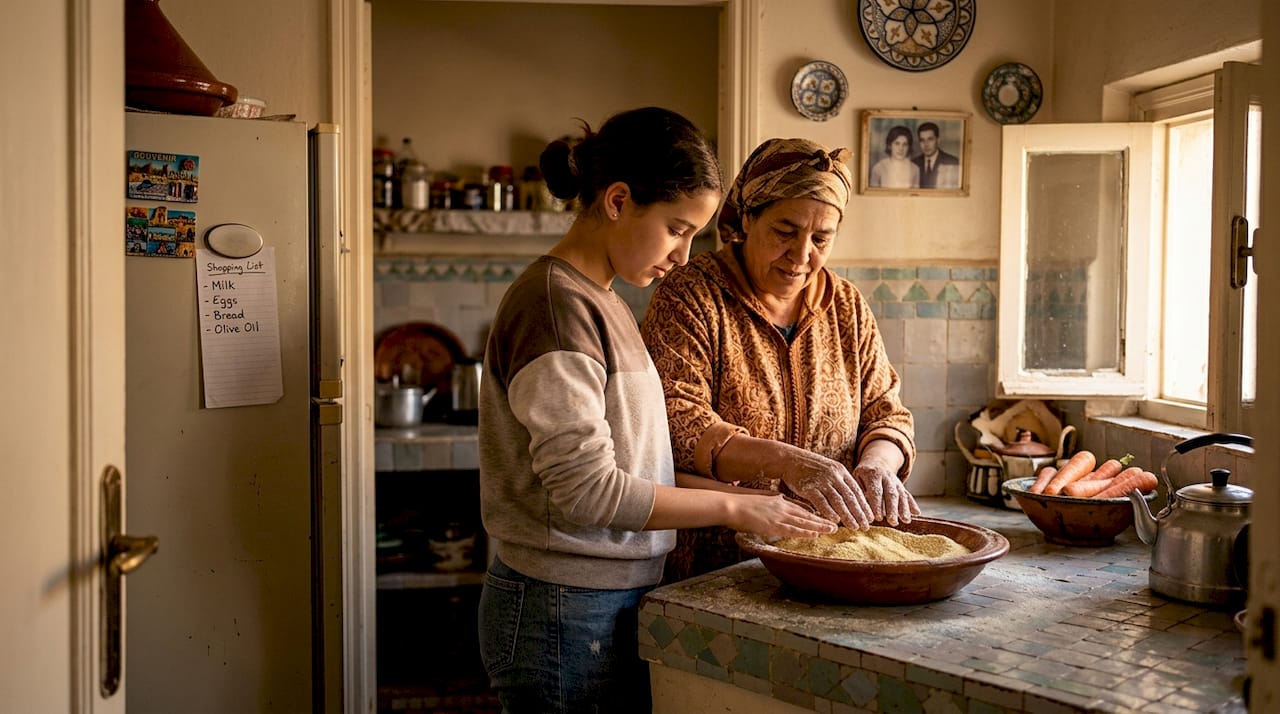
Imagine stepping into a traditional Moroccan home where the aroma of fresh mint tea mingles with spices from the evening tagine, and your host family greets you like a long-lost relative. Most travelers book hotels or riads without realizing they’re missing Morocco’s most authentic experience: living with a local family. This guide reveals what Moroccan family homestays truly offer, where to find them, what daily life looks like inside these homes, and how to prepare for an immersion that transforms you from tourist to temporary family member.
Table of Contents
- What Is A Moroccan Family Homestay?
- How To Find And Book A Moroccan Family Homestay
- What To Expect During Your Moroccan Family Homestay Experience
- Where To Stay: Best Moroccan Regions For Authentic Family Homestays
- Experience Authentic Morocco With Top Morocco Travel
- Frequently Asked Questions
Key takeaways
| Point | Details |
|---|---|
| Cultural immersion depth | Family homestays provide direct access to Moroccan daily life, customs, and home-cooked meals unavailable in commercial accommodations. |
| Booking methods | Arrange stays through specialized cultural exchange platforms, local guides, or direct contact with verified host families. |
| Comfort expectations | Expect basic facilities, shared spaces, and simple amenities prioritizing authentic experience over luxury standards. |
| Ideal locations | High Atlas Berber villages, Chefchaouen, and Fes medina offer the richest homestay experiences for cultural learners. |
| Preparation essentials | Learn basic greetings, pack modest clothing, prepare for language barriers, and embrace family routines and customs. |
What is a Moroccan family homestay?
A Moroccan family homestay is accommodation where travelers stay in the home of a local family, typically in rural or traditional settings to experience authentic daily life. You’re not a hotel guest here. You become part of the household rhythm, sharing meals at the family table, participating in daily activities, and learning customs through lived experience rather than guidebooks.
These homestays exist primarily in three settings:
- Rural farmhouses where families cultivate land and raise livestock
- Berber villages nestled in mountain communities with centuries-old traditions
- Traditional homes within medina walls where urban Moroccan life unfolds
The experience centers on genuine cultural exchange. Your host family might teach you to prepare couscous by hand, invite you to weekly market trips, or share evening conversations over sweet tea. You’ll witness prayer times, family dynamics, and seasonal celebrations as they naturally occur. This cultural immersion stands worlds apart from the polished service of hotels or the boutique charm of riads.
Homestays trade luxury for authenticity. Forget heated pools, concierge services, or daily housekeeping. Instead, expect simple rooms, family-style bathrooms, and home-cooked meals prepared with local ingredients. The value lies not in thread count but in the grandmother teaching you Arabic phrases or the children practicing English with you after school.
Travel enthusiasts seeking genuine connection benefit most from homestays. If you prioritize comfort, amenities, and privacy over cultural learning, a riad or hotel serves you better. But if you want to understand how Moroccans actually live, think, and celebrate, a family homestay offers irreplaceable insight. You’ll leave with recipes, friendships, and perspectives no tour bus can deliver.
Pro Tip: Research your host family’s location and lifestyle beforehand to ensure alignment with your comfort boundaries and cultural curiosity level.
How to find and book a Moroccan family homestay
Finding authentic homestays requires different strategies than booking standard accommodations. Three primary methods connect travelers with host families, each offering distinct advantages for your planning approach.
Specialized cultural exchange platforms provide the most structured path. Organizations like Crossroads Cultural Exchange and similar programs arrange homestays through verified networks of host families. These platforms screen families, facilitate communication, and often include cultural orientation. You’ll pay slightly more than informal arrangements, but gain security, support, and clearer expectations. Many platforms also offer language learning components or volunteer opportunities integrated with your stay.
Local guides and tour operators represent your second option. Moroccan travel companies maintain relationships with families in specific regions, particularly in tourist-adjacent areas like Chefchaouen or Atlas villages. These guides handle logistics, translation, and cultural mediation. The advantage? Someone familiar with both cultures bridges potential misunderstandings. The tradeoff? Less direct family contact during booking and potentially shorter, more structured stays.
Direct contact through travel forums, social media groups, or personal referrals offers the most authentic but riskiest approach. Some families advertise homestays on community boards or through word-of-mouth networks. This method demands more cultural competence and flexibility from you. Language barriers complicate arrangements, expectations may remain unclear, and you lack institutional support if problems arise.
When evaluating any homestay option, verify these elements:
- Clear communication about facilities, meal arrangements, and house rules
- Photos or descriptions of sleeping arrangements and bathroom access
- Reviews or references from previous guests when available
- Discussion of your dietary restrictions, cultural practices, or special needs
- Transparent pricing covering accommodation, meals, and any additional activities
Potential challenges include informal setups without contracts, varying English proficiency among hosts, and limited recourse for disputes. Some families operate homestays as supplemental income without tourism licenses, which affects legal protections but doesn’t necessarily indicate poor quality.
Pro Tip: Request a video call with your host family before committing to assess communication comfort and clarify expectations about daily routines, meal times, and privacy boundaries.
Understanding why Morocco offers exceptional cultural immersion helps you appreciate the unique value these family connections provide beyond standard tourism experiences.
What to expect during your Moroccan family homestay experience
Your homestay reality will differ dramatically from hotel stays, requiring mental preparation for both wonderful surprises and practical adjustments. Understanding typical conditions helps you pack appropriately and set realistic expectations.
Facility standards lean toward basic functionality. Most homestays provide a private or semi-private bedroom with simple furnishings: a bed, perhaps a small table, minimal decoration. Shared bathrooms are common, sometimes with squat toilets rather than Western-style fixtures. Hot water may require advance notice or operate on limited schedules. Heating in mountain regions during winter months often relies on portable braziers or wood stoves rather than central systems. Rural locations might experience occasional water or electricity interruptions.
Cultural practices shape your daily experience more than physical amenities. Moroccan hospitality runs deep. Expect your host family to:
- Serve abundant food and insist you eat more than you think possible
- Include you in family activities, conversations, and social visits
- Show curiosity about your life, family, and country through many questions
- Offer constant tea, treating refusal as mild offense to their generosity
Meal sharing becomes your primary cultural classroom. You’ll likely eat from communal dishes, use bread as utensil, and follow the family’s pace and customs. Breakfast might feature bread, olive oil, honey, and mint tea. Lunch, the main meal, typically includes tagine, couscous, or other substantial dishes. Dinner tends lighter, sometimes leftovers or soup.
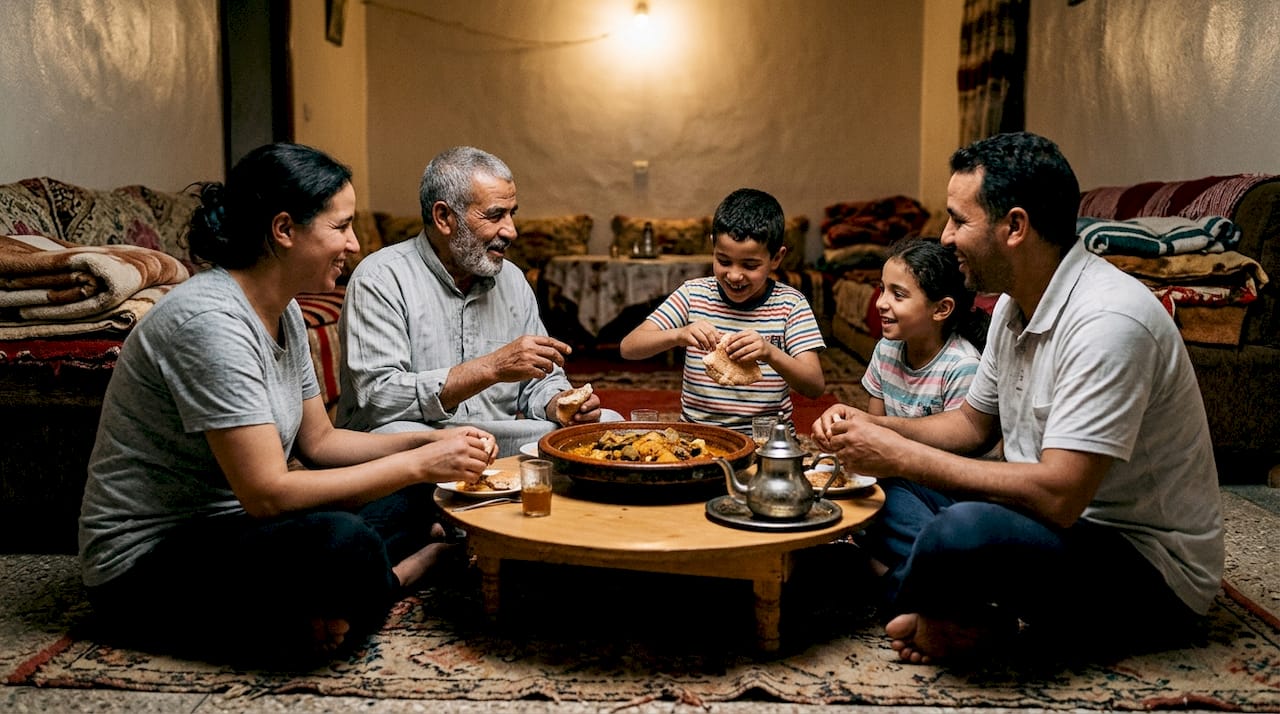
Language barriers present the most common challenge. Many rural families speak primarily Darija (Moroccan Arabic) or Berber languages, with limited French or English. Communication happens through gestures, translation apps, and patience. This limitation can feel isolating initially but often leads to creative connection and accelerated language learning.
Physical comfort varies significantly by season and location. Summer heat in southern regions without air conditioning tests tolerance. Winter cold in mountain homes without heating requires multiple blankets and warm clothing indoors. Rural access means bumpy roads, limited nearby services, and potential transportation challenges.
“The discomfort you feel in a homestay is actually the space where cultural learning happens. When you can’t retreat to hotel luxury, you engage more deeply with the family and adapt to their reality rather than observing it from a distance.”
Compared to riads and hotels, homestays offer minimal privacy and personal space. Family members may enter your room to deliver tea or clean. Household noise, children’s activities, and family conversations become your ambient soundtrack. You follow the family’s schedule for meals, bathroom access, and quiet hours rather than maintaining independent routines.
The tradeoff delivers unmatched cultural depth. You’ll learn phrases textbooks never teach, taste recipes passed through generations, and witness daily life’s unfiltered reality. Children become your informal language teachers. Parents share perspectives on Moroccan society, politics, and values. Grandparents tell stories connecting you to Morocco’s history.
Prepare mentally for simplicity, embrace inevitable awkwardness, and approach each day with curiosity rather than judgment. Your comfort zone will stretch, but the personal growth and authentic connections justify every adjustment.
Where to stay: best Moroccan regions for authentic family homestays
Location dramatically impacts your homestay experience, with each region offering distinct cultural flavors, accessibility levels, and immersion intensity. Choosing wisely ensures your stay matches your cultural curiosity and practical constraints.
Chefchaouen, the High Atlas Berber villages, and Fes medina rank as prime homestay destinations, each providing different windows into Moroccan life. Understanding regional characteristics helps you select the environment that resonates with your travel goals.
| Region | Cultural Experience | Accessibility | Typical Homestay Style | Ideal Duration |
|---|---|---|---|---|
| High Atlas Villages | Deep Berber traditions, agricultural life, mountain customs | Challenging, requires 4×4 or hiking | Rural farmhouses, simple facilities | 4-7 days |
| Chefchaouen | Relaxed mountain town, artistic community, moderate tourism | Easy, regular transport | Traditional medina homes, modest comfort | 3-5 days |
| Fes Medina | Urban Moroccan life, artisan culture, religious traditions | Easy, within city | Historic medina houses, varied facilities | 2-4 days |
| Sahara Oases | Desert Berber culture, nomadic influences, extreme climate | Moderate, organized transport needed | Mud-brick homes, very basic | 2-3 days |
High Atlas villages deliver the most intensive cultural immersion. Families here maintain centuries-old Berber traditions, speak Tamazight as their primary language, and live close to the land. You’ll participate in agricultural tasks, learn traditional crafts, and experience genuine rural hospitality. The isolation intensifies cultural exchange but limits escape options if you feel overwhelmed. Physical demands include mountain altitude, basic facilities, and potential hiking to reach villages.
Chefchaouen balances authenticity with accessibility. This blue-washed mountain town hosts families accustomed to hosting travelers while maintaining traditional lifestyles. You’ll experience Moroccan home life with slightly more comfort and easier communication than remote villages. The town’s relaxed atmosphere and stunning setting provide cultural depth without extreme isolation. Markets, cafes, and other travelers remain accessible when you need breaks from intensive family interaction.
Fes medina homestays immerse you in urban Moroccan culture within the world’s largest car-free urban zone. Families here navigate modern Moroccan life while preserving traditional values and customs. You’ll witness artisan work, religious observance, and medina commerce up close. The density and energy can feel overwhelming, but you gain insight into how most urban Moroccans actually live. Language barriers may be lower here, with more French and English speakers.
Trip length significantly affects cultural depth. Short stays of two to three days provide introductory experiences but barely scratch the surface. Four to seven days allow genuine relationship building, routine establishment, and deeper cultural understanding. Extended stays of weeks or months transform you from guest to temporary family member, accelerating language acquisition and cultural competence.
Pro Tip: Choose High Atlas villages for the deepest Berber cultural experiences if you can handle basic conditions and isolation, or select Chefchaouen if you want authentic immersion with easier logistics and comfort fallbacks.
Travel logistics to rural homestays require planning. Most villages lack public transport, necessitating arranged pickups, shared taxis, or guided transfers. Confirm transportation details during booking to avoid arrival complications. Family-friendly Morocco travel considerations apply equally to homestays, particularly regarding facility standards and activity appropriateness for children.
Consider combining homestays with other top Moroccan destinations to balance intensive cultural immersion with varied travel experiences. A week in a mountain village followed by riad comfort in Marrakech provides contrast that helps you process and appreciate each experience more fully.
Experience authentic Morocco with Top Morocco Travel
Planning a Moroccan family homestay requires cultural knowledge, reliable connections, and logistical expertise that Top Morocco Travel provides through years of specialized experience. Our curated Moroccan city tours seamlessly blend luxury accommodations with authentic cultural encounters, including vetted family homestay options.
We maintain established relationships with host families across Morocco’s most culturally rich regions, ensuring your homestay meets safety standards while delivering genuine immersion. Our cultural immersion activities extend beyond accommodation to include cooking classes, artisan workshops, and guided cultural exchanges that deepen your understanding.
Every traveler’s comfort threshold differs. Our flexible Morocco travel packages allow you to combine homestay experiences with comfortable hotels or riads, creating balanced itineraries that challenge you culturally without overwhelming your travel enjoyment. We handle all logistics, from transportation to translation support, letting you focus on connection rather than coordination.
Contact our travel specialists to design your personalized Moroccan adventure integrating family homestays with the cultural depth and travel comfort you desire.
Frequently asked questions
What is the difference between a Moroccan family homestay and a riad?
A riad is a traditional Moroccan house converted into a boutique hotel or guesthouse, offering private rooms, professional service, and tourist amenities within a historic architectural setting. Family homestays place you directly in a family’s living space, sharing their daily routines, meals, and private areas with minimal separation between guest and host. Riads provide privacy, comfort, and independence while homestays prioritize cultural immersion and personal connection over amenities. Most riads operate as commercial businesses with staff, while homestays function as family income supplements with family members as your hosts.
Is it safe to stay in a Moroccan family homestay?
Safety varies depending on how the homestay operates and whether it meets official standards. Licensed gites and auberges undergo classification and safety inspections, while informal family homestays may operate without formal oversight or safety checks. Booking through reputable platforms, established tour operators, or cultural exchange organizations significantly improves safety by connecting you with vetted families. Research your host family beforehand, read reviews when available, and trust your instincts during initial communications. Most Moroccan families take hospitality seriously and treat guests with genuine care and protection.
How do I prepare for cultural differences in a Moroccan family homestay?
Learn basic Arabic or French greetings, common phrases, and polite expressions before arrival to show respect and facilitate daily interaction. Pack modest clothing covering shoulders and knees, particularly for women, as most homestay families maintain traditional values regarding dress. Research Moroccan customs around meals, religious practices, and social interactions to avoid unintentional offense. Prepare mentally for simple living conditions, shared spaces, and language barriers by approaching differences with curiosity rather than judgment. Participating in cultural immersion activities before your homestay builds cultural competence that enhances your family stay experience.
Can I stay long-term in a Moroccan family homestay?
Extended stays of weeks or months are ideal for deeper language acquisition and cultural learning, allowing you to move beyond guest status into genuine family integration. Many families welcome long-term guests, particularly those interested in language exchange, cultural study, or volunteer work. Confirm arrangements, expectations, and pricing for extended periods directly with your host family before committing. Long stays require greater cultural flexibility and adaptation as the novelty wears off and daily life routines become your reality. Consider starting with a shorter stay to assess compatibility before committing to months with a particular family.
Recommended
- How to Plan Morocco Family Trip for Unforgettable Moments
- Where to Stay Morocco: Top Hotels and Riads Guide
- 7 Best Family Adventure Ideas Morocco Travelers Will Love – Top Morocco Travel
- Unforgettable Family Tours in Morocco: Top Picks



Comments are closed