




TL;DR:
- Morocco is safe for solo women, with most risks stemming from verbal harassment rather than violence.
- Preparation, modest dress, confident navigation, and choosing relaxed cities improve safety and comfort.
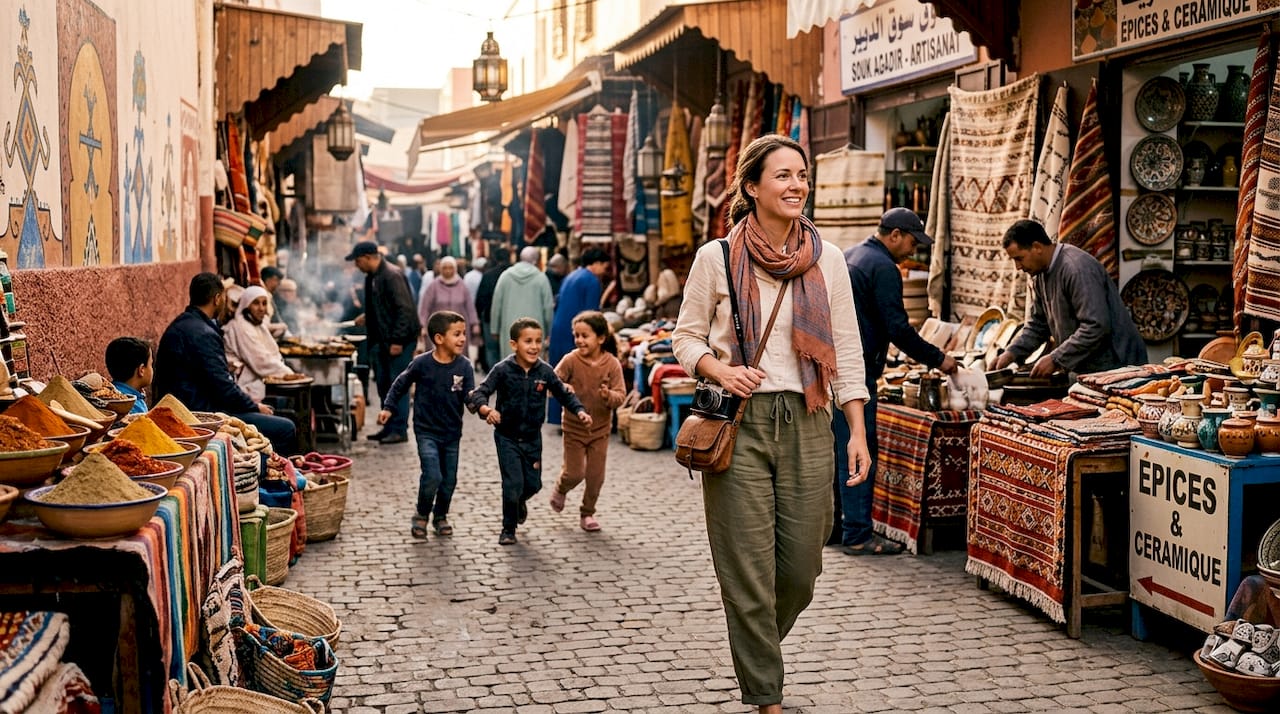
Morocco stops people mid-scroll. The colors, the food, the medinas. But if you’re a solo woman reading this, you’ve probably also stopped to ask whether it’s actually safe to go. The honest answer is that Morocco is safe for solo women, and millions of female travelers have explored it without serious incident. What you need is an accurate picture of what kind of challenges you’ll actually face, because fear built on the wrong information will either keep you home unnecessarily or leave you blindsided by the challenges that do exist. This guide gives you that picture.
Table of Contents
- Key Takeaways
- Is Morocco safe for solo women travelers?
- Dress, customs, and how they affect your comfort
- Navigating medinas with confidence
- Timing your days and choosing the right places
- My honest take after years guiding solo women through Morocco
- Plan your Morocco trip with expert support
- FAQ
Key Takeaways
| Point | Details |
|---|---|
| Harassment, not violence, is the real risk | Most solo women in Morocco face verbal attention and vendor pressure, not physical danger. |
| Dress and cultural awareness reduce friction | Covering up and carrying a scarf actively lowers the amount of unsolicited attention you receive. |
| Knowing your route changes everything | Having your accommodation address saved and walking with purpose prevents most persistent guide situations. |
| Time and city choice matter | Essaouira and Chefchaouen are notably more relaxed for solo women than the central Marrakech medina. |
| Riads are strategic, not just charming | Riad staff can arrange transport, give local advice, and provide a safe social base throughout your trip. |
Is Morocco safe for solo women travelers?
The first thing to get straight is what the actual risk profile looks like. Violent crime is rare in Morocco; most female travelers confront social challenges, not physical safety threats. That distinction matters enormously when you’re trying to decide whether to pack your bags.
The primary concern for women traveling alone in Morocco is verbal harassment. Think persistent catcalling, unsolicited attention in tourist-heavy medina areas, and vendors who don’t take a polite “no” at face value. Primary safety concerns are verbal, with advice to keep walking and avoid engagement. It’s social friction, and it’s real. But it’s a very different problem from the kind of violent crime that should genuinely stop you from traveling somewhere.
“Solo women in Morocco will most often deal with persistent attention and unsolicited offers, not threats to their physical safety. The correct framing is social navigation, not survival mode.”
The areas where you’re most likely to experience this kind of attention are the medinas of Marrakech and Fes, particularly around major tourist squares and souks. These are densely packed, easy to get turned around in, and full of people whose income depends on tourist engagement. That combination creates pressure. Official travel advisories warn that solo women may face harassment and verbal abuse, particularly at beaches, and recommend tourist beaches over public ones for women in swimwear.
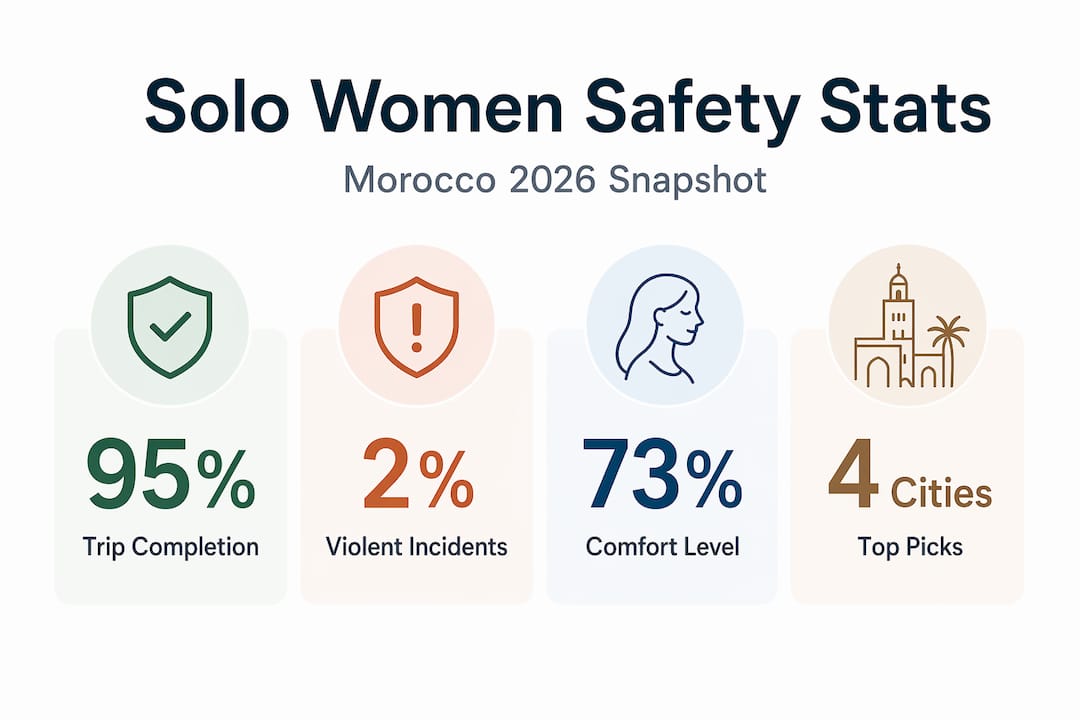
The important calibration here is expectation. Morocco had record tourism in recent years with very few violent crime incidents against tourists. The vast majority of visitors, including solo women, complete their trips without anything more serious than the social discomfort described above. Going in with that reality in mind, rather than worst-case-scenario thinking, lets you prepare the right way.
Understanding the difference between discomfort and danger is the foundation of confident solo female travel in Morocco. Once you’ve made that mental shift, every other strategy in this guide becomes easier to apply.
Dress, customs, and how they affect your comfort
Morocco is a Muslim-majority country, and modest dress is the social norm, particularly outside of resort towns. For solo female travelers, this isn’t just about respect. It’s a practical tool that actively reduces the amount of unsolicited attention you receive.
Modest dress and carrying a scarf for mosque visits reduce unwanted attention and help visitors move through communities more comfortably. That scarf is one of the most useful items you can pack. It covers your shoulders entering religious spaces, wraps around your head if you want to blend in more, and signals a basic level of cultural awareness that locals notice and respect.
Here’s what modest dressing actually looks like in practice for a Morocco trip:
- Cover your shoulders and avoid sleeveless tops in medinas and non-resort areas
- Wear pants or skirts that fall at least below the knee in smaller towns
- Save shorts and sleeveless clothes for private riads, beaches, and resort areas
- Keep a lightweight cotton scarf in your day bag at all times
- At beaches, stick to tourist-designated areas if you’re in a swimsuit, as the Canadian advisory recommends caution for women in swimwear on public beaches
Pro Tip: Pack two loose linen or cotton shirts in neutral colors. They keep you cool in the heat, they’re culturally appropriate, and they significantly reduce the amount of attention you attract in medinas and souks.
Cultural respect goes deeper than clothing, though. Making eye contact and smiling at strangers reads differently in Morocco than it does in many Western countries. What you might intend as friendly can be interpreted as an invitation to engage. This isn’t a reason to be cold or unfriendly. It’s just worth knowing so you can modulate your signals intentionally rather than accidentally sending mixed ones.
Learning a handful of Arabic or Darija phrases, specifically “la shukran” (no thank you) and “imshi” (go away, used firmly), gives you tools that feel natural in the moment and land with more finality than English rejections often do.
Navigating medinas with confidence
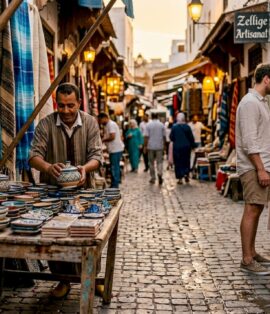
Medinas are the historic city centers of Moroccan cities, and they’re genuinely disorienting by design. The narrow, winding alleys were built centuries before GPS. For solo women, navigating medinas is a learned skill that sits at the center of safety and confidence throughout the trip.
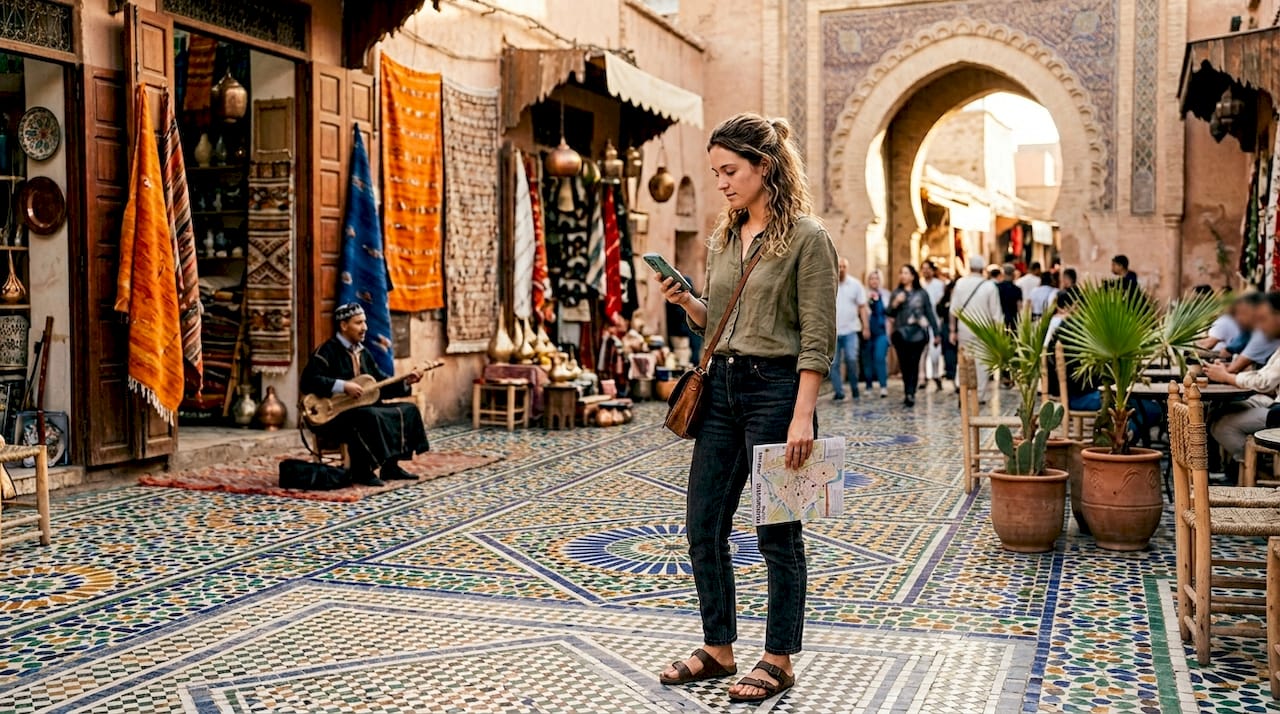
The single biggest mistake solo women make in medinas is visibly looking lost. The moment you stop, pull out a phone uncertainly, or start spinning around trying to get your bearings, you signal vulnerability to every vendor and would-be guide in the area. The solution is to do your orientation work before you step out.
Follow these steps before entering any major medina:
- Screenshot your riad’s address in Arabic before leaving. Many street signs in medinas don’t exist, but locals can read the Arabic address and point you in the right direction.
- Walk the main artery from your accommodation outward so you know the route back instinctively.
- Identify one or two anchor landmarks, a specific gate, a mosque minaret, or a large square, and use them to reorient if needed.
- Save an offline map on your phone (Google Maps offline works well in most Moroccan cities).
- If you genuinely get lost, step into a shop and ask the shopkeeper to point you toward a main street. This is safer and less attention-drawing than asking on the street.
Pro Tip: If someone starts walking alongside you claiming to “help” without being asked, say clearly and firmly “la shukran” without slowing down or making prolonged eye contact. Hesitation or engagement only extends the interaction.
Having addresses saved and avoiding looking lost prevents the persistent attention from vendors and unsolicited guides that drains energy and confidence fast. Riad accommodations provide safer bases with staff familiarity and reduced street exposure. This isn’t just about charm. Riad staff know the medina, they know which streets get quieter at night, and they’ll tell you honestly where not to wander alone after dark.
Here’s how Marrakech and Fes compare in terms of medina navigation pressure for solo women:
| City | Medina pressure level | Notes for solo women |
|---|---|---|
| Marrakech | High | Djemaa el-Fna and surrounding souks are intense; confidence and pace matter most |
| Fes | High | Fes el-Bali is the world’s largest car-free urban area; a local guide on day one helps enormously |
| Essaouira | Low to moderate | Much more relaxed, smaller medina, wind keeps some vendors indoors |
| Chefchaouen | Low | Famously calm, very tourist-friendly, and easier to orient in |
Using your Morocco solo travel guide to plan city-by-city rather than treating Morocco as one uniform experience makes a significant practical difference.
Timing your days and choosing the right places
When you go out matters as much as where you go. Daylight hours bring higher foot traffic to medinas and markets, and higher foot traffic means a lower likelihood of uncomfortable one-on-one interactions. Choosing busy, public areas during the day and early evening minimizes risk and maximizes comfort for solo women.
After dark, the calculus shifts. Quiet, unlit medina alleys at night are not the right environment for solo exploration, regardless of how safe the city feels during the day. Evening walks should stay in well-lit, populated tourist squares, and taxis should be arranged through your riad rather than hailed from the street.
Here’s a quick city-by-city breakdown of how different Moroccan destinations rank for solo female comfort:
| City | Solo female comfort | Best for |
|---|---|---|
| Marrakech | Moderate | Culture, food, riads; best with preparation |
| Fes | Moderate | History and authenticity; guided first day recommended |
| Essaouira | High | Relaxed beach town with artsy vibe |
| Chefchaouen | High | Scenic, slow-paced, very welcoming |
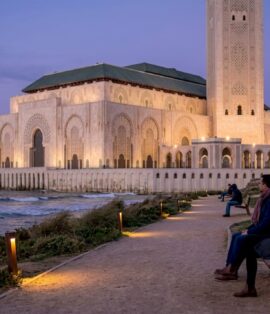
| Casablanca | Moderate to high | More cosmopolitan, easier navigation |
| Merzouga | High with guide | Desert trips work best through a tour operator |
Riad staff can arrange reliable transport and offer trusted local advice that increases your safety margins considerably. For night transport specifically, asking your riad to call a trusted driver is consistently safer than using street taxis, especially in Marrakech, where unlicensed drivers operate near tourist areas. Uber and Careem also operate in major Moroccan cities and offer the added safety of tracked rides and digital receipts.
You’ll also find that mornings, roughly from 8 to 11 a.m., are the calmest time to explore. Markets are just opening, streets are quieter, and the vendors who create the most pressure tend to arrive later. This is when you can actually see the architecture, photograph the light, and experience medina life at its most authentic.
My honest take after years guiding solo women through Morocco
I’ve worked with solo female travelers in Morocco long enough to recognize the pattern. Women who struggle most are usually those who either came with zero preparation or prepared by reading only horror-story accounts online and arrived expecting the worst at every corner.
The truth I’ve learned is that Morocco’s challenges are heavily front-loaded. Those first 48 hours of discomfort, when you’re still figuring out the medina, still calibrating how to respond to attention, and still adjusting your pace, are the hardest part. After that, most women find a rhythm and genuinely love it. The first 48 hours shape the entire experience, and the mindset you bring in matters more than almost any external factor.
What I tell every solo woman before her trip: You are not fragile, and Morocco is not trying to hurt you. The discomfort is real, but it’s manageable. Confidence is your most effective tool. Not aggression, not over-friendliness. Just clear, calm confidence that signals you know where you’re going and you’re not interested in being redirected.
I’ve watched women arrive nervous and leave planning their return. I’ve also watched women arrive unprepared and spend the entire trip anxious. The difference was almost always preparation and mindset, not the city or the people. When you approach Morocco with accurate safety framing and the right strategies in hand, the country opens up in extraordinary ways.
Explore our solo female travel guide for deeper cultural context on exactly what to expect city by city.
— TopMoroccoTravel
Plan your Morocco trip with expert support
At TopMoroccoTravel, we work specifically with solo travelers who want the authentic Morocco experience without the guesswork that often makes the first trip feel overwhelming. Our guided city tours are designed to give you cultural context, trusted local guides, and the kind of insider navigation knowledge that takes most solo travelers several days to build on their own. From walking the medinas of Marrakech and Fes to planning desert excursions in Merzouga, we put the right structure around your trip so you spend your energy enjoying Morocco rather than managing it.
We also help with accommodation selection, recommending vetted riads in safe, well-located parts of each medina. If you want to understand why guided tours work so well for solo female travelers specifically, we’ve written a detailed breakdown of exactly that. Reach out, and let’s build your Morocco trip around what actually matters to you.
FAQ
Is Morocco safe for solo female travelers?
Yes. Violent crime against tourists is rare, and the majority of solo women complete their trips without serious incident. The main challenges are social, including verbal harassment and persistent vendor attention, both of which are manageable with preparation.
What should solo women wear in Morocco?
Loose, modest clothing that covers shoulders and knees works best in medinas and smaller towns. Carry a lightweight scarf in your bag at all times, as modest dress actively reduces unsolicited attention and signals cultural respect.
Which Moroccan city is most comfortable for solo women?
Chefchaouen and Essaouira consistently rank as the most relaxed cities for solo female travelers, with lower medina pressure and more tourism-accustomed locals. Marrakech and Fes require more preparation but are absolutely manageable.
How do you handle persistent vendors or unsolicited guides?
Say “la shukran” firmly without slowing down, avoiding prolonged eye contact. Confidence and keeping your pace are the most effective responses. Hesitation or extended replies invite more engagement rather than ending it.
Is it safe to take taxis alone at night in Morocco?
Use taxis arranged by your riad or booked through Uber or Careem rather than hailing them from the street at night. Accommodation-arranged taxis are the recommended approach for solo women after dark in major cities.


Comments are closed