





Most American and European travelers want more than just comfort when exploring Morocco. With nearly 95 percent expressing concern about the environmental impact of tourism, the desire for authentic, responsible experiences is stronger than ever. Luxurious travel now means immersive local connections, ethical choices, and community support. Discover how conscious exploration in Morocco allows you to enjoy exceptional comfort while making a meaningful difference for both people and planet.
Table of Contents
- Defining Responsible Travel and Key Concepts
- Types of Responsible Travel Experiences
- Core Principles and Best Practices
- How Responsible Travel Supports Local Communities
- Common Challenges and Mistakes to Avoid
Key Takeaways
| Point | Details |
|---|---|
| Responsible Travel Defined | It involves making conscious choices that benefit local communities, preserve culture, and protect the environment. |
| Types of Responsible Travel | Options like community-based tourism and conservation travel create meaningful connections and support local economies. |
| Core Principles | Best practices include learning local customs, minimizing carbon footprints, and supporting local businesses. |
| Challenges to Avoid | Travelers should be mindful of unsustainable practices and overconsumption to ensure their travel positively impacts local communities and ecosystems. |
Defining Responsible Travel and Key Concepts
Responsible travel is more than just visiting a destination – it represents a transformative approach to exploring our world while creating meaningful positive impacts. At its core, responsible travel means making conscious choices that support local communities, preserve cultural heritage, and minimize environmental damage. Sustainable tourism practices emphasize creating travel experiences that benefit both travelers and the destinations they explore.
The key concepts of responsible travel encompass several critical dimensions. Environmental sustainability means reducing carbon footprints, supporting conservation efforts, and protecting fragile ecosystems. Community support involves ensuring that tourism generates economic opportunities for local populations, respecting their traditions and empowering residents through ethical engagement. Cultural respect requires travelers to approach different societies with curiosity, humility, and a genuine desire to understand rather than exploit.
Understanding these principles transforms travel from a transactional experience into a meaningful cultural exchange. Responsible travel organizations highlight that true sustainable tourism involves active participation, not passive observation. This means selecting accommodations that employ local staff, participating in community-led tours, purchasing locally made products, and being mindful of resource consumption during your journey.
Pro Tip: Before booking any travel experience, research the destination’s specific sustainability initiatives and choose operators that demonstrate genuine commitment to community and environmental welfare.
Types of Responsible Travel Experiences
Responsible travel encompasses a diverse array of experiences that prioritize meaningful interactions and minimal environmental impact. Sustainable tourism practices reveal multiple approaches travelers can adopt to create positive change while exploring new destinations. These experiences range from community-based tourism to eco-friendly adventures, each designed to generate meaningful connections between travelers and local environments.
Some prominent types of responsible travel experiences include community-based tourism, where travelers directly engage with local populations, supporting their economic development and cultural preservation. Another powerful approach is conservation-focused travel, which involves participating in wildlife protection efforts, supporting national parks, and contributing to ecological preservation projects. Ethical wildlife encounters stand out as a critical category, emphasizing observation and respect over exploitation, ensuring that animal interactions prioritize the welfare of local species.
Responsible travel options span various travel styles and budgets, demonstrating that sustainable tourism is accessible to everyone. Travelers can choose locally owned accommodations, dine at community restaurants, purchase handicrafts directly from artisans, and engage with local guides who provide authentic cultural insights. These choices transform travel from a mere consumption experience into a meaningful cultural exchange that generates tangible benefits for destination communities.
Here’s a comparison of responsible travel types and their typical benefits:
| Travel Type | Main Focus | Typical Local Impact |
|---|---|---|
| Community-based tourism | Direct community interaction | Boosts local economy, preserves culture |
| Conservation-focused travel | Environmental protection | Supports wildlife and habitat conservation |
| Ethical wildlife encounters | Animal welfare | Prevents exploitation and raises awareness |
| Local accommodation dining | Local ownership | Increases local income, reduces leakage |
Pro Tip: Research and select travel experiences that provide transparent information about their community and environmental impact, prioritizing operators who can demonstrate measurable positive contributions.
Core Principles and Best Practices
Responsible travel requires a thoughtful and intentional approach that goes beyond simple tourism. Responsible travel principles emphasize comprehensive strategies that protect both environmental ecosystems and local community interests. These core principles serve as a comprehensive framework for travelers committed to creating positive global impact through their journeys.
The fundamental best practices encompass several critical dimensions of responsible travel. First, travelers must conduct thorough destination research, understanding the local cultural context, environmental sensitivities, and economic challenges. This means learning about local customs, respecting cultural norms, and making informed choices that support sustainable development. Ethical decision-making becomes crucial, which includes selecting transportation methods with minimal carbon footprint, supporting locally owned businesses, and avoiding activities that exploit local populations or damage fragile ecosystems.
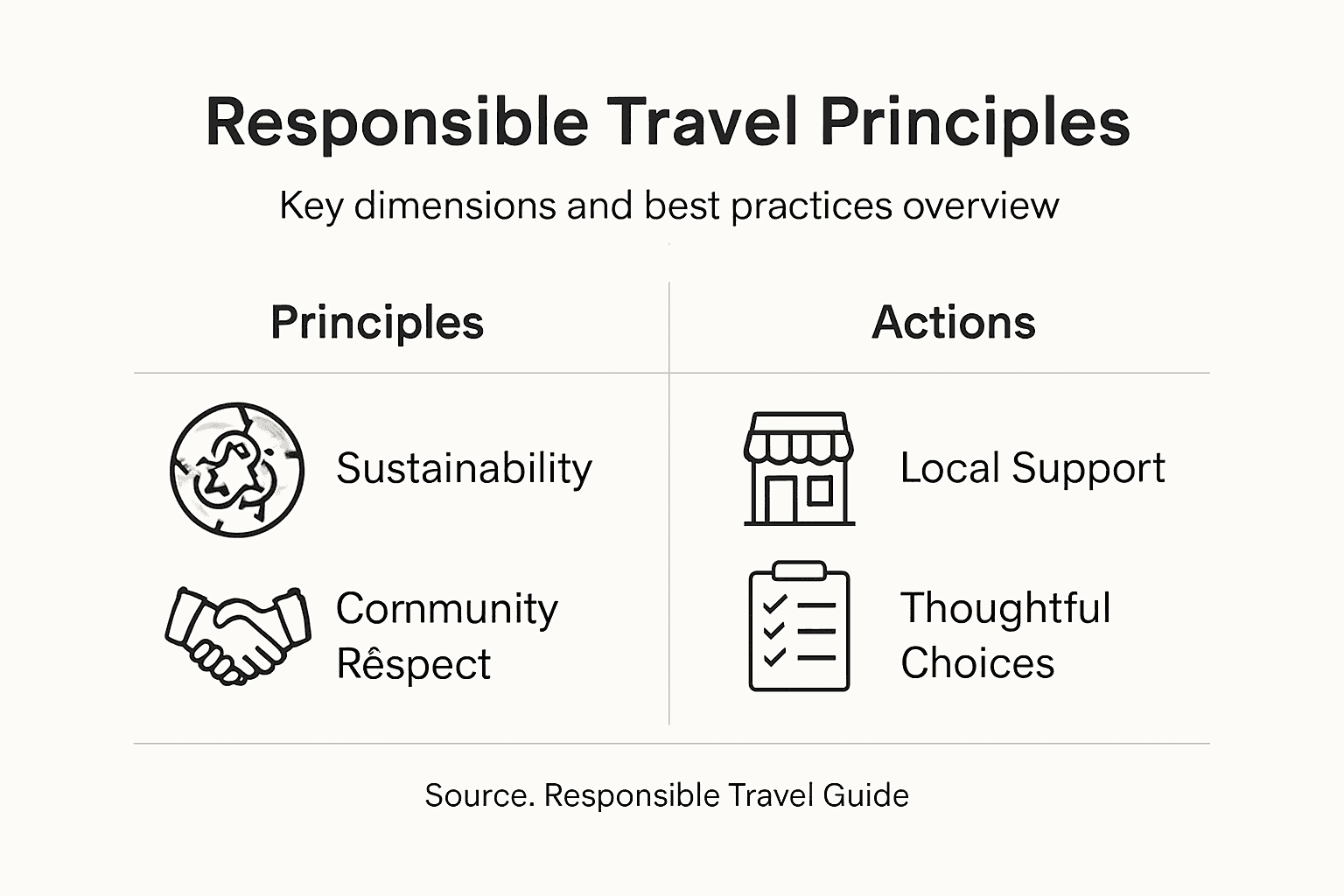
Destination stewardship approaches highlight the importance of community engagement and collaborative travel experiences. This involves actively seeking opportunities to contribute positively to local economies, participating in conservation efforts, and choosing travel experiences that provide equitable benefits to destination communities. Responsible travelers must be mindful of their consumption patterns, minimize waste, respect wildlife, and prioritize experiences that generate mutual understanding and economic opportunities for local populations.
Below is a summary of best practices for responsible travel and their intended outcomes:
| Best Practice | What It Involves | Intended Outcome |
|---|---|---|
| Learn local customs | Research traditions before visiting | Improved cultural understanding |
| Minimize carbon footprint | Choose eco-friendly transport | Reduced emissions, cleaner environment |
| Support local businesses | Shop, eat, and stay locally | Stronger local economies |
| Avoid exploitative activities | Research providers’ ethics | Protects people and wildlife |
Pro Tip: Before your trip, develop a comprehensive travel plan that includes researching local sustainability initiatives and identifying ways you can directly contribute to community welfare during your journey.
How Responsible Travel Supports Local Communities
Responsible travel represents a powerful mechanism for creating sustainable economic opportunities in destination communities. Tourism benefits local economies by generating direct financial impacts that extend far beyond traditional transactional interactions. When travelers intentionally choose experiences that prioritize local engagement, they transform tourism from a passive consumption activity into a meaningful catalyst for community development and cultural preservation.

The economic impact of responsible travel manifests through multiple strategic channels. Direct community investment occurs when travelers deliberately support locally owned businesses, hire local guides, and purchase authentic handicrafts directly from artisan communities. These choices create tangible economic opportunities, ensuring that tourism revenue remains within the community rather than being extracted by external corporations. Skill development becomes another critical benefit, as responsible tourism often involves training programs that empower local residents with professional skills in hospitality, language, and cultural interpretation.
Community development strategies highlight the transformative potential of thoughtful travel experiences. Responsible tourism generates funds for critical infrastructure improvements, supports educational initiatives, and creates sustainable livelihoods that motivate younger generations to preserve their cultural heritage. By valuing local knowledge and creating economic incentives for environmental conservation, responsible travelers help communities develop resilient, self-sustaining tourism models that protect both cultural traditions and natural ecosystems.
Pro Tip: When planning your trip, actively seek out tour operators and experiences that demonstrate transparent, measurable community benefits and provide direct economic opportunities for local residents.
Common Challenges and Mistakes to Avoid
Responsible travel challenges require travelers to be mindful and intentional about their experiences. Navigating responsible tourism demands more than good intentions – it requires a comprehensive understanding of potential pitfalls that can inadvertently harm local communities and environments. Understanding these challenges is the first step toward creating meaningful, positive travel experiences that genuinely support destination welfare.
Some of the most significant mistakes travelers consistently make include supporting unsustainable tourism practices without proper research. This might involve participating in wildlife experiences that exploit animals, choosing accommodations that do not benefit local economies, or engaging in activities that disrupt delicate cultural or environmental ecosystems. Overconsumption emerges as another critical challenge, where travelers unknowingly contribute to resource depletion, environmental degradation, and cultural disruption through their travel choices.
Sustainable travel strategies highlight the importance of conscious decision-making throughout the travel experience. Travelers must critically evaluate tour operators, accommodations, and experiences based on their commitment to environmental conservation, community development, and cultural preservation. This means researching certifications, understanding local economic contexts, and making deliberate choices that prioritize long-term community well-being over short-term personal convenience or entertainment.
Pro Tip: Always conduct thorough research about your destination, verify the sustainability credentials of your travel providers, and be prepared to make informed choices that prioritize community and environmental welfare.
Discover Responsible Travel with Authentic Moroccan Experiences
Embracing responsible travel means more than visiting — it is about creating a positive impact on communities and environments you explore. If you seek to minimize your carbon footprint, support local economies, and engage with culture respectfully, then a thoughtfully crafted journey through Morocco is the ideal choice. At TopMoroccoTravel.com, we understand the importance of ethical decision-making, community support, and cultural respect as highlighted in the article. We specialize in offering customized tours that promote sustainability by working with local guides, supporting artisan communities, and preserving Morocco’s vibrant heritage.
Start your journey with a personalized Moroccan adventure that aligns with responsible travel principles. Whether you want immersive city tours, desert excursions, or cultural experiences, our tailored packages provide transparent community benefits and eco-friendly options. Do not wait to transform your travel into a meaningful experience that supports local livelihoods and protects the environment. Visit TopMoroccoTravel.com now to explore authentic, sustainable travel opportunities and take the first step toward making a difference with every trip.
Frequently Asked Questions
What is responsible travel?
Responsible travel is a transformative approach to exploring destinations, focusing on making conscious choices that support local communities, preserve cultural heritage, and minimize environmental damage.
Why is responsible travel important?
Responsible travel is important because it creates meaningful positive impacts for local communities and environments, transforming tourism from a transactional experience into a cultural exchange that benefits both travelers and destinations.
How can I practice responsible travel?
You can practice responsible travel by selecting locally owned accommodations, participating in community-led tours, purchasing locally made products, and being mindful of your resource consumption during your journey.
What are the key principles of responsible travel?
The key principles of responsible travel include environmental sustainability, community support, and cultural respect, all aimed at generating positive impacts for both travelers and destination communities.
Recommended
- Complete Guide to the Role of a Travel Agency
- Travel to Morocco: Ultimate Guide for Shocking Adventures
- Defining Luxury Group Tours: Experiences That Set Them Apart
- 10 Ways Top Morocco Travel Delivers Hassle-Free Adventures for Every Traveler – Top Morocco Travel
- Understanding Sustainable Event Planning: The How and Why|CS





Comments are closed